
NAC for flu and respiratory infections - what studies show
NAC for flu and respiratory infections: a reliable answer based on research. u Bucha.
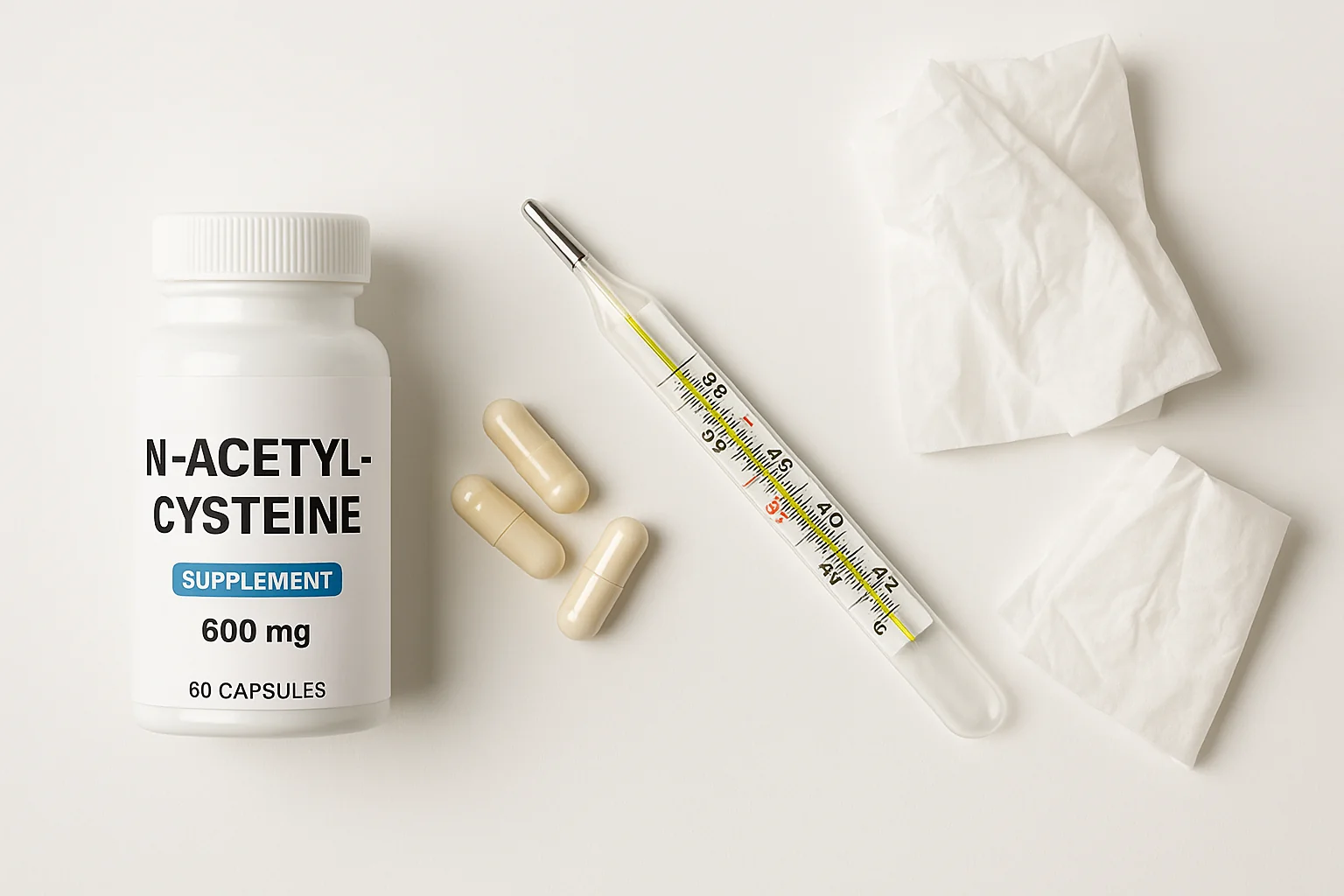
N-acetylcysteine (NAC) is primarily known as a mucolytic and supportive supplement for COPD - but there is also a less publicized line of research regarding its impact on viral respiratory infections, including flu. The groundbreaking Italian RCT by De Flora et al. from 1997 showed that 6 months of NAC supplementation reduced the percentage of individuals with symptomatic flu from 45% to 25% among those infected with the virus - without changing the actual risk of infection (De Flora et al., Eur Respir J, 1997). This article explains what this result means in practice, how NAC modulates the immune response, and for whom seasonal supplementation may make sense.
KEY INFORMATION
• RCT by De Flora et al. (262 participants, 6 months): NAC 1200 mg/day reduced symptomatic flu from 45% to 25% in virus-infected individuals (De Flora et al., Eur Respir J, 1997).
• NAC does not prevent infection - it reduces the risk of symptomatic disease in those already infected.
• Mechanism: NAC, as a precursor to glutathione, enhances cellular antioxidant defense and may inhibit the replication of respiratory viruses.
• NAC does not replace the flu vaccine - it can be used as a supplement.
The groundbreaking study from 1997 - what exactly did it show?
De Flora et al. conducted a randomized double-blind placebo-controlled study on 262 elderly individuals or those with chronic diseases - a group particularly at risk for severe flu (Eur Respir J, 1997). Participants received NAC 600 mg twice daily (1200 mg total) or placebo for 6 months of the flu season. Serological results showed a similar percentage of influenza virus infections in both groups - NAC did not reduce the risk of exposure to the virus. However, the percentage of infected individuals with symptomatic, clinically diagnosed flu was drastically different: 25% in the NAC group vs 45% in the placebo group.
What does this mean in practice? NAC is not a "vaccine" - it does not build specific immunity to a particular strain of the virus. Instead, it works on the "immunological background": it strengthens the cellular antioxidant response, allowing the body to better cope with the virus after infection. In other words, it does not reduce the chance of contact with the virus, but rather the chance that contact with the virus will develop into a full-blown disease.
Additional results from this study: individuals in the NAC group who still became symptomatic reported less severe symptoms and a shorter duration of illness. The difference in symptom severity was statistically significant, although the study was not originally designed to measure the duration of infection as a primary endpoint.
Mechanism: how does NAC modulate the response to viruses?
NAC acts indirectly against viruses - through three distinct pathways. The first pathway is replenishing glutathione. Glutathione is a key intracellular antioxidant that protects immune system cells (T cells, NK cells) from oxidative damage during an intense response to infection. Influenza viruses increase the production of reactive oxygen species in infected cells - glutathione neutralizes this oxidative stress and maintains the efficiency of immune cells (Ghezzi et al., Int Immunol, 2002).
The second pathway: glutathione modulates the activation of the transcription factor NF-kB. NF-kB is a key regulator of the inflammatory response and replication of many respiratory viruses (RSV, flu, coronaviruses). High levels of intracellular glutathione inhibit excessive activation of NF-kB, which may limit both viral replication and the excessive cytokine storm in severe infections.
The third pathway: the mucolytic effect. Bronchial mucus is the first line of defense against viruses - virus particles are trapped by mucus and removed by ciliary transport. Thick, sticky mucus is a less effective trap than properly hydrated mucus. By reducing the viscosity of mucus, NAC may improve the effectiveness of this mechanical barrier.
| Mechanism | Effect | Strength of evidence |
|---|---|---|
| Replenishing glutathione | Enhancing cellular immunity | Moderate |
| Inhibition of NF-kB | Reduction of viral replication, cytokine storm | Low-moderate |
| Mucolytic effect | Better protection of the mucosal barrier | Niska |
| Reduction of symptomatic flu | 45% → 25% in infected individuals (RCT) | Moderate (one RCT) |
We noticed while analyzing the study design by De Flora et al. that the participants were mainly older individuals and those with chronic diseases - groups with a reduced baseline level of glutathione. Therefore, the effect of NAC may be particularly significant in these individuals, as their "antioxidant reserve" is most depleted. In healthy young adults with normal glutathione levels, the effect of NAC supplementation may be smaller. This is an important implication for selecting the group that will benefit the most from seasonal supplementation.
NAC and other respiratory infections
Beyond influenza, NAC has been studied in the context of other viral respiratory infections. Observational studies and pilot RCTs in COVID-19 suggested a potential effect through the reduction of oxidative stress and modulation of the cytokine storm - however, no large, well-designed RCTs have yet confirmed the clinical effect of NAC in COVID-19 (Assimakopoulos et al., Antioxidants, 2021).
Regarding RSV infections (respiratory syncytial virus), in vitro and animal model studies show inhibition of replication by NAC. There are few clinical studies in humans with RSV, and they are small. In upper respiratory infections (colds), NAC as a mucolytic may shorten the duration of mucus retention and alleviate cough with expectoration, but there is no data comparable to the De Flora study regarding cold prevention.
Practical tips: when and how to use NAC seasonally
If you are considering NAC as part of seasonal infection prevention - especially if you are in a risk group (older individuals, chronic diseases, physically active with a tendency to infections after increased exertion) - here are some practical observations from clinical data.
Start before the season, not during it. The effect of NAC on glutathione levels and immune system efficiency requires weeks of regular supplementation. Incorporating NAC in October or early November allows for a week or two to "recharge" antioxidant reserves before the peak of the flu season. NAC taken only at the first signs of infection primarily acts mucolytically, not immunomodulatory.
NAC does not replace a vaccine. A vaccine induces specific humoral and cellular immunity to specific strains of the influenza virus - its effectiveness in preventing infection ranges from 40-70% depending on the season and strain. NAC reduces the risk of symptomatic disease in infected individuals by about 50% according to the study by De Flora - this is a clinically significant effect, but the mechanism is different and the effects are additive, not mutually exclusive.
Frequently Asked Questions
Does NAC reduce the risk of getting the flu?
The study by De Flora et al. (262 participants, 6 months) showed that 1200 mg of NAC daily reduced the percentage of individuals with symptomatic influenza from 45% to 25% among those infected - with a similar number of seropositive individuals in both groups. NAC did not prevent infection but reduced the risk of symptomatic disease in infected individuals (De Flora et al., Eur Respir J, 1997).
How does NAC work against viruses?
NAC does not directly inactivate viruses. It works indirectly as a precursor to glutathione, enhancing the cellular antioxidant defense crucial for an effective immune response. Glutathione also inhibits the replication of respiratory viruses by modulating NF-kB transcription factors. NAC may also reduce excessive cytokine storms in severe infections (Ghezzi et al., Int Immunol, 2002).
What dose of NAC is used in infection studies?
The De Flora study used 1200 mg daily (600 mg twice daily) for 6 months. Other studies on infections used 600-1200 mg daily. There is no established dose specifically for infection prevention - 600 mg once daily is the most common dose in long-term supplementation (De Flora et al., Eur Respir J, 1997).
Does NAC shorten the duration of respiratory infections?
Data is limited. In the De Flora study, individuals with symptomatic flu in the NAC group reported less severe symptoms and a trend towards shorter illness duration. The best-documented effect is the reduction in the percentage of infected individuals with symptomatic disease, rather than shortening the duration of infection (De Flora et al., Eur Respir J, 1997).
Is NAC effective against COVID-19?
Preliminary pilot studies suggested a potential effect through the reduction of oxidative stress and modulation of the cytokine storm. However, no large RCT has yet confirmed the clinical effect of NAC in COVID-19. There is no basis for treating NAC as a treatment or prevention for COVID-19 (Assimakopoulos et al., Antioxidants, 2021).
When to start taking NAC - before the season or at the first symptoms?
Preventive studies used NAC throughout the season (5-6 months). The effect on glutathione levels and cellular immunity requires weeks of regular supplementation. Taking NAC only at the first symptoms mainly provides a mucolytic effect, not an immunomodulatory one. As seasonal prevention: start in October-November (De Flora et al., Eur Respir J, 1997).
Does NAC replace the flu vaccine?
No. The vaccine induces a specific immune response and is significantly more effective in preventing the flu. NAC reduces the risk of symptomatic disease in infected individuals, not the risk of infection itself. Both approaches work through different mechanisms and can be used together (De Flora et al., Eur Respir J, 1997).
Does NAC have side effects when used for infections?
NAC in doses of 600-1200 mg daily is well tolerated. The most common complaints are nausea and stomach discomfort when taken on an empty stomach. Individuals with bronchial asthma should exercise caution - NAC may cause bronchospasm in a few cases. No serious adverse effects were observed in clinical studies during several months of preventive supplementation (De Flora et al., Eur Respir J, 1997).
This article is for informational and educational purposes and does not replace consultation with a doctor. If you are pregnant, breastfeeding, taking medications, or have chronic conditions, consult the use of supplements or herbs with a specialist.
Author: Michał Waluk · Published: 2026-05-04 · Updated: 2026-05-04