
Transdermal patches with CBD - how they work and when to use them (FAQ)
Plastry transdermalne z CBD: odpowiedzi na najczestsze pytania i co mowia badania. u Bucha.
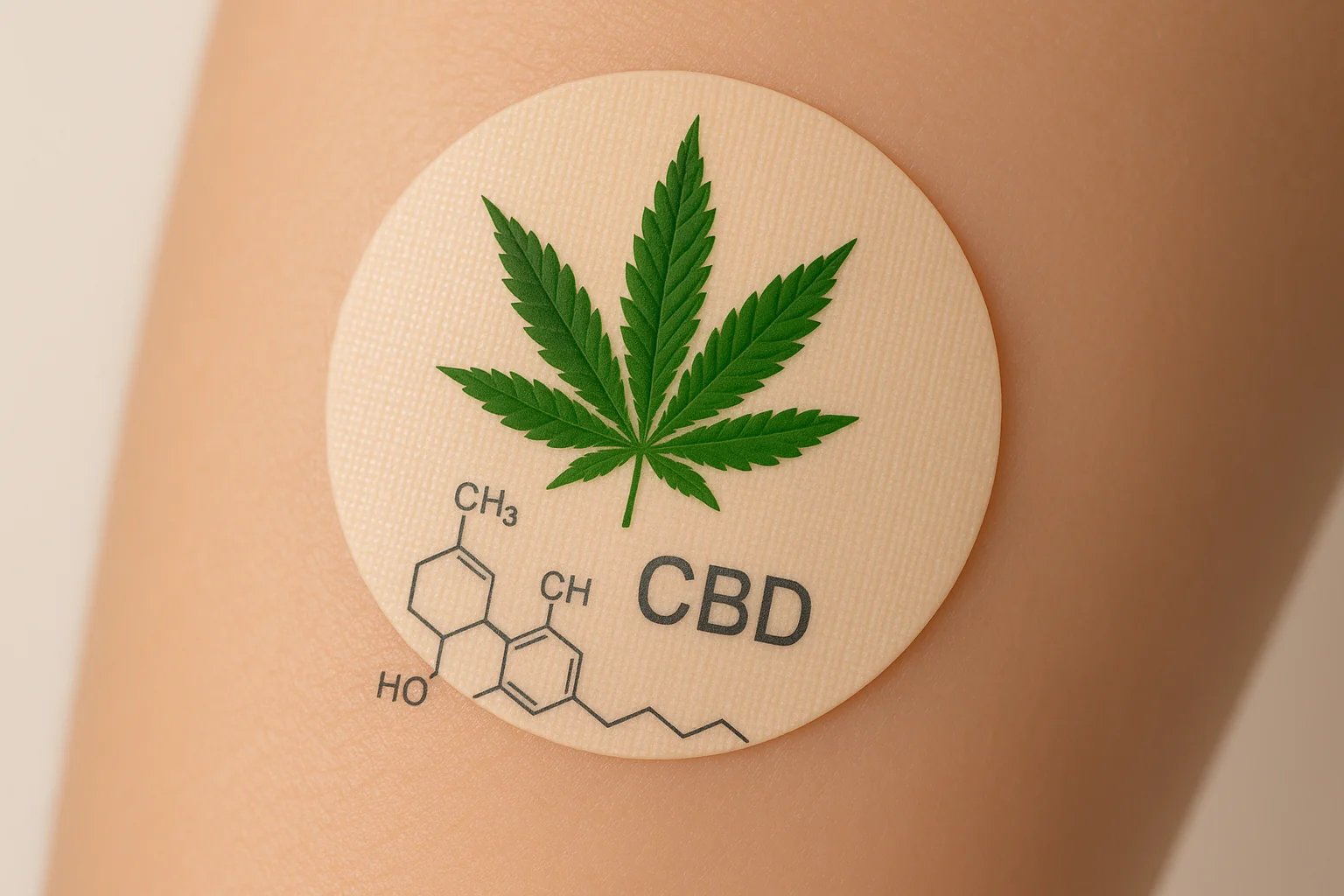
A CBD patch is one of the newer forms of cannabidiol supplementation, combining convenience of administration with bypassing the digestive tract. Unlike oils or capsules, the patch delivers CBD through the skin directly into the bloodstream, maintaining a relatively stable level of the substance for many hours. A study by Millar et al. showed that administering CBD while bypassing the first-pass effect through the liver significantly increases the bioavailability of cannabidiol (Millar et al., Pharmaceuticals, 2019). This article answers the most common questions about CBD patches: how to use them, where to apply them, and when they make sense.
KEY INFORMATION
• Transdermal CBD bypasses the first-pass effect through the liver, which may increase its bioavailability compared to capsules (Millar et al., Pharmaceuticals, 2019).
• Patches work systemically - CBD enters the bloodstream, not just locally like a cream.
• The release time of typical patches ranges from 8-72 hours depending on the technology and manufacturer.
• The allergenic substance is usually the acrylic adhesive, not CBD itself - it is worth doing a patch test before long-term use.
How does CBD penetrate through the skin into the bloodstream?
The skin is a natural barrier, but it is not impermeable to CBD. Cannabidiol is a lipophilic molecule - it dissolves well in fats, which facilitates its passage through the lipid-rich stratum corneum. From there, CBD diffuses through the epidermis to the dermis, where blood vessels absorb it into the general circulation. This pathway completely bypasses the digestive system and liver, allowing CBD to avoid first-pass metabolism - a process that reduces the bioavailability of swallowed capsules and oils.
The rate of penetration depends on several variables: skin temperature (warmer skin allows CBD to pass through faster), epidermal thickness (thinner skin = faster absorption), skin hydration, and patch composition. CBD manufacturers formulate patches with permeators - substances that enhance skin penetration, such as plant oils or fatty alcohols. Without permeators, CBD would penetrate the skin very slowly or not at all.
Where to apply the CBD patch?
The application site has a real impact on the speed of action. The best places are those with thin skin, good blood supply, and minimal fat tissue. The inner side of the wrist and forearm, the inner side of the upper arm, the area behind the ear, and the upper back (below the neck) are classic locations. A thick layer of subcutaneous tissue slows down the transport of CBD to the blood vessels, so the thigh or abdomen works worse than the wrist.
The skin at the application site should be clean, dry, and hairless. Oil, cream, or sweat between the patch and the skin reduces adhesion and disrupts absorption. After removing the patch, it is advisable to change the application site - using the same spot repeatedly increases the risk of skin irritation from the adhesive.
How much CBD is absorbed from the patch?
It depends on the concentration of CBD in the patch, the duration of wear, and the release technology. Monolithic patches (where CBD is mixed directly into the adhesive) release it less controllably than membrane patches with a dedicated reservoir layer and a membrane controlling the diffusion rate. Membrane patches provide more linear release - a more stable concentration profile in the blood throughout the wear time.
In practice, manufacturers provide the amount of CBD released per day or for the entire duration of wearing the patch. Typical CBD patches contain 10-50 mg of CBD, of which a portion enters the bloodstream - different studies report different values, as this depends heavily on the matrix composition and the skin conditions of the individual. Not all CBD patches on the market have reliable absorption data - a CoA certificate confirming the CBD content is essential, but it does not provide any information about bioavailability.
| Parameter | CBD Patch | CBD Oil (sublingual) |
|---|---|---|
| Route of administration | Transdermal (through the skin) | Sublingual (mucous membrane) |
| First-pass effect | Bypassed | Partially bypassed |
| Time to feel the effect | 1-2 hours | 15-45 minutes |
| Duration of action | 8-72 godziny | 4-6 hours |
| Blood concentration profile | Stable, linear | Peak and decline |
| General/local action | Systemic | Systemic |
CBD Patch vs CBD Cream - When to Choose Which?
This is one of the most common points of confusion. A CBD cream applied to the skin acts locally - CBD penetrates into the subcutaneous tissues in a specific area but does not enter the bloodstream in amounts that have systemic significance. If your knee hurts and you want an effect directly in the knee, a CBD cream or gel is a good choice. Transdermal patches, on the other hand, deliver CBD into the bloodstream and act throughout the body, regardless of where you apply them.
We have noticed that customers sometimes apply a CBD patch directly to the painful area, expecting a localized effect. This is an understandable instinct, but technically speaking, a patch applied to the knee does not 'target' the knee - CBD enters the general bloodstream and circulates throughout the body. The localized effect may still be lower than that of a specially formulated cream. The decision between a patch and a cream should depend on whether you are looking for a systemic effect or purely local relief.
How to determine the CBD dose from a patch?
Determining the dosage from a CBD patch is more challenging than with oil, because you cannot 'see' how much you have taken. Manufacturers usually provide the total CBD content in the patch (e.g., 20 mg) and the declared wearing time (e.g., 24 hours). This means a theoretical release of about 0.83 mg of CBD per hour - but the actual dose absorbed through the skin depends on individual factors and can vary significantly between individuals.
A good practice when using for the first time is to start with a product that has a lower CBD content (10-20 mg per patch) and observe the reaction for 24-48 hours before moving on to a higher concentration. In cases of chronic pain or sleep disorders, some users wear the patch continuously, changing it after the recommended duration of action. Regular use for 1-2 weeks provides a better picture of the actual effect than a one-time use - the endocannabinoid system responds more to regular supplementation than to a one-time spike in concentration.
Do not combine the CBD patch with other forms of CBD simultaneously without being aware of the total dosage. Patch + sublingual oil means a double dose of CBD - which may not be better, but increases the risk of reaching concentrations at which CBD can affect drug metabolism via CYP3A4.
Frequently Asked Questions
How do transdermal patches with CBD work?
CBD patches applied to the skin release cannabidiol slowly through the stratum corneum into the blood vessels in the dermis. By bypassing the digestive system and the first-pass effect through the liver, the bioavailability of CBD from the patch may be higher than that from an oral capsule. The absorption rate depends on skin temperature, thickness of the epidermis, and the composition of the patch (Millar et al., Pharmaceuticals, 2019).
Where to apply the CBD patch for best results?
CBD patches should be applied to areas with thin, well-vascularized skin and low amounts of fat tissue: the inner wrist, the inner arm, the upper back, or behind the ear. A thick layer of fat tissue slows the penetration of CBD into the bloodstream. Avoid applying to injured, irritated, or hairy skin.
How long does the CBD patch last?
Most CBD patches are designed for 8-12 or 24-72 hours of continuous release. The duration of action depends on the amount of CBD in the matrix, the release technology, and the thickness of the adhesive layer. Long-acting patches maintain a more stable level of CBD in the blood than oils, which produce a more pronounced peak and a rapid drop in concentration.
Does the CBD patch work locally or systemically?
Transdermal patches work systemically - CBD penetrates through the skin into the bloodstream and circulates throughout the body. This distinguishes them from CBD creams and balms, which work locally. If you want the effect only in one place, a CBD cream or gel is a more suitable choice than a transdermal patch.
Who are transdermal patches with CBD best suited for?
Patches are particularly effective for individuals seeking a constant, round-the-clock level of CBD without the need to remember additional doses, those who have difficulty swallowing capsules, or discomfort with sublingual oils. They are also useful for chronic pain requiring continuous coverage rather than a one-time spike in concentration.
Can CBD patches cause a skin reaction?
Yes, although rarely. The substance that most often causes an allergy is not the CBD itself, but the acrylic adhesive in the patch matrix. Symptoms include redness, itching, or blisters at the site of application. It is always advisable to perform a patch test on a small area of skin for 1 hour before prolonged use.
Will the CBD patch show up on a drug test?
Standard tests detect THC, not CBD. However, full-spectrum products contain trace amounts of THC (up to 0.3%), which can accumulate in the blood and urine with intensive use of patches. If you are subject to drug testing, choose patches made from CBD isolate with a CoA certificate confirming zero THC content.
This article is informational and educational in nature. It contains internal links to products available in the u Bucha store. Prices and specifications may change - please check the current data on the product page before purchasing.
Author: Michał Waluk · Published: 2026-05-04 · Updated: 2026-05-04