
Czopki CBD - zastosowanie, dawkowanie i dla kogo (FAQ)
Czopki CBD: odpowiedzi na najczestsze pytania i co mowia badania. u Bucha.
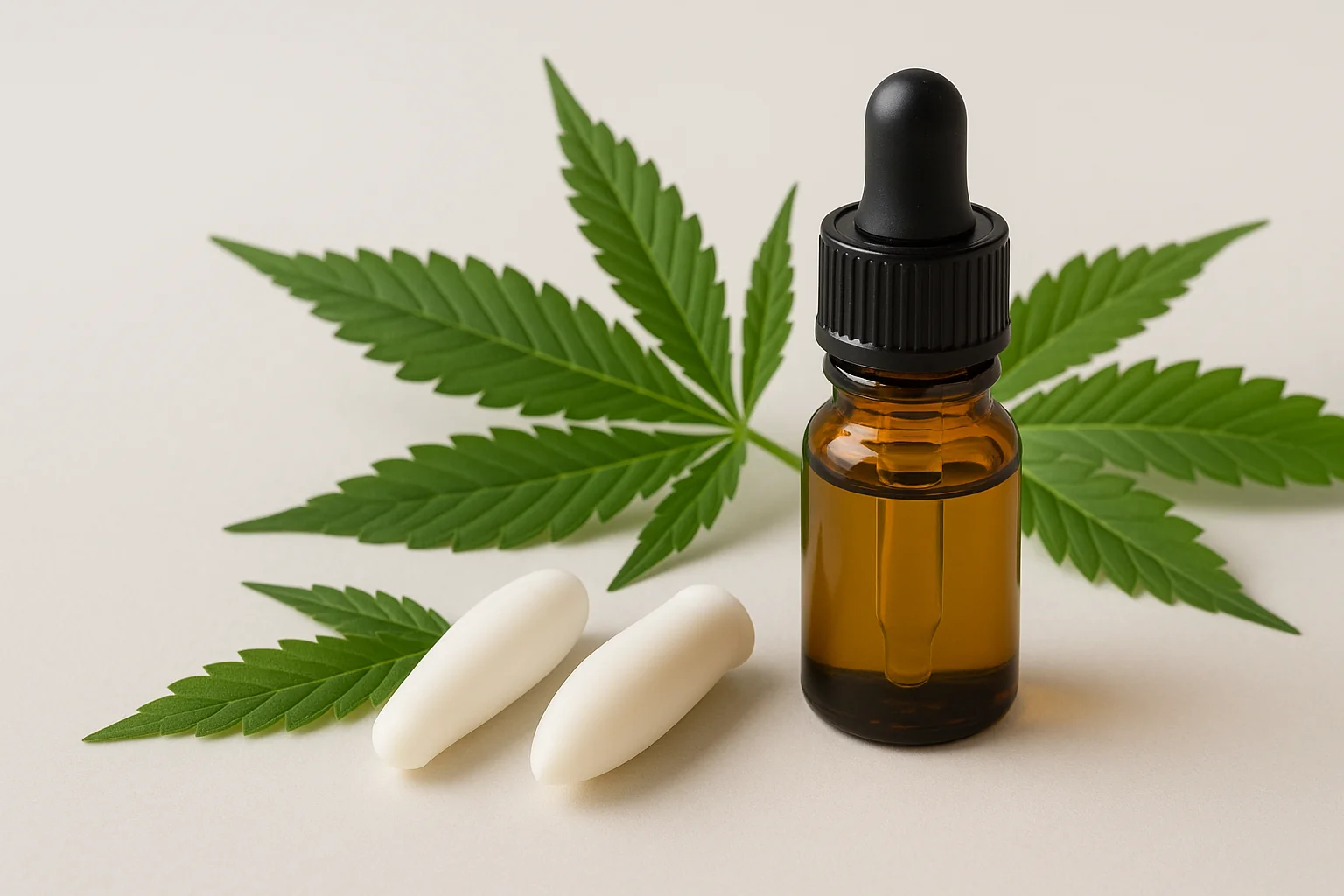
CBD suppositories are one of the least discussed yet most interesting forms of cannabidiol administration. The rectal and vaginal route has a long history in pharmacology - many drugs are used in this form precisely because they bypass the digestive system and liver. CBD delivered through the mucous membrane of the rectum or vagina can theoretically be absorbed faster and more completely than from a swallowed capsule. Millar and colleagues indicate that the bioavailability of oral CBD is only 6-19%, and changing the route of administration is one way to improve this result (Millar et al., Pharmaceuticals, 2019). This article explains how CBD suppositories work, who can benefit from them, and what to consider when choosing a product.
KEY INFORMATION
• The rectal and vaginal routes bypass the first-pass effect through the liver, which may increase the bioavailability of CBD compared to capsules (Millar et al., Pharmaceuticals, 2019).
• CBD suppositories are mainly used by individuals with pelvic pain, endometriosis, and painful menstruation.
• Typical CBD suppositories contain 25-100 mg of CBD per piece - significantly more than gummies or sprays.
• WHO (2018) confirms the good safety profile of CBD, but local reactions may depend on the composition of the suppository base.
How exactly is CBD absorbed from a suppository?
The absorption mechanism from a rectal suppository is anatomically complex. The rectum is supplied with blood by three rectal veins. The lower and middle rectal veins drain blood directly into the inferior vena cava, bypassing the liver - this is called the extrahepatic route. The upper rectal vein leads to the portal system and liver. In practice, CBD introduced as a suppository is absorbed through both the vessels bypassing the liver and those leading to it - the proportion depends on the depth of insertion of the suppository and how high the CBD gets into the rectum.
Vaginal suppositories work somewhat differently - the vaginal mucosa is richly vascularized, and CBD is absorbed into the vessels surrounding the uterus and pelvis. The local effect may be more pronounced here than with rectal administration, which may explain the interest in vaginal suppositories for endometriosis and dysmenorrhea. Neither of these routes provides fully predictable and repeatable bioavailability - hence the dosing of CBD suppositories still relies more on clinical experience than on standardized studies.
Who are CBD suppositories intended for?
CBD suppositories have several user groups with different needs. The first and largest group consists of women with endometriosis, painful menstruation, or pelvic floor muscle tension. Vaginal or rectal administration of CBD can act locally on the muscles and nerves of the pelvis, reducing tension and discomfort directly where it is needed. The second group includes individuals with hemorrhoids or rectal inflammation seeking a local soothing effect. The third group consists of patients with conditions preventing oral intake - e.g., due to nausea caused by chemotherapy or after gastrointestinal surgeries.
We have noticed that interest in CBD suppositories in Poland is growing primarily in the context of endometriosis - a condition that affects an estimated 10% of women of reproductive age (WHO, Endometriosis fact sheet, 2023). Available pharmacological options may be insufficient or carry side effects, so some women seek to complement conventional treatment. However, CBD suppositories as a form of adjunct therapy require consultation with a gynecologist or the attending physician.
CBD Suppositories - Comparison with Other Forms of Administration
| Feature | CBD Suppository | Sublingual Oil | CBD Capsule |
|---|---|---|---|
| Absorption Route | Through the mucous membrane of the rectum/vagina | Sublingual | Through the digestive tract |
| First-pass effect | Partially bypassed | Partially bypassed | Full hepatic metabolism |
| Time to effect | 15-30 minutes | 15-45 minutes | 60-120 minutes |
| Typical CBD dose | 25-100 mg | 10-50 mg | 10-50 mg |
| Local effect in the pelvis | Yes (especially vaginal) | No | No |
| Convenience | Low (requires privacy) | High | Bardzo wysoka |
What do studies say about CBD suppositories for pelvic pain?
Clinical data on CBD suppositories is still limited. A review by Sinclair et al. published in Journal of Cannabis Research In 2021, a study analyzed self-reports from women with endometriosis using cannabis products - 56% of respondents reported effective pain relief, although the study was survey-based and did not differentiate between forms of CBD (Sinclair et al., Journal of Cannabis Research, 2021). Randomized controlled clinical trials on CBD suppositories as a separate form for endometriosis have not yet been published.
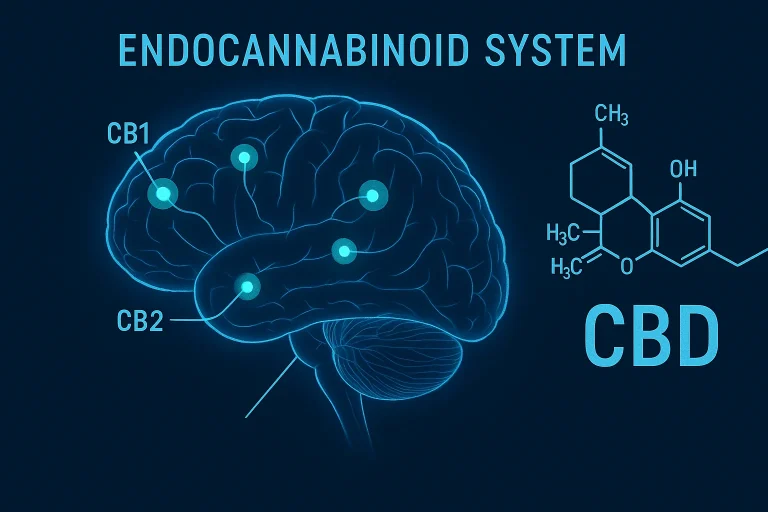
Mechanistically, the justification is solid: CB1 and CB2 receptors are expressed in the tissues of the uterus and ovaries, and CBD may modulate pain transmission through the TRPV1 receptor and pro-inflammatory pathways. However, the path from mechanism to proven clinical efficacy is long. CBD suppositories should be considered as a complement to conventional treatment after consulting with a doctor - not as a substitute for gynecological therapy.
How to Choose a Good CBD Suppository - Base Composition and Certificate
The quality of a CBD suppository depends on two independent components: the quality of the CBD itself and the composition of the suppository base. A cocoa butter base is a natural choice - cocoa butter melts at body temperature (32-35°C), providing slow, controlled release of CBD upon insertion. Synthetic bases, such as Witepsol H15 or Suppocire, have precisely defined melting points and are more thermally stable during storage and transport. Each base has its advantages - the choice should depend on your preferences and storage conditions.
The CoA (Certificate of Analysis) is just as important for CBD suppositories as it is for oils. It should confirm the declared CBD content in mg per unit, the level of THC, and the absence of microbiological contaminants - particularly important for a product used directly on mucous membranes. CBD suppositories for vaginal use are subject to higher microbiological purity requirements than rectal products - it is worth ensuring that the manufacturer has appropriate purity studies, not just a cannabinoid profile. The absence of a CoA or a certificate only for the CBD raw material without testing the finished suppository is a signal of insufficient quality control.
Frequently Asked Questions
How do CBD suppositories work?
CBD suppositories administered rectally or vaginally release cannabidiol in the mucous membrane of the large intestine or vagina. CBD is absorbed through the richly vascularized membrane into the surrounding venous vessels, partially bypassing the liver and the first-pass effect. The bioavailability of this route may be higher than that of oral capsules (Millar et al., Pharmaceuticals, 2019).
Do CBD suppositories work locally or systemically?
CBD suppositories can work in two ways. Part of the CBD absorbed through the lower rectal vessels bypasses the liver and acts systemically. At the same time, vaginal suppositories can provide a distinct local effect in the pelvic area - on the pelvic floor muscles and the tissues surrounding the uterus - which is particularly relevant for endometriosis and menstrual pain.
Who are CBD suppositories recommended for?
CBD suppositories are mainly used by women with endometriosis, painful menstruation, and pelvic floor muscle tension. This form is also chosen by individuals with hemorrhoids or those who cannot take CBD orally - due to nausea or swallowing difficulties. It is always advisable to consult usage with a doctor.
How much CBD do the suppositories contain and how should they be dosed?
Typical CBD suppositories contain 25-100 mg of CBD per unit. Due to potentially higher rectal bioavailability, effective doses may be lower than when taken orally. Manufacturers usually recommend 1 suppository 1-2 times a day. There are no established clinical dosing standards - always follow the recommendations of the specific product.
Is there research supporting the use of CBD suppositories for endometriosis?
Clinical data is limited. A survey review by Sinclair et al. (2021) indicates that women with endometriosis using CBD products report pain reduction, but the level of evidence is low and requires confirmation in randomized studies. The mechanisms of CBD action on receptors in uterine tissues are biologically justified (Sinclair et al., Journal of Cannabis Research, 2021).
How should CBD suppositories be stored?
Cocoa butter-based suppositories have a low melting point and must be stored in the refrigerator (2-8°C). Synthetic bases (Witepsol) are more stable but also require storage below 25°C away from heat. A melted and re-solidified suppository may have an uneven distribution of CBD - always check the manufacturer's instructions.
Are CBD suppositories safe?
The WHO confirms a good safety profile for CBD (WHO, 2018). Local reactions may occur and depend on the base composition, not on CBD. Individuals with inflammatory bowel or rectal diseases should consult a doctor before using CBD suppositories.
This article is informational and educational in nature. It contains internal links to products available in the u Bucha store. Prices and specifications may change - please check the current data on the product page before purchasing.
Author: Michał Waluk · Published: 2026-05-04 · Updated: 2026-05-04