
Passiflora (passionflower) for sleep and anxiety - how to use (FAQ)
Passiflora: answers to frequently asked questions and what studies say. u Bucha.
Passiflora incarnata - known in Polish as the passionflower - is a climbing plant with large flowers recognized in traditional medicine in both Americas and Europe for centuries as a calming and sleep-inducing agent. Modern science confirms some of these effects. A randomized study by Ngan and Conduit published in Phytotherapy Research showed that daily consumption of passiflora tea for a week significantly improved subjective sleep quality in the study group compared to placebo (Ngan & Conduit, Phytotherapy Research, 2011). The European Medicines Agency (EMA) classified passionflower as a traditional herbal medicine for mild symptoms of stress and sleep disorders (EMA, 2014).
KEY INFORMATION
• Passiflora modulates GABA-A receptors - a mechanism similar to benzodiazepines, but without the risk of addiction (EMA, 2014).
• A clinical study confirmed improved sleep quality after a week of using passiflora tea (Ngan & Conduit, 2011).
• Typical dosage of extract: 300-450 mg of standardized extract before sleep.
• Do not use during pregnancy, breastfeeding, or in children under 12 years of age without medical consultation.
• Interactions with sleep-inducing and sedative medications - consult a doctor before using with prescription medications.
How does passionflower work? Mechanism of action
Passiflora contains a group of active flavonoids, the most studied of which is chrysin. Chrysin has an affinity for GABA-A receptors - the same receptors that benzodiazepines (sedative and sleep-inducing medications) act on. Stimulation of GABA-A receptors by GABA (gamma-aminobutyric acid) or its modulators inhibits neuronal activity and induces calming, anti-anxiety, and sleep-inducing effects.
The effect of passiflora on GABA-A receptors is significantly weaker than that of benzodiazepines - which is both an advantage (lack of strong side effects and risk of addiction) and a limitation (it does not replace pharmacological treatment for serious sleep disorders or severe anxiety). Passiflora is useful for mild, transient sleep difficulties and mild daily stress, but not for clinically significant insomnia or anxiety disorders requiring psychiatric treatment.
In addition to chrysin, passiflora also contains indole alkaloids (harmine, harmaline) - in clinically insignificant amounts at regular supplemental doses, but potentially interesting pharmacologically in the context of mild MAO-inhibiting activity (monoamine oxidase inhibition). This is another mechanism that may contribute to the overall relaxing effect of the plant.
Clinical studies - what does science say about passiflora?
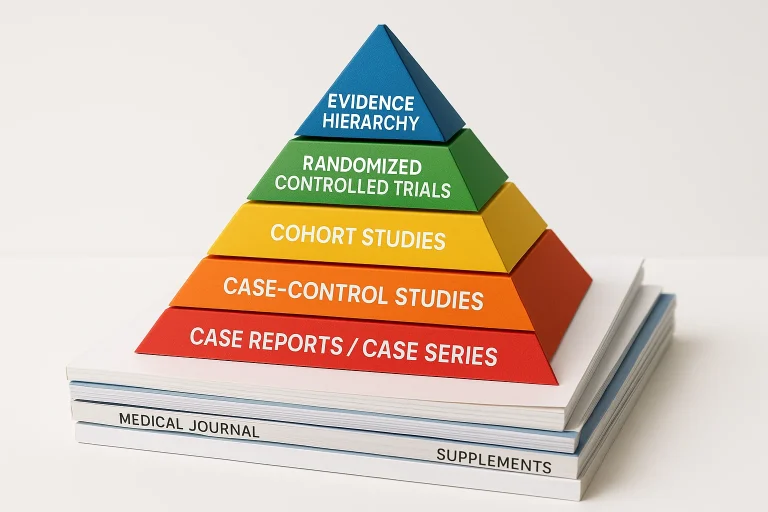
The study by Ngan and Conduit (2011) is one of several well-designed clinical studies with a double-blind placebo-controlled design. Participants drank passionflower tea or placebo tea every evening for 7 days. In the passionflower group, participants rated their sleep quality significantly higher than in the placebo group in sleep diaries, and objective sleep measurements via polysomnography showed a suggestive improvement, although not statistically significant. The authors conclude that passionflower may improve subjective sleep quality with short-term use.
A meta-analysis of studies on passionflower in anxiety disorders (Kim et al., Phytomedicine, 2013) suggests a comparable anti-anxiety effect to oxazepam (benzodiazepines) with better tolerance and less impact on occupational performance. The study was limited - small groups and short observation time - but the results are promising.
Overall assessment of the evidence: passiflora has solid traditional use confirmed by the EMA and several positive clinical studies, but the scientific literature is not yet as extensive as for, e.g., melatonin or sleep medications. The EMA classifies it as a traditional herbal medicine, not as a medicine with proven clinical effect - which is an important regulatory distinction.
| Parameter | Passiflora | Melatonin | Valerian |
|---|---|---|---|
| Mechanism of action | GABA-A modulation, flavonoids | Circadian rhythm regulating hormone | GABA modulation, adenosine |
| Time to take effect | 30-60 min przed snem | 30-60 min przed snem | 30-60 min przed snem |
| Anxiolytic effect | Yes (mild) | Weak | Yes (mild) |
| Risk of addiction | None | None | None |
| EMA classification | Traditional herbal medicine | Supplement/OTC medication | Traditional herbal medicine |
| Drug interactions | Yes (sleep-inducing, calming) | Yes (anticoagulants) | Yes (sleep-inducing, calming) |
Passiflora in combination with other herbs - popular synergistic blends
Passiflora is often combined with other calming and sleep-inducing herbs, which can enhance the effect. The most common combination is passiflora with valerian (Valeriana officinalis). Valerian acts on similar GABA and adenosine pathways, and both herbs together have a longer history of use in traditional European medicine than either one alone. The study by Donath et al. (Pharmacology Biochemistry and Behavior, 2000) examined the combination of valerian+hops+passiflora and showed improvements in sleep latency and subjective quality of rest.
Hops (Humulus lupulus) is another herb often combined with passiflora. The resinous substances in hop cones - particularly 2-methyl-3-buten-2-ol - exhibit sleep-inducing effects independent of sedative effects. The combination of hops, passiflora, and valerian is a classic herbal "triangle for sleep" found in many products available in pharmacies.
Lemon balm (Melissa officinalis) combined with passiflora is sometimes used for mild anxiety during the day - lemon balm is less sedative than passiflora, so the combination can be used in the morning without the risk of drowsiness. Studies on lemon balm alone confirm its effect on reducing anxiety symptoms and improving mood (Kennedy et al., Nutrients, 2014).
When passiflora is not enough - the limits of herbal sleep support
Passiflora and other sleep-inducing herbs are solutions that support sleep in mild, transitional cases. They are not suitable tools for: chronic insomnia lasting more than 3 months, insomnia caused by somatic diseases (sleep apnea, pain, thyroid disorders), affective disorders with accompanying sleep problems (depression, bipolar disorder), and insomnia requiring psychiatric evaluation or pharmacological treatment.
If after 2-4 weeks of regular use of passiflora you do not observe an improvement in sleep quality, it is advisable to consult a doctor. Insomnia is often a symptom, not a disease - diagnosing the cause is more important than seeking a stronger herb.
Cognitive-behavioral therapy for insomnia (CBT-I) is recognized by scientific societies as the first-line treatment for chronic insomnia - more effective long-term than sleep medications and herbs. Passiflora can be a complement to therapy or support for transient difficulties, but it does not replace professional diagnosis and treatment.
How to use passiflora - dosage and forms
Passiflora is available in several forms: dried herb for tea, standardized extracts in capsules or tablets, alcoholic tinctures, and herbal blends. Each form has its advantages.
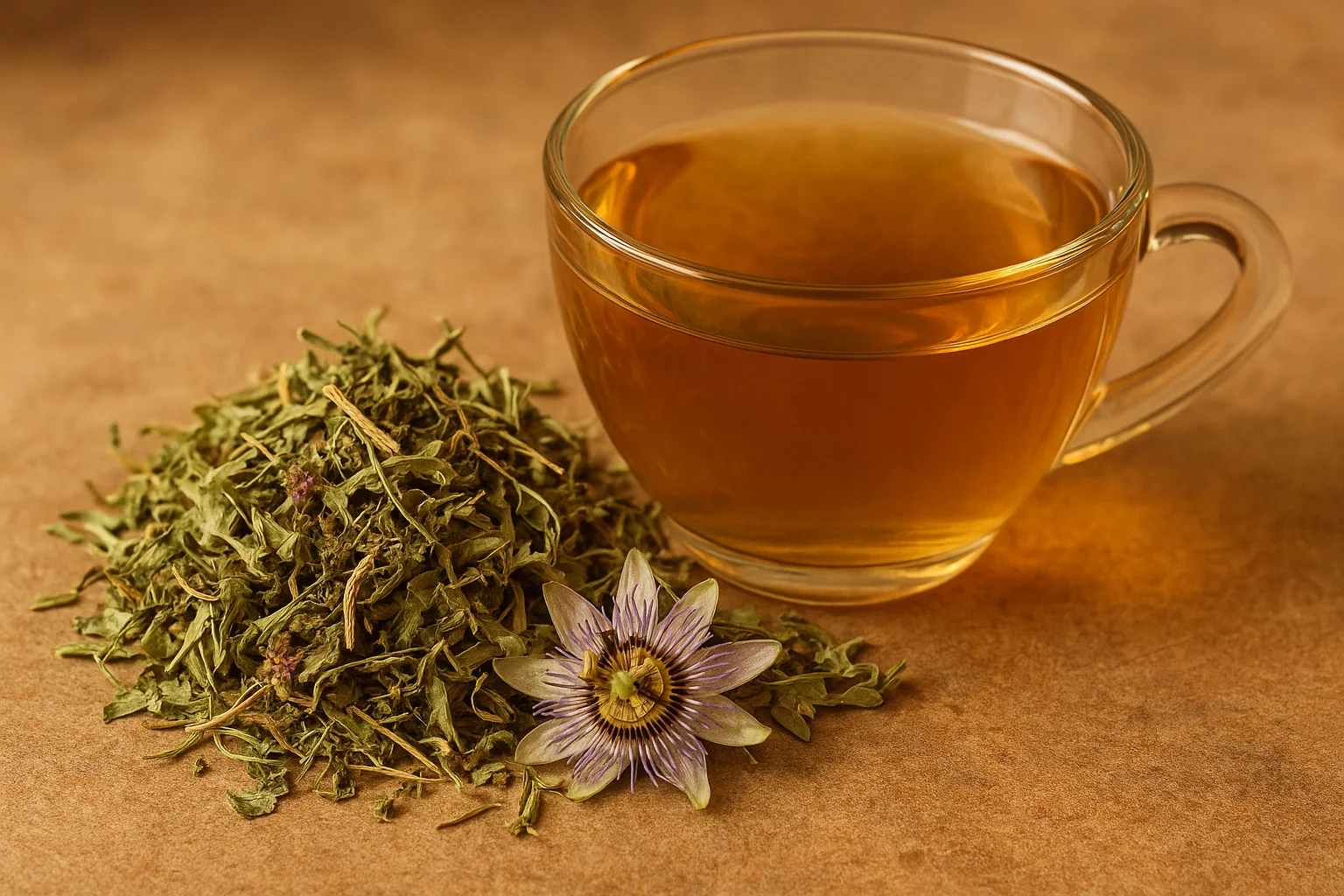
Passionflower tea: Pour 1-2 teaspoons (2-4 g) of dried herb with 250 ml of boiling water, cover, and steep for 10-15 minutes. Drink 30-60 minutes before sleep. The concentration of active flavonoids in tea is variable - depending on the quality of the raw material and brewing technique. This is a form with good bioavailability, pleasant as an evening ritual.
Extract in capsules: Standardized extracts (usually 3-4% flavonoids) provide a predictable, repeatable dose. Typical doses used in studies: 300-450 mg before sleep or 2-3 times a day for anxiety. Check the product label - the percentage of standardization and dosage in mg should be clearly indicated.
Tincture: usually 1:5 or 1:8 in alcohol 25-40%. Used 1-2 ml 2-3 times a day or once before sleep. The effect may be faster than capsules due to quicker absorption from the digestive tract in liquid form.
Frequently Asked Questions
Does passionflower really help with sleep?
Yes - clinical studies confirm the effect of passiflora on sleep quality. A randomized study by Ngan and Conduit (Phytotherapy Research, 2011) showed a significant improvement in subjective sleep quality after a week of drinking passiflora tea. Passiflora modulates GABA-A receptors, similar to benzodiazepines, but without the risk of addiction with regular use.
What dose of passionflower should be used for sleep?
Typical dosage in studies is 300-450 mg of standardized extract or 1-2 teaspoons of dried herb for tea, consumed 30-60 minutes before sleep. Always check the dosage indicated by the manufacturer of the specific product. Do not exceed 900 mg of extract per day without medical consultation.
Is passionflower safe? What are its side effects?
Passionflower is considered safe for short-term use in healthy adults (EMA, 2014). Possible mild side effects: drowsiness during the day with too high a dose, dizziness. Do not use during pregnancy, breastfeeding, or in children under 12 years of age without medical consultation.
Does passionflower cause addiction?
Passionflower is not an addictive substance. Unlike benzodiazepines, passionflower does not create tolerance or withdrawal symptoms at regular doses. The EMA does not identify the potential for addiction as a problem with recommended use.
Does passionflower interact with medications?
Passionflower may enhance the effects of sedatives, sleeping pills, and anxiolytics that act on GABA. It may also interact with anticoagulant medications. If you are taking prescription medications, consult the use of passionflower with your doctor or pharmacist before starting supplementation.
What is the difference between passionflower tea and extract in capsules?
Tea contains variable concentrations of flavonoids, depending on the quality of the raw material and brewing time. A standardized extract in capsules provides a repeatable dose. For regular supplementation, the extract is more convenient and predictable. Tea is more enjoyable as an evening relaxation ritual.
This article is for informational and educational purposes and does not replace consultation with a doctor. If you are pregnant, breastfeeding, taking medications, or have chronic conditions, consult the use of supplements or herbs with a specialist.
Author: Michał Waluk · Published: 2026-05-04 · Updated: 2026-05-04