
Iron and child cognitive development - why deficiency harms learning
Iron and child cognitive development: a reliable answer based on research. u Bucha.
Iron deficiency is the most common nutritional deficiency in the world - WHO estimates that it affects over 2 billion people, with children under 5 years old and pregnant women being the most at-risk groups. In Central and Eastern Europe, iron deficiency anemia is found in 10-15% of young children. The effects of deficiency on the brain are genuinely concerning - iron is involved in the myelination of nerves, the synthesis of neurotransmitters, and the energy metabolism of neurons. A meta-analysis in the Cochrane database (Szajewska et al.) involving over 9,000 children confirmed that iron supplementation in children with deficiency improves cognitive outcomes and attention (Szajewska et al., Cochrane, 2023). This article explains the mechanism, critical windows, and practical tips for parents.
KEY INFORMATION
• Iron deficiency is the most common nutritional deficiency in the world and a major nutritional threat to children's neurodevelopment (WHO, 2023).
• The Cochrane meta-analysis (over 9,000 children) showed improvement in attention and cognitive outcomes after iron supplementation in deficient children.
• The first 1000 days of life is a critical window - severe deficiency during this time can cause lasting neurocognitive deficits.
• Ferritin levels below 20-30 µg/l in a child with symptoms require consultation with a pediatrician.
How does iron build a child's brain?
Iron plays roles in the developing brain that no other micronutrient can replace. First, it is essential for myelination - the process of surrounding nerve fibers with a myelin sheath that allows for rapid and precise signal transmission. Myelination occurs intensively from birth to about 3 years of age and continues throughout childhood. Iron deficiency during this time slows myelination and disrupts neural connections (Lozoff and Georgieff, Semin Pediatr Neurol, 2006).
Second, iron is a cofactor for the enzyme tyrosine hydroxylase - crucial in dopamine synthesis. Dopamine regulates attention, motivation, working memory, and planning ability. Iron deficiency reduces dopamine production, which directly translates to weakened attention and difficulties with concentration - symptoms often mistaken for ADHD or laziness.
Third, iron is involved in the mitochondrial respiratory chain. Neurons are exceptionally energy-intensive - they consume disproportionately large amounts of energy relative to their mass. Iron deficiency disrupts the energy metabolism of nerve cells, manifesting as a general slowdown in cognitive processes and mental fatigue.
Critical developmental windows - when does deficiency harm the most?
Not every moment in life is equally sensitive to iron deficiency. Epidemiological and interventional studies identify three main critical windows for neurodevelopment.
| Critical window | Main threats | Reversibility of deficits |
|---|---|---|
| Pregnancy (third trimester) | Transfer of iron to the fetus, reserves for the first months | Partial - depends on the severity |
| 0-24 months | Intensive myelination and synaptogenesis | Limited in severe deficiency |
| School age (5-12 years) | Attention, working memory, academic performance | Good after correcting the deficiency |
| Puberty (girls) | Increased demand, loss due to menstruation | Good with quick intervention |
Longitudinal studies by Lozoff et al. (2006) conducted in Chile and Costa Rica showed that children with iron deficiency anemia in infancy had poorer performance in cognitive tests, attention, and behavior at age 10 - even when the deficiency was treated in infancy. This is a strong argument for prevention, not just treatment (Lozoff et al., J Pediatr, 2006).
We noticed while analyzing long-term studies that there is a so-called "catch-up effect" after correcting iron deficiency in school age, but it is incomplete with early severe deficiency. In other words: treating deficiency at age 2 does not reverse all deficits that occurred in the first year of life. This distinguishes iron from many other micronutrient deficiencies - intervention must be early, not just effective.
How to recognize iron deficiency in a child?
Early symptoms of iron deficiency in children are nonspecific and can easily be overlooked or attributed to other causes. Irritability, weakened attention and concentration, fatigue, paleness of the skin and conjunctiva, reduced tolerance for physical exertion - these are symptoms that should prompt testing for ferritin, especially in children with risk factors.
Risk factors for iron deficiency in children: age 6-24 months (peak growth with limited iron intake from complementary diet), vegetarian or vegan diet, consumption of cow's milk above 500 ml per day (milk inhibits iron absorption and fills the stomach, displacing iron-rich foods), prematurity (lower iron stores at birth), severe maternal anemia during pregnancy.
Laboratory diagnostics: a complete blood count (hemoglobin, MCV, MCH) is the first step, but it detects deficiency only in the presence of anemia. Serum ferritin reflects tissue stores - it drops earlier than hemoglobin. Ferritin levels below 20 µg/l in a small child with symptoms signal the need for pediatric consultation. Interpretation of results should always be done by a doctor who considers the child's age, weight, and clinical condition.
Iron in a child's diet - practical tips
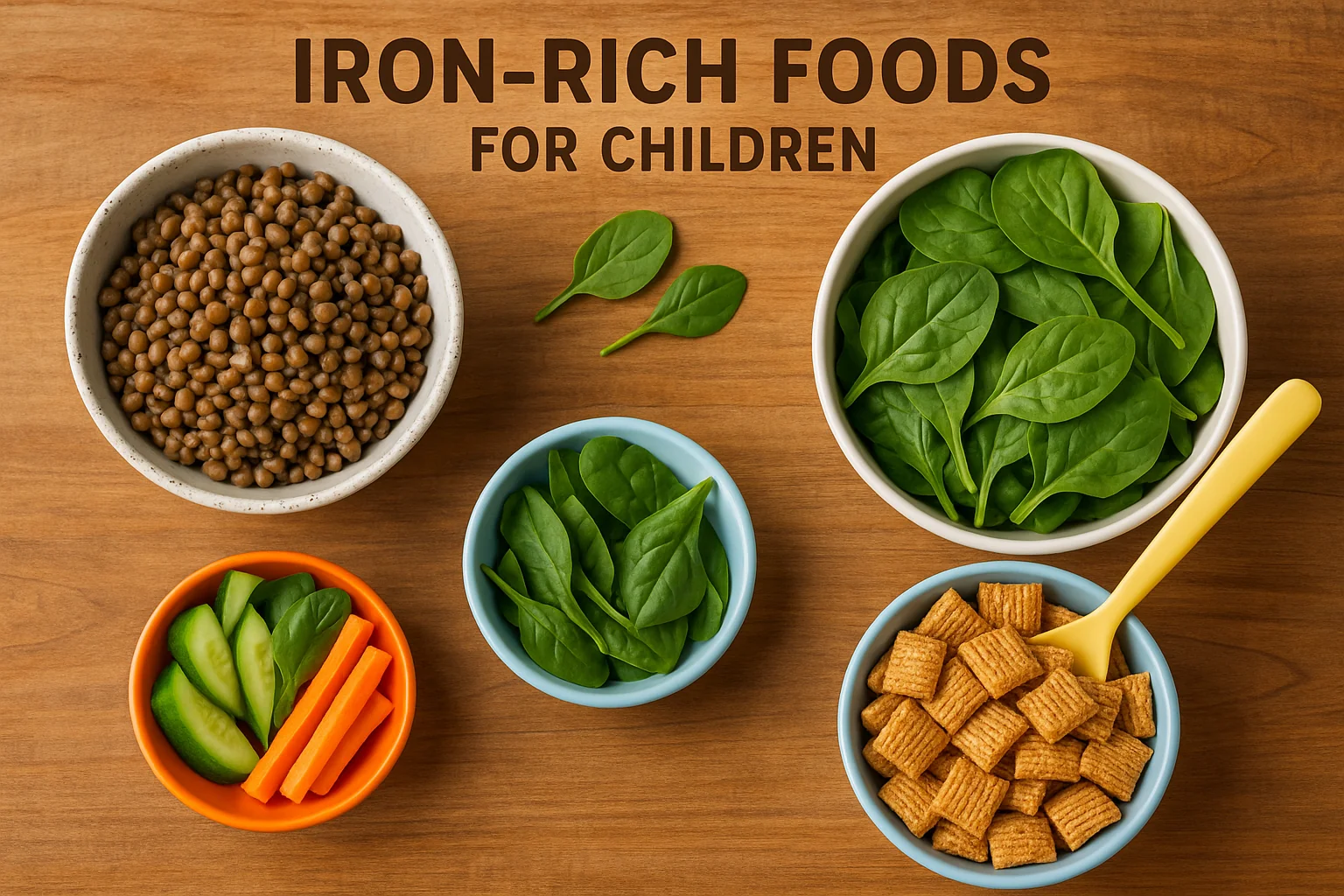
Heme iron from meat, poultry, and fish is absorbed at 15-35%, while non-heme iron from plants is absorbed at only 2-20%. This means that a child on a vegetarian diet or consuming little meat must compensate for the lower bioavailability with a larger volume of iron from plants. Legumes (lentils, chickpeas, beans), spinach, tofu, pumpkin seeds, and fortified cereals are the best plant sources of iron for children.
Practical rule: serve plant iron-rich products with vegetables or fruits high in vitamin C (bell pepper, tomato, strawberries, kiwi). Vitamin C in the same meal can significantly increase the absorption of non-heme iron. Avoid serving milk and dairy products in the same meal as iron - calcium inhibits its absorption.
Frequently Asked Questions
How does iron deficiency affect a child's brain?
Iron is essential for the myelination of nerves, synthesis of dopamine and serotonin, and energy metabolism of neurons. Deficiency during critical developmental windows disrupts these processes, leading to reduced attention, slowed information processing, and difficulties with working memory. WHO recognizes iron deficiency as a major nutritional threat to children's neurodevelopment (Lozoff and Georgieff, Semin Pediatr Neurol, 2006).
At what age are children most at risk for iron deficiency?
Critical windows are: the first 1000 days of life (pregnancy + the first two years), age 6-24 months (peak growth with insufficient iron intake), and puberty in girls. WHO estimates that 25-40% of children under 5 years old worldwide have iron deficiency anemia (WHO, Anaemia, 2023).
What are the first symptoms of iron deficiency in a child?
Deficiency without anemia may manifest as irritability, weakened attention, fatigue, pale skin and conjunctiva, and more frequent infections. Advanced deficiency (anemia) additionally presents with a rapid heartbeat and noticeable delays in learning. Ferritin below 20 µg/l in a child with symptoms requires consultation with a pediatrician (Lozoff and Georgieff, 2006).
Does iron supplementation improve learning outcomes?
A Cochrane meta-analysis involving over 9,000 children showed that iron supplementation in children with deficiency improved cognitive outcomes, attention, and test results compared to placebo. The effect was more pronounced in children with anemia. Treating iron deficiency has a real impact on cognitive functions (Szajewska et al., Cochrane, 2023).
How to diagnose iron deficiency in a child?
Basic tests include morphology (hemoglobin, MCV, MCH) and serum ferritin. Ferritin below 20-30 µg/l with symptoms indicates the need for further diagnostics and possible supplementation. Morphology may be normal in early deficiency - ferritin drops earlier. Interpretation of results should be done by a pediatrician or family doctor (NIH ODS, Iron, 2024).
What foods are the best source of iron for children?
Heme iron (meat, poultry, fish) is absorbed at 15-35%. Non-heme iron (lentils, spinach, tofu, pumpkin seeds, fortified cereals) - at 2-20%. Vitamin C consumed in the same meal increases the absorption of plant iron. Excess cow's milk (over 500 ml/day) inhibits iron absorption (NIH ODS, Iron, 2024).
Does iron deficiency in infants cause lasting effects?
Longitudinal studies by Lozoff et al. showed that children with anemia in infancy had poorer school performance at age 10, even after treatment for deficiency. Severe deficiency in early childhood can lead to lasting neurocognitive deficits, especially when it occurs during the first two years of life (Lozoff et al., J Pediatr, 2006).
When does iron supplementation in a child require medical supervision?
Always. Iron supplementation in children without confirmed deficiency is not recommended - excess iron is toxic and can interfere with the absorption of zinc and copper. Any supplementation in children under 12 years of age should be prescribed and monitored by a pediatrician, who will determine the appropriate dose based on body weight and the severity of the deficiency (NIH ODS, Iron, 2024).
This article is for informational and educational purposes and does not replace consultation with a doctor. If you are pregnant, breastfeeding, taking medications, or have chronic conditions, consult the use of supplements or herbs with a specialist.
Author: Michał Waluk · Published: 2026-05-04 · Updated: 2026-05-04