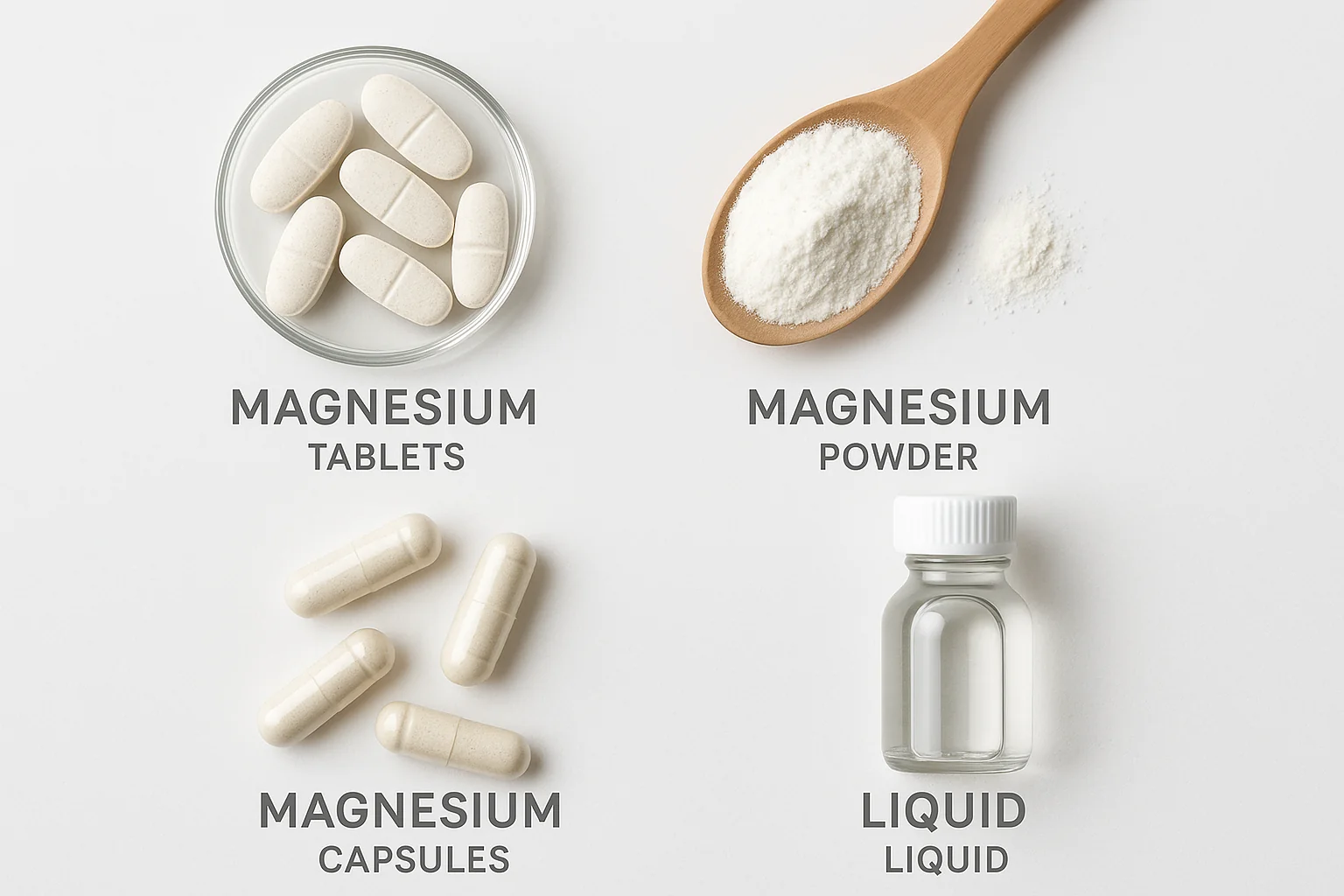

Magnesium for stress and sleep: differences between forms and how to choose the right one.
Glycinate, oxide, citrate, taurate magnesium – differences and indications. Which magnesium for sleep and stress, which for constipation, which for the heart? Dosage and bioavailability based on research.
Magnesium is the fourth most abundant mineral in the human body, participating in over 300 enzymatic reactions. Magnesium deficiency is estimated to be common in 50-60% of Europeans, and symptoms - muscle cramps, irritability, sleep problems, excessive fatigue - are so common that they are often overlooked. The problem is not only that many people do not provide enough magnesium through their diet, but also that supplements bought in pharmacies often contain forms with minimal bioavailability. This article will explain the differences between magnesium forms that have clinical significance and how to choose the right form for a specific problem.
KEY INFORMATION
• Schwalfenberg and Genuis (Scientifica, 2017) - magnesium oxide has a bioavailability of 4-15%, glycine and malate above 50% - this difference translates into clinical effects.
• RDA for magnesium: 420 mg/day (men), 320-360 mg/day (women); the average Pole provides only 200-250 mg from diet.
• Magnesium glycinate - best for sleep and stress; citrate - for general supplementation; oxide - for constipation; taurate - for heart and arrhythmias.
• Magnesium deficiency intensifies the stress response (HPA axis) and lowers the seizure threshold - it is not just a "comfort supplement."
Dlaczego forma magnezu ma kluczowe znaczenie?
The chemical form in which magnesium is delivered as a supplement determines its bioavailability, gastric tolerance, and where it goes in the body. Not all forms of magnesium are equivalent. Schwalfenberg i Genuis (Scientifica, 2017) In a clinical review, they compared the bioavailability of different forms of magnesium and showed that magnesium oxide (MgO) - the most popular and cheapest preparation in pharmacies - has a bioavailability of only 4-15%. In comparison: magnesium citrate about 30-45%, glycine about 50-80%, and taurate and malate similarly high as glycine.
What does this mean in practice? A 400 mg MgO tablet contains about 241 mg of elemental magnesium, but with 10% bioavailability, only about 24 mg actually enters the bloodstream. A 400 mg glycine tablet (containing, for example, 100 mg of elemental Mg) with 60% bioavailability delivers about 60 mg to the bloodstream - despite appearing to have a lower content on the label. The label "400 mg of magnesium" without specifying the form is insufficient information to assess the actual dose.
Our observations: The paradox of the Polish magnesium supplement market is that the cheapest and most widely advertised preparations (MgO or MgCO₃) are also the least absorbable. The effect is that consumers take magnesium, do not see clear effects, and conclude that "magnesium does not work," while the problem lies in the form, not the mineral itself. Only switching to a glycine chelate often brings visible effects for the same issue.
Magnez glicynian - najlepsza forma na sen i stres
Magnesium glycinate is a magnesium chelate with glycine - an amino acid with neuroprotective and calming properties. The combination provides a synergistic effect: magnesium modulates GABA receptors and blocks NMDA receptors (calming effect on the nervous system), while glycine additionally lowers the body's core temperature by dilating skin blood vessels - which facilitates falling asleep by mimicking the natural drop in nighttime temperature. Bannai i Kawai (Sleep and Biological Rhythms, 2012) They have shown that glycine as a standalone supplement shortens sleep latency and improves its quality.
Magnesium glycinate does not cause loose stools at therapeutic doses (unlike citrate and oxide), as it is absorbed through different intestinal transporters than those responsible for the osmotic effect. This has practical significance at therapeutic doses of 300-400 mg of elemental Mg. Dawka na sen i stres: 200-400 mg magnezu elementarnego w formie glicynianu, przyjmowane 1-2 godziny przed snem.
Magnesium citrate - good price and good absorbability.
Magnesium citrate is a well-researched organic form with a bioavailability of about 30-45% - many times higher than oxide. Walker et al. (JACN, 2003) They demonstrated in a randomized study that citrate was significantly better absorbed than oxide at comparable doses. Citrate is a good choice for general magnesium deficiency supplementation, for constipation (it has an osmotic effect attracting water to the intestine, which relaxes stools) and for general fatigue. In cases of digestive issues or at higher doses, it may cause loose stools - this is both a disadvantage and an advantage, depending on the problem. General dose: 200-400 mg of elemental Mg daily, can be divided into morning and evening doses.
Magnez malat - energia i fibromialgia
Magnesium malate is a magnesium chelate with malic acid. Malic acid is a key metabolite in the Krebs cycle - the main energy production pathway (ATP) in mitochondria. For this reason, malate is the preferred form of magnesium for fatigue, muscle pain, and fibromyalgia.
Russel et al. (Journal of Rheumatology, 1995) They conducted a pilot study with 300 mg of magnesium + 1200 mg of malate in fibromyalgia patients for 8 weeks and demonstrated a reduction in pain and tenderness of trigger points by over 50%. Malate is often used by individuals with chronic fatigue, athletes during recovery from intense exertion, and those with chronic fatigue syndrome (ME/CFS). Dose: 200-400 mg Mg elementarnego w formie malatu, preferowane rano lub przed treningiem.
Magnez tlenek - tylko zaparcia
Magnesium oxide (MgO) is a form mainly used as a laxative due to its osmotic effect in the intestines - attracting water to the intestines, relaxing stools. A bioavailability of 4-15% makes it ineffective as a source of magnesium for bones, muscles, or the nervous system. Nevertheless, it is an ingredient in many popular and cheap magnesium supplements in Poland. If you are looking for magnesium for stress, sleep, cramps, or arrhythmias - avoid preparations based on oxide. Jedyne sensowne zastosowanie: mild constipation as an osmotic agent.
Magnesium taurate - for the heart and cardiovascular system.
Magnesium taurate combines magnesium with taurine - an amino acid with cardioprotective effects. Taurine stabilizes the cell membranes of cardiomyocytes, acts as an osmoregulator, and has antiarrhythmic properties. Magnesium regulates calcium and potassium channels in the heart, reducing the risk of arrhythmias. Shechter et al. (Circulation, 2000) they demonstrated the protective effect of magnesium (intravenous) on heart rhythm after a heart attack. Studies with oral magnesium taurinate in the context of hypertension and arrhythmias are promising, although limited in number. Preventive dose: 200-400 mg of elemental Mg in the form of taurate. Individuals with heart rhythm disorders should use supplementation under the supervision of a cardiologist.
How magnesium affects stress - biological mechanism.
The relationship between magnesium and the stress response is bidirectional: stress depletes magnesium, and magnesium deficiency exacerbates the stress response. Cortisol (the stress hormone) increases magnesium excretion by the kidneys. At the same time, magnesium deficiency sensitizes the HPA axis (hypothalamus-pituitary-adrenal) to stressors and increases cortisol production. It’s a mutually reinforcing spiral.
Magnesium has a calming effect at the neurological level through several mechanisms: modulation of GABA receptors (enhancing inhibition), blockade of NMDA receptors (reducing glutamatergic excitation), regulation of the release of monoamine neurotransmitters (serotonin, dopamine, norepinephrine). Serefko et al. (Pharmacological Reports, 2013) in a review, they showed that magnesium deficiency correlates with symptoms of depression and anxiety, and supplementation shows anxiolytic effects in animal studies and pilot human studies. With chronic stress, supplementation of 400 mg of magnesium glycinate daily can be a valuable support regardless of other actions.
Magnez a migreny - czy suplementacja pomaga?
Magnesium and migraines are one of the better-studied clinical areas of supplementation of this mineral. People with migraines statistically have lower magnesium concentrations in erythrocytes and brain tissue than healthy individuals. Magnesium plays a role in regulating vascular tension, serotonergic transmission, and modifying pain by inhibiting NMDA receptors - all pathways involved in the pathophysiology of migraines.
Peikert et al. (Cephalalgia, 1996) they conducted a randomized, double-blind study with 600 mg of magnesium (citrate) daily for 12 weeks as migraine prophylaxis. Results: 41.6% reduction in the frequency of migraine attacks in the magnesium group vs 15.8% in the placebo group. Another study Pfaffenrath et al. (Cephalalgia, 1996) confirmed the prophylactic effect of magnesium in migraines. The Polish Neurological Society and the International Headache Society list magnesium as one of the options for migraine prevention. Preventive dose: 400-600 mg of elemental Mg daily (preferred: citrate or glycinate). Effects appear after 8-12 weeks of regular use.
Magnesium and insulin resistance and diabetes
Magnesium participates in over 300 enzymatic reactions, including glucose metabolism pathways and insulin signaling. Insulin receptor-binding enzymes (insulin receptor tyrosine kinase) are magnesium-dependent. Magnesium deficiency weakens cellular sensitivity to insulin and may accelerate the progression of insulin resistance. Guerrero-Romero i Rodriguez-Moran (Diabetes, Obesity and Metabolism, 2004) in an RCT study, they showed that magnesium supplementation (2.5 g MgCl₂ daily for 3 months) in individuals with insulin resistance significantly improved the HOMA-IR insulin resistance index and fasting glucose levels.
Diabetics have particularly high risks of magnesium deficiency due to increased renal excretion (glucosuria drives magnesium excretion) and often insufficient dietary intake. In diabetic patients, it is advisable to regularly monitor magnesium levels in erythrocytes or at least in serum and to supplement deficiencies as needed. The citrate or glycinate form is preferred over oxide in this group.
Symptoms of magnesium deficiency - how to recognize them?
Testing magnesium levels in the blood (serum magnesium) is a poorly sensitive test for deficiency - serum contains only about 1% of total magnesium in the body, and serum levels are tightly regulated by the kidneys and can be normal in the presence of overall tissue deficiency. A better biomarker is magnesium in erythrocytes, but it is less frequently available. Therefore, diagnosing magnesium deficiency is often clinical, based on symptoms.
Symptoms of deficiency: muscle cramps (especially calves at night), muscle twitches, eyelid "tics", headaches and migraines, irritability, anxiety and difficulty concentrating, fatigue despite adequate sleep, irregular heart rhythm (palpitations), hypersensitivity to sounds and light. Risk groups for deficiency: diabetics (increased renal excretion), individuals taking PPIs (omeprazole reduces magnesium absorption), alcohol abusers, the elderly, and athletes (increased excretion through sweat). For these groups, magnesium supplementation is particularly justified.
The relationship between magnesium and sleep and other sleepiness supplements is discussed in the article Insomnia - natural remedies..
How and when to take magnesium - practical tips.
The timing of magnesium intake matters depending on the goal. For sleep and relaxation: in the evening, 1-2 hours before bedtime. For stress and general supplementation: it can be divided between morning and evening. For migraine prevention: in the morning with a meal, as higher doses may cause stomach discomfort on an empty stomach.
Magnesium is best absorbed with or near a meal. Avoid taking magnesium simultaneously with large doses of calcium, zinc, or iron - they may compete for the same intestinal transporters. Caffeine and alcohol increase magnesium excretion through the kidneys - if you drink a lot of coffee or alcohol, your magnesium needs are higher. Long-term use of proton pump inhibitors (omeprazole, pantoprazole) disrupts magnesium absorption from the intestines and is a common, underestimated cause of deficiency - with PPIs, regularly check magnesium levels in serum.
When choosing a supplement: check the content of elemental magnesium per serving (it should be stated as "of which magnesium: XX mg"). The supplement "400 mg magnesium oxide" contains about 241 mg of elemental Mg with a bioavailability of 10% - effectively delivering only about 24 mg. The supplement "200 mg magnesium glycinate" with 60% bioavailability delivers about 120 mg of elemental Mg. Read labels carefully, not just the price.
Drug interactions: tetracycline antibiotics and quinolones form chelate complexes with magnesium. Take magnesium at least 2-3 hours after these antibiotics. Bisphosphonates (for osteoporosis) require a similar break. Thiazide diuretics and furosemide increase magnesium excretion - with chronic diuretic therapy, supplementation is often indicated. You can read more about sleep supplements in the article. Naturalne sposoby na sen.
Frequently Asked Questions
Jaka forma magnezu jest najlepsza na sen?
Magnesium glycinate (bis-glycinate) - glycine as a carrier additionally improves sleep architecture by lowering core body temperature, and its high bioavailability (50-80%) ensures effective delivery of magnesium to the brain and muscles. A dose of 200-400 mg of elemental magnesium 1-2 hours before sleep.
Jaka forma magnezu jest najlepiej przyswajalna?
Schwalfenberg i Genuis (Scientifica, 2017) They confirmed that chelated forms (glycinate, taurate, malate) and citrate have bioavailability several times higher than oxide (4-15%). Glycinate and malate are among the highest bioavailable forms available in OTC supplements.
How much magnesium should be taken daily?
RDA: 420 mg/day for men, 320-360 mg for women. The average Pole consumes about 200-250 mg from diet - a deficit of about 150-200 mg. Supplementation of 200-400 mg of elemental magnesium fills the deficit without the risk of toxicity with normal kidney function. In kidney diseases, magnesium supplementation requires medical supervision.
Czy magnez taurynian jest dobry na serce?
Yes - taurine adds a cardioprotective effect to magnesium's action on cardiac ion channels. It is recommended for arrhythmias, hypertension, and general cardioprotection. Shechter et al. (Circulation, 2000) They documented the protective effect of magnesium on heart rhythm. In the presence of existing heart diseases, supplementation should be under the supervision of a cardiologist.
Can you overdose on magnesium from supplements?
With normal kidney function - very difficult. The kidneys effectively excrete excess magnesium. Doses above 400 mg of elemental magnesium can cause diarrhea (osmotic effect), especially with inorganic forms. Hypermagnesemia from OTC supplements occurs almost exclusively in severe chronic kidney disease.
Does magnesium help with muscle cramps?
Yes - muscle cramps (especially in the calves at night) are one of the most characteristic symptoms of magnesium deficiency. Magnesium regulates neuromuscular conduction by controlling the flow of calcium and potassium ions through the muscle cell membrane. For nighttime cramps, 300-400 mg of magnesium glycinate or citrate is recommended in the evening. Garrison i Albers (Cochrane, 2012) - a review stating moderate evidence for the effectiveness of magnesium in nighttime calf cramps.
Czy magnez pomaga przy migrenach?
Tak - suplementacja 400-600 mg magnezu dziennie przez 8-12 tygodni ma rekomendacje jako profilaktyka migreny. Peikert et al. (Cephalalgia, 1996) They demonstrated a 41.6% reduction in attack frequency vs 15.8% placebo with 600 mg of citrate daily. Effects appear after 8-12 weeks. Magnesium is listed in migraine prevention guidelines as a safe first-line option.
Does malate differ from glycinate in effectiveness?
Yes - they have different indications. Malate with malic acid is better for fatigue, muscle pain, and fibromyalgia, as it supports energy metabolism in the mitochondria. Glycinate is better for sleep, stress, and anxiety due to glycine's additional effect on sleep architecture and GABA receptors. Both forms have similar bioavailability. The choice depends on the dominant issue. For complex symptoms (fatigue + insomnia), alternating malate in the morning and glycinate in the evening can be used - this "split dosing" strategy utilizes the different mechanisms of both forms at optimal times.
This article is for informational and educational purposes and does not replace consultation with a doctor. If you are pregnant, breastfeeding, taking medications, or have chronic conditions, consult the use of supplements or herbs with a specialist.
Author: Michał Waluk · Published: 2026-05-04 · Updated: 2026-05-04