
Apple cider vinegar for reflux and heartburn: effectiveness, dosage, and precautions
Apple cider vinegar for reflux – does it really help? The paradoxical truth about acidity, safe dosing (1-2 tablespoons in 240 ml of water), the risk to tooth enamel, and when ACV is contraindicated.
Apple cider vinegar (ACV) is one of the most popular home remedies for heartburn and reflux. The problem is that this popularity is based on a misunderstanding of the physiology of reflux. Reflux is not always a problem of excess stomach acid - much more often, it is a matter of an improperly functioning esophageal sphincter. And here lies the paradox: ACV may actually help with a specific, rarer type of reflux caused by acid deficiency, but it can clearly worsen the symptoms of classic gastroesophageal reflux disease (GERD). This article will explain when ACV makes sense, how to dose it safely, and what risks are often overlooked by popular health content creators.
KEY INFORMATION
• A study by Yagnik et al. (Scientific Reports, 2018) confirmed the antimicrobial properties of ACV, but clinical studies on humans with GERD are almost absent in the peer-reviewed scientific literature.
• ACV (pH 2-3) can erode tooth enamel and the mucous membrane of the esophagus when consumed undiluted.
• Safe dosage: 1-2 tablespoons (15-30 ml) in 240 ml of water, 15-30 minutes before a meal.
• ACV interacts with diuretics, insulin, and digoxin - individuals taking these medications should exercise caution.
What is reflux and why is acidity not the only problem?
Gastroesophageal reflux disease (GERD) is a condition in which stomach contents backflow into the esophagus, causing heartburn, a sour taste in the mouth, pain behind the breastbone, and cough. The key to understanding the controversy surrounding ACV is the physiology of the lower esophageal sphincter (LES). The LES is a muscular valve between the esophagus and the stomach that should open when swallowing and close tightly between meals. When the LES is weakened or improperly coordinated, stomach contents can flow back into the esophagus.
An important observation: proper closure of the LES requires adequate stomach acidity. Badania Johnston et al. (Mayo Clinic Proceedings, 2011) suggest that in some patients with reflux - particularly older individuals or those using proton pump inhibitors for a long time - stomach acidity is paradoxically too low (hypochlorhydria). In such cases, the LES may not close properly due to insufficient acidification. Here, the logic of using ACV has some scientific justification: adding acid may stimulate the LES to function better. But this is a scenario for a minority, not the majority of GERD patients.
Our observations: A popular myth states, "reflux is too much acid, so I take ACV to neutralize it." This is doubly incorrect - firstly, ACV is an acid (pH 2-3), not a base, so it does not "neutralize" stomach acid. Secondly, in classic GERD, the problem is the backflow of acid (even normal amounts) through a leaky LES, and adding acid from ACV only worsens the situation. The paradoxical truth: ACV may help only when there is too little, not too much.
What does science say about ACV and reflux?
A candid look at the scientific literature reveals that there are virtually no high-quality clinical studies on ACV and GERD in humans. Yagnik et al. (Scientific Reports, Nature, 2018) conducted a study that is the most frequently cited scientific support for ACV - however, it concerned the antimicrobial properties of ACV against bacteria (E. coli, Staphylococcus aureus, Candida albicans), not the treatment of reflux. The results were positive in the context of infections, but not GERD.
A pilot study from Arizona State University (Johnston et al., 2006) showed that ACV taken before meals may slow gastric emptying - which is a desirable effect in insulin resistance, but may exacerbate reflux by prolonging the retention of food contents under the sphincter. In other words: ACV may simultaneously improve postprandial glycemia and worsen reflux in the same person, which requires individual assessment of effects.
The lack of strong RCT studies does not mean that ACV is completely useless for stomach ailments - but it means that claims about its effectiveness in GERD are based on anecdote and theory, not controlled clinical evidence. The relief that some individuals describe may result from several mechanisms: the placebo effect, a coincidental improvement in diet, or actual hypochlorhydria, where ACV works through the mechanism described earlier.
How to safely dose apple cider vinegar?
If you decide to try ACV for stomach ailments, dilution is absolutely essential for safety. Undiluted ACV has a pH of 2-3, which is more acidic than gastric juice (pH 1.5-3.5) and can damage the mucous membranes of the esophagus, mouth, and teeth with regular contact.
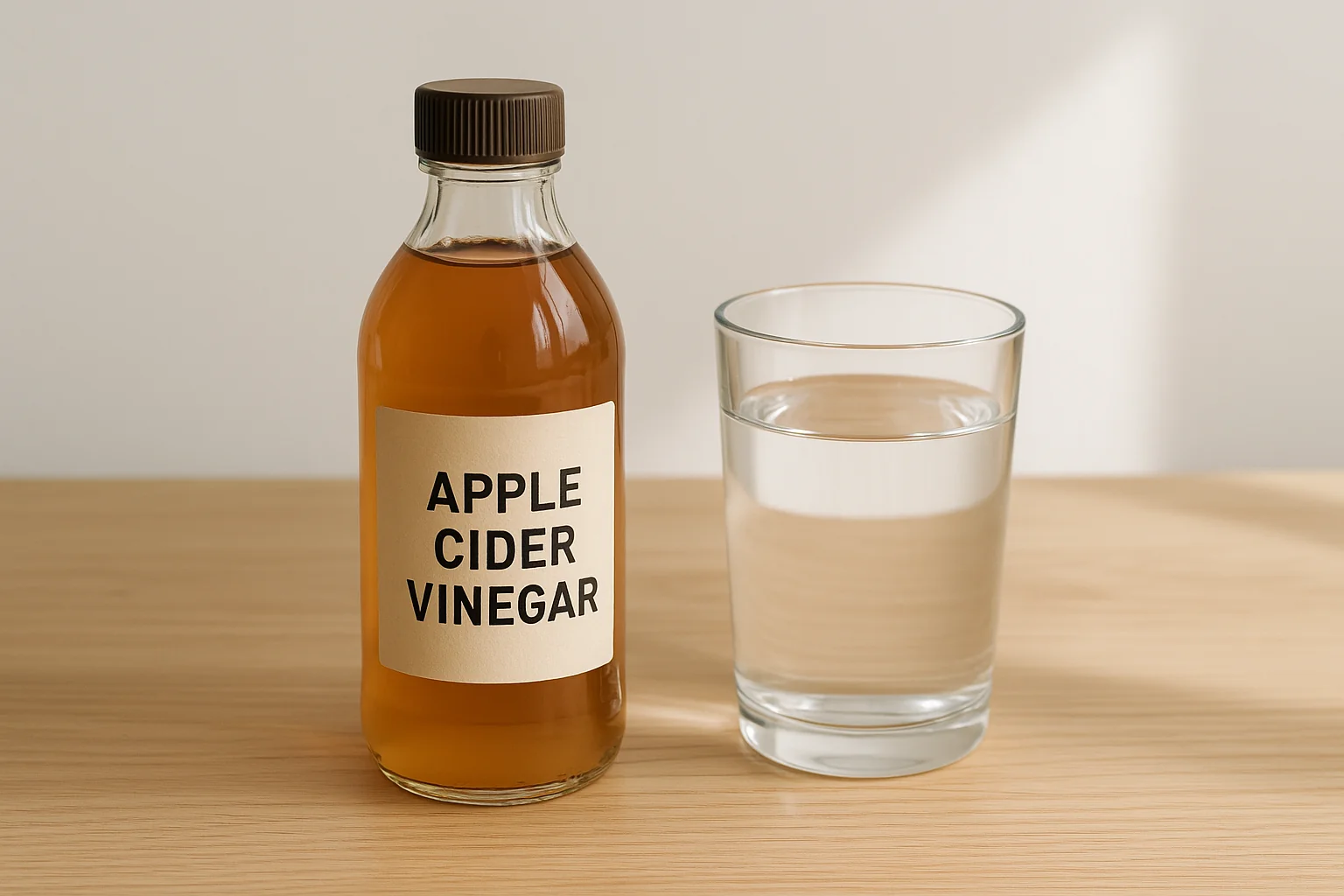
Safe usage protocol: 1-2 tablespoons (15-30 ml) of ACV diluted in at least 240 ml of water, consumed 15-30 minutes before the main meal. Start with 1 teaspoon (5 ml) for the first few days to assess tolerance. Use a straw - it limits contact with teeth. After drinking, rinse your mouth with plain water. Do not brush your teeth for at least 30 minutes after drinking ACV, as this reinforces erosion with the toothbrush abrasive on softened enamel.
An important detail: choose unfiltered ACV with "the mother" (a cloudy sediment of bacteria and yeast), although clinical studies have not clearly confirmed the superiority of this type over filtered. The acetic acid concentration in ACV typically ranges from 5-6% - this value is significant because products with concentrate may have higher concentrations requiring greater dilution.
Risk to tooth enamel and mucous membranes - an overlooked danger
Enamel erosion is the best-documented adverse effect of regular ACV consumption. Willershausen et al. (European Journal of Dentistry, 2015) they conducted an in vitro study comparing the erosiveness of various beverages and showed that apple cider vinegar causes significant enamel erosion. In vitro studies do not directly translate to clinical risk with single exposure, but with daily use over months or years, the risk is real.
Opis przypadku opublikowany w Journal of the Academy of Nutrition and Dietetics (2012) documented severe enamel damage and hypokalemia in a woman who consumed 237 ml (a cup) of undiluted ACV daily for several years. Hypokalemia (low potassium levels in the blood) resulted from excessive acidification, which increased potassium excretion by the kidneys. This is an extreme case, but it illustrates that excessive use of ACV is not "just food" - it is a biologically active substance with a real risk profile.
The mucous membrane of the esophagus is more sensitive than that of the stomach - it lacks a protective mucus layer resistant to pH 2. Regular consumption of undiluted ACV with existing esophagitis or GERD may deepen erosions and intensify pain. If you have diagnosed GERD, Barrett's esophagus, or esophagitis - consulting a gastroenterologist before using ACV is essential.
ACV and the microbiological composition and "mother" of vinegar - does it matter?
Unfiltered apple cider vinegar with "mother" is a product containing active cultures of acetic acid bacteria (Acetobacter), yeast fragments, proteins, and enzymes remaining after fermentation. Producers emphasize the superiority of this type of ACV over filtered, and the Internet is full of claims about its exceptional health properties. Science is cautious here.
There is no high-quality clinical study that has shown a statistically significant difference between filtered and unfiltered ACV in the context of reflux or glycemia. The amount of live bacteria in the "mother" is variable and depends on storage conditions (heat, light, oxygen kill bacteria). It is unknown whether any live bacteria from the "mother" survive the acidic environment of the stomach in sufficient quantities to exert a probiotic effect. If you are looking for probiotics for gut health - fermented products (yogurt, kefir, pickles) provide many times more live bacterial cultures than a tablespoon of ACV.
Acetic acid - the active ingredient in both filtered and unfiltered ACV - is the same in both types and is responsible for the biological effects of vinegar. The "mother" may add aesthetic and marketing value, but when choosing ACV for health purposes, the concentration of acetic acid (look for 5-6%) and the quality of production are more important than the presence of sediment.
Interakcje ACV z lekami i chorobami
Apple cider vinegar is not a neutral food ingredient for people taking medications. Acetic acid and the metabolic effects of ACV can interfere with several groups of drugs in clinically significant ways.
Diuretics (thiazide diuretics, furosemide): ACV may increase potassium loss through the kidneys, raising the risk of hypokalemia when used concurrently with diuretics. Insulina i leki przeciwcukrzycowe: ACV lowers postprandial glycemia, which, when combined with blood sugar-lowering medications, can lead to hypoglycemia. Digoksyna: Hypokalemia induced by excessive ACV consumption increases the toxicity of digoxin. Antacids (antacids, PPIs): ACV works contrary to these medications - together they may have a neutralizing or confounding effect. Individuals chronically using omeprazole or pantoprazole and wishing to try ACV should discuss the appropriateness of this combination with their doctor.
Discussion of the impact of ACV on blood sugar levels and clinical studies regarding glycemia can be found in the article Apple cider vinegar for diabetes and glycemia.
Diet for reflux - what really helps more than ACV?
Before reaching for ACV as a remedy for reflux, it's worth knowing that dietary modifications have much better-documented clinical effects than apple cider vinegar. The review by Ness-Jensen et al. (Clinical Gastroenterology and Hepatology, 2016) involving over 29,000 participants showed that dietary and lifestyle changes reduced GERD symptoms in 37% of subjects - without any medications or supplements.
Products that clearly exacerbate reflux: coffee, alcohol (especially wine and beer), chocolate, peppermint, fatty and fried foods, onions, garlic, and spicy dishes. Their elimination or reduction provides relief faster and more safely than experimenting with ACV. Potentially beneficial products: low-acid vegetables (broccoli, zucchini, lettuce), white meat, fish, oatmeal, ginger, and alkaline products (melon, banana).
Eating behaviors are crucial regardless of diet composition: eating slowly and in small portions, avoiding lying down for 2-3 hours after a meal, having the last meal no later than 2-3 hours before bedtime, raising the head of the bed by 15-20 cm (much more effective than a pillow under the head), and losing weight if overweight (every 3.5 kg reduction in BMI lowers the risk of GERD by 40%). Probiotics - especially Lactobacillus rhamnosus - may improve the intestinal barrier and reduce permeability, which indirectly affects the severity of reflux, although the mechanism is complex and is not a direct therapy for GERD.
Kiedy zamiast ACV - konwencjonalne leczenie refluksu
In confirmed GERD (diagnosed by a doctor or gastroenterologist), ACV is not a recommended treatment method and can be dangerous. Evidence-based methods for treating reflux include: proton pump inhibitors (omeprazole, esomeprazole) for moderate and severe GERD, antacids for mild episodes, and lifestyle modifications (avoiding fatty and fried foods, alcohol, coffee, chocolate, spicy dishes, lying down after meals, and excessive evening eating).
ACV may be an attempt for mild, occasional heartburn without confirmed GERD, in individuals with suspected hypochlorhydria (verified by the Heidelberg test or gastric pH study), or as part of dietary changes for mild symptoms. In cases of chest pain worsening with exertion, nighttime symptoms, difficulty swallowing, or unintended weight loss - diagnostics are necessary, not experimenting with ACV.
Read more about the role of apple cider vinegar in alleviating inflammation and joint pain in the article Apple cider vinegar for joints and muscle pain.
Frequently Asked Questions
Does apple cider vinegar help with reflux?
There are no high-quality RCT studies confirming the effectiveness of ACV in treating GERD. Theoretically, ACV may help with hypochlorhydria (deficiency of gastric acid), but in classical reflux with acid overproduction, it may exacerbate symptoms. Effects reported by users may result from the placebo effect or dietary changes accompanying the use of ACV.
How to dose apple cider vinegar for reflux?
A safe dose is 1-2 tablespoons (15-30 ml) diluted in 240 ml of water, 15-30 minutes before a meal. Start with 1 teaspoon to assess tolerance. Never drink undiluted ACV - there is a risk of enamel erosion and damage to the esophageal mucosa. Use a straw and rinse your mouth after drinking.
When is apple cider vinegar contraindicated?
Contraindicated in: confirmed GERD with acid overproduction, esophagitis, peptic ulcer disease, use of diuretics (risk of hypokalemia), insulin and antidiabetic medications (risk of hypoglycemia), as well as in osteoporosis and Barrett's esophagus.
Does apple cider vinegar damage tooth enamel?
Willershausen et al. (European Journal of Dentistry, 2015) They have shown that ACV causes significant erosion of tooth enamel in in vitro studies. With daily use over months, the risk of enamel damage is real. Always dilute ACV, use a straw, and do not brush your teeth for 30 minutes after drinking.
What causes heartburn - too much or too little acid?
The most common cause of heartburn is not excess acid itself, but dysfunction of the lower esophageal sphincter (LES) - allowing stomach contents to flow back into the esophagus. In classic GERD, stomach acidity is normal or higher. Hypochlorhydria (acid deficiency) mainly affects older individuals and long-term users of PPIs - and is the only scenario where ACV has a biological rationale.
How long does it take to see the effects of ACV for heartburn?
Individuals reporting relief after ACV describe the effect within 15-30 minutes of drinking the diluted solution - which rather indicates a direct mechanism (acidification or psychosomatic effect) rather than a biological effect over days or weeks. If after 2 weeks of daily use there is no improvement or symptoms worsen - it is a signal that ACV is not the right method for your type of ailment and a visit to the doctor is needed, not a higher dose of vinegar.
This article is for informational and educational purposes and does not replace consultation with a doctor. If you are pregnant, breastfeeding, taking medications, or have chronic conditions, consult the use of supplements or herbs with a specialist.
Author: Michał Waluk · Published: 2026-05-04 · Updated: 2026-05-04