
How to clean and maintain a bong, pipe, and glass accessories
How to clean and maintain a bong, pipe, and glass accessories: answers to the most common questions. u Bucha.
A dirty glass accessory is not just an aesthetic problem - microbiological studies have shown that water in a bong after 24 hours of use contains live colonies of bacteria and mold, including potentially pathogenic strains (Streptococcus, E. coli), which can infect the respiratory tract upon next use (Tashkin et al., PMC, 2002). Regular cleaning is not a whim - it is a matter of hygiene. This guide answers the most common questions: what to clean with, how often, and what to do with dried resin that nothing seems to remove.
KEY INFORMATION
• Water in the bong after 24h contains colonies of bacteria and mold - change it after each session (Tashkin et al., PMC 2002).
• 90-99% isopropyl alcohol with sea salt is the most effective, safe method for cleaning glass.
• Do not wash glass in the dishwasher - sudden temperature changes can crack even borosilicate glass.
• Clean the downstem and bowl separately - these are the areas where resin accumulates the most.
Why is regular cleaning important?
Resin that accumulates in glass accessories is a mixture of condensed tar substances, essential oils, and incomplete combustion products. It is unpleasant in taste and smell, but the real problem arises when moisture and temperature from daily use are added to old deposits in the water. Under such conditions, colonies of microorganisms develop - primarily molds and bacteria responsible for respiratory infections.
In addition to hygiene, clean equipment simply works better. A clean bong filters smoke more effectively, the diffuser operates correctly, and the accessory retains its visual and material value. Dried resin from a bong that has been forgotten for weeks sometimes needs to be soaked for hours - cleaning once a week takes 5 minutes, while neglecting it for a month takes 45.
What to clean glass accessories with - a review of methods
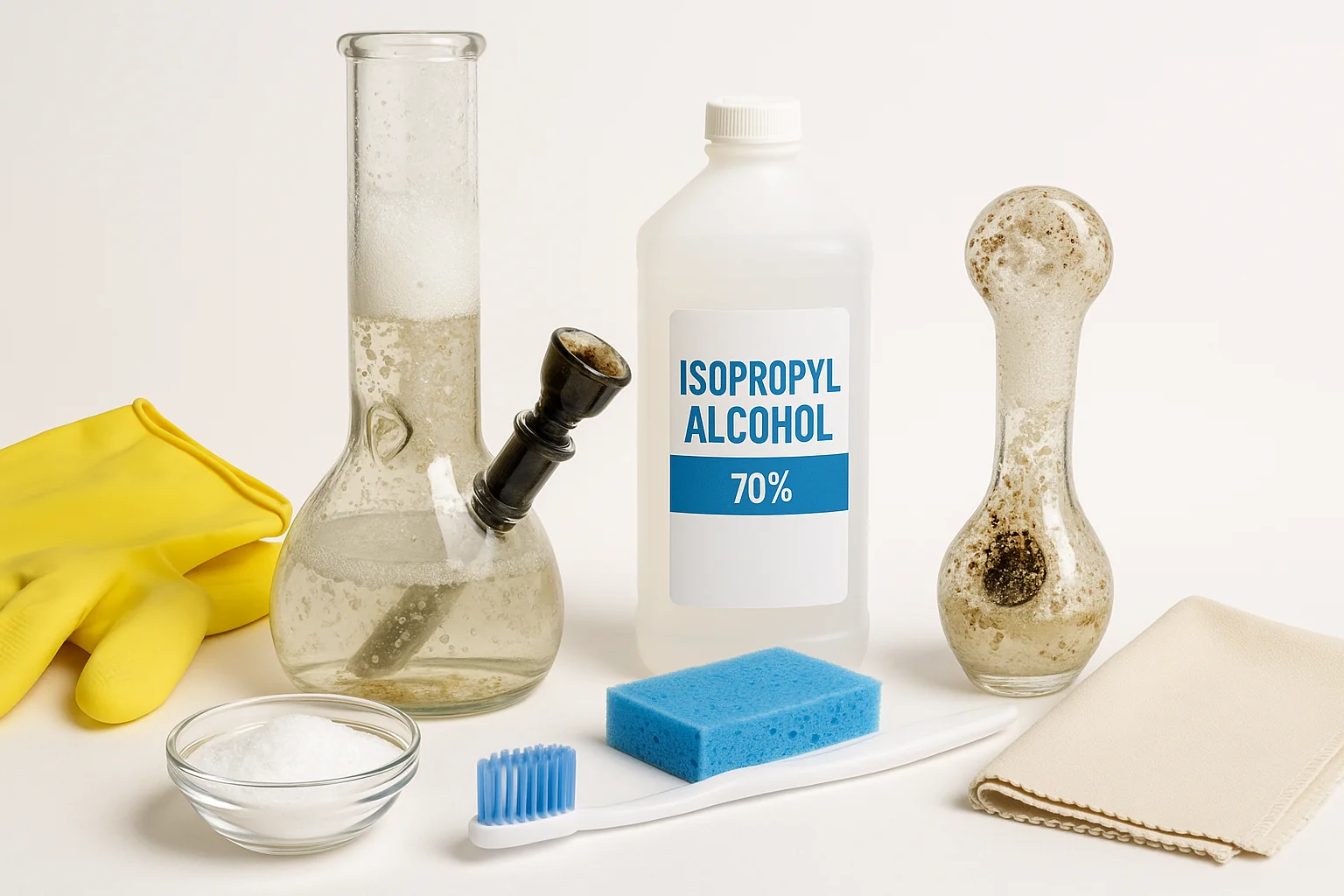
Isopropyl alcohol (IPA) is the gold standard for cleaning glass accessories. 90-99% alcohol is concentrated enough to effectively dissolve resin, completely evaporates after rinsing with water, and is safe for borosilicate glass, metal, and silicone. It is available at pharmacies as "isopropyl alcohol for disinfection," usually at a concentration of 70% - this is too low for effective resin cleaning; you need 90% or higher.
Sea salt or table salt (coarse) is an abrasive that helps mechanically detach resin from the walls. It does not clean by itself - it must work in conjunction with alcohol. Fine salt is less effective than coarse - larger crystals scrub surfaces better. You pour in alcohol, add salt, seal the openings, and shake.
Baking soda (sodium bicarbonate) does not dissolve resin but neutralizes odors. Use it after cleaning with alcohol as a final rinse: a teaspoon in hot water, shake, rinse. The result: a fresh, odor-free accessory. You can also use vinegar (diluted) to neutralize odors, but without rinsing, vinegar leaves an acidic taste.
Step by step: cleaning a bong with alcohol and salt
Step 1: Empty all the water from the bong and disassemble it - remove the downstem and bowl. Rinse the bong with cold water to remove loose residues. Step 2: Pour 2-3 tablespoons of coarse sea salt into the water chamber and add 100-150 ml of isopropyl alcohol 90-99%. Seal all openings (mouthpiece, downstem hole) with your hands or special silicone plugs for bongs. Step 3: Shake vigorously for 2-3 minutes. The salt acts like sandpaper - the crystals scrub the inner walls. Step 4: Pour out the dirty liquid, rinse with hot water several times. If you see resin residues, repeat with a new portion of alcohol and salt.
Clean the downstem (diffuser) separately: place it in a ziplock bag or a small jar, cover it with alcohol, and let it sit for 20-30 minutes. Clean the narrow openings of the diffuser with a pipe cleaner - a flexible wire cleaner with cotton. Clean the bowl the same way - soak and scrub with a brush or pipe cleaner. After cleaning all components, rinse with hot water and dry before reassembling.
We have noticed that the most neglected areas are the inside of the downstem and the inner side of the mouthpiece - places where the condensing vapor passes through. Resin accumulates most intensely there, and users often forget to clean these components, focusing only on the water chamber. Using a pipe cleaner in the downstem weekly is easier than soaking a dried-out downstem for two hours once a month.
Frequently Asked Questions
How to clean a bong with isopropyl alcohol?
Empty the water, remove the downstem and bowl. Pour coarse sea salt into the chamber, add IPA alcohol 90-99% (about 100-150 ml). Seal the openings with your hands, shake vigorously for 2-3 minutes. Pour out, rinse with hot water. Repeat for heavy soiling. Soak the downstem and bowl separately in alcohol for 20-30 minutes.
How often should you clean a bong and pipe?
Change the water after each session - standing water after 24 hours contains bacteria and mold. Clean a glass bong once a week with regular use. Clean a pipe every 5-7 sessions or when you notice clear residues. Neglecting cleaning creates hard, dried resin that is much harder to remove.
How to store a bong and pipe so they don't get dirty faster?
The way you store your bong between sessions directly affects the rate of residue buildup and bacterial growth. The most common mistake is leaving water in the bong for several days - standing water at room temperature creates an ideal environment for bacteria and mold, which cling to the glass walls and are difficult to remove later with just alcohol. Always pour out the water after each session without exception.
Store the bong upright in a stable place - an overturned bong means spilled residual water and resin on the countertop or shelf. Dedicated bong stands (available as accessories for 20-50 zł) are a convenient solution for larger pieces. Store the pipe bowl-up in a closed container or case - this protects against dust and accidental spilling of material residues onto other surfaces.
When should you replace your bong or pipe with a new one?
Glass accessories, when used properly and cleaned regularly, can last for years. Signs that it might be time to consider replacement: cracks or chips in the glass near the downstem or mouthpiece - even minor damage to the glass structure can lead to sudden breakage under heat; permanent discoloration of the glass (gold-brown residue that does not respond after several cleaning cycles) - this indicates deeply embedded resin or permanent glass staining; damaged or broken rubber seals that cannot be replaced (not every manufacturer sells spare parts).
Acrylic accessories have a significantly shorter lifespan - micro-scratches on the acrylic surface accumulate resin in a way that cannot be removed without damaging the material, and acrylic can also release BPA and other plasticizers under heat. If your acrylic bong has noticeable scratches inside the chamber and resin is seeping into the grooves - this is a signal to switch to glass or silicone.
Can you wash a bong in the dishwasher?
No. The dishwasher damages glass accessories due to rapid temperature changes and strong detergents. Even borosilicate glass can crack when transitioning from the hot washing phase to cold rinsing. Always wash by hand with warm water and isopropyl alcohol.
What to do with dried resin that alcohol won't dissolve?
For very hard resin: soak the accessory in IPA 90-99% alcohol for 8-12 hours (overnight). In the morning, add salt, and shake vigorously. Hard resin on external surfaces can be gently scraped off with a bamboo spatula - do not use metal tools on thin glass walls.
Does isopropyl alcohol damage glass?
No. Isopropyl alcohol is safe for borosilicate glass, silicone, and metal. It does not break down glass and completely evaporates after rinsing with water. Avoid acetone (remover) - it can attack silicone seals and plastic components.
How to remove odor from a bong?
After cleaning with alcohol, rinse with hot water and a teaspoon of baking soda - baking soda neutralizes organic odors. You can also soak in a 1:1 solution of water and vinegar for 30 minutes, rinse thoroughly, and dry. The odor comes from organic residues that require mechanical cleaning, not just rinsing.
How to care for the downstem and bowl?
Remove before each cleaning and soak in alcohol separately for 15-30 minutes. Clean the narrow openings of the diffuser with a pipe cleaner weekly. Regularly check the rubber seals between the downstem and the bong - a cracked seal causes difficulties when drawing and a dirty taste.
What substances should NOT be used on glass?
Avoid: acetone (destroys silicone seals), chlorine and bleach (toxic fumes, corrode seals), excessive dish detergents (hard to rinse, leave a taste). Safe options are: isopropyl alcohol 90-99%, sea salt as an abrasive, baking soda for odor neutralization.
This article is informational and educational in nature. It contains internal links to products available in the u Bucha store. Prices and specifications may change - please check the current data on the product page before purchasing.
Author: Michał Waluk · Published: 2026-05-04 · Updated: 2026-05-04