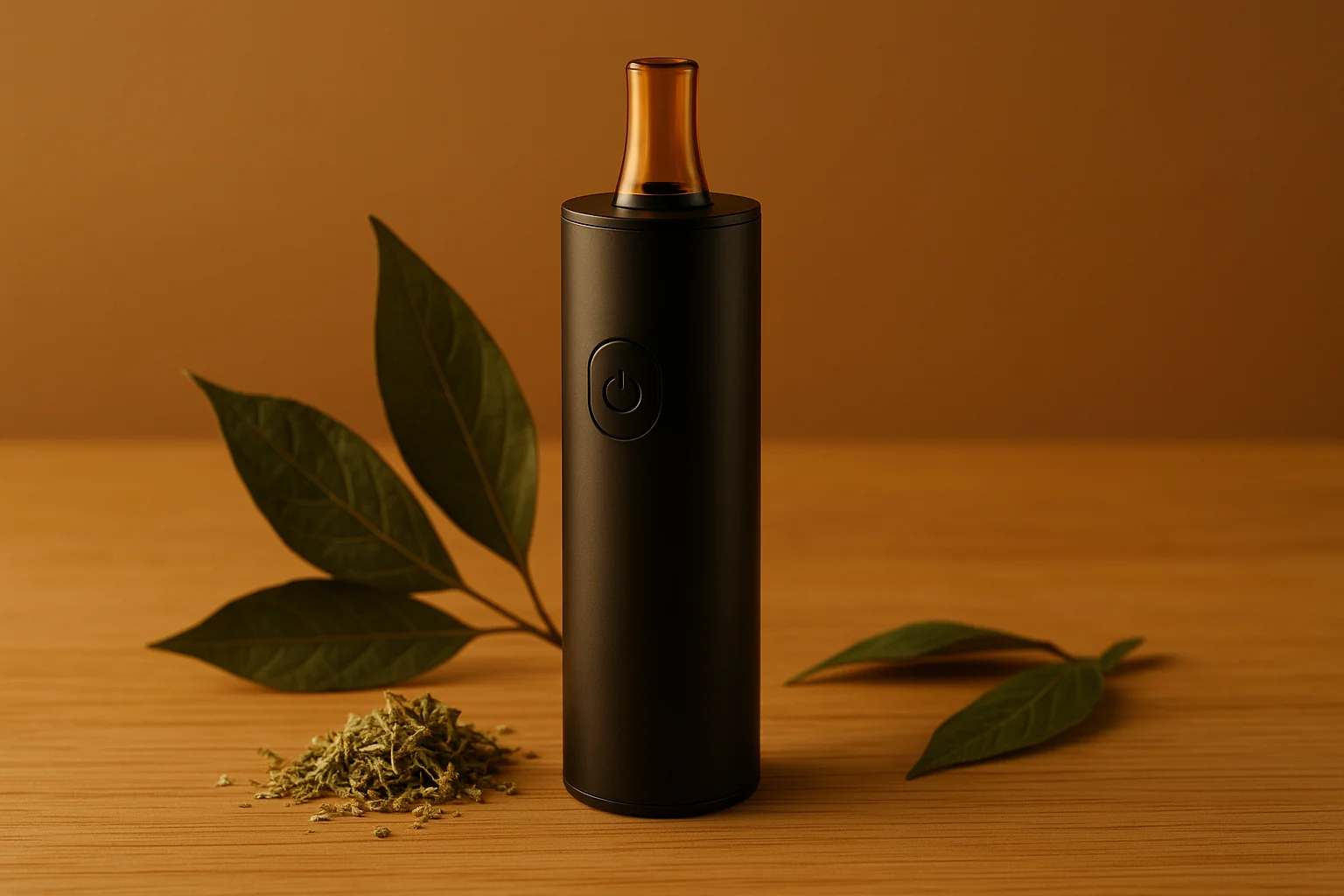

How a vaporizer works: principles, types, and who it's for (guide)
How does a vaporizer work, what is the difference between convection and conduction, and what does temperature really change? We explain the principle and debunk the myth about boiling points.
The vaporizer heats the plant material enough to release volatile compounds, but not enough to burn it. The result is vapor, not smoke, and this one difference leads to all the others. In a study involving eighteen volunteers, the concentration of carbon monoxide in exhaled air was lower after vaporization than after smoking a cigarette made from the same material, with comparable levels of active substance in the blood. However, this does not mean that vaporization is a neutral process, and we will return to this caveat as well. This guide explains how the device does this, how the two methods of heat transfer differ, how to choose a type for personal use, and why popular tables with cannabinoid boiling points can be misleading.
KEY INFORMATION
• Vaporization reduced the concentration of carbon monoxide in exhaled air with comparable THC levels in plasma compared to smoking, in a study of 18 individuals (Abrams et al., Clinical Pharmacology and Therapeutics 2007).
• The recommended operating temperature for devices is around 160-220 degrees Celsius, typically around 180, which is over 200 degrees below the normal boiling points of THC and CBD (Eyal et al., Cannabis and Cannabinoid Research 2023).
• Popular tables "cannabinoid vaporizes at a given temperature" confuse boiling with vaporization; the rate of vaporization is determined by vapor pressure, not boiling temperature.
• Convection heats the material with hot air, conduction through contact with a heated chamber, and most modern portable models combine both solutions.
• Vaporization is not neutral: metals originating from the heating device itself have been detected in the aerosol.
How does a vaporizer work?
Each device has three components: a power source, a heating element, and a chamber for the material. You inhale air through the mouthpiece, hot air or the heated surface transfers energy to the material, and the volatile components enter the airflow. The material does not ignite because the temperature remains below the combustion threshold, and that is the whole principle.
The amount of material that actually reaches the lungs was measured with stationary equipment. Hazekamp and colleagues tested the Volcano device on pure cannabinoid preparations and found that on average about 54 percent of the loaded THC reached the balloon, in a repeatable manner between devices and between subsequent fills (Journal of Pharmaceutical Sciences, 2006). With clinical inhalation administration, on average 35 percent of inhaled THC was immediately exhaled back.
The conclusion of the authors of this work is worth quoting exactly, as it is often misinterpreted in both directions. The ultimate pulmonary absorption after vaporization is comparable to smoking, and the difference concerns what, besides the active substance, also reaches the respiratory tract. Thus, a vaporizer is not a cost-saving device, but a cleaner one.
Is vaporization less harmful than smoking?
The measurement that resolves this was conducted by Abrams and colleagues. Eighteen healthy volunteers stayed in hospital conditions for six days of the study, and each day received a randomly assigned dose of material and method of administration: the Volcano vaporizer or a standard cigarette (Clinical Pharmacology and Therapeutics, 2007). The peak THC concentration in plasma and the area under the concentration curve over six hours were similar in both groups, and the concentration of carbon monoxide in exhaled air was lower after vaporization. No adverse events were recorded.
This is a strong result, but it concerns one indicator. Carbon monoxide is produced during combustion, so its decrease confirms that there was no combustion. However, this is not the same as proof of the safety of the entire method.
It is worth mentioning a finding that goes in the opposite direction. McDaniel and colleagues examined the aerosol from vaporizers for ten metals and detected chromium, copper, and nickel, and in smaller concentrations lead, manganese, and tin (Chemical Research in Toxicology, 2021). Some measurements exceeded the regulatory thresholds set by several supervisory bodies. The authors also compared heating methods other than inserts and found that the source of metal contamination can be the heating device itself. Thus, vaporization performs better than smoking in what Abrams measured, while also not being a neutral process.
What is the difference between convection and conduction?
The method of heat transfer is the most important technical difference between classes of devices. Convection involves the flow of hot air through the material. The air is heated on the heating element and only then passes through the material, which does not touch the heated surface. This provides even heating of the entire load, a lower risk of local burning, and a cleaner flavor profile. The cost is the complexity of the design, and thus a higher price.
Conduction works through direct contact. The material sits on a heated ceramic or steel chamber and absorbs heat through contact. The advantage is the quick achievement of working temperature and a simpler mechanism, while the disadvantage is uneven heating, as the layer near the wall heats up more than the center of the load. The practical consequence is that the load needs to be mixed between puffs. Conduction also tolerates less with too long a draw, as the layer touching the wall can overheat locally.
Hybrid designs combine both mechanisms: quick conductive start and even convective extraction. This type currently dominates the portable segment. A detailed comparison of the three solutions is outlined in a separate article about waporyzatorach konwekcyjnych, kondukcyjnych i hybrydowych.
Which type of vaporizer to choose?
The choice comes down to three questions: should the device be portable, how much time do you want to spend on cleaning, and how much do you care about taste. The table organizes the main classes of equipment according to these criteria. Deliberately, there is no column for prices, as market ranges change faster than the article.
| Type | Heating | Portability | For whom |
|---|---|---|---|
| Portable conduction | Conduction | High | Beginners, ease of use |
| Portable hybrid | Konwekcja i kondukcja | High | Most users |
| Portable convection | Convection | High | You care about taste and even extraction |
| Stacjonarny | Zwykle konwekcja | none | Home use, sessions with a few people |
| Kieszonkowy | Conduction | Maximum | Discretion and travel |
Stationary devices powered from the mains sacrifice portability for heating power and temperature stability. Their most recognizable representative is the Volcano by Storz and Bickel, a balloon device used by both Hazekamp and Abrams (strona producenta). The balloon fills with vapor, detaches from the base, and is inhaled at one's own pace, which can be more convenient for group sessions than a hose.
What does changing the temperature do?
Temperature regulation changes the composition of what you inhale, but the mechanism is different from what popular tables suggest. Eyal and colleagues reviewed materials provided to patients and caregivers and found incorrect data and confusion between the concepts of boiling, evaporation, and vaporization (Cannabis and Cannabinoid Research, 2023). The recommended operating temperature for devices, according to this work, is around 160-220 degrees Celsius, typically around 180, which is over 200 degrees below the normal boiling points of THC and CBD. If boiling were the measure, the vaporizer would not release anything.
What evaporates first is determined by the vapor pressure of a given compound at a specific temperature. Monoterpenes have the highest vapor pressure, so they are released first. In vaporization, this means that you inhale terpenes before cannabinoids, rather than selecting them by temperature from a list. The authors also note that terpene losses begin during the drying and curing of the material and become significant during decarboxylation, resulting in finished products being poorer in monoterpenes than the plants from which they were derived.
There are also measurements of efficiency. Eyal's work cites a comparison by Lanza and colleagues, in which five commercial vaporizers operated for three minutes at 210 degrees; the evaporation rate ranged from 55 to 83 percent for THC and from 46 to 70 percent for CBD. In their own trial, Eyal's team operated the Volcano device at temperatures ranging from 180 to 220 degrees for times from 20 to 180 seconds. If you want to delve deeper into temperature settings, we have information on that osobny przewodnik.
How to care for your vaporizer and what to vaporize in it?
Regular cleaning determines the longevity of the device and the taste of the vapor. Resinous residues after a session clog the airflow path and reduce extraction efficiency, so it's worth cleaning the chamber and mouthpiece before the resistance during inhalation becomes noticeable. Standard tools include isopropyl alcohol, cotton swabs, and a brush usually included in the kit. Do not soak rubber and silicone parts in alcohol, as they lose elasticity. We have described the full procedure in our text about czyszczeniu waporyzatora.
Herb vaporizers are designed for plant material, and the chamber should be filled loosely, as packed material blocks airflow. Besides hemp, the devices can handle herbal blends designed for vaporization, such as those from the category herbs. Manufacturers provide recommended settings for them, so choose the temperature according to the instructions for the specific blend, not from general tables circulating online.
The used material after a session is not completely devoid of active substances, as evaporation efficiency measurements show that some remains in the load. This is an argument not to instinctively throw away the leftovers, as well as a second argument for cleaning the chamber, as residue from previous sessions alters the taste of subsequent ones.
Frequently Asked Questions
What is the difference between a vaporizer and smoking?
The vaporizer maintains a temperature below the combustion threshold, thus releasing vapor instead of smoke. In a study with 18 volunteers, the concentration of carbon monoxide in exhaled air was lower after vaporization than after smoking a cigarette, with comparable THC levels in plasma and a comparable area under the curve for six hours.
W jakiej temperaturze pracuje waporyzator?
According to a 2023 review, the recommended operating range for devices is around 160-220 degrees Celsius, typically around 180. This is over 200 degrees below the normal boiling points of THC and CBD, which shows that vaporization in a vaporizer is not boiling and cannot be read from boiling point tables.
Does lower temperature yield more terpenes?
Terpenes evaporate earlier than cannabinoids because they have a higher vapor pressure, so the first puffs are richer in them. However, this is not a choice from a list: monoterpenes are lost during drying and decarboxylation, which means that finished products can be poor in them, regardless of the device settings.
Convection or conduction for beginners?
Most often, a hybrid design works best, as it combines the quick start of conduction with the even extraction of convection. Pure conduction is simpler and cheaper but requires mixing the material. Pure convection provides the cleanest taste at a higher price and usually longer heating time.
Is vaporization safe?
It is less burdensome than smoking, but not neutral. A study of aerosols from vaporizers detected chromium, copper, and nickel, and in smaller amounts lead, manganese, and tin, with some of these metals originating from the heating device itself. Do not vaporize materials of unknown origin or synthetic cannabinoids.
In summary: a vaporizer is a device that separates the release of volatile compounds from combustion, and that is its main advantage. The choice between convection and conduction affects flavor, heating time, and price, while temperature influences the order in which compounds leave the load. Popular boiling point tables describe a phenomenon that does not occur in a vaporizer at all.
The models available in our store are gathered in the category vaporizers; it currently includes five devices priced from 374 to 499 PLN, as of August 16, 2026.
This article is for informational and educational purposes. It contains internal links to product categories available in the u Bucha store. Prices and specifications may change: check the current data on the product page before purchasing.
Author: Michał Waluk · Opublikowano: 2026-07-01 · Aktualizacja: 2026-08-16