
How Long Does CBD Last in Urine? A Complete Guide to CBD Detection Times in 2026
How long does CBD stay in urine? Detectability 3-15 days, SAMHSA threshold 50 ng/mL THC-COOH. Complete guide for drivers, athletes, officials 2026.
The question of how long CBD can be detected in urine is being asked by an increasing number of Poles: professional drivers, amateur athletes, government officials, and corporate employees subjected to random testing. According to a study by Spindle et al. published in JAMA Psychiatry (2019), the detection period for CBD metabolites typically ranges from 3 to 15 days, depending on the dosage and frequency of use. This large time window raises specific practical concerns.
A key misunderstanding lies in confusing CBD with THC. Standard drug tests based on the SAMHSA protocol look for the THC-COOH metabolite at a cutoff threshold of 50 ng/mL, not for cannabidiol itself. CBD is not the target of anti-drug tests, but full-spectrum products contain trace amounts of THC that accumulate in fatty tissue and may lead to a positive result.
In this guide, we will discuss the pharmacokinetics of CBD and THC, detection thresholds in urine, blood, and hair, the mechanism of false-positive results, WADA regulations for athletes, and the Polish legal context for drivers. We will also explain why broad-spectrum oil with a certified COA is the only sensible choice for those professionally subjected to toxicological testing. All data is based on peer-reviewed publications: JAMA, Drug Testing and Analysis, AACC, Permanente Journal, and Project CBD.
KEY INFORMATION
– CBD is not THC. Standard SAMHSA tests look for the THC-COOH metabolite at a threshold of 50 ng/mL, not cannabidiol (AACC, 2021).
– Pure broad spectrum with certified absence of THC does not produce a positive drug test result.
– Full spectrum oil with 0.3% THC may accumulate enough THC-COOH with regular use to exceed the cutoff threshold.
– The detection time is 3-15 days in urine, 1-2 days in blood, and up to 90 days in hair (Permanente Journal, 2019).
– In the 2017 JAMA study, 21.4% of commercial CBD oils contained THC not disclosed on the label. Always request a COA for the batch.
What is CBD and how is it metabolized in the body?
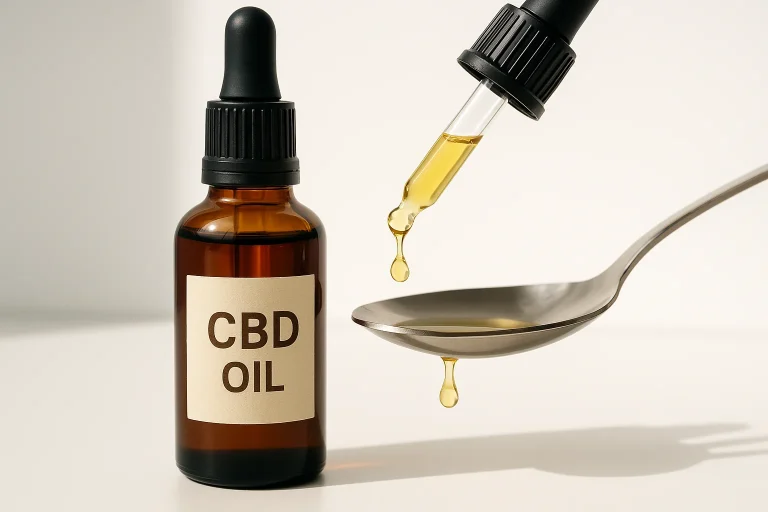
CBD (cannabidiol) is a non-psychoactive cannabinoid that constitutes 10-20% of the mass of the hemp flower Cannabis sativa L. (Project CBD, 2023). After oral or sublingual administration, CBD undergoes hepatic metabolism via cytochrome P450 enzymes, primarily CYP3A4 and CYP2C9. This results in the formation of 7-hydroxy-CBD and 7-carboxy-CBD metabolites, which are excreted in urine and feces (PMC, 2020).
The oral bioavailability of CBD ranges from 6-19%, while the sublingual form increases absorption to the upper limit of the range (Frontiers in Pharmacology, 2020). This means that only a small portion of the dose enters the systemic bloodstream. The rest undergoes first-pass metabolism in the liver. The higher the bioavailability, the faster the body eliminates the substance.
The half-life (T1/2) of CBD ranges from 18 to 32 hours after a single oral dose. With chronic use, this value extends to 60 hours due to accumulation in fatty tissue (Drug Test Anal, 2020). Complete elimination of a single dose takes about 5 half-lives, which realistically translates to 4-7 days for an individual with an average BMI.
How does the body break down CBD?
CBD metabolism primarily occurs in hepatocytes. The enzyme CYP3A4 is responsible for hydroxylation, while CYP2C19 is responsible for demethylation. Intermediate products undergo conjugation with glucuronic acid, which increases their water solubility and facilitates renal excretion. About 33% of the dose leaves the body via urine, while the rest is excreted through feces via the biliary system.
The genetics of P450 enzymes play a significant role. Individuals with the "ultra-rapid metabolizer" CYP2C19 phenotype eliminate CBD up to twice as fast as "slow metabolizers." This explains why the same dosing protocol yields different effects in different individuals. Individual pharmacogenetics remains an unpredictable factor.
Lipophilicity as the key to accumulation
CBD and THC are highly lipophilic, meaning they preferentially bind to fats. Cannabinoids accumulate in fatty tissue, from which they are gradually released into circulation for weeks after the last dose. In individuals with a BMI over 30, the detection time may extend by 30-50% compared to lean individuals (Drug Test Anal, 2020).
The mechanism is straightforward from a physicochemical perspective. Fats serve as a reservoir that releases cannabinoids chronically. Physical training that mobilizes fatty tissue can paradoxically temporarily increase cannabinoid levels in the blood, as confirmed by the study by Hartman and Huestis (Clinical Chemistry, 2013).
What is the detection time for CBD in urine, blood, and hair?
According to a meta-analysis from the Permanente Journal (2019), the standard detection windows for cannabinoids are: urine 3-15 days for CBD and 3-30 days for THC, blood 1-2 days for both after a single dose, saliva 1-3 days, and hair up to 90 days from the moment it grows above the skin. These values depend on dosage, frequency, and individual pharmacokinetics.
Urine is the most commonly used matrix in screening tests. The reason is simple: sample collection is non-invasive, costs are low, and the detection time is long. However, urine shows a history of exposure, not current intoxication. A positive urine result does not prove that a person was under the influence at the time of the test, but only that they used cannabinoids in the past weeks.
Blood provides a current picture, but the detection window is short. It is used in roadside tests by law enforcement to determine impairment "here and now." Hair, on the other hand, offers the longest historical window but only detects regular, not sporadic use. Each matrix has its context of application.
Urine: 3-15 days for CBD
After a single oral dose of CBD 25-50 mg, detection in urine typically lasts 1-3 days. With regular daily use (over 4 weeks), this period extends to 10-15 days from the last dose. Higher doses (over 100 mg daily) may yield detectable metabolite concentrations even 3 weeks after cessation (Spindle et al., JAMA Psychiatry 2019).
The laboratory detection threshold for CBD is not standardized like for THC. Specific GC-MS tests can detect CBD metabolites from 5 ng/mL, but screening immunoassay tests do not look for CBD. This is a crucial distinction. The mere presence of CBD in urine has no significance for a standard drug test.
Blood: 1-7 days
The peak concentration of CBD in blood (Cmax) is reached 1-4 hours after an oral dose. For the sublingual form, Tmax is 30-60 minutes. After a single dose of 25 mg CBD, Cmax is about 1-2 ng/mL, and after 100 mg, about 6-8 ng/mL. Blood detection is possible for 1-2 days with occasional use, up to 5-7 days with chronic use.
Blood tests are used in legal proceedings when a current state of intoxication is required. In Poland, the traffic police direct individuals to blood testing if a saliva test shows the presence of cannabinoids. A laboratory blood result has evidential value in court.
Hair: up to 90 days
Hair tests detect cannabinoids incorporated into the hair structure during growth. The hair growth rate is about 1 cm per month, so a 3 cm segment covers about 90 days of history. Hair tests do not detect single use but show a pattern of regular use.
Primarily used in legal proceedings, demographic studies, and some procedures for specific professions (air traffic controllers, certain uniformed services). It has no application in routine employee testing in Poland due to cost and specialized laboratories.
The detection time for cannabidiol metabolites in urine typically ranges from 3-15 days and depends on dosage, frequency of use, BMI, and polymorphism of P450 enzymes. After a single dose of 25-50 mg, the detection period is 1-3 days, with chronic daily use extending to 15 days (Spindle et al., JAMA Psychiatry, 2019).
What do standard drug tests actually detect?
Standard drug tests detect the metabolite 11-nor-9-carboxy-THC (THC-COOH), not cannabidiol. The SAMHSA protocol (Substance Abuse and Mental Health Services Administration) sets the cutoff threshold for the screening test at 50 ng/mL THC-COOH in urine. The cutoff for the confirmatory GC-MS test is 15 ng/mL. CBD is not the target analyte of these tests (AACC, 2021).
The screening test operates on an immunoassay basis. Antibodies in the test bind to THC metabolites, producing a color reaction proportional to the concentration. A drawback of the method is cross-reactivity: some structurally similar substances may yield false-positive results. CBD has minimal cross-reactivity, but some medications (ibuprofen, certain PPIs) may interfere with the result.
In the case of a positive result, a confirmatory test is performed using the GC-MS or LC-MS/MS method. These techniques separate and precisely identify specific molecules. The confirmatory test indicates specifically THC-COOH, not generally "cannabinoids." This eliminates any doubt as to whether the result pertains to CBD or THC.
Why did SAMHSA choose the cutoff of 50 ng/mL?
The cutoff of 50 ng/mL was empirically established as a compromise between the sensitivity and specificity of the test. A lower threshold would detect passive exposure to smoke (e.g., presence in a room where someone smoked), while a higher threshold would allow active users to pass. The SAMHSA standard has been used in the USA, Poland, and most EU countries since the 1990s.
Some programs use a lower threshold of 20 ng/mL (e.g., the U.S. Department of Transportation for drivers) or a higher one of 100 ng/mL (low-risk programs). In Poland, most occupational medicine laboratories use the standard threshold of 50 ng/mL. The confirmatory GC-MS test uses a threshold of 15 ng/mL THC-COOH, as the technique is more accurate.
WADA uses a higher threshold for athletes
The World Anti-Doping Agency (WADA) established in 2013 a threshold for THC-COOH in athletes' urine at 150 ng/mL, raised from the previous 15 ng/mL. The reason: to distinguish "recreational use outside of competition" from "intentional doping during the competition period" (WADA Prohibited List, 2026). CBD has been completely exempt from the list of prohibited substances since 2018.
This high cutoff for athletes practically means that even occasional use of recreational marijuana out of competition should not yield a positive result during competitions. However, for certainty, athletes should use only CBD products with an anti-doping certificate, e.g., Informed Sport.
What is the risk of a false-positive result when using CBD?
The risk of a false-positive result when using pure CBD alone is minimal but real. In the study by Spindle et al. (JAMA Psychiatry, 2019), volunteers received a single oral dose of 100 mg of pure CBD. None exceeded the threshold of 50 ng/mL THC-COOH in urine, but two out of nine achieved concentrations close to the threshold (above 30 ng/mL) after a dose containing 0.39 mg of THC.
The key issue is product quality. Bonn-Miller et al. published in JAMA (2017) an analysis of 84 commercial CBD products purchased online. They found that 21.4% of products contained THC not indicated on the label, 26% contained less CBD than declared, and 43% more. This highlights the scale of the mislabeling problem in an industry that remains poorly regulated to this day.
A false-positive result in a screening test does not mean a false-positive result in a confirmatory test. The GC-MS test is specific for THC-COOH and does not react to CBD or its metabolites. The SAMHSA procedure always requires confirmation, so one positive result in a strip test does not conclude the process.
Cross-reactivity of other substances
In addition to CBD, some commonly used substances may yield false-positive results in cannabinoid tests. The list includes ibuprofen in very high doses, naproxen, certain proton pump inhibitors (pantoprazole), efavirenz (an HIV antiviral medication), and dronabinol (synthetic THC used therapeutically).
The cross-reactivity of CBD is estimated to be below 1% in new generation immunoassays. This means that pure CBD in realistic doses should not generate false positives. The problem lies in THC contamination in CBD products, not in the cannabidiol molecule itself.
Procedure in case of a positive result
If a workplace screening test comes back positive, you have the right to a confirmatory test using GC-MS or LC-MS/MS. In the USA, the procedure is overseen by a Medical Review Officer (MRO), who evaluates the result in a clinical context. In Poland, the occupational medicine procedure is less formalized, but the right to confirm the result exists.
Practical checklist: keep the packaging of the CBD product and the COA for the batch, prepare a written statement with dates of use and dosages, request a confirmatory test at an accredited laboratory, and consult with an occupational medicine physician if necessary. A negative confirmatory result invalidates the screening result.
Unique observation: The paradox of the Polish CBD market is that consumers often choose full-spectrum oils believing in the "better entourage effect", unaware that for professionally tested individuals, the only reasonable option is broad spectrum with certified THC-free content. Pure broad spectrum provides almost the entire synergy effect without the risk of detection. Full spectrum with 0.3% THC is a luxury reserved for those without professional risk.
What factors influence the detection time of cannabinoids?
The detection time of CBD and THC depends on a complex interplay of biological and pharmacological factors. The most important are dosage, frequency of use, BMI, and percentage of body fat, hepatic metabolism rate (mainly CYP3A4 and CYP2C9 activity), hydration, physical activity, and route of administration (Drug Test Anal, 2020). Each of these can change the detection window by 30-100%.
BMI and body fat
Cannabinoids are lipophilic and accumulate in adipocytes. In a person with a BMI of 35 and 40% body fat, detection may extend by 50-100% compared to a person with a BMI of 22. The mechanism is slow release from fat stores into circulation for weeks after cessation (Hartman and Huestis, Clinical Chemistry, 2013).
Interestingly, acute weight loss and intense cardio workouts that mobilize fatty acids can temporarily increase cannabinoid levels in urine. This phenomenon has been observed in individuals on weight loss diets who had positive test results many weeks after the last exposure.
Dose and frequency
A single dose of 25 mg CBD results in detection for 1-3 days, while a dose of 100 mg results in 3-7 days. Daily use of 50 mg for a month leads to tissue accumulation, extending the detection window to 10-15 days from the last dose. Therapeutic doses like Epidiolex (300-1500 mg daily) may yield detection for over 30 days.
A heavy THC user (daily for over 6 weeks) may test positive in urine even 90 days after cessation (Drug Test Anal, 2020). For CBD, such extreme data do not exist in the literature, but the accumulation mechanism is analogous. The longer the period of use and the higher the doses, the longer the detection window.
Genetics of P450 enzymes
CYP2C19 polymorphism divides the population into slow, normal, fast, and ultra-rapid metabolizers. The difference in the rate of CBD elimination between phenotypes can reach fourfold. This means that some individuals eliminate CBD four times faster than others at the same dose. Without pharmacogenetic testing, individual rates cannot be predicted.
Hydration and physical activity
Good hydration increases diuresis and accelerates renal excretion of CBD metabolites. Excessive hydration (over 4 liters per day) can dilute urine to a level that laboratories mark as "diluted specimen" and require retesting. Moderate hydration (2.5-3 liters per day) is the optimal strategy.
Physical activity has a bidirectional effect. Chronic exercise improves hepatic metabolism and accelerates elimination. Sudden intense workouts mobilize fatty tissue and temporarily increase cannabinoid levels in blood and urine. Therefore, avoid intense exercise immediately before a planned test.
Pure broad spectrum vs full spectrum – which to choose for safety?
For individuals subjected to drug testing, the choice of oil formulation is crucial. Broad spectrum with a certified lack of THC (below the limit of detection LOQ) is practically safe in SAMHSA tests. Full spectrum with legal 0.3% THC may accumulate enough THC-COOH with regular use to exceed the threshold of 50 ng/mL (Spindle et al., JAMA Psychiatry, 2019).
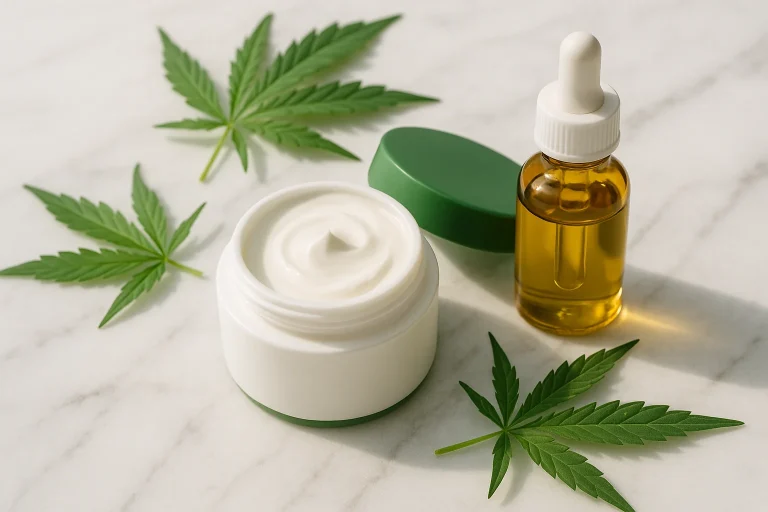
Broad spectrum is an extract containing all cannabinoids except THC. It has CBD, CBG, CBN, CBC, and terpenes, but THC has been selectively removed (chromatographically). This preserves most of the entourage effect while eliminating the risk of detection. For 95% of individuals, the difference in effect between broad and full spectrum is negligible.
Full spectrum contains a complete extract with natural proportions, including trace THC up to 0.3%. Some researchers believe this form has the strongest entourage effect. For individuals without professional risk (no workplace testing, not a professional driver, not a WADA-licensed athlete), full spectrum may be more beneficial. For all others: broad spectrum is the only reasonable choice.
Why might full spectrum yield a positive result?
Full spectrum oil with 0.3% THC contains 3 mg of THC per 1 ml of oil. With a daily dose of 1 ml over a month, we provide 90 mg of THC. This is enough to lead to THC-COOH accumulation exceeding the threshold of 50 ng/mL in some individuals. Spindle et al. showed that a single dose of oil with 0.39 mg of THC resulted in concentrations close to the threshold in 22% of subjects.
Accumulation is key. A single dose of 0.39 mg of THC did not yield a positive result, but daily doses over weeks accumulate in fatty tissue. In lean individuals with a fast metabolism, the risk is lower; in individuals with a BMI over 30 and a slow metabolism, the risk is real.
How to recognize authentic broad spectrum?
A Certificate of Analysis (COA) is a laboratory document showing the composition of a batch. Check the "cannabinoid profile" section. A good broad spectrum has THC marked as "ND" (Not Detected) or "LOQ" (Below Limit of Quantification). If you see a specific numerical value, e.g., 0.1% THC, it is not "true" broad spectrum.
Other tips: the manufacturer publishes COA for each batch (batch date matches the packaging), the laboratory is independent and accredited (e.g., ISO 17025), and the analysis date is current (up to 12 months). Lack of COA is a red flag. Bonn-Miller et al. (2017) showed that without a COA, as many as 21.4% of products contained undisclosed THC.
According to Bonn-Miller et al. (JAMA, 2017), 21.4% of commercial CBD products purchased online contained THC not disclosed on the label, 26% contained less CBD than declared, and 43% more. This highlights the scale of the mislabeling problem and underscores the importance of batch COA certificates for individuals subjected to drug testing.
Driver and CBD – what does Polish law say in 2026?
The Polish Penal Code in Article 178a penalizes driving under the influence of an intoxicating substance but does not define a numerical threshold for THC or other cannabinoids. This means that the presence of any detectable amount of THC in a driver's body may result in criminal proceedings, regardless of the state of intoxication. Cannabidiol (CBD) itself is not a controlled substance.
In practice, the traffic police use DrugWipe or SoToxa devices that detect THC in saliva at a threshold of 25-50 ng/mL. A positive result leads to the suspension of the driver's license and blood collection for laboratory analysis. A blood result with THC above 1 ng/mL is grounds for prosecution, and above 2.5 ng/mL is treated as a state of use (analogous to alcohol).
Professional drivers (taxis, buses, trucks, couriers) are subject to additional occupational medicine checks. A positive THC-COOH test in urine results in a referral to a medical board and temporary suspension from duties. For this group, using full spectrum is too risky. Only broad spectrum with a COA certificate provides an acceptable margin of safety.
What to do if you are a professional driver?
A practical checklist: 1) use only broad spectrum oil with a COA showing THC below LOQ, 2) keep the original packaging and printed COA for the batch, 3) maintain a dosing journal (date, dose, time), 4) avoid use 12 hours before mandatory occupational medicine testing, 5) in case of a positive test, immediately request a confirmatory GC-MS test.
Remember: even "safe" broad spectrum from a good source carries risks if you buy a counterfeit or low-quality product. Bonn-Miller showed that one in five products on the market contains undisclosed THC. Stick to trusted brands and brick-and-mortar stores with batch certificates available for inspection.
What about amateur drivers?
Private drivers are not subject to routine occupational medicine tests, but any traffic stop may lead to a saliva test. If you regularly use full spectrum with 0.3% THC, you have a real risk of a positive result in an unexpected check. The worst-case scenario: losing your driver's license for at least 6 months, plus criminal proceedings.
Recommendation: if you drive, use broad spectrum or CBD isolate. Full spectrum only if you are sure you won't be behind the wheel for at least 7-14 days after the last dose. The margin of safety depends on BMI and frequency of use, but 14 days is a conservative minimum for regular users.
Athlete and CBD – WADA regulations in 2026
The World Anti-Doping Agency (WADA) removed CBD from the list of prohibited substances in January 2018. This means that athletes can legally use CBD during training and competitions. All other cannabinoids (THC, synthetic cannabinoids) remain on the prohibited list "in-competition" with a threshold of 150 ng/mL THC-COOH in urine (WADA Prohibited List, 2026).
The threshold of 150 ng/mL is ten times higher than the threshold for confirmatory tests by SAMHSA. This was intentionally set high to separate "out-of-competition recreational use" from "intentional doping during competitions". An athlete who uses marijuana recreationally off-season is unlikely to exceed the 150 ng/mL threshold in a competition test.
Nevertheless, professional athletes must exercise caution. Every CBD product should have an anti-doping certificate, such as Informed Sport, Cologne List, or BSCG. These certificates confirm that the product has been tested for the presence of substances prohibited by WADA and does not contain THC or other cannabinoids detectable in tests.
List of WADA-approved products
A practical rule for athletes: only broad spectrum with an anti-doping certificate or pure CBD isolate 99%. Full spectrum is risky even at the 150 ng/mL threshold, as regular use can accumulate THC-COOH. The most publicized disqualification cases in individual sports involved THC contamination in "legal" supplements.
The athlete bears full responsibility for everything in their body (the "strict liability" principle). Ignorance does not exempt from responsibility. Therefore, before reaching for any CBD product, check its anti-doping certificates and keep documentation. In case of a positive test, the COA can save your sports career.
What to do if the test is positive despite using only CBD?
A positive screening test result despite using only CBD most likely indicates the presence of THC in the product (mislabeling). The first step is to request a confirmatory test using GC-MS or LC-MS/MS. The confirmatory test accurately identifies specific metabolites and distinguishes THC-COOH from other substances. A negative confirmatory result invalidates the screening result (AACC, 2021).
Practical checklist
After receiving a positive screening test result: 1) stay calm and do not sign any statements of guilt, 2) request a written confirmatory test at an accredited laboratory, 3) prepare documentation of the products used: packaging, COA for the batch, invoices, 4) prepare a written statement with a chronology of CBD use, 5) consult with a lawyer or occupational medicine physician.
The confirmatory GC-MS test is accurate to a level of 1 ng/mL and does not cross-react with CBD. If you have used pure CBD without THC, the confirmatory result should be negative. If the confirmatory result is also positive, it means your product contained THC – then the only defense is purchase documentation and a COA showing no THC in the manufacturer's declaration.
Can I speed up the elimination of cannabinoids?
There is no reliable method to accelerate elimination. Commercially available "detox kits" mostly do not work and can adulterate urine in a way detectable by the laboratory (creatinine, specific gravity). The safest strategy is abstinence for at least 14 days before the test, good hydration of 2.5-3 liters per day, and avoiding excessive exercise that mobilizes fat tissue.
Some studies suggest that high doses of niacin (1-3 g daily) may accelerate fat tissue metabolism, but the evidence is weak and the risk of side effects (liver damage, hepatotoxicity) is high. This method is not recommended. The best strategy is prolonged abstinence and, if possible, planning the CBD use calendar around test dates.
From the Bucha editorial office: In our store, we observe that customers asking about CBD in relation to tests fall into two groups. The first is informed consumers who immediately ask about broad spectrum with COA. The second consists of individuals who learn about the risk of THC only after the first positive test result. Therefore, starting in 2024, we clearly mark "THC-FREE" in product descriptions for every broad spectrum, so the information is visible from the first contact with the product.
Practical tips for individuals subjected to testing
The review from the Permanente Journal (2019) and AACC guidelines (2021) suggest several principles of conduct that minimize the risk of unpleasant consequences from drug testing for individuals using CBD. The practical list includes product selection, documentation, usage calendar, and procedures in case of doubt. Each of these elements increases the margin of safety.
Product selection
Only broad spectrum with a COA showing THC as "ND" or "LOQ". Avoid full spectrum if you are a professional driver, licensed athlete, or an official subject to random testing. CBD isolate 99% is an alternative for the most cautious, but it loses the entourage effect. For most people, broad spectrum is the optimal compromise.
Documentation
Keep product packaging, batch labels (LOT), COA for each batch, and purchase invoices from the seller. In case of a positive test, this documentation is crucial. The COA must come from an independent laboratory accredited to ISO 17025, not from the brand owner's laboratory. Check that the batch date on the packaging matches the batch date on the COA.
Usage calendar
If you know you have an upcoming occupational medicine test or anti-doping check, plan for abstinence for at least 14 days before the date. For intensive users (over 50 mg of CBD daily for many weeks), the margin of safety is even 21-30 days. A short abstinence of 2-3 days is insufficient due to accumulation in fatty tissue.
Legal and medical consultations
If you work in a regulated sector (transport, uniformed services, medical care), it is advisable to consult with an occupational medicine physician or a lawyer specializing in labor law before starting to use CBD. Some employers have zero tolerance for positive results, regardless of the source. Company policy is often stricter than state regulations.
Frequently Asked Questions
How long does CBD stay in urine?
Pure CBD and its metabolites are typically detectable in urine for 3 to 15 days after the last dose, depending on frequency of use, dosage, BMI, and metabolism rate. After a single dose of 25-50 mg, the detection period is 1-3 days, with regular use extending to 10-15 days (Spindle et al., JAMA Psychiatry, 2019).
Do standard drug tests detect CBD?
No. Standard SAMHSA immunoassay tests look for the THC-COOH metabolite at a threshold of 50 ng/mL, not for the CBD molecule. Pure CBD does not cause a positive result because the test does not cross-react with cannabidiol. The cross-reactivity of CBD is estimated to be below 1% in modern tests (AACC, 2021).
Can broad spectrum CBD oil without THC yield a positive test?
Pure broad spectrum with a certified THC content below the limit of detection LOQ is practically safe in drug tests. In the study by Bonn-Miller et al. from JAMA 2017, as many as 21.4% of commercial CBD oils contained THC not indicated on the label (JAMA, 2017), which is why a COA for the batch should always be requested.
Can a driver in Poland be penalized for CBD?
Cannabidiol itself is not controlled under Polish traffic law. The problem lies with THC: Article 178a of the Penal Code does not define a numerical threshold, and a toxicologist's opinion determines the suspension of the driver's license. Regular use of full spectrum oil with 0.3% THC may accumulate enough THC-COOH to yield a positive result in saliva or urine tests.
Can an athlete legally use CBD according to WADA?
Yes. Since 2018, the World Anti-Doping Agency has removed CBD from the list of prohibited substances. All other cannabinoids, including THC, remain prohibited in competition at a threshold of 150 ng/mL in urine (WADA Prohibited List, 2026). Athletes should use only broad spectrum products with an anti-doping certificate such as Informed Sport.
What factors influence the detection time of CBD and THC?
Key factors include dosage, frequency, BMI, and percentage of body fat (cannabinoids are lipophilic and accumulate), hepatic metabolism rate (CYP3A4 and CYP2C9), hydration, physical activity, and route of administration. In individuals with a BMI over 30, detection may extend by 30-50% compared to lean individuals (Drug Test Anal, 2020).
What to do if the test is positive despite using only CBD?
You should request a confirmatory test using GC-MS or LC-MS/MS, which accurately identifies specific metabolites. The screening test has 5-10% cross-reactivity (false positive). It is advisable to present the COA of the oil used and keep the packaging. The SAMHSA procedures provide for the involvement of a Medical Review Officer, who assesses the clinical context.
How long is CBD detectable in blood and hair?
In blood, CBD is detectable for 1-2 days after a single dose, up to 5-7 days with chronic use. In hair, detection can reach 90 days from the moment the hair grows above the skin. Saliva tests detect cannabinoids 1-3 days after the last dose (Permanente Journal, 2019).
Summary and safe CBD usage path
The detection time for CBD in urine is 3-15 days, in blood 1-7 days, and in hair up to 90 days. However, standard SAMHSA drug tests look for the THC-COOH metabolite, not cannabidiol, at a threshold of 50 ng/mL. Pure CBD does not yield a positive result. The problem lies in product quality and the presence of trace THC in full-spectrum oils.
For professional drivers, athletes, and officials, the only sensible option is pure broad spectrum with a COA showing THC below the limit of detection. Full spectrum oil with 0.3% THC with regular use may accumulate enough THC-COOH to exceed the cutoff threshold. Bonn-Miller et al. showed that one in five products on the market contained undisclosed THC.
Practical strategy: choose broad spectrum from a reputable source, keep documentation (COA, invoices, packaging), plan for abstinence 14-21 days before scheduled tests, and in case of a positive test, always request a confirmatory GC-MS test. This procedure protects your professional career and driver's license.
CBD remains a safe and legal tool for supporting daily well-being, but it requires a conscious approach. Knowledge of pharmacokinetics, detection thresholds, and testing procedures allows one to avoid most problems. If you have doubts about a specific product or procedure, consult with an occupational medicine physician or lawyer.
This article is for informational and educational purposes and does not constitute medical or legal advice. Before starting to use CBD in professional situations subject to drug testing, consult with an occupational medicine physician or lawyer. The seller is not responsible for the results of drug tests or consequences arising from individual use of products.
Author: Michał Waluk, Editor of the Bucha blog
Publication date: April 26, 2026
Last update: April 26, 2026
Next update: April 26, 2027