
Flavonoids in cannabis - sources, role, and action (guide)
Flawonoidy w konopiach — co to, jak dziala i na co. Zrozumialy przewodnik u Bucha.
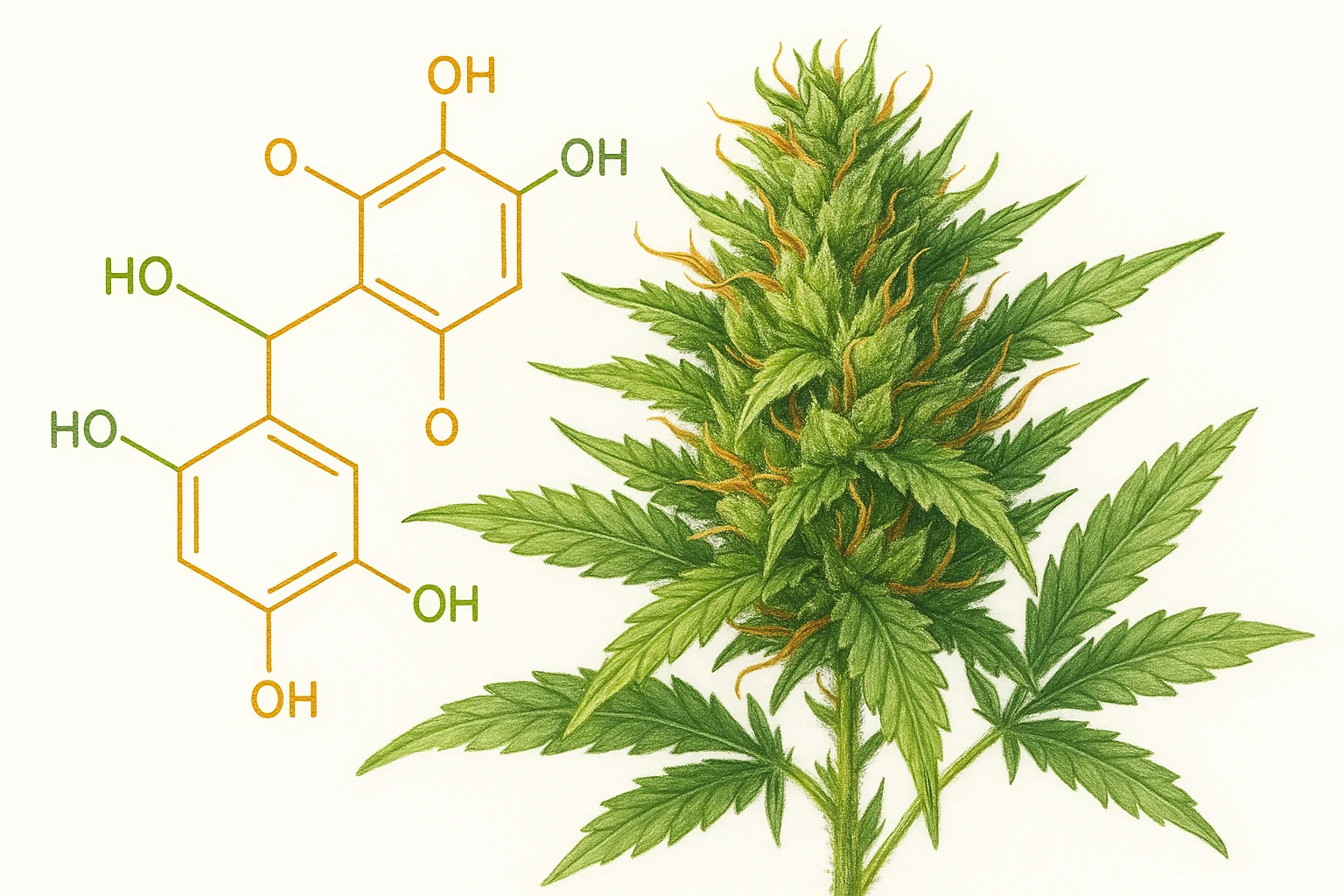
When discussing cannabis and its active ingredients, the conversation almost always revolves around cannabinoids - CBD, THC, CBG. Flavonoids, meanwhile, are an equally fascinating group of compounds, though significantly less visible in the marketing of cannabis products. Over 20 flavonoids have been identified in cannabis, including a unique group not found anywhere else in nature - cannflavins. Bhargava and Bhargava in their phytochemical review of cannabis highlight flavonoids as an important element of the plant's bioactive profile, long underestimated compared to the dominant role of cannabinoids (Bhargava & Bhargava, Natural Product Communications, 2017). This article explains what flavonoids are in hemp, where they accumulate, what role they play in the plant, and what they mean for CBD products.
KEY INFORMATION
• Cannabis contains over 20 flavonoids, including unique cannflavins A, B, and C, which are not found in any other species (Bhargava & Bhargava, Natural Product Communications, 2017).
• Cannflavin A inhibits COX-2 in cell studies with a potency described as 30 times that of aspirin - although clinical data in humans is still limited.
• Full-spectrum products retain flavonoids; CBD isolate and hemp seed oil are devoid of them.
• Flavonoids participate in the entourage effect - the synergistic action of the cannabis phytocomplex.
What are flavonoids and where do they come from in hemp?
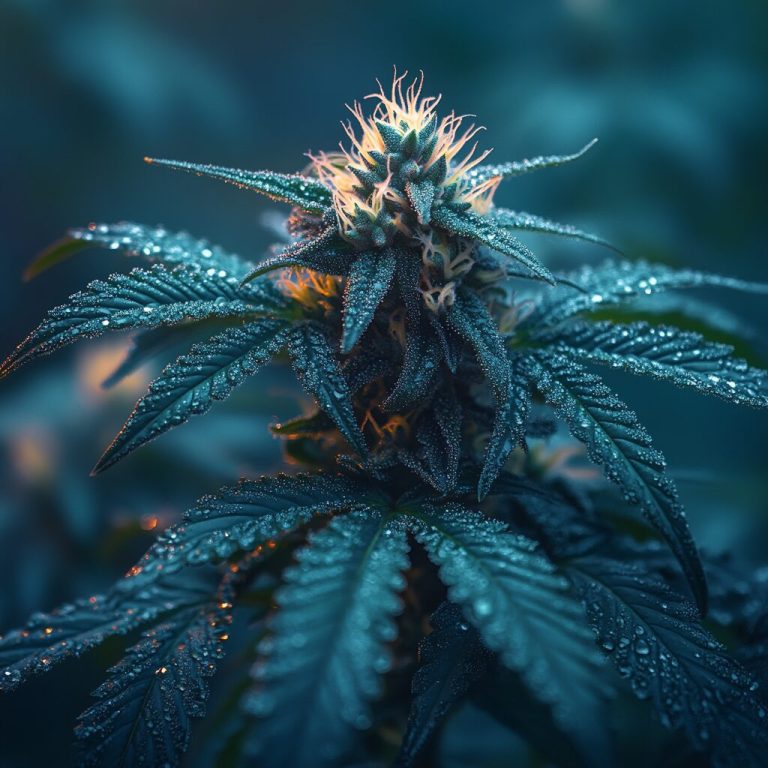
Flavonoids are one of the largest families of polyphenolic plant compounds - over 6000 have been identified in the plant kingdom. They are synthesized in plants from phenylalanine via the phenylpropanoid pathway. In cannabis, flavonoid biosynthesis mainly occurs in leaves and flowers, with the highest enzymatic activity in the secretory cells of trichomes - the same glands where cannabinoids and terpenes are also produced.
The role of flavonoids in the plant is multifunctional. They absorb UV-B radiation, protecting plant tissues from photochemical damage. They act as signals for pollinators - many flavonoids absorb or reflect radiation in wavelengths visible to bees, creating patterns on flowers that are invisible to the human eye. They also serve a defensive function against fungi, bacteria, and insects. For the plant, they are therefore a multifunctional system of protection and chemical communication.
Kannflawiny - flawonoidy unikalne dla konopi
Among all cannabis flavonoids, cannflavins have garnered particular interest - compounds not synthesized by any other known plant species. Cannflavin A and cannflavin B were described by Barrett et al. in 1986. Cannflavin C was discovered much later, in 2019, by Muellner et al. Structurally, cannflavins belong to the flavonoid class but contain distinctive prenyl or geranyl substituents that give them unique biological properties.
A groundbreaking study by Werz and colleagues, published in FASEB Journal In 2014, it was shown that cannflavin A inhibits the activity of the COX-2 enzyme responsible for the synthesis of pro-inflammatory prostaglandins - with a potency described as about 30 times that of acetylsalicylic acid (aspirin) in cellular conditions (Werz et al., FASEB Journal, 2014). An important caveat: these results were obtained in cell line studies, not in clinical studies in humans. "30 times stronger than aspirin" is a cited phrase that requires context - in vitro effects rarely translate directly to clinical outcomes.
Inne flawonoidy w konopiach - kwercetyna, apigenina, witeksyna
Besides cannflavins, cannabis contains a number of flavonoids common in other plants, each with its own documented biological properties. Quercetin - one of the most studied flavonoids - is a strong antioxidant that works by scavenging free radicals and chelating metal ions. Clinical studies indicate its anti-inflammatory properties and potential cardioprotective effects. Apigenin, a flavone also present in chamomile, shows affinity for GABA-A receptors in preclinical studies, suggesting anxiolytic properties. Kaempferol and orientin are other components of the cannabis flavonoid profile with antioxidant activity.
We have noticed that CBD product manufacturers rarely provide information about flavonoid content in CoA certificates - these documents focus almost exclusively on the cannabinoid and terpene profiles. This is an information gap: flavonoids, although more challenging to standardize analytically than cannabinoids, are part of the bioactive phytocomplex that distinguishes full-spectrum products from CBD isolate.
Flawonoidy, terpeny i kannabinoidy - efekt entourage
Ethan Russo described the entourage effect as the synergistic interaction of cannabinoids, terpenes, and flavonoids present in full-spectrum hemp extract (Russo, Frontiers in Plant Science, 2019). The mechanisms of this synergy may include modulation of cannabinoid metabolism by flavonoids (inhibition of CYP enzymes by quercetin and kaempferol may slow the breakdown of CBD), additive anti-inflammatory effects (cannabinoids + flavonoids + terpenes act on different pro-inflammatory pathways simultaneously), and mutual enhancement of effects through distinct receptors and signaling pathways.
The practical significance of the entourage effect for the buyer is the difference between full-spectrum products and CBD isolate. CBD isolate contains only pure cannabidiol - without terpenes, without flavonoids, without other phytosubstances. Full-spectrum products retain the complete phytochemical profile of the plant, including flavonoids. Broad-spectrum removes THC but retains the other components. For someone seeking maximum synergistic action from the cannabis phytocomplex, full-spectrum is closest to the natural profile of the plant.
Flavonoids in cannabis - table of key compounds
| Flavonoid | Unique to Hemp? | Potential properties |
|---|---|---|
| Cannflavins A | Yes | COX-2 inhibition (in vitro), anti-inflammatory action |
| Cannflavins B | Yes | COX-1 and 5-LOX inhibition (in vitro) |
| Cannflavins C | Yes | Discovered in 2019; activity profiles in study |
| Kwercetyna | No (common) | Antioxidant, cardioprotective, anti-inflammatory |
| Apigenina | No (common) | GABA-A receptors, anxiolytic (preclinical) |
| Kaempferol | No (common) | Antioxidant, potential cytoprotective action |
| Vitexin | No (common) | Cardioprotective and anti-inflammatory (preclinical) |
| Orientin | No (common) | Antioxidant, neuroprotective action (models) |
Flavonoids and the stability and quality of CBD products
Flavonoids play not only a bioactive role in cannabis extract - they also matter for product stability. Quercetin and kaempferol act as natural antioxidants that slow the oxidation of cannabinoids and terpenes in the oil. Full-spectrum oils stored in darkness and coolness retain their complete phytochemical profile longer, partly thanks to the natural action of flavonoids. This is one of the biological arguments for choosing full-spectrum extract over isolate in oil - an isolate devoid of flavonoids and terpenes loses its "natural buffers" against oxidation.
High-quality CBD oil manufacturers use CO2 extraction at low temperatures (subcritical or supercritical extraction) to preserve heat-sensitive terpenes and flavonoids. Ethanol extraction at high temperatures can degrade some flavonoids, especially those sensitive to heat, such as apigenin. The CoA certificate usually does not report flavonoid content - this is a gap in standard CBD testing - but the extraction method provided by the manufacturer is a good indicator of whether the product has retained the complete phytocomplex or just cannabinoids.
We have noticed that the growing interest in cannabis flavonoids is reflected in the emergence of products on the market marketing "enrichment with cannflavins" or "high flavonoid content." So far, there are no standardized analytical methods commonly used for the quantitative determination of flavonoids in CBD products - treat such claims with caution if not supported by data from an independent laboratory.
Frequently Asked Questions
What are flavonoids in hemp?
Flavonoids are polyphenolic plant compounds synthesized in the flowers and leaves of hemp. They serve protective functions in the plant (UV absorption, protection against pathogens) and communicative functions (signals for pollinators). Over 20 flavonoids have been identified in hemp, including the unique cannflavins A, B, and C. In the human body, they exhibit antioxidant and anti-inflammatory properties (Bhargava & Bhargava, Natural Product Communications, 2017).
What are cannflavins and why are they unique?
Cannflavins are flavonoids unique to the cannabis plant - they do not occur in any other species. Cannflavin A is described as a COX-2 inhibitor with a potency 30 times that of aspirin in cell studies, making it one of the more interesting phytochemical discoveries in cannabis. Clinical studies in humans are still limited (Werz et al., FASEB Journal, 2014).
Do flavonoids enhance the effects of CBD?
Ethan Russo described the entourage effect as the synergistic interaction of cannabinoids, terpenes, and flavonoids in full-spectrum products. Flavonoids may modulate cannabinoid metabolism by inhibiting CYP enzymes and additively enhance the anti-inflammatory effects of CBD. Full-spectrum products contain a complete flavonoid profile; CBD isolate and hemp seed oil lack this profile (Russo, Frontiers in Plant Science, 2019).
Where in the cannabis plant are flavonoids concentrated?
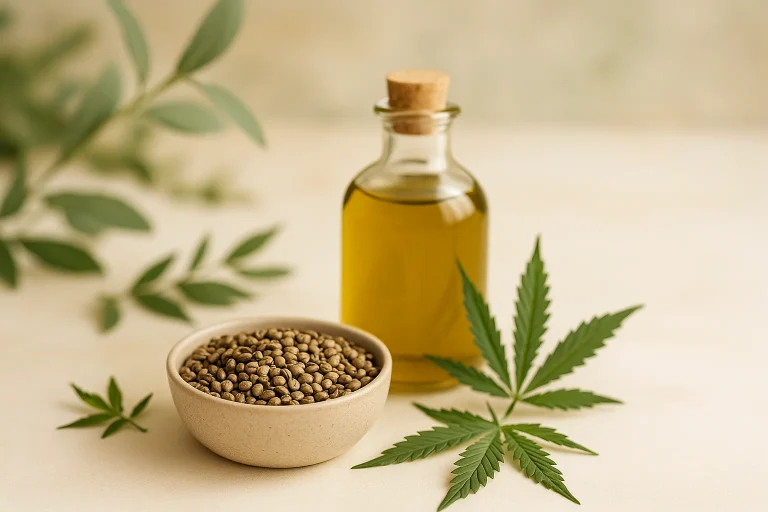
Flavonoids are concentrated in the flowers and leaves, with the highest density in trichomes - the secretory glands on the inflorescences. Stems and seeds contain significantly lower amounts. Therefore, full-spectrum extracts from hemp flowers are rich in flavonoids, while hemp seed oil is virtually devoid of them.
Are flavonoids from cannabis safe?
Flavonoids as a class are widely present in the diet (tea, apples, onions, citrus) and are considered safe. Cannflavins have not been the subject of long-term toxicological studies in humans - safety data is indirect. High doses of flavonoids may interact with drugs metabolized by CYP3A4 and CYP2C9 - when using medications, it is advisable to consult a doctor.
What flavonoids do cannabis plants contain besides cannflavins?
Cannabis contains more common flavonoids: quercetin (a strong antioxidant with cardioprotective potential), apigenin (affinity for GABA-A receptors, preclinical anxiolytic properties), kaempferol (antioxidant, cytoprotection), vitexin and orientin (anti-inflammatory and neuroprotective effects in models). The complete flavonoid profile of cannabis is a complex mixture with complementary mechanisms of action.
This article is for informational and educational purposes and does not replace consultation with a doctor. If you are pregnant, breastfeeding, taking medications, or have chronic conditions, consult the use of supplements or herbs with a specialist.
Author: Michał Waluk · Published: 2026-05-04 · Updated: 2026-05-04