
Ginkgo na szumy uszne (tinnitus) - czy pomaga
Ginkgo na szumy uszne: rzetelna odpowiedz oparta na badaniach. u Bucha.
Tinnitus affects 10-15% of the adult population, and in 1-2% of individuals, it is bothersome enough to significantly reduce quality of life (Langguth et al., The Lancet, 2013). Effective pharmacological treatment for tinnitus practically does not exist - which leads patients to seek all available methods. Ginkgo biloba (Japanese ginkgo) has been one of the most commonly recommended supplements for tinnitus for decades. But what do clinical studies really show? The answer is less straightforward than it might seem.
KEY INFORMATION
• The largest RCT (Drew and Davies, 2001, n=1121) found no significant difference between EGb 761 and placebo in treating tinnitus (Drew & Davies, BMJ, 2001).
• The Cochrane review (2013) assessed the existing evidence as insufficient for definitive conclusions.
• Proposed mechanism: improvement of microcirculation in the inner ear and antioxidant action.
• The best-documented treatment methods for tinnitus: CBT and tinnitus retraining therapy (TRT).
What does the key clinical study by Drew and Davies (2001) say?
The randomized, double-blind study by Drew and Davies, published in BMJ In 2001, it was the largest RCT assessing ginkgo in tinnitus. The study involved 1121 patients with chronic tinnitus - recruited from general practitioner practices in the UK. They used standardized extract EGb 761 at a dose of 150 mg daily or placebo for 12 weeks. Result: no statistically significant difference between groups in any of the assessed measures of tinnitus (Drew & Davies, BMJ, 2001).
The Drew and Davies study has been repeatedly criticized for the heterogeneity of the patient group - among participants were individuals with tinnitus of various causes, including vascular, psychosomatic, and hearing loss-related. Critics suggested that ginkgo might be effective in selected subgroups (especially with vascular tinnitus), but this effect diminished when analyzing the general population.
We noted that the literature on ginkgo and tinnitus often overlooks the methodological differences between studies. Older, positive studies (e.g., Meyer 1986) used doses of 40-80 mg daily - significantly lower than the currently recommended 120-240 mg. Newer studies with higher doses show mixed or negative results. It is unclear whether the difference arises from the dose, patient population, or quality of the extract - but this is an important context.
Cochrane review and other meta-analyses
The systematic review by Cochrane authored by Hilton et al. in 2013 included 4 randomized clinical trials of ginkgo biloba vs placebo in tinnitus with a total of 1543 patients. Conclusions: 'there is insufficient evidence to support the use of ginkgo biloba in tinnitus' - the authors rated the quality of available evidence as low or moderate, with high heterogeneity between studies (Hilton et al., Cochrane Database of Systematic Reviews, 2013).
An earlier meta-analysis by Rejali et al. (2004) analyzed 5 studies and drew more cautious conclusions - stating that the results are too heterogeneous to formulate recommendations for or against. A newer work by Seredy et al. (2015) suggested that ginkgo may be effective in a specific subgroup: tinnitus with cerebrovascular and inner ear vascular disorders, but studies in this group are small and open.
How ginkgo biloba works - proposed mechanisms
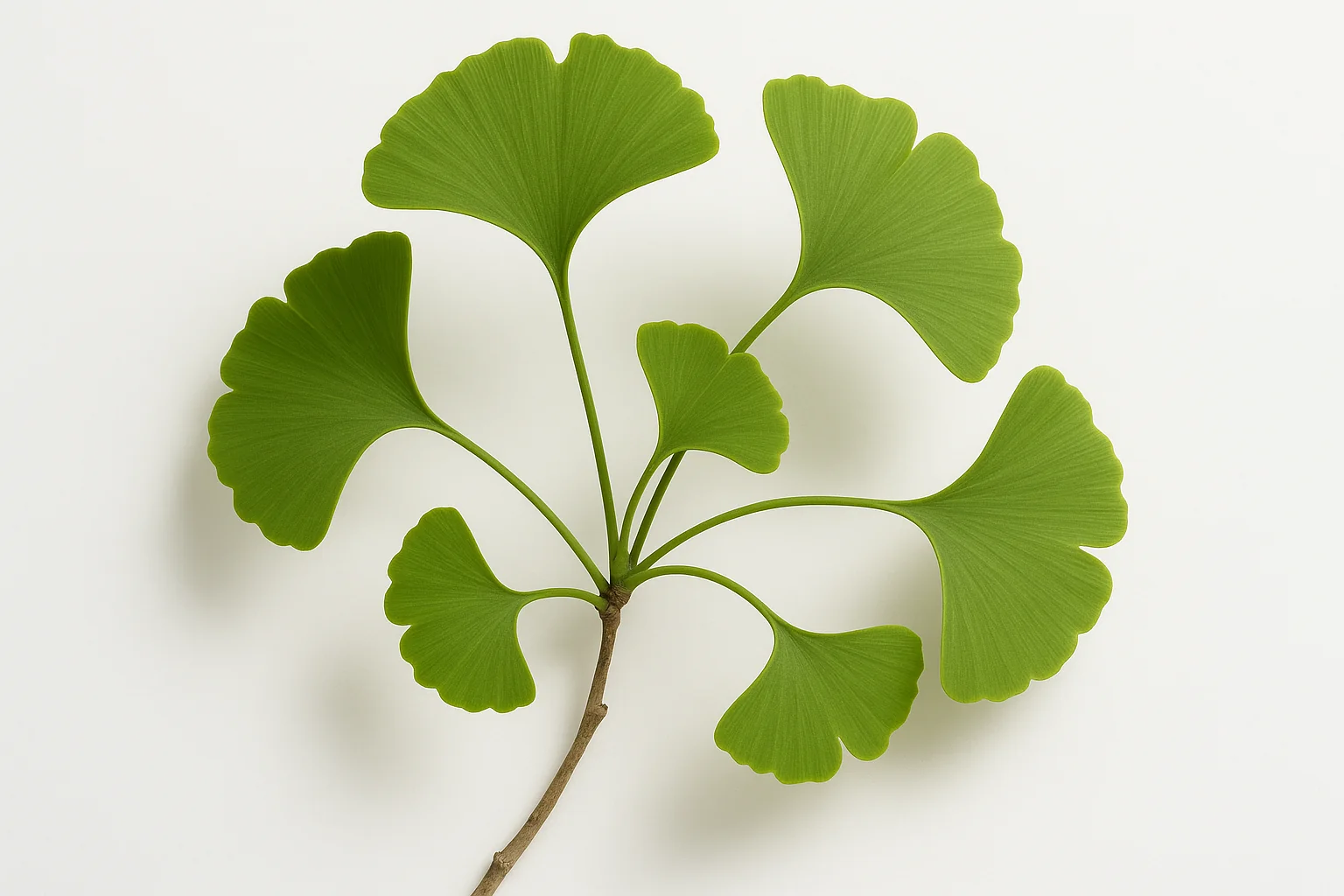
Ginkgo biloba leaves contain two main groups of active compounds: flavonoids (including quercetin, kaempferol, isorhamnetin) and terpenes (ginkgolides A, B, C, and bilobalide). The standardized extract EGb 761 contains 24% flavonoids and 6% terpenes. Proposed mechanisms of action in the context of tinnitus and hearing disorders (Sierpina et al., American Family Physician, 2003):
- Improvement of microcirculation in the inner ear vessels through antiplatelet action (PAF antagonism) and vasodilation
- Antioxidant action protecting hair cells of the Corti organ from oxidative stress
- Modulation of neurotransmission in the central auditory system - ginkgolides exhibit neuroprotective effects in in vitro models
- Reduction of glutamate excitotoxicity in the auditory nuclei of the brainstem
Do these mechanisms translate into clinical effects? In vitro and animal model data are promising. The problem is that tinnitus is a symptom - not a disease - and its pathophysiology is multifactorial. In most patients, tinnitus results from damage to hair cells (due to noise exposure, ototoxic drugs, age-related hearing loss). In these cases, improving microcirculation may not be sufficient, as the structures are already damaged.
Ginkgo biloba for other indications - what does the evidence say?
It is important to distinguish the question "does ginkgo work for tinnitus" from the broader question of the effectiveness of this supplement in general. Ginkgo biloba has significantly stronger evidence of efficacy for several other indications. The EMA approves the standardized extract EGb 761 for use in cognitive disorders related to aging and in mild to moderate dementia symptoms - based on a large number of clinical studies (EMA Herbal Monograph, Ginkgo biloba, 2014).
A large randomized study, GuidAge (2012, n=2854, 5 years of observation), evaluated ginkgo in the prevention of Alzheimer's disease in individuals with subjective memory loss. The results were neutral - ginkgo did not prevent progression to dementia (Vellas et al., The Lancet Neurology, 2012). However, meta-analyses using EGb 761 in symptomatic vascular and mixed dementia showed improvement in cognitive functions - a moderate but consistent effect.
For tinnitus, this context is important: even if ginkgo improves cerebral microcirculation and has neuroprotective effects, it does not automatically mean effectiveness for tinnitus. Central tinnitus (resulting from cortical reorganization after hearing damage) and vascular tinnitus are different pathophysiological states - and no drug or supplement works uniformly for both. The thinking that "it improves cerebral circulation, so it will help with tinnitus" is an oversimplification that is not clinically supported.
What is truly effective in treating tinnitus?
Knowing that ginkgo has limited evidence of effectiveness, it is worth being aware of methods with a stronger evidence base. Cognitive-behavioral therapy (CBT) is the only method rated by Cochrane as "effective" in reducing tinnitus severity and improving quality of life in patients with tinnitus (Martinez-Devesa et al., Cochrane, 2010). CBT does not eliminate the sound, but reduces the perception of its annoyance and improves functioning.
Our observations indicate that patients with tinnitus are rarely informed about CBT as a treatment option - and this therapy has significantly stronger evidence than any supplement. Tinnitus retraining therapy (TRT), which combines counseling with sound therapy, has also shown effectiveness in reducing the perception of ear sounds. Herbal supplements may be complementary, but they will not replace a diagnostic-therapeutic approach by a specialist.
Frequently Asked Questions
Does ginkgo biloba help with tinnitus?
The evidence is conflicting. The largest RCT (Drew and Davies, n=1121) showed no benefits, and a Cochrane review (2013) rated the evidence as insufficient (Hilton et al., 2013). Possible effectiveness in a subgroup with vascular tinnitus - but there is a lack of large RCTs in this population. It is advisable to consult an ENT specialist before use.
What is the dosage of ginkgo for tinnitus?
In clinical studies, a standardized extract of EGb 761 was used at a dose of 120-240 mg per day (twice daily). Doses lower than 120 mg/day, used in older studies, were likely insufficient. The EMA allows 120-240 mg of EGb 761 for cognitive disorders; there is no formal indication for tinnitus.
How long should ginkgo be taken for tinnitus?
In studies, the observation period was 12-24 weeks. Effects - if they occur - are visible at the earliest after 4-6 weeks. Due to conflicting evidence of effectiveness, use without medical consultation for more than 3 months is not recommended. If there is no improvement after 8-12 weeks, further use is likely pointless.
Is ginkgo biloba safe?
At standard doses - yes. Possible side effects: headaches, gastrointestinal disturbances, dizziness. Key interaction: ginkgo exhibits antiplatelet effects and may increase the risk of bleeding with warfarin, aspirin, or clopidogrel (Sierpina et al., AFP, 2003). Individuals on anticoagulant medications must consult their doctor before using ginkgo.
How does ginkgo biloba work for tinnitus?
The proposed mechanisms are: improvement of microcirculation in the inner ear (PAF antagonism), antioxidant action protecting hair cells, and modulation of neurotransmission in the auditory nuclei. None of these mechanisms has been confirmed as dominant in tinnitus in humans.
Can tinnitus be effectively treated with herbs?
No herbal method has strong evidence of effectiveness in tinnitus. The best-documented methods are cognitive-behavioral therapy (CBT)Martinez-Devesa et al., Cochrane, 2010) and tinnitus retraining therapy (TRT). Each case of tinnitus requires laryngological diagnostics to exclude causes that require causal treatment.
This article is for informational and educational purposes and does not replace consultation with a doctor. If you are pregnant, breastfeeding, taking medications, or have chronic conditions, consult the use of supplements or herbs with a specialist.
Author: Michał Waluk · Published: 2026-05-04 · Updated: 2026-05-04