
GABA supplement: what it is, when it really works, and what to combine it with for sleep and stress
GABA as a supplement: what studies in humans have really shown, why the debate about the blood-brain barrier continues, and what to combine GABA with for sleep and stress.
GABA, or gamma-aminobutyric acid, is the main inhibitory neurotransmitter in the human cerebral cortex. This same compound is now sold as a supplement for stress and sleep, and it has become the subject of one of the most persistent controversies in supplementation: whether the molecule taken orally actually reaches where it is supposed to act. The answer has practical implications, as it determines whether you are buying an effect or just a package. Below, we separate what studies on humans have shown from what advertising has added. You will see how much was actually measured, on whom, and with what results, where the evidence ends, and the hypothesis begins, and which popular statements about GABA misinterpret the results of the studies they reference. You will also see what has not yet been checked with this supplement.
KEY INFORMATION
• In Kanehira's study (Journal of Nutritional Science and Vitaminology, 2011), a drink with 50 mg of GABA reduced mental fatigue in 30 healthy participants, while at 25 mg there was no effect on this scale.
• Boonstra's review (Frontiers in Psychology, 2015) states that the mechanism of action of GABA supplements remains unknown, and a significant portion of the beneficial results comes from authors with potential conflicts of interest.
• A popular study on the combination of GABA with L-theanine was conducted on mice and rats, not on humans.
• GABA is not a substitute for the treatment of anxiety disorders or insomnia.
What is GABA and how does it work in the brain?
GABA is the main inhibitory neurotransmitter in the human cerebral cortex. It is synthesized in neurons from glutamic acid, the main excitatory neurotransmitter, with the help of glutamic acid decarboxylase and vitamin B6 as a cofactor. Its role is to calm excessive neuronal activity, and the efficiency of this system determines the excitability threshold of the entire brain.
It acts through two types of receptors. GABA-A is a chloride channel that opens quickly and immediately reduces cell excitability. This is where benzodiazepines and barbiturates act, with benzodiazepines not mimicking GABA but enhancing the receptor's response to the body's own GABA. GABA-B is a receptor coupled with a G protein, acts more slowly, and regulates potassium channels.
This biology is well described and no one disputes it. The debate concerns something else: whether GABA swallowed in a capsule behaves like GABA produced in a neuron. These are two separate questions, and confusing them is the source of most misunderstandings surrounding this supplement. The brain maintains neurotransmitter levels through feedback mechanisms, so providing a substrate from the outside does not directly translate into higher activity of the inhibitory system.
Does GABA from the supplement reach the brain?
The honest answer is: it's unclear. Boonstra's review and colleagues from 2015, published in Frontiers in Psychology, is dedicated precisely to this question and concludes that the mechanism of action of GABA supplements remains far from being explained.
The authors write that for years it was believed that GABA does not cross the blood-brain barrier, but the studies that checked this are often contradictory and vary significantly in methods. They suggest measuring the effect of oral GABA on its concentration in the human brain directly, for example, using magnetic resonance spectroscopy. This is a proposal for the future, not a report of a measurement that has been made.
Two sentences from this review are more important for the reader than the rest. The first: it is unclear whether the benefits reported by users exceed the placebo effect. The second: there is some evidence for the calming effect of GABA supplements, but most of it comes from researchers with potential conflicts of interest. The authors allow for two possible pathways of action, through the blood-brain barrier or indirectly through the enteric nervous system, and treat both as hypotheses to be tested.
The version found in commercial descriptions, according to which this same review proved the effectiveness of GABA, is a reversal of its conclusion. The work does not confirm the action, it only describes why it has not yet been resolved.
What have studies on GABA in humans really shown?
There are several studies involving humans, they are small and mostly come from one research circle. The table below summarizes what was actually measured in them. Pay attention to the group sizes: these are dozens of people, not thousands, so each of these results is a premise, not a resolution.
| Study | Kto i ilu | Co podano | What was found |
|---|---|---|---|
| Abdou 2006, BioFactors | 13 people in part with EEG recording, 8 people with acrophobia in the second part | GABA orally, comparison with water and L-theanine | after 60 minutes more alpha waves and fewer beta waves; in individuals crossing a suspension bridge, the level of immunoglobulin A in saliva did not drop as it did in the placebo group |
| Kanehira 2011, Journal of Nutritional Science and Vitaminology | 30 healthy individuals, including 9 with diagnosed chronic fatigue | 250 ml napoju z 0, 25 albo 50 mg GABA przed testem arytmetycznym | mental fatigue significantly lower only at 50 mg; chromogranin A and cortisol in saliva lower at both doses |
| Yamatsu 2016, Food Science and Biotechnology | volunteers in a crossover design with placebo, single-blind trial | GABA doustnie, sen oceniany zapisem EEG | shorter sleep latency and longer non-REM sleep; blood GABA concentration highest 30 minutes after intake, then decreased |
| Boonstra 2015, Frontiers in Psychology | literature review, without own participants | nie dotyczy | mechanism unknown, evidence partially burdened by conflicts of interest of the authors |
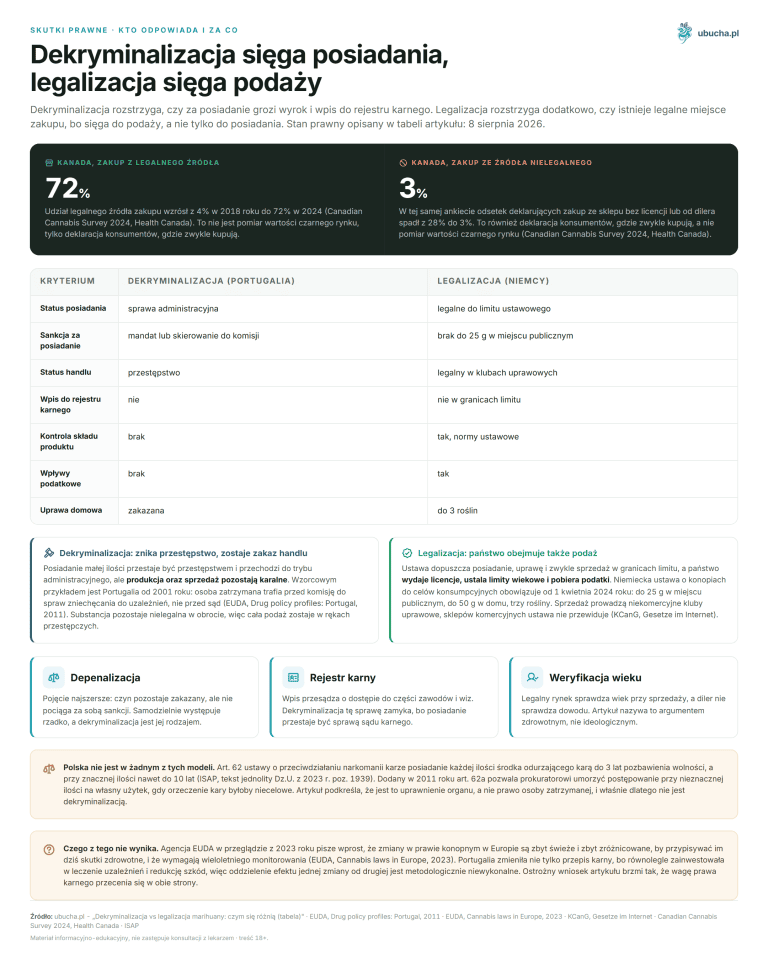
Two things are only visible in such a comparison. Alpha waves after GABA increase, not decrease, so descriptions stating "reduction of stress alpha waves" contradict Abdou's results. And the effect on subjective fatigue in Kanehira appeared at the higher of the two doses studied, not at the lower.
What is the difference between PharmaGABA and synthetic GABA?
The difference lies in the method of production, not in the molecule. PharmaGABA is the trade name for gamma-aminobutyric acid obtained through bacterial fermentation involving Lactobacillus hilgardii, bacteria known from fermented foods. Synthetic GABA is produced chemically. The resulting compound is the same.
Manufacturers attribute better absorption to the fermented form. We searched for a study that would directly compare both forms in one study, in humans, and we did not find such a study. This does not prove that there is no difference; it means that no one has measured it in a setup that would allow it to be seen.
It is worth remembering the caveat that Boonstra and colleagues state directly: a significant portion of the beneficial results for GABA supplements comes from teams affiliated with their manufacturers. This also applies to some studies cited by the marketing of the fermented form. This does not invalidate their results, but it requires reading them more cautiously than independent work. If the fermented form costs significantly more, you are paying today for a declaration, not for demonstrated superiority. When choosing a product, it is therefore more practical to ask about the purity of the raw material and about batch testing rather than the method of its production.
How much GABA was administered in studies and why is this not a recommendation?
The numbers from the studies describe a specific experiment: who was examined, how many people participated, and what the result was. They are not a dosing instruction. In Kanehira, thirty healthy participants drank 250 ml of a beverage containing 0, 25, or 50 mg of GABA directly before an arithmetic task, and mental fatigue significantly decreased only at the higher dose.
In the Abdou study, thirteen participants had EEG recordings after water, after GABA, and after L-theanine; the difference in alpha and beta waves revealed itself an hour after intake. In the second part of the same study, eight participants with acrophobia crossed a suspension bridge, and in the GABA group, the level of immunoglobulin A in saliva did not drop as clearly as in the placebo group.
Yamatsu's 2016 study concerned sleep and absorption. The summary provides a crossover design with placebo, sleep assessment in EEG, and that blood GABA concentration peaked 30 minutes after oral administration. It does not provide either the number of participants or the size of the doses, so it cannot be read how much was given to whom. The circulating version online about a four-week study on forty people with insomnia could not be confirmed in the available summary of this work.
The practical conclusion is simple: discuss the sensibility of supplementation and the size of the dose with a doctor or pharmacist, especially if you are taking any medications. This text describes studies, not a protocol.
What to combine GABA with for sleep and stress?
The most frequently mentioned companion of GABA is L-theanine, an amino acid from green tea. The basis for this recommendation is usually Kim and colleagues' 2019 work on reduced sleep latency. Its full description looks different than what product descriptions suggest.
The study was published in Pharmaceutical Biology, not in Food Science and Nutrition, and it was conducted on animals: ICR strain mice in a pentobarbital sleep test and on rats with EEG recordings, including in a caffeine stimulation model. The mixture was administered based on body weight. Sleep latency decreased by 20.7% and 14.9% compared to GABA alone and L-theanine alone, and sleep duration increased. The summary does not mention any part involving humans, so the figure "24.1% in healthy volunteers," repeated in Polish descriptions, does not come from it or from any study we managed to find.
This does not mean that the combination does not make sense. It means that its basis today is animal physiology and the result of one study, not a study involving humans. Similarly, treat comparisons with magnesium and melatonin cautiously: both substances have their own independent evidence of influence on sleep, but no one has measured synergy with GABA in humans. Separately and without nuances: do not combine GABA with alcohol or sedative medications. If you are looking for comparisons of other ingredients affecting tension and sleep, we described them in the text about adaptogens and their impact on the central nervous system.
Is GABA safe with epilepsy and anxiety medications?
The answer is: this has not been studied, and that is not the same as "it is safe." Antiepileptic drugs largely act on the GABAergic system. Valproate inhibits GABA breakdown, gabapentin and pregabalin act on calcium channel subunits, benzodiazepines enhance the response of the GABA-A receptor. Adding a supplement with an uncertain mechanism introduces a variable that no one has described.
The same caution applies to baclofen, a GABA-B receptor agonist used as a muscle relaxant. There is no clinical study assessing what oral GABA does in a person taking any of these medications. In treating epilepsy, leave the decision to a neurologist, and in treating anxiety disorders, to a psychiatrist.
It is also worth distinguishing between two situations. GABA supplements are not a milder version of benzodiazepines or their natural equivalent, as the mechanism is completely different and does not replace treatment. In situational tension in a healthy person who is not taking medications, the safety profile looks good, and reported side effects are mild and transient: tingling or warmth, less often drowsiness. In epilepsy, taking supplements on your own is a separate risk; we write about the state of research on other compounds in the context of kannabidiwaryny badanej przy padaczce.
How can the gut mediate the action of GABA?
The gut pathway is the most frequently cited hypothesis explaining why people report an effect from a supplement whose passage to the brain is questionable. Boonstra and colleagues point it out directly as one of two possibilities, alongside limited crossing of the blood-brain barrier.
The mechanism looks like this: the enteric nervous system has its own GABA receptors, and the vagus nerve leads from the gut to the brainstem. Thus, the inhibitory signal could reach the central nervous system without the need to transport the molecule itself. Additionally, there are gut bacteria capable of producing GABA, including strains of Lactobacillus.
However, it must be named for what it is: it is a hypothesis formulated by the authors of the review, not a measured pathway. There is no study that has traced the signal from the capsule, through the gut receptors and the vagus nerve, to behavioral change in humans. Until such a measurement exists, the gut pathway explains why the effect is even possible despite the barrier, but does not prove that it occurs. If you are interested in how far the evidence for the gut-brain axis extends today, we have gathered it in the text about psychobiotics and the influence of gut bacteria on mood.
Who can GABA help, and who probably cannot?
GABA supplements make sense at most as a mild support for a healthy person who is not taking medications and is dealing with situational tension or difficulty calming thoughts before sleep. With such a profile, the risk is low, and expectations should be appropriately modest.
There are also situations where reaching for GABA is a waste of time or simply a bad idea. A diagnosed anxiety disorder requires therapy and a doctor's decision. Chronic insomnia has a first-line treatment, which is cognitive-behavioral therapy, not a supplement. Epilepsy and psychiatric treatment necessitate a mandatory consultation, as no one has studied the interactions. During pregnancy, while breastfeeding, and in children, there is simply no safety data.
Our assessment after reviewing the available studies: GABA is a supplement with low risk and uncertain effectiveness, not a substance to expect a clear change from. If after a few weeks you don't see a difference, the most likely explanation is that there isn't one, not that the dose was too small.
Frequently Asked Questions
Does GABA from the supplement cross the blood-brain barrier?
It's unclear. A review by Boonstra and colleagues from 2015 in Frontiers in Psychology states outright that research on this question is contradictory and varies in methods, and the mechanism of action of GABA supplements remains unknown. The authors propose two hypotheses: limited passage through the barrier or action via the enteric nervous system.
What is the difference between PharmaGABA and synthetic GABA?
Method of production. PharmaGABA is produced through bacterial fermentation, while synthetic GABA is created through a chemical reaction. The molecule is the same. We did not find a study that directly compared both forms in humans, so the claim of better absorption for one of them is not supported by published comparisons.
How much GABA was administered in studies on humans?
In Kanehira's 2011 study, thirty healthy participants consumed 250 ml of a drink containing 0, 25, or 50 mg of GABA before an arithmetic test. Mental fatigue significantly decreased only with 50 mg. This is a description of the study, not a dosage to measure: decide on supplementation with a doctor or pharmacist.
What to combine GABA with for sleep and stress?
L-theanine is most often mentioned, but Kim's 2019 study in Pharmaceutical Biology, cited by most descriptions of this combination, was conducted on mice and rats, not on humans. There is a lack of human confirmation of this synergy. Do not combine GABA with alcohol or sedative medications.
Who should avoid GABA supplements?
Individuals taking medications that affect the GABAergic system: benzodiazepines, baclofen, gabapentin, and valproate. No one has studied such combinations. Caution is also advised during pregnancy and breastfeeding and in children, as there is simply no safety data for these groups.
We checked the assortment of the u Bucha store in this regard: there is no product containing only GABA. supplements However, in the category, you will find magnesium in several forms, which is the ingredient most often discussed regarding its impact on muscle tension and sleep.
This article is for informational and educational purposes and does not constitute medical advice. Before starting supplementation, consult your doctor, especially if you are taking medications regularly, are pregnant or breastfeeding, or have a chronic illness.
Author: Michał Waluk · Opublikowano: 2026-05-22 · Aktualizacja: 2026-08-16