


Pipes and bongs - types, materials, and how to choose (FAQ)
Pipes and one-hitters: answers to frequently asked questions and what studies say. u Bucha.
A pipe for flower is one of the most classic cannabis accessories - the history of pipes for smoking herbs dates back thousands of years, and the modern market offers hundreds of models differing in material, shape, size, and price. The choice between glass, wood, metal, or ceramic has a real impact on flavor, durability, and ease of cleaning. This article answers the most common questions about pipes and one-hitters to help you choose the right model for your usage style.
KEY INFORMATION
• Borosilicate glass (Pyrex) - the purest flavor, easy to clean, mechanically sensitive.
• Wood - distinctive flavor, durable, requires seasoning and maintenance.
• Metal - the cheapest, shatter-resistant, may affect the taste with an unknown alloy composition.
• One-hitter pipe - discreet, precise dosing, requires frequent cleaning.
• Bubbler - a compromise between a pipe and a bong: water filtration without the bulk of a bong.
Types of pipes and one-hitters - an overview of the main types
The market for dry herb accessories offers several distinctly different types of pipes and bowls, each with a different usage profile. Familiarizing yourself with these types is the first step to making a good choice.
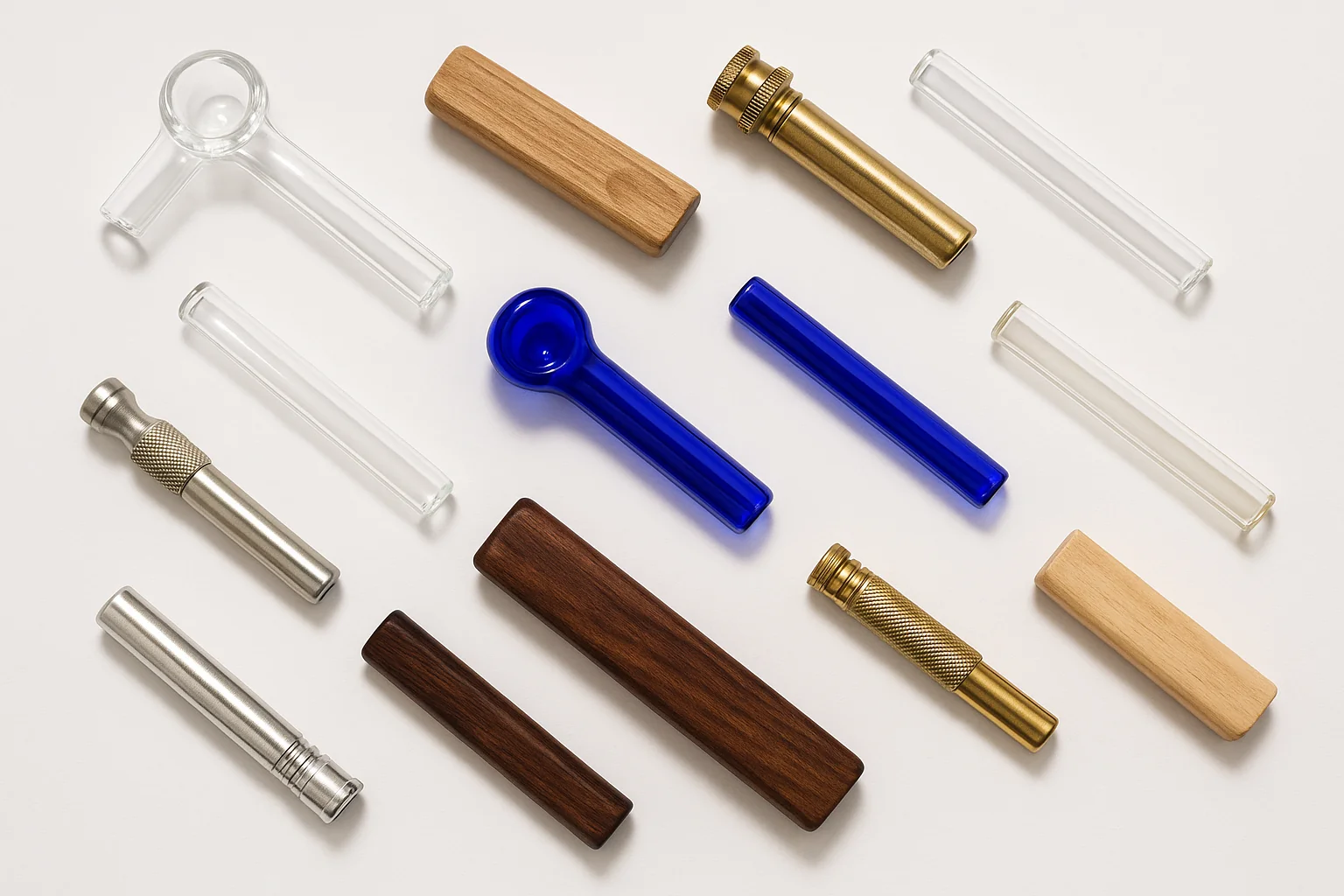
Glass Pipe (spoon pipe) this is the most commonly encountered type - it resembles a table spoon in shape. It has a bowl for the material, a tunnel for smoke, and a mouthpiece. Most have a side hole (carb hole) that regulates airflow - covering it with a finger while inhaling and releasing it during the breath provides a clean, intense effect. Sizes range from 7 cm (miniature) to 15 cm (standard).
Chillum (bowl pipe) is a simple, tubular pipe without a side hole. The material is packed into the bowl at one end of the tube. Traditionally used in India and Nepal for consuming charas (hashish). Easier to use than a spoon pipe, but offers less control over airflow.
One-hitter (pipe) is a miniature pipe for a single serving of dry herb. Often sold together with a dugout container: a wooden or plastic case where one tunnel holds the herb and the other holds the one-hitter. Ideal for discreet, mobile use with precise dosing.
Bubbler this is a hybrid pipe with a water chamber. Smoke from the bowl passes through water before reaching the mouthpiece. The effect is cooler, gentler smoke without the need for a full-sized bong. Bubblers are usually made from a single piece of glass - harder to clean than collapsible accessories.
Steamroller this is a glass tube, usually 15-25 cm long, with a bowl on top and a large carb hole on the side of the back wall. The smoke is neither filtered nor cooled - steamrollers are known for intense, strong inhales. Intended for experienced users.
Pipe materials - glass, wood, metal, ceramic
Borosilicate Glass (Pyrex) this is the gold standard for most users. Borosilicate is chemically inert at the temperatures used for pipes - it does not react with smoke or condensate, which means a clean, neutral taste without material influence. Glass is easy to clean with isopropanol. The downside is fragility - a fall from a table onto a hard surface usually results in a broken pipe. Soda glass (cheaper) is more prone to breaking with sudden temperature changes than borosilicate.
Wood gives the smoke a distinctive flavor that many users appreciate as part of the ritual. Popular types include briar, apple, cherry, ebony, and olive. Wooden pipes require seasoning before first use - a few short sessions with a small amount of material to allow the inner coating to develop. Wood absorbs moisture and resins from the condensate, which affects the taste over time. Regular cleaning with a pipe cleaner extends the lifespan of a wooden pipe.
Metal - aluminum and metal alloys - this is the cheapest and most mechanically resistant material. Metal pipes do not break easily. The main drawback: the alloy composition matters. Cheap pipes made from unknown aluminum or zinc may release volatile metal compounds when heated. Look for pipes made from aircraft-grade aluminum (6061 or similar) or Grade 2 titanium - both materials are safe for pipe use.
Ceramics this is a less common but interesting material. Ceramic is chemically inert like glass, does not affect the taste, and is more mechanically resistant than glass (does not break as easily, though it can crack under strong impact). Ceramic pipes are usually handmade and expensive - often a choice for collectors or those who appreciate original design.
| Material | Flavor | Shelf life | Cleaning | Price (standard size) |
|---|---|---|---|---|
| Borosilicate glass | Neutral | Low (fragile) | Very easy (IPA + salt) | 20-100 zł |
| Wood | Characteristic | High | Dry cleaners | 40-200 zł |
| Metal (Al/Ti) | Metallic (light) | Bardzo wysoka | Easy | 15-60 zł |
| Ceramics | Neutral | High | Easy | 60-250 zł |
Mesh screens - are they necessary?
Mesh screens are small metal or glass meshes placed at the bottom of the bowl of a pipe. Their purpose is to prevent particles of herb from entering the pipe tunnel and going directly into the mouth. With very finely ground herb or heavily burnt material that crumbles into powder, a mesh screen is helpful. With properly ground and packed material, it is not absolutely necessary.
Metal mesh screens require regular replacement - they accumulate resins and black residue that becomes difficult to remove over time. Disposable metal screens are available in packs of several dozen for a few złoty. Glass screens are more durable and easier to clean with isopropanol, but also more expensive. With glass pipes that have a well-shaped bowl opening (not too small, not too large), a mesh screen may not be necessary - the bowl itself holds back coarser material.
Pipe for herb vs. vaporizer - when is it worth considering a change?
A pipe for herb uses combustion - just like a joint. Smoking a pipe produces smoke containing incomplete combustion products: carbon monoxide, soot, and polycyclic aromatic hydrocarbons. People struggling with chronic respiratory symptoms (cough, hoarseness, irritating sensation in the throat after a session) often notice a significant improvement after switching to a vaporizer.
A vaporizer heats the herb to a temperature below the combustion threshold and releases active ingredients in the form of vapor without smoke. The European Monitoring Centre for Drugs and Drug Addiction (EMCDDA) indicates vaporization as a method with a lower exposure profile to harmful substances from combustion (EMCDDA, 2023). A pipe is simpler, cheaper, and more accessible as an entry point to herb consumption, while a vaporizer offers a better safety profile at a higher cost of equipment.
How to use a pipe - basics for beginners
Using a pipe for herb is simple, but a few basic tips enhance the experience. The herb should be ground before packing into the bowl - coarsely ground, not to powder. Too finely ground material clogs the bowl opening and makes it difficult to draw air. Too coarse leads to uneven burning and lack of control over the dose.
Fill the bowl loosely - do not pack the material too tightly. Lightly packed herb allows air to pass through, while tightly packed clogs the bowl. Hold the pipe so that the bowl is horizontal or slightly raised - if tilted too much, the material may fall out during inhalation. If the pipe has a carb hole, cover it with your finger while drawing air and release it during the last, clearing inhale.
Light the material from the outer edge of the bowl, not from the center - this technique is called "cornering," which allows for several fresh lights from the same bowl. Lighting from the center immediately covers the entire surface of the material and reduces the number of fresh inhales when sharing the pipe with others.
Frequently Asked Questions
What is the difference between a pipe and a one-hitter?
A pipe is an accessory with a bowl for material and a mouthpiece - larger capacity, comfort for longer sessions. A one-hitter is a smaller, tubular form designed for a single dose - discreet and precise in dosing. Both serve for consuming herb, but differ in capacity, size, and style of use.
What material is best for a dry herb pipe?
Borosilicate glass (Pyrex) is the best choice for most - neutral taste, easy cleaning, available in many designs. Wood provides a distinctive flavor and is mechanically more durable. Metal is the cheapest and shatter-resistant, but with an unknown alloy composition, it may affect the taste. Ceramic is a premium option that combines the advantages of glass with better mechanical durability.
How to clean a glass pipe?
Fill the pipe with isopropanol (90%+) and coarse salt. Cover the openings and shake vigorously - the salt acts as an abrasive, and the isopropanol dissolves the resins. Leave for 30 minutes with heavy deposits, then rinse with hot water. Regular cleaning every 5-10 sessions prevents difficult-to-remove black deposits.
What is a one-hitter and who is it for?
A one-hitter is a simple pipe with a small bowl for a single serving of herb. It is designed for those who value discretion, portability, and precise dosing. It allows you to control the amount of material session by session. The downside is that the small bowl clogs quickly - it requires frequent cleaning with regular use.
Is a water pipe (bubbler) better than a regular pipe?
A bubbler cools and filters smoke through water, which reduces throat irritation. It is a compromise between the compactness of a pipe and the filtration of a bong. The downside is that it is harder to clean and more expensive than a simple glass pipe. For those with sensitive airways, it is a sensible intermediate option.
How long does a good glass pipe last?
A borosilicate glass pipe, when used correctly and cleaned regularly, can last practically indefinitely - glass does not chemically degrade within the range of usable temperatures. The main risk is mechanical breakage from a fall. Pipes made of thin soda glass are more prone to cracking with sudden temperature changes.
This article is informational and educational in nature. It contains internal links to products available in the u Bucha store. Prices and specifications may change - please check the current data on the product page before purchasing.
Author: Michał Waluk · Published: 2026-05-04 · Updated: 2026-05-04