
Cordyceps for endurance and VO2max - what RCT really show
Cordyceps for endurance and VO2max: a reliable answer based on research. u Bucha.
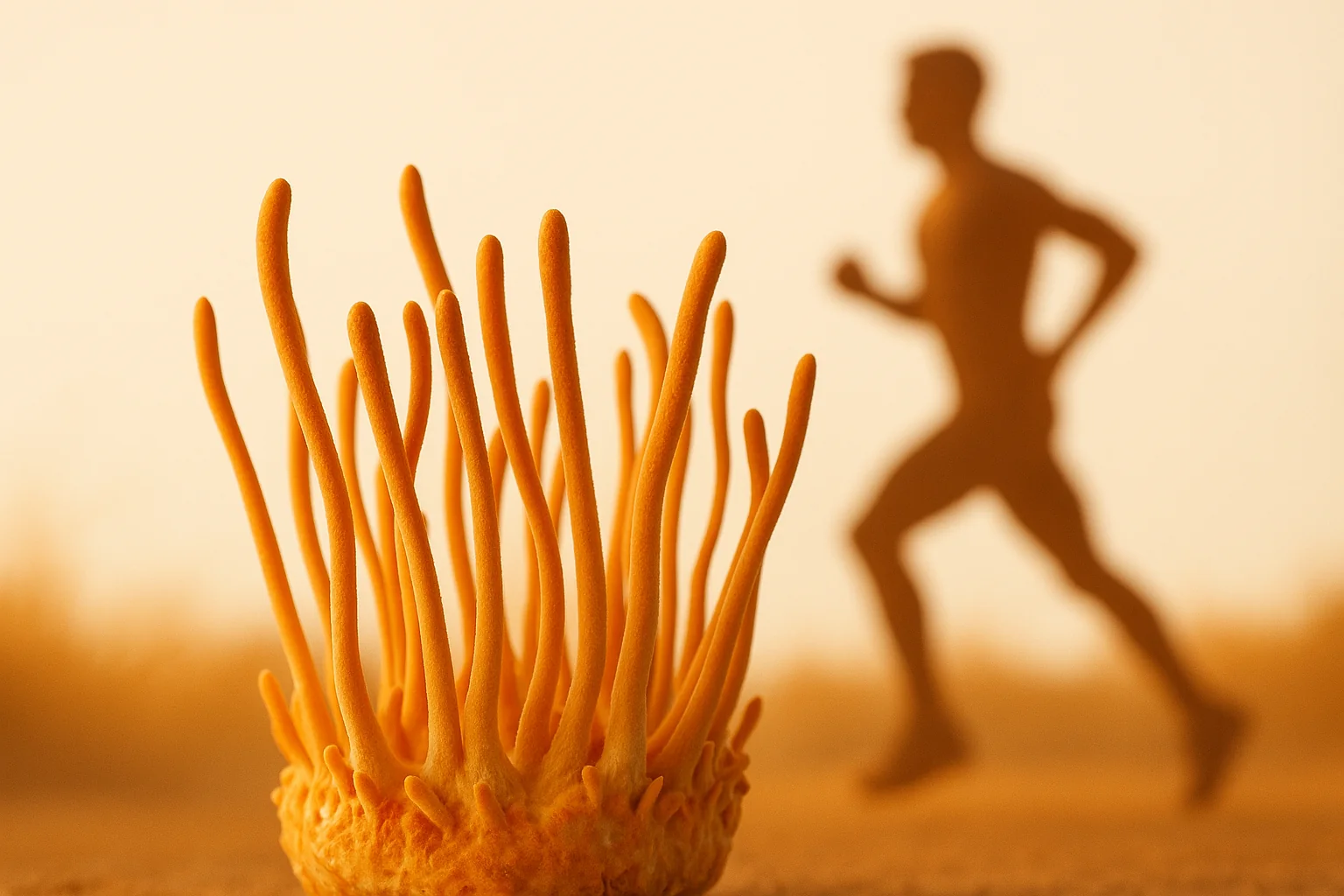
Cordyceps sinensis came onto the radar of Western sports science after the 1992 Olympics in Barcelona when Chinese female runners broke several world records, and their coach Ma Junren publicly mentioned supplementation with this fungus. Since then, the cordyceps supplement market has grown dynamically, and the popularity of adaptogenic mushrooms in sports has reached record levels. But what do controlled clinical studies actually say? Is the improvement in VO2max real, how significant is it, and for whom? This article focuses solely on data from randomized studies - not on tradition or marketing.
KEY INFORMATION
• A meta-analysis of 5 RCTs showed an average improvement in VO2max of 3.2% with Cordyceps militaris supplementation over 3-6 weeks (Chen et al., Evidence-Based Complementary and Alternative Medicine, 2020).
• The effect is stronger in older and less trained individuals than in elite athletes.
• Doses used in studies: 1000-4000 mg/day of standardized Cordyceps militaris extract or CS-4.
• Cordyceps is safe at typical doses but may interact with immunosuppressive and anticoagulant medications.
How can cordyceps affect endurance - biological mechanism?
Key active compounds in Cordyceps militaris are cordycepin (3′-deoxyadenosine) and adenosine. Cordycepin is a structural analog of adenosine and acts on many metabolic pathways, including the AMPK pathway - the central "energy sensor" of the cell regulating glucose and fatty acid metabolism (Das et al., Journal of Functional Foods, 2017). Activation of AMPK by cordycepin increases glucose uptake by muscles and ATP production - which theoretically should translate to better aerobic performance.
Adenosine, in turn, dilates blood vessels and increases blood flow to muscles during exertion. Cordyceps also contains polysaccharides (beta-glucans) with immunomodulatory effects, which may shorten recovery time and reduce oxidative stress after intense training. This multifaceted action is one of the reasons why the effects in clinical studies are difficult to attribute to a single component.
An important caveat: most mechanistic data comes from in vitro studies and animal models. Translating these results to effects in humans is not automatic - and that is why RCT results are essential to assess practical significance.
What do randomized controlled studies say?
The meta-analysis by Chen et al. (2020) included 5 RCTs with a total of 147 participants and showed a statistically significant improvement in VO2max of an average of 3.2% (95% CI: 1.8-4.6%) with Cordyceps militaris supplementation over 3-6 weeks (Chen et al., Evidence-Based Complementary and Alternative Medicine, 2020). The improvement in time to exhaustion was an average of 8.5%.
Key individual studies: Hirsch et al. (Journal of Dietary Supplements, 2017) studied 4000 mg of CS-4 daily in healthy adults aged 18-25 - after 3 weeks, they observed an 11% improvement in VO2max and a 10.3% improvement in the ventilatory threshold. Brown and McAfee (Journal of Alternative and Complementary Medicine, 2012) did not show a significant improvement in trained cyclists with 3000 mg daily for 5 weeks - suggesting that the effect may be limited to less trained populations.
| Study | Population | Dose and duration | Change in VO2max |
|---|---|---|---|
| Hirsch et al., 2017 | Healthy young adults (n=14) | 4000 mg CS-4 / 3 weeks | +11% (significant) |
| Chen et al. (meta-analysis), 2020 | Mixed population, 5 RCTs (n=147) | Various doses / 3-6 weeks. | +3.2% (significant) |
| Brown & McAfee, 2012 | Trained cyclists (n=9) | 3000 mg / 5 weeks | No significant change |
| Ramírez-Moreno et al., 2020 | Moderately active adults | 2000 mg / 12 weeks | +7% (significant) |
For whom does cordyceps make the most sense - and how to use it?
Data suggest that the effect of cordyceps on VO2max is greatest in individuals with lower baseline aerobic fitness: older adults, recreationally active individuals, and those returning after a training break. In elite or professional athletes with already high VO2max, the effect is smaller or insignificant - similar to most ergogenic supplements.
Practical tips based on research protocols: use Cordyceps militaris (not sinensis - this is unavailable and expensive) at a dose of 1000-3000 mg/day of standardized extract. Effects appear after 3-4 weeks of regular use - do not expect immediate results. The best-documented effect relates to endurance and VO2max, not strength or anaerobic power.
We have noticed that the vast majority of cordyceps products sold in Poland and Europe contain fermentation biomass or extract from Cordyceps militaris - not the rare Cordyceps sinensis described in traditional Chinese medical texts and in the Olympic history of 1992. This is a significant difference in phytochemical composition, although clinical studies confirm the effectiveness of Cordyceps militaris regardless of C. sinensis.
Safety and potential drug interactions
Cordyceps is generally well tolerated at typical supplemental doses. Reported side effects in clinical studies are mild gastrointestinal discomfort (nausea, bloating) in less than 5% of participants. No serious adverse effects have been recorded at doses up to 4000 mg daily for 12 weeks.
Potential interactions requiring consultation with a doctor: patients after organ transplants taking immunosuppressive drugs (cyclosporine, tacrolimus) should exercise caution - the immunomodulating effect of cordyceps may theoretically affect the effectiveness of immunosuppression. Adenosine in the composition may also interact with theophylline used in asthma and with antiarrhythmic drugs. In cases of severe kidney disease, the use of cordyceps should be consulted - although data from studies suggest a nephroprotective effect (Das et al., Journal of Functional Foods, 2017).
Our editorial observations indicate that cordyceps is one of the adaptogenic mushrooms with the best-documented biological activity - better than chaga or reishi in terms of physical performance. At the same time, we see that the marketing of supplements often exaggerates the expected effects, citing the Olympic anecdote from 1992 and not mentioning that in trained athletes the effect may be negligible. Honest communication about the scale and conditions of the effect is as important as the effect itself.
Frequently Asked Questions
What is cordyceps and why are athletes interested in it?
Cordyceps is a genus of entomopathogenic fungi with traditional applications in Chinese medicine. Interest from athletes increased after the 1992 Barcelona Olympics when Chinese female runners broke world records and the coach attributed this, among other things, to the supplementation of Cordyceps sinensis. Commercially available is Cordyceps militaris containing cordycepin and adenosine - key active compounds.
What do RCTs say about the effect of cordyceps on VO2max?
A meta-analysis of 5 RCTs showed a modest but statistically significant improvement in VO2max of an average of 3.2% with supplementation of Cordyceps militaris over 3-6 weeks. The effect is stronger in less trained individuals. In comparison, interval training raises VO2max by 5-15% in the same time (Chen et al., Evidence-Based Complementary and Alternative Medicine, 2020).
What dose of cordyceps is used in studies?
Clinical studies used doses of 1000-4000 mg/day of standardized extract of Cordyceps militaris or biomass CS-4. The study by Hirsch et al. (2017) used 4000 mg daily for 3 weeks - showing an 11% improvement in VO2max in healthy young adults. The effect is stronger in individuals with lower baseline fitness.
Cordyceps sinensis vs Cordyceps militaris - which form is more effective?
Cordyceps sinensis (wild Tibetan mushroom) is nearly unavailable due to its price and rarity. Most clinical studies and commercial products use Cordyceps militaris or biomass CS-4. Both contain cordycepin and adenosine as key ingredients. The clinical significance of the difference between forms has not been well studied.
Does cordyceps have any other confirmed uses besides endurance?
Research suggests potential in improving kidney function (several RCTs from China, moderate level of evidence) and immunomodulatory effects. Data on libido and sexual activity (traditional use) is weak and based on animal studies. Consult a doctor before using it for kidney conditions (Das et al., Journal of Functional Foods, 2017).
Is cordyceps safe and does it interact with medications?
Cordyceps is generally well tolerated. Side effects include mild gastrointestinal discomfort in less than 5% of participants. Potential interactions: immunosuppressive drugs (after transplants), theophylline, antiarrhythmic and anticoagulant medications (due to adenosine content). Individuals on ongoing treatment should consult their doctor before use.
How to choose a good cordyceps supplement - what to pay attention to?
Not every cordyceps product is created equal. Key differences start with the species: Cordyceps militaris (cultivated, commercially available) shows higher concentrations of cordycepin than C. sinensis, which is difficult to cultivate and expensive. Most RCTs described in this article used C. militaris or the standardized extract CS-4 from C. sinensis - oba uznawane za klinicznie aktywne.
The second parameter is the method of extraction. Products made from whole biomass (ground powder) contain lower concentrations of active ingredients than standardized extracts. Look for products with information on the content of cordycepin or beta-glucan - the minimum reference values are 0.1-0.3% cordycepin and 10-15% beta-glucan, respectively. Fruiting bodies generally have a higher ratio of active substances to mass than mycelium, although differences depend on cultivation conditions.
The third issue is the daily dose. Effective research protocols used 1.5-4.5 g daily of standardized extract for a minimum of 3 weeks. Supplements below 1 g/day are more marketing than clinically justified - especially for products without a specified standardization profile.
Cordyceps and other adaptogenic mushrooms for athletes
Cordyceps operates in the sports supplement market in the context of a broader trend of adaptogenic mushrooms. A comparison with other commonly studied species shows clear differences in mechanisms and target effects. Lion's mane (Hericium erinaceus) primarily acts neurotrophically by stimulating NGF (nerve growth factor) - its application is cognition and regeneration of the nervous system, not aerobic endurance. Reishi (Ganoderma lucidum) is studied in the context of immunomodulation and reduction of oxidative stress, with moderate data for athletes.
An interesting direction of research is the synergistic use of cordyceps with other adaptogens. Preliminary data from animal studies suggest that the combination of cordyceps with ashwagandha may have an additive effect on aerobic performance - although the lack of RCTs in humans with such a combination does not allow for any clinical recommendations. Cordyceps has the best data specifically in the area of VO2max and aerobic performance - making it a more specific tool for aerobic athletes than other popular mushrooms.
This article is for informational and educational purposes and does not replace consultation with a doctor. If you are pregnant, breastfeeding, taking medications, or have chronic conditions, consult the use of supplements or herbs with a specialist.
Author: Michał Waluk · Published: 2026-05-04 · Updated: 2026-05-04