
Liposomal CBD - what is it and is it worth the extra cost (FAQ)
Liposomalne CBD: odpowiedzi na najczestsze pytania i co mowia badania. u Bucha.
The CBD market is increasingly seeing products labeled as "liposomal" with a price clearly higher than standard oils. Is this justified? Liposomes are a technology known since the 1970s - they have been used in pharmaceuticals for decades to transport drugs across cell membranes. Millar and colleagues in a review published in Pharmaceuticals confirm that the bioavailability of oral CBD is low - only 6-19% - and that changing the method of administration is one way to improve it (Millar et al., Pharmaceuticals, 2019). This article explains what liposomes really are, what distinguishes them from marketing gimmicks, and when a higher price is justified.
KEY INFORMATION
• The bioavailability of oral CBD is only 6-19% without fat - liposomes are one of the technologies to improve it (Millar et al., Pharmaceuticals, 2019).
• Liposomes are vesicles made of phospholipids - the same structure as the cell membrane, used in pharmaceuticals since the 1970s.
• Not every product labeled as "liposomal" is a true liposomal form - check the composition and technical data.
• Taking standard CBD with a fatty meal can provide a similar effect without the extra cost for liposomes.
What are liposomes and how did they come to be in CBD supplements?
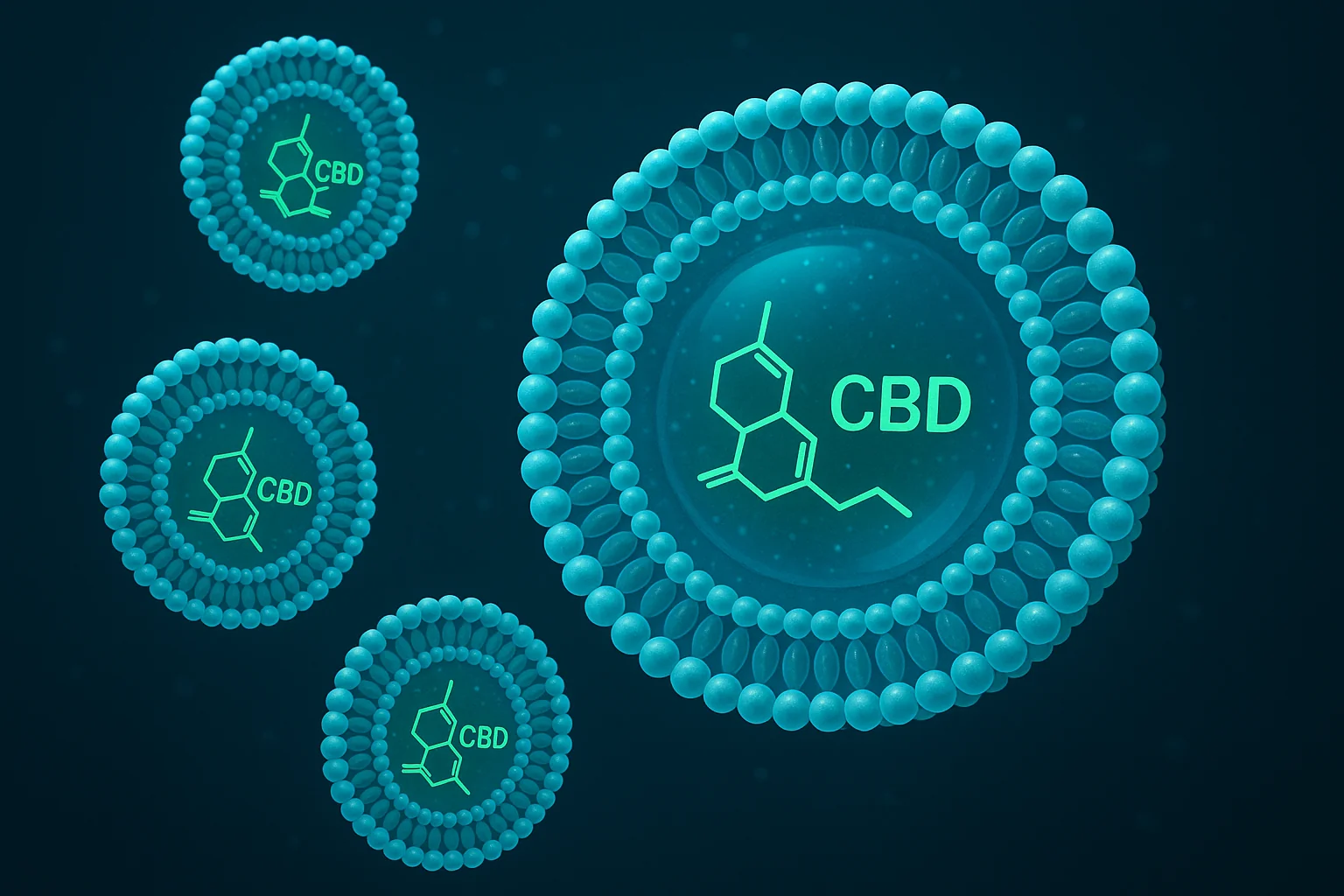
Liposomes were discovered in the 1960s, and the first liposomal oncology therapy - Doxil - received FDA approval in 1995. A liposome is a microscopic vesicle made of a double layer of phospholipids - identical to the cell membrane. This structure allows the liposome to encapsulate the active substance and "flow" through the aqueous environment of the body, protecting the contents from degradation, and then merge with the cell membrane to release the substance directly inside the cell.
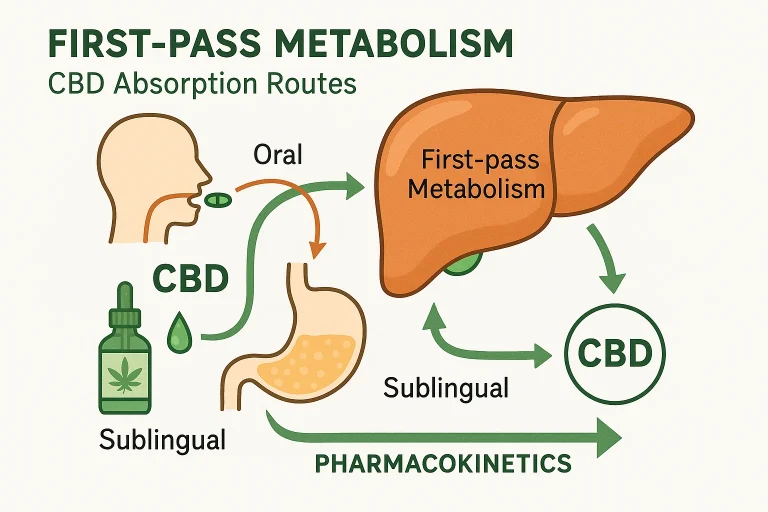
In the context of CBD, liposomes aim to solve two problems. First, CBD is a lipophilic substance - it poorly dissolves in water, which makes up the interior of the intestine. Second, CBD passing through the intestinal wall and liver undergoes first-pass metabolism, which reduces the actual amount reaching the bloodstream. Liposomes protect CBD at both stages: in the intestinal environment and partially during passage through hepatocytes. Research on liposomal carriers of lipophilic substances shows the potential of this technology for increasing bioavailability (Beloqui et al., Nanomedicine, 2016).
Liposomal CBD vs standard CBD oil - comparison table
The difference between liposomal CBD and classic oil is not limited to price. The absorption profile, duration of action, and form of the product change. The table below compares the key features of both forms.
| Feature | Liposomal CBD | Standard CBD oil |
|---|---|---|
| Carrier technology | Phospholipid vesicles | Carrier oil (MCT, hemp) |
| Bioavailability (estimated) | Potentially higher | 6-19% without fat; higher with a meal |
| Protection against degradation in the intestines | Yes (liposomal coating) | No - CBD directly in the intestinal environment |
| Product form | Liquid emulsion or soft capsules | Sublingual oil, hard capsules |
| Price | Higher (expensive production) | Lower |
| Shelf life | Shorter (unstable emulsions) | Longer (stable oil) |
When does liposomal CBD actually have an advantage?
Liposomal CBD has real justification in several situations. First: you take CBD on an empty stomach or between meals and cannot or do not want to combine it with fat. A study by Millar et al. shows that the same CBD oil taken after a fatty meal is absorbed up to four times better than on an empty stomach. If you cannot afford such a combination, liposomes may help equalize bioavailability without changing your diet.
Second situation: you have trouble absorbing fats (e.g., after cholecystectomy or with pancreatitis) - standard CBD oil in MCT oil may then be poorly absorbed. The liposomal form with phospholipids may yield better results. Third situation: you need precise dosing with low amounts of CBD - higher bioavailability of liposomal CBD means that you can achieve an effect with a smaller dose expressed in mg.
We have noticed that in practice, many people ask about liposomal CBD mainly due to marketing, not from a specific need. If you regularly take CBD oil after a fatty meal - you are absorbing regular oil well, and the additional payment for liposomes may not bring a measurable difference in effect.
How to recognize an authentic liposomal product?
The supplement market is full of products described as "liposomal" without any basis in reality. Authentic liposomal CBD is characterized by several features: the composition includes phosphatidylcholine or sunflower lecithin as a carrier - this is a phospholipid that forms the liposome membrane. The manufacturer provides the size of the liposome particles, usually in the range of 80-200 nm. The product's consistency is typically a creamy emulsion, not a clear oil - liposomal CBD does not mix cleanly with water but forms a homogeneous suspension.
The absence of any technical data with the word "liposomal" on the packaging is a warning sign. True liposomal production requires specialized equipment and is costly - an authentic product will always be more expensive than standard oil with the same CBD content in mg. If the price is similar to that of regular oil, and it is described as liposomal, something is off.
Liposomal CBD vs. other bioavailability enhancement technologies
Liposomes are one of several competitive technologies used by CBD manufacturers to improve bioavailability. CBD nanoemulsion is a stable suspension of ultra-small droplets of CBD oil in water - the particles are sized 20-200 nm and have a very large surface area in contact with intestinal membranes, which accelerates absorption. CBD water-soluble typically refers to either nanoemulsion or liposomal CBD in powder form - a marketing term that can mean various technologies. Micronization of CBD is the mechanical breakdown of isolate particles into microscopic sizes, which improves solubility, but without a phospholipid carrier, it does not provide the protective effect against intestinal degradation typical of liposomes.
The key difference: liposomes are carrier systems with a biological coating that actively protect CBD in the digestive tract and facilitate fusion with cell membranes. Nanoemulsions are faster (smaller particles act instantly), but liposomes can provide a more lasting effect due to gradual release of contents. When choosing a product, it is worth asking the manufacturer not only about the name of the technology but also about the particle size in nanometers - this is the only measurable parameter that allows assessing the real quality of the carrier, regardless of the label.
Frequently Asked Questions
What is liposomal CBD?
Liposomal CBD is a form in which cannabidiol molecules are enclosed in liposomes - vesicles made of a double layer of phospholipids identical to the cell membrane. Liposomes protect CBD from degradation in the digestive system and facilitate penetration through cell membranes, which should increase bioavailability (Beloqui et al., Nanomedicine, 2016).
Does liposomal CBD absorb better than regular oil?
Research on liposomal drugs confirms the improvement of bioavailability of lipophilic substances. The bioavailability of oral CBD is generally low - 6-19% - and can be improved by changing the form of administration or combining it with fat. Liposomes are one method, but taking standard oil with a fatty meal can yield a similar effect (Millar et al., Pharmaceuticals, 2019).
How to use liposomal CBD?
Liquid liposomal CBD is taken sublingually or mixed with a drink. Soft capsules are swallowed like a standard supplement. Due to potentially higher bioavailability, the starting dose may be lower than with regular oil. Always follow the manufacturer's recommendations provided on the packaging of the specific product.
How does liposomal CBD differ from CBD nanoemulsion?
Liposomes are vesicles made of phospholipids (a biological structure similar to a cell). Nanoemulsion is a stable suspension of nano-droplets of CBD oil in water, stabilized by an emulsifier. Both forms improve CBD absorption, but they differ in composition, stability, and release profile. Nanoemulsion acts faster (smaller particles), while liposomes may better protect CBD from degradation.
When is liposomal CBD not worth the higher price?
Liposomal CBD may not be worth the extra cost if you are already taking it with a fatty meal - fats already significantly improve the bioavailability of standard CBD. The extra cost makes sense when you use CBD on an empty stomach or between meals and care about the highest possible absorption without changing your diet (Millar et al., Pharmaceuticals, 2019).
How to recognize truly liposomal CBD?
Signs of authenticity: phosphatidylcholine or sunflower lecithin in the composition, specified size of liposome particles (80-200 nm), creamy emulsion instead of clear oil, and a clearly higher price than standard oil with the same CBD content. The absence of technical data with the word "liposomal" is a warning sign.
Is liposomal CBD safe?
Liposomes have been used in pharmaceuticals for decades - the first liposomal cancer therapy received FDA approval in 1995. The phospholipid carrier itself is considered safe. The safety of a specific liposomal CBD product depends on the quality of the CBD raw material and other ingredients - always check the CoA certificate from an independent laboratory.
This article is informational and educational in nature. It contains internal links to products available in the u Bucha store. Prices and specifications may change - please check the current data on the product page before purchasing.
Author: Michał Waluk · Published: 2026-05-04 · Updated: 2026-05-04