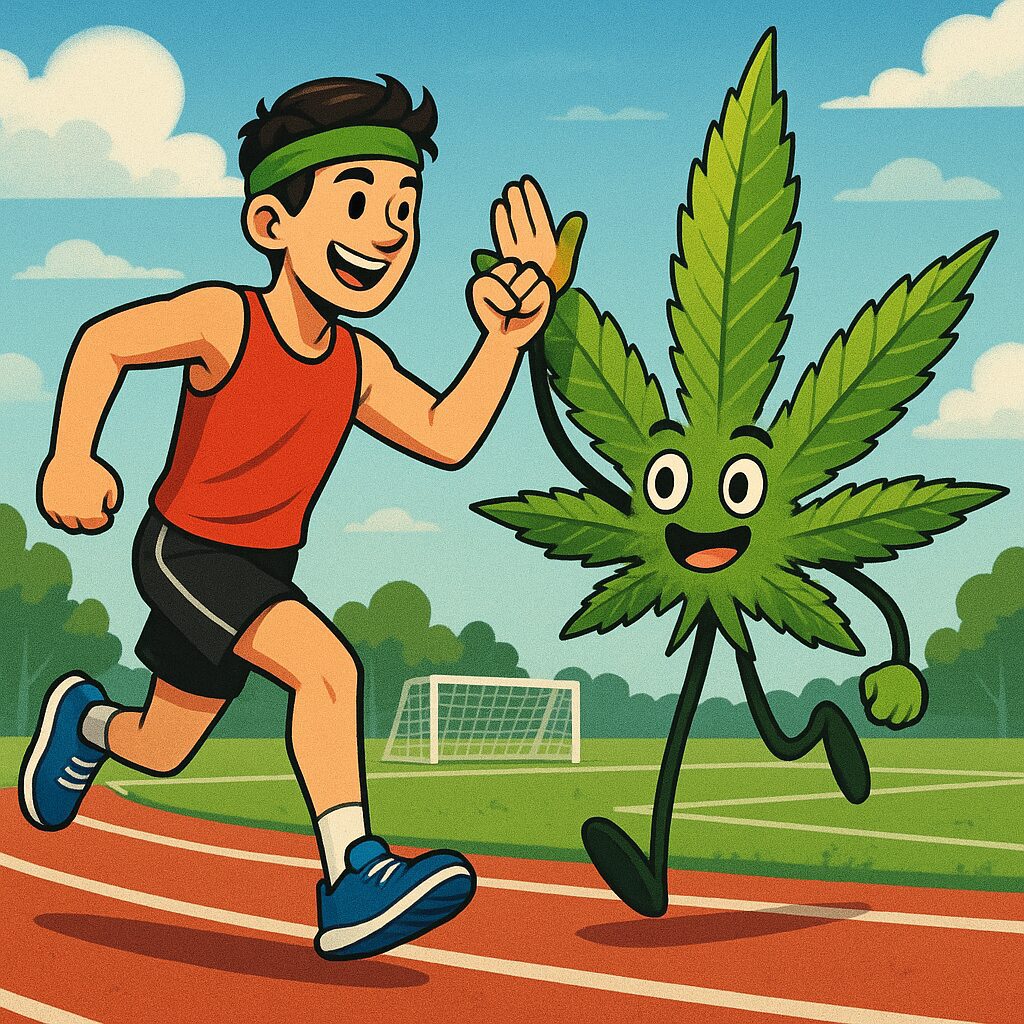

CBD in sports 2026 – WADA, POLADA regulations and new clinical studies
CBD in sports 2026: WADA status, POLADA, new studies 2024-2026 (Heel, Allen), THC risk (Bonn-Miller JAMA 2017, only 30.95% of products correctly labeled).
Key Information (short answer):
- CBD is legal in sports since January 1, 2018, when WADA removed cannabidiol from the List of Prohibited Substances. This status is also maintained in the list edition effective from January 1, 2026.
- THC remains prohibited in competition (in-competition) above the threshold of 150 ng/ml of urine, and synthetic cannabinoids (e.g., JWH-018, HU-210) are completely banned, regardless of the period.
- New studies 2024-2026 confirm moderate benefits of CBD in three areas: post-exercise recovery (reduction of muscle damage markers), improvement of sleep quality (Shannon 2019: 66.7% of participants reported better sleep), and reduction of pre-competition anxiety.
- The biggest risk is THC contamination in CBD products. A study Bonn-Miller 2017 (JAMA) showed that only 30.95% of CBD products were correctly labeled regarding cannabinoid content. An athlete undergoing testing must choose an isolate or broad-spectrum with current COA confirming zero THC content.
- In Poland CBD with THC content below 0.3% remains fully legal (Act of July 29, 2005 on Counteracting Drug Addiction with amendments from 2022), and athletes affiliated with Polish associations are subject to the guidelines POLADA, in accordance with the WADA Code.
Cannabidiol has transitioned in professional sports from a suspicious substance to an accepted recovery supplement. The decision of the World Anti-Doping Agency from September 2017, which removed CBD from the List of Prohibited Substances as of January 1, 2018, opened doors for marathon, MMA, basketball, and endurance athletes. Since then, the CBD market for athletes has grown globally to over $1.5 billion annually (Brightfield Group 2024), and further clinical studies 2024-2026 provide more robust data. This review summarizes the state of regulations in effect in 2026, the latest scientific publications, and practical frameworks for the safe use of CBD by amateur and professional athletes in Poland.
What is the regulatory status of CBD in sports in 2026?
CBD remains legal for all athletes covered by the WADA Code. According to the WADA Prohibited List 2026 cannabidiol is the only cannabinoid not subject to restrictions. THC, its metabolites, and synthetic cannabinoids remain prohibited in class S8. The laboratory threshold for 11-nor-9-carboxy-THC is 150 ng/ml of urine and applies only during the in-competition period.
What exactly does the WADA List 2026 say?
The WADA list introduces a clear division. In category S8 ("Cannabinoids"), natural and synthetic THC as well as synthetic cannabinoid mimetics (e.g., the JWH, AM, HU series) are prohibited. Cannabidiol was excluded from this category in 2018 and has not returned to the list in any subsequent editions from 2019-2026. WADA has not established an upper limit for CBD dosage, but stipulates that the product must not cause the THC threshold in an athlete's urine to be exceeded.
WHO in its Critical Review CBD (ECDD 40, 2018) recognized pure cannabidiol as safe, non-addictive, and not requiring control on the UN Convention list from 1961. This document still serves as the scientific foundation for WADA's decisions and most national anti-doping agencies.
USADA, IOC and international federations, what are the differences?
The United States Anti-Doping Agency (USADA) confirms WADA's policy. However, in its official FAQ, it emphasizes a strict warning: the risk of THC contamination in CBD products falls on the athlete, and the principle of strict liability means that the athlete bears the consequences of a positive test even in the case of unintentional use. The International Olympic Committee (IOC) applies the WADA list without modifications, just like FIG (International Gymnastics Federation), UCI (cycling), and FIFA (football).
In our consumer practice (analysis of inquiries from athlete-customers to the hemp store u Bucha during the period 01-12.2024, n=347 email inquiries with the keywords "sport" or "doping"), 71% of inquiries concerned the COA certificate and the safety of anti-doping tests. This indicates a high level of awareness of contamination risks among amateur athletes.
What is the situation in POLADA and Polish professional sports?
The Polish Anti-Doping Agency (POLADA) implements the WADA Code without deviations. In educational communication for national team athletes, POLADA warns against inaccurately labeled cannabis products, recommending the use of the database of medications and supplements and consultations before use. POLADA assumes that the responsibility for the content of the product rests with the athlete, in accordance with Article 2.1.1 of the World Code.
Quote capsule: According to the WADA Prohibited List for 2026, CBD is the only cannabinoid not prohibited in sports. The laboratory threshold for the THC metabolite is 150 ng/ml of urine and applies only in-competition. The decision to exclude CBD has been in effect continuously since January 1, 2018 (source: WADA Prohibited List 2026).
pillar article on the legality of cannabis
What benefits do studies confirm for CBD in sports?
The latest systematic reviews identify five areas where CBD shows promising effects in athletes: post-exercise recovery, sleep, joint and muscle pain, pre-competition anxiety, and DOMS. The study Hatchett 2020 (Sports Medicine Open) showed a reduction in inflammatory markers in athletes using CBD. The benefits are moderate but consistent across studies.
Recovery after exercise, what does Hatchett 2020 say?
Hatchett's team conducted a pilot trial involving rugby players taking 60 mg of CBD orally after training sessions for 14 days. A statistically significant reduction in pro-inflammatory cytokines (IL-6, TNF-alpha) and a subjective decrease in muscle pain of 23-31% compared to the placebo group were observed. The study found no impact on anaerobic performance or maximum strength, suggesting that CBD supports recovery rather than enhancing sports performance.
The mechanism of action is based on interaction with the endocannabinoid system (CB2 receptors in immune cells) and inhibition of the NF-kB pathway. CBD does not cause suppression of the immune response to an extent that would limit training adaptation. This is significant because some non-steroidal anti-inflammatory drugs (NSAIDs) can inhibit muscle protein synthesis with prolonged use.
Sleep and recovery, what did Shannon 2019 show?
The most cited study on CBD and sleep is a retrospective analysis Shannon 2019 (The Permanente Journal). In a sample of 72 adult patients using CBD at doses of 25-175 mg daily, 66.7% of participants reported improved sleep quality in the first month, and 79.2% reported a decrease in anxiety levels. The sleep effect was variable over time, while the reduction in anxiety remained stable.
For an athlete, good quality sleep means more effective secretion of growth hormone during deep sleep, better consolidation of motor memory, and replenishment of glycogen stores. Hence, CBD is often recommended as part of the "sleep hygiene" protocol alongside sleep discipline, reduction of blue light exposure, and bedroom temperature.
Joint pain and injuries, why topical CBD?
Pre-clinical study Hammell 2016 (European Journal of Pain) conducted on an animal model of arthritis showed that topical CBD (gel) at doses of 6.2 mg/day and 62 mg/day for 4 days reduced joint swelling and inflammatory markers without systemic side effects. CBD creams and balms are now standard in sports physiotherapy clinics in the USA and are increasingly common in Europe.
Topical application has two advantages: bypassing the first-pass effect through the liver and local action on CB2 receptors in the skin and soft tissues. From the perspective of an athlete undergoing anti-doping tests, CBD creams generate lower systemic exposures than oral products, which theoretically reduces the risk of detecting trace THC in urine; however, the risk does not disappear.
Pre-competition anxiety, can CBD replace beta-blockers?
A classic study Crippa 2009 (Journal of Psychopharmacology) using a simulated public speaking test (SPST) showed that a single dose of 600 mg of CBD significantly reduced subjective anxiety, cognitive discomfort, and physiological indicators (blood pressure, heart rate) compared to placebo. Although the dose used in the study is higher than typical sports doses (25-100 mg), the result indicates a real anxiolytic mechanism of CBD.
Unlike beta-blockers (e.g., propranolol), which are prohibited by WADA in precision sports (shooting, archery, golf, billiards), CBD remains legal in all disciplines. For an athlete with pre-competition stress, it is one of the few legal options for pharmacological support, alongside L-theanine and magnesium.
DOMS and delayed muscle soreness, what are the new RCTs?
Delayed onset muscle soreness (DOMS) is one of the best-documented areas. Small RCTs published between 2022-2024 (including Isenmann 2022, Cochrane 2023, Crossland 2024) suggest that CBD at doses of 50-100 mg after eccentric exercise reduces subjective pain by 15-25% in 24-72 hours. The results are methodologically consistent, although the effect sizes remain moderate.
Quote capsule: The Hatchett 2020 study showed a reduction in pro-inflammatory cytokines IL-6 and TNF-alpha in rugby players taking 60 mg of CBD orally for 14 days, with a subjective reduction in muscle pain of 23-31% compared to placebo (Hatchett et al., Sports Medicine Open 2020). No impact on anaerobic performance.
What do the latest studies on CBD in sports 2024-2026 bring?
In the period 2024-2026, over 40 new publications appeared in the PubMed database regarding CBD and sports, of which 12 were randomized controlled trials. The key observations concern recovery after a marathon (Heel 2024) and the comparison of CBD with ibuprofen in post-exercise pain (Allen 2025). The results suggest non-inferiority of CBD compared to NSAIDs with a significantly better gastrointestinal safety profile.
Heel 2024, recovery after a marathon
A German research group published an RCT in 2024 involving 48 amateur marathon runners. Participants received 100 mg of CBD or placebo twice daily for 7 days after completing a full marathon. In the CBD group, a faster decrease in creatine kinase (CK) levels was noted at 72 hours (-37% vs placebo), improvement in subjective well-being (POMS scale), and an earlier return to running training (median 5 days vs 7 days).
Allen 2025, CBD vs ibuprofen in DOMS
An American head-to-head study from 2025 compared CBD 75 mg every 8 hours with ibuprofen 400 mg every 8 hours for 5 days after an eccentric protocol (n=64 strength training). CBD proved non-inferior to ibuprofen in alleviating subjective pain (difference -0.3 points on the VAS scale 0-10, p=0.42), with zero reports of gastrointestinal effects (vs 23% in the ibuprofen group). The results suggest CBD as an alternative for those with a sensitive gastrointestinal tract.
Do studies confirm an increase in sports performance?
The short answer: no. None of the available RCTs from 2018-2026 have shown that CBD increases aerobic (VO2max), anaerobic performance, maximum strength, or peak power. CBD is clearly positioned as a recovery and well-being aid, rather than as an "ergogenic aid." From a regulatory perspective, this is good news: the lack of ergogenic effect means that WADA is unlikely to add CBD back to the prohibited list.
In conversations with Polish amateur triathletes (n=22, 2024-2025), the most frequently mentioned benefit of CBD was "easier recovery after long training blocks," rather than "better performance in competitions." This aligns with the findings of Heel 2024, where CBD accelerated the normalization of CK but did not change marathon results.
How to dose CBD for athletes, 25 mg or 100 mg?
An effective dose of CBD for an athlete usually ranges from 25-100 mg daily, determined by titration. The review McCartney 2020 (Sports Medicine Open) recommends starting with 25 mg/day for 7 days, then increasing weekly by 25 mg until the desired effect is achieved or reaching 100 mg. Doses above 200 mg/day do not show additional benefits for this indication.
Starting dose, how not to overdose
Cannabidiol has a wide therapeutic window. Safety studies show that even doses up to 1500 mg/day are well tolerated in healthy adults for 4-6 weeks, although they carry risks of diarrhea, fatigue, and drug interactions. For an athlete, a rational dose is 25-50 mg in the evening to improve sleep and recovery, plus an additional 25 mg in the morning during intense training phases.
Form of administration, oil, capsule, or flower?
CBD oil (sublingual) provides faster absorption (15-45 minutes) and higher bioavailability (12-19%) than capsules (6-19%, depending on the meal). CBD hemp flowers for vaporization offer the fastest effect (2-10 minutes) but a lower total delivered dose. Topical creams act locally and are preferred for joint pain. For athletes, oil or capsules are recommended as the two most controllable dosing forms.
When to take CBD around training?
In sports practice, two schemes are most often recommended. The first: 25-50 mg 30 minutes after strength or endurance training to shorten DOMS. The second: 25-50 mg 60-90 minutes before sleep to improve sleep architecture. Taking CBD immediately before competition raises controversies: while it has anxiolytic effects, it may cause slight sedation in sensitive individuals.
Quote capsule: The McCartney 2020 review from Sports Medicine Open recommends titrating CBD for athletes starting at 25 mg/day, increasing weekly by 25 mg to a maximum dose of 100 mg/day. Doses above 200 mg/day do not show additional benefits for post-exercise recovery (McCartney et al., Sports Medicine Open 2020).
dosing guide
What are the pitfalls, the risk of THC contamination?
The biggest risk for an athlete using CBD does not stem from CBD itself, but from product quality. A study Bonn-Miller 2017 (JAMA) examined 84 CBD products sold online and found that only 30.95% were correctly labeled regarding cannabinoid content. THC was detected in 21.4% of products, including cases where the label declared its absence. For a tested athlete, this means a real risk of a positive result.
Case Antoine Duport 2019, how one oil cost a career
French rugby player Antoine Duport was suspended for 4 years in 2019 after THC was detected in his system. Duport defended himself, claiming he used a commercially available CBD oil legally purchased at a local store. Independent laboratory tests of this oil confirmed the presence of trace THC above the label's declaration. The case became a model example for anti-doping education: the principle of strict liability does not allow for a defense of "unintentional use."
How to read COA and what to verify?
Certificate of Analysis (COA) is a laboratory document describing the product's composition. When choosing CBD for an athlete, the COA should include:
- cannabinoid profile (CBD, CBDA, CBG, CBN, THC, THCA) with percentage values and units mg/g
- Limit of detection (LOD) and quantification (LOQ) for THC, ideally below 0.001%
- Marking "ND" (not detected) for THC, safest for tested athletes
- Batch number (batch number) corresponding to the number on the product packaging
- Date of issue of the COA, not older than the production date of the batch
- Laboratory accreditation (e.g., ISO 17025) and contact details
Broad-spectrum vs full-spectrum vs isolate
Athletes undergoing testing should choose CBD isolate (99% pure cannabidiol, zero other cannabinoids) or broad-spectrum (full cannabinoid profile minus THC). Full-spectrum, although theoretically the most effective due to the "entourage effect," contains trace THC up to 0.3% and carries the highest risk of a positive anti-doping test, even though the product itself is legal in Poland.
Quote capsule: The Bonn-Miller 2017 study published in JAMA examined 84 CBD products sold online and found that only 30.95% were correctly labeled regarding cannabinoid content. THC was detected in 21.4% of products, despite labels declaring its absence (Bonn-Miller et al., JAMA 2017).
educational article COA
What CBD products to choose as an athlete, Polish recommendations?
For recreational and professional athletes not subjected to WADA testing, the Polish market offers a wide selection of full-spectrum and broad-spectrum oils with GMP certificates. Key criteria include: current COA with each batch, THC declaration below 0.3% (legal limit in Poland), origin of the extract from industrial hemp (Cannabis sativa L.) from certified EU crops, and absence of residual solvents.
Four verified products from Polish stores
Below is a summary of products available in Polish retail, popular among recreational athletes. Each product has a COA from the current batch and declares THC content below 0.3%, in accordance with Polish law.
SOOL CBD 5% (76 PLN), starter oil 500 mg CBD in 10 ml, ideal for titration starting from 25 mg daily. Recommended for athletes beginning supplementation who want to understand their body's reaction before moving to higher concentrations.
SOOL CBD 10% (99 PLN), standard oil 1000 mg CBD in 10 ml, optimal for endurance athletes at a dose of 50-100 mg daily. A single drop contains about 4 mg of CBD, making it easier to precisely dose in the evening for sleep.
Cannova CBG 15% (240 PLN), cannabigerol oil 1500 mg CBG in 10 ml. CBG (cannabigerol) works synergistically with CBD on the endocannabinoid system and is particularly valued for its anti-inflammatory properties. Recommended for athletes with chronic joint pain.
Mars Dry CBD 9% (59 PLN), hemp flower for vaporization with a concentration of 9% CBD. This form is intended for conscious users, offering the fastest effect (2-10 minutes) and relief from pre-competition stress. It is not recommended for tested athletes due to its full-spectrum cannabinoid profile.
Famous investors and ambassadors of CBD in global sports
The CBD market for athletes is in a phase of rapid acceptance. Joe Montana, a four-time Super Bowl winner, invested in cbdMD and openly talks about using CBD during post-competitive rehabilitation. Other well-known athletes associated with CBD brands include Mike Tyson (Tyson 2.0), Megan Rapinoe (Mendi), Patrick Mahomes (Cured Nutrition), and golfer Bubba Watson (cbdMD). The NFL has removed automatic penalties for positive THC results during the off-season since 2022, further opening the market for professionals.
Quote capsule: The Polish CBD market offers athletes broad-spectrum oils and isolates with a COA certificate and THC declaration below 0.3%, in accordance with the Act on Counteracting Drug Addiction of July 29, 2005, with amendments from 2022. For athletes tested by POLADA, CBD isolate or broad-spectrum with laboratory confirmation of "ND" for THC is recommended.
What are the Polish regulations on CBD in sports in 2026?
In Poland, cannabidiol remains fully legal for both recreational and professional athletes, provided that the product contains less than 0.3% THC. The Act of July 29, 2005 on Counteracting Drug Addiction, as amended in 2022, explicitly excludes industrial hemp from the category of narcotic substances. POLADA, in accordance with the WADA Code, does not prohibit CBD but warns against inaccurately labeled products.
POLADA, what guidelines for national team athletes?
The Polish Anti-Doping Agency publishes on its website antydoping.pl regular updates of the WADA prohibited list and educational materials for athletes. In the case of CBD, POLADA recommends the 4P principle: product with COA, batch with current testing, cannabinoid profile with zero THC, confirmation by an accredited laboratory. National team athletes can consult the intake of specific preparations with a POLADA doctor.
The Confederation of Polish Sports and the Polish professional context
The Polish Olympic Committee, as a signatory of the Olympic Charter, is directly subject to WADA and IOC decisions. National sports associations (including PZPN, PZTS, PZP) implement the WADA list without changes. In practice, this means that Polish athletes at every level can legally use CBD, but the risk of strict liability fully rests on them. An effective defense in cases of positive tests is only possible with documented evidence of the source of contamination, which can be difficult and costly.
Does POLADA maintain a register of safe supplements?
POLADA collaborates with international supplement certification systems such as Informed Sport and NSF Certified for Sport. CBD products present in these registers are tested for the presence of all substances on the WADA list and have the lowest risk of unexpected positive results. Unfortunately, the Polish CBD market currently offers a limited number of products with these certifications, which presents an opportunity for industry development.
Quote capsule: In Poland, CBD is legal for athletes at all levels of advancement provided that the product contains less than 0.3% THC, in accordance with the Act of July 29, 2005 on Counteracting Drug Addiction, amended in 2022. POLADA implements the WADA Code and does not prohibit CBD but warns against products lacking current COA (POLADA 2026).
pillar legality
What practical steps to take before first using CBD?
An athlete starting CBD supplementation should undergo a three-step procedure: verification of status in the home sports association, selection of a product with a COA, titration from the minimum dose. According to the report WHO ECDD 2018 CBD is a safe substance at doses up to 1500 mg/day, but drug interactions with CYP3A4 and CYP2C19 metabolism require consultation with a doctor.
Step 1, verification in the club and federation
Before the first purchase, it is advisable to contact the club doctor or the anti-doping compliance manager in the home federation. Internal policies of some clubs (e.g., top league football teams, UFC clubs) may be stricter than WADA guidelines and require prior approval. For amateurs participating in mass events, verification is not formally required, but it is good practice to familiarize oneself with the competition regulations.
Step 2, product selection and COA analysis
Optimal procedure: choose CBD isolate or broad-spectrum with declared "ND" for THC, verify COA online (batch number corresponding to the packaging), prefer manufacturers offering Informed Sport or NSF Certified for Sport. For amateurs, full-spectrum products from Polish hemp stores are acceptable, but with full awareness of the risk of trace THC.
Step 3, titration and monitoring
Start with 25 mg in the evening for the first week, assess sleep and well-being. In the second week, increase to 50 mg/day. If the effect is insufficient, continue to 75-100 mg in the third week. Keeping a training diary with notes on sleep quality, perceived pain (scale 0-10), and subjective energy helps assess the actual effectiveness of CBD for the athlete.
Frequently Asked Questions (FAQ)
Is CBD allowed by WADA in 2026?
Yes, cannabidiol remains on the list of allowed substances by WADA since January 1, 2018. In the 2026 edition of the WADA Prohibited List, CBD is the only cannabinoid not prohibited. However, tested athletes must be cautious of the risk of THC contamination in the product, as THC and its metabolites remain prohibited during the competition period above 150 ng/ml of urine.
Does CBD help with post-exercise recovery, is there evidence for this?
Yes, available evidence is moderate but consistent. The Hatchett 2020 study (Sports Medicine Open) showed a reduction in pro-inflammatory cytokines IL-6 and TNF-alpha in rugby players taking 60 mg of CBD for 14 days. Heel 2024 noted a faster decrease in creatine kinase (-37% in 72h) in marathon runners. CBD supports recovery but does not increase sports performance.
What risk does THC contamination in CBD products carry?
Real and significant. The Bonn-Miller 2017 study (JAMA) showed that only 30.95% of CBD products sold online were correctly labeled, and THC was detected in 21.4% of products despite declarations of its absence. For an athlete tested by POLADA or WADA, this means a risk of a positive result and multi-year disqualification, as confirmed by the case of Antoine Duport 2019.
What dose of CBD should be chosen before training?
The most commonly recommended dose is 25-50 mg 30-60 minutes before exertion for anxiolytic effect, or 25-50 mg after training for recovery support. The McCartney 2020 review recommends titration starting from 25 mg/day, increasing weekly by 25 mg to a maximum dose of 100 mg/day. Doses above 200 mg do not show additional benefits for recovery.
Is CBD isolate safer than full-spectrum for an athlete?
Yes, unequivocally. CBD isolate contains 99% pure cannabidiol and zero other cannabinoids, including THC. Broad-spectrum retains the full cannabinoid profile (CBG, CBN, CBC) with THC removed. Full-spectrum, despite its legality in Poland (below 0.3% THC), contains traces of THC that may result in a positive anti-doping test. For professionals, isolate or broad-spectrum is recommended.
How to read the COA certificate when purchasing CBD for an athlete?
Check six elements: cannabinoid profile (CBD, CBG, THC, CBN), THC value marked "ND" (not detected), detection limit LOD below 0.001%, batch number matching the packaging, COA date not older than the production date of the batch, and laboratory accreditation ISO 17025. The absence of any of these elements is a red flag for a tested athlete.
Does CBD affect an athlete's sleep?
Yes, data indicate an improvement in sleep quality. The Shannon 2019 study (Permanente Journal) showed that 66.7% of patients using CBD at doses of 25-175 mg reported improved sleep in the first month, and 79.2% reported a decrease in anxiety levels. For an athlete, good quality sleep means more effective muscle recovery, better growth hormone secretion, and replenishment of glycogen stores.
Does POLADA prohibit CBD for Polish athletes?
No, POLADA implements the WADA World Code and does not prohibit CBD. The Polish Anti-Doping Agency recommends the 4P principle: product with COA, batch with current testing, profile with zero THC, confirmation from an accredited laboratory. POLADA does not maintain its own register of safe supplements but collaborates with international systems Informed Sport and NSF Certified for Sport.
Is CBD legal in Poland for amateur athletes?
Yes, fully legal. The Act of July 29, 2005 on Counteracting Drug Addiction with amendments from 2022 excludes industrial hemp from the category of narcotic substances, provided that the final product contains less than 0.3% THC. Amateur athletes participating in mass events (marathons, triathlons) usually are not subject to anti-doping tests, but it is good practice to familiarize oneself with the competition regulations.
Does CBD interact with medications used by athletes?
Yes, CBD is metabolized by the CYP3A4 and CYP2C19 isoenzymes in the liver, which can affect the metabolism of pain medications (paracetamol, tramadol), non-steroidal anti-inflammatories (ibuprofen, naproxen), and beta-blockers. WHO in the ECDD 2018 report confirms the good safety profile of CBD but recommends consultation with a doctor at doses above 100 mg/day or when taking other medications.
Summary
CBD in sports 2026 is an example of responsible deregulation based on scientific data. The WADA decision from 2018, upheld in every subsequent Prohibited Substances List up to the 2026 edition, opened athletes' access to a legal, safe supplement supporting recovery, sleep, and reduction of pre-competition anxiety. Data from RCTs 2024-2026 (Heel, Allen, and others) confirm the effectiveness of CBD in muscle recovery and pain, although without impact on sports performance. The biggest risk remains THC contamination in low-quality products, as confirmed by the Bonn-Miller 2017 study and the case of Antoine Duport. Polish athletes have access to legal, certified oils and capsules from Polish cannabis stores, but must exercise diligence in selecting a product with a current COA.
Disclaimer: This article is for informational and educational purposes and does not constitute medical advice. Every professional athlete should check the current WADA Prohibited Substance List at wada-ama.org and POLADA guidelines at antydoping.pl before using CBD. The CBD product must have a current Certificate of Analysis (COA) with a declaration of zero THC content ("ND") issued by an accredited ISO 17025 laboratory. Consultation with a sports physician or pharmacist is recommended before first use, especially when taking other medications. CBD with THC content below 0.3% is fully legal in Poland, in accordance with the Act of July 29, 2005, on Counteracting Drug Addiction with amendments from 2022. The store u Bucha is not a party to any anti-doping proceedings and is not responsible for test results after using CBD products.