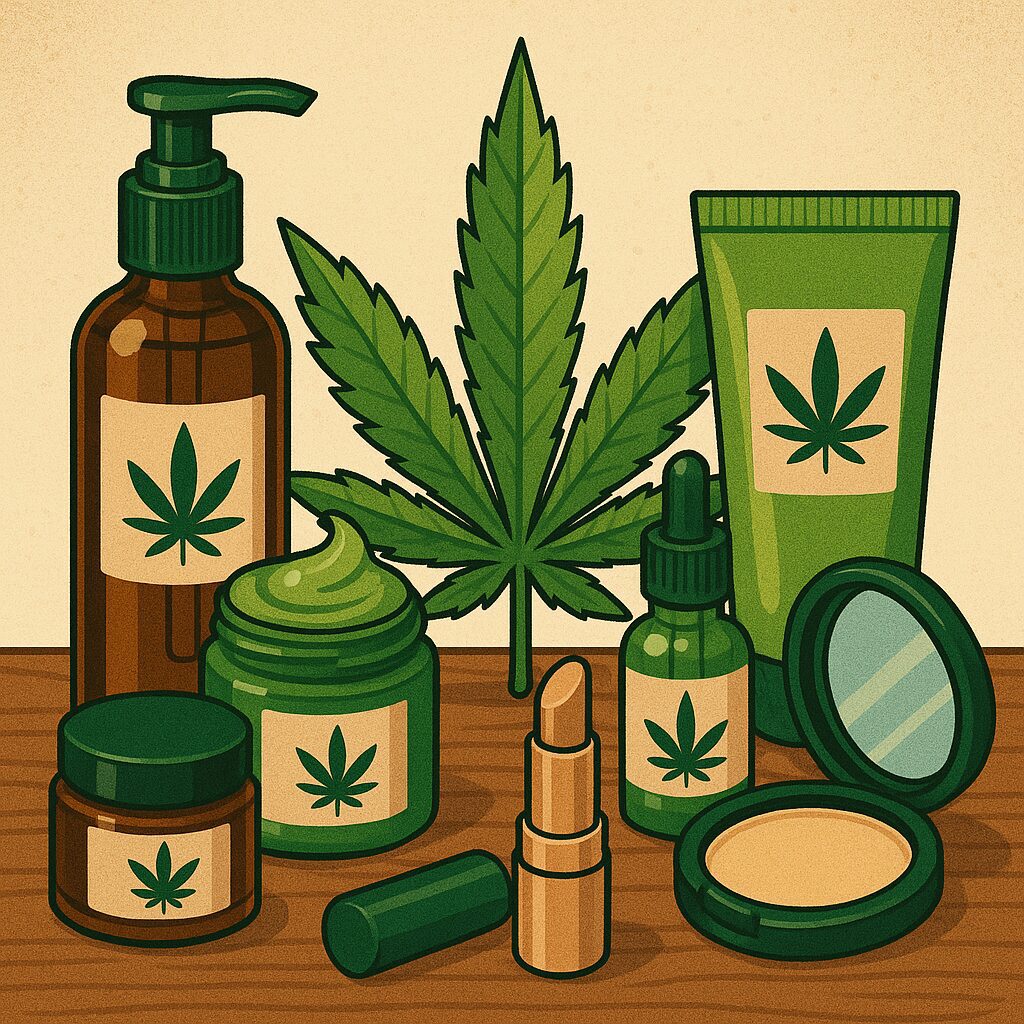

Cannabis in Cosmetics 2026: Trends, Ingredients, Regulations (Overview)
Cannabis in cosmetics 2026: hemp seed oil (Omega 3-6-9), topical CBD and CBG, trends in encapsulated CBD and fermented cannabinoids, PL and EU regulations, how to read labels and COA.
Short answer: Cannabis in cosmetics in 2026 is characterized by two parallel trends. The first is hemp seed oil (Cannabis sativa seed oil), rich in Omega 3, 6, and 9 in a nearly ideal ratio of 3:1 for the skin, providing linoleic and gamma-linolenic acids that rebuild the skin barrier. The second is topical cannabinoids: CBD (cannabidiol) with anti-inflammatory, sebostatic, and antioxidant effects, CBG regulating sebum production, and CBN supporting nighttime regeneration.
Why it works: human skin has its own endocannabinoid system (ECS), described by Bíró et al. in 2009. CB1 and CB2 receptors are found in keratinocytes, sebaceous glands, hair follicles, and immune cells in the skin. Topical cannabinoids modulate this system, leading to real clinical effects confirmed in studies on psoriasis (Palmieri 2019), arthritis (Hammell 2016), and acne (Oláh 2014).
Trends 2026: Encapsulated CBD in liposomes and niosomes for higher dermal bioavailability, microbiome-friendly formulations protecting the skin microbiome, fermented CBD produced by yeast, combinations of bakuchiol + CBD as an alternative to retinol, synbiotic CBD (probiotics + cannabinoids), and hemp polyphenols as a new category of antioxidants.
Polish Regulations 2026: cosmetics with CBD are legal in Poland if the THC content does not exceed 0.3% (Act of July 29, 2005), the product is subject to EU Regulation 1223/2009, and the ingredient is listed in the CosIng database. Choose only products with a current Certificate of Analysis (COA).
Disclaimer: This article is for educational purposes and does not replace a dermatological consultation. For skin diseases (psoriasis, atopic dermatitis, rosacea), consult the introduction of CBD cosmetics with a doctor. Do not use in children, pregnant or breastfeeding women without explicit specialist recommendation. Choose only products with documented composition, COA, and zero THC content.
The hemp cosmetics market in 2026 looks different than it did just two years ago. According to Grand View Research, the global value of the CBD skin care market reached $1.76 billion in 2024 and is growing at a rate of 25.7% annually until 2030. It is no longer a niche for natural brands. It is mainstream with liposomal serums in retail chains, fermented cannabinoids in pharmacies, and bakuchiol with CBD as a salon alternative to retinol. Polish consumers in 2026 have access to products that recently required importing from the USA. This overview shows what really works, how to read labels, and which trends are backed by research and which will remain in marketing.
Why cannabis? The Endocannabinoid System of the Skin
Human skin has its own endocannabinoid system (ECS), complete with CB1 and CB2 receptors and endogenous ligands. A groundbreaking article by Bíró et al. (2009) described that the ECS regulates keratinocyte proliferation, sebum production, hair growth, and inflammatory response. This is the biological basis for why topical cannabinoids have a real impact on the skin.
Where exactly do CB1 and CB2 receptors act
Cannabinoid receptors are not randomly distributed. Bíró and his team demonstrated their presence in epidermal keratinocytes, melanocytes, sebaceous glands, hair follicles, Langerhans cells, and sensory nerve endings in the skin. Each of these locations is responsible for a different aspect of skin barrier function.
This is why CBD acts in multiple ways. By modulating receptors in sebaceous glands, it reduces excess sebum production (key in acne). By activating the ECS in keratinocytes, it normalizes their proliferation (important in psoriasis). By influencing immune cells, it reduces inflammation (significant in atopic dermatitis and rosacea). All this without activating receptors psychoactively, as CBD does not significantly bind to CB1 in the brain.
Why topical CBD does not cause a psychoactive effect
This is a common question from consumers. CBD has a low affinity for the CB1 receptor, which is responsible for the psychoactive effects of THC. It mainly acts through allosteric modulation of CB2, inhibition of fatty acid amide hydrolase (FAAH), and activation of TRPV1 and PPARgamma receptors. WHO ECDD (2018) In a critical review, it was confirmed that CBD does not exhibit addictive or psychoactive potential.
In cosmetics, this barrier is double. First, CBD applied topically does not significantly penetrate the bloodstream in measurable amounts. Second, even if it did penetrate, it would not cause an intoxicating effect. This is pure pharmacology, not marketing.
Citation capsule: Human skin has a fully functional endocannabinoid system with CB1 and CB2 receptors located in keratinocytes, sebaceous glands, hair follicles, and immune cells. Bíró et al. (2009) demonstrated that the ECS regulates proliferation, sebum secretion, and inflammatory response, which constitutes the biological basis for the topical use of CBD and CBG.
What are the key hemp ingredients in cosmetics 2026?
Four ingredients will dominate the hemp cosmetics market in 2026, each with a different action profile. According to a 2025 report by Cosmetics Europe, as many as 38% new dermocosmetic products labeled "natural" contain at least one hemp ingredient. This is a jump from 12% recorded in 2022, demonstrating the scale of adoption in the industry.
Hemp seed oil (Cannabis sativa seed oil)
Hemp seed oil is the base from which everything starts. It does not contain cannabinoids (neither THC nor CBD), as these are found in the flowers. Its cosmetic value comes from its fatty acid profile. Cohen (2009) pointed out that hemp oil contains Omega 3 and Omega 6 fatty acids in a ratio of about 1:3, closest to the recommended ratio for human skin.
Linoleic acid (LA, Omega 6) rebuilds the intercellular cement of the epidermis. Alpha-linolenic acid (ALA, Omega 3) has anti-inflammatory properties. Gamma-linolenic acid (GLA) supports the production of prostaglandins that reduce inflammation. The oil also contains vitamin E (tocopherols), carotenoids, and phytosterols, making it a natural antioxidant.
Topical CBD: cannabidiol as an active ingredient
CBD in cosmetics is not a placebo. Hammell et al. (2016) demonstrated in an animal model that transdermal CBD significantly reduced swelling and inflammatory markers in arthritis. Palmieri et al. (2019) applied a CBD ointment to 20 patients with psoriasis, atopic dermatitis, and scars. After three months, they noted a statistically significant improvement in PASI, skin hydration, and elasticity, without adverse effects.
Cosmetic CBD concentrations range from 0.1% to 5%. For problematic skin (acne, psoriasis), 1-3% is typically used. Above 5%, the clinical benefit does not increase proportionally to the cost. The form is key: full spectrum vs broad spectrum vs isolate (more in the labeling section).
Topical CBG: a new player for oily skin
CBG (cannabigerol) is the "mother of cannabinoids," from which THC and CBD are biosynthetically produced. For years, it was overlooked due to its low content in the plant. Oláh et al. (2014, 2016) demonstrated that both CBD and CBG have sebostatic effects on human sebocytes, normalizing sebum production and inhibiting proliferation in acne-like conditions.
In 2026, CBG appears in new generation anti-acne products, often in combination with niacinamide and azelaic acid. The price remains higher than CBD due to more complicated extraction.
Terpenes: aroma and entourage synergy
Terpenes give cannabis its characteristic scent, but they also have pharmacological properties. Gertsch et al. (2008) described beta-caryophyllene as a selective agonist of the CB2 receptor, making it the first known terpene to act on the endocannabinoid system. Myrcene, limonene, and linalool add anti-inflammatory and soothing effects.
The entourage effect describes the synergistic action of the full profile of cannabinoids and terpenes. This is why broad spectrum extracts act on multiple levels. CBD isolate provides pure cannabidiol but loses synergy with the natural components of the plant.
How do cannabis compounds affect the skin? Four documented effects
Topical cannabinoids have four main mechanisms of action, confirmed in clinical and preclinical studies. According to a 2023 meta-analysis in the Journal of the American Academy of Dermatology, of the 47 identified studies on topical CBD, 39 demonstrated positive effects on inflammatory markers, hydration, or sebum regulation. This is significantly more than most "natural" ingredients.
Hydration and rebuilding the skin barrier
Hemp seed oil and CBD support the function of the epidermal barrier in two ways. The oil provides fatty acids necessary for ceramide synthesis. CBD modulates the expression of barrier proteins through PPAR receptors. In practice, this means reducing transepidermal water loss (TEWL) and improving hydration of the stratum corneum.
Palmieri et al. (2019) measured a 13.7% increase in hydration after three months of using CBD ointment. This effect is comparable to good emollients containing ceramides. For dry, atopic, and mature skin, this is a significant argument.
Sebum regulation and support in acne
Oláh et al. (2014) demonstrated that CBD applied to human sebocytes reduces their lipogenic activity by about 30%. Additionally, it inhibits the release of inflammatory cytokines (TNF-alpha, IL-6) triggered by Cutibacterium acnes. The mechanism is twofold: less sebum + less inflammation = fewer acne lesions.
In 2026, brands are combining CBD or CBG with salicylic acid, niacinamide, and azelaic acid. These combinations are better tolerated than classic BPO (benzoyl peroxide) and work holistically.
Reduction of redness and soothing effect
The anti-inflammatory action of CBD results from the inhibition of the NF-kB pathway and the reduction of pro-inflammatory cytokine release. This is crucial in rosacea, atopic dermatitis, and dermatoses with an inflammatory component. Patients with atopic dermatitis in the Palmieri study reported a reduction in itching after just two weeks.
This is why CBD appears in post-procedure products: after laser treatments, chemical peels, and microneedling. Cosmetologists use CBD formulations to shorten the duration of erythema and accelerate regeneration.
Anti-aging effects and protection against oxidative stress
CBD exhibits strong antioxidant properties, according to some studies stronger than vitamins C and E under in vitro conditions. It neutralizes free radicals, protects cellular mitochondria, and modulates the expression of antioxidant enzymes. This translates to slower photo-induced aging.
In combination with bakuchiol (an alternative to retinol) or peptides, CBD creates anti-wrinkle formulations suitable even for sensitive skin that does not tolerate retinoids.
Citation capsule: Topical CBD has four documented effects on the skin: barrier rebuilding (Palmieri 2019, 13.7% increase in hydration), sebum regulation (Oláh 2014, 30% reduction in lipogenesis), anti-inflammatory action (modulation of NF-kB, reduction of TNF-alpha), and antioxidant protection (neutralization of free radicals stronger in vitro than vitamin E).
Trends 2026 in hemp cosmetics: what is really happening in the market
The year 2026 isn't about a continuation of 2025 trends, but about their technological maturity. Our market observations in specialty stores in Q1 2026 show that the "encapsulated CBD" category grew by approximately 180% year-over-year, while traditional CBD oils with simple formulas are losing share to liposomal-delivered products. This is the biggest technological shift in the segment since the introduction of broad spectrum.
Encapsulated CBD: liposomes, niosomes, and nano-carriers
CBD is a lipophilic molecule and has limited dermal bioavailability in classic formulations. Encapsulation in liposomes (phospholipid vesicles) or niosomes (non-ionic vesicles) increases penetration through the stratum corneum several times. This is a technology known from pharmaceuticals, now adapted to cosmetics.
In practice, this means that a serum with 1% liposomal CBD can act like a classic preparation with 3-5%. For the consumer, this is a less irritating formula and a better price-to-effect ratio.
Skin microbiome: microbiome-friendly formulations
The skin microbiome (bacteria, fungi, viruses living on the surface) is the topic of the decade in dermatology. Classic cosmetics with preservatives and alcohol disrupt this balance. Hemp cosmetics in 2026 are formulated alcohol-free, with minimal preservatives and a pH close to physiological (4.5-5.5).
Some brands add prebiotics (alpha-glucan, inulin) to support beneficial bacteria. Synbiotic CBD is another step, combining CBD with probiotics (e.g., Lactobacillus ferment lysate) and prebiotics in one formula.
Fermented CBD: yeast producing cannabinoids
The biosynthesis of cannabinoids by modified yeasts (Saccharomyces cerevisiae) and bacteria is a breakthrough from laboratories such as Demetrix and Hyasynth. Fermented CBD has the same chemical structure as plant-derived CBD but with higher purity, a smaller carbon footprint, and independence from weather conditions. In 2026, the first cosmetic products with fermented CBD appeared on the premium market.
Bakuchiol + CBD: an alternative to retinol
Bakuchiol (from the Psoralea corylifolia plant) is a natural ingredient with effects similar to retinol, but without the irritating effects. Combined with CBD, it creates an anti-wrinkle formula suitable for sensitive skin, pregnant women (after consultation), and those intolerant to retinoids. This trend is fueled by the "skinimalism" trend.
CBN for nighttime regeneration
CBN (cannabinol) is produced from the degradation of THC and has soothing and regenerative effects. In 2026, it appeared in night creams and sleeping masks, often combined with melatonin and centella asiatica. Marketing positions CBN as a "skin sleep aid," although clinical evidence requires further research.
Hemp polyphenols: a new category of antioxidants
Hemp contains unique polyphenols, including cannaflavins A, B, and C, which in some studies have been shown to have anti-inflammatory effects 30 times more potent than aspirin. This opens up a new category of antioxidant ingredients, independent of cannabinoids, allowing products to be formulated without THC and CBD, yet still claiming to be "hemp-derived.".
Citation capsule: Trends in hemp cosmetics 2026 indicate technological maturity: encapsulated CBD in liposomes and niosomes (increased dermal bioavailability), microbiome-friendly formulations (pH 4.5-5.5, alcohol-free), fermented CBD from yeast, combinations of bakuchiol + CBD as an alternative to retinol, and CBN for nighttime regeneration. According to our market observations, the encapsulated CBD category has grown by ~180% year-on-year.
Which hemp cosmetic brands are worth knowing in 2026?
The Polish hemp cosmetics market in 2026 offers both local brands and top global positions. According to the PMR Poland report, the value of the domestic CBD cosmetics market exceeded 95 million PLN in 2025 and is projected to reach 145 million PLN in 2027. This represents a growth rate of 25-30% annually, significantly above the average for natural cosmetics.
International brands available in Poland
Cannaderm is a Czech pharmacy brand whose Aknea line (anti-acne cream and serum) is one of the bestsellers in pharmacies. Annabis (Czech Republic) offers CBD balms and ointments designed for dry and atopic skin. Lord Jones (USA) and Saint Jane Beauty (USA) are premium brands emphasizing luxury presentation, available through import. CBD-MD has a wide range from balms to body lotions.
Hemptouch (Slovenia) is building its position in the natural segment with CBD balms and emulsions for atopic skin. Zatik (USA) specializes in soaps and shampoos with hemp.
Polish hemp cosmetic brands
Hempress is a Polish brand offering cosmetics with hemp oil and CBD at an affordable price. ConofineSkin positions itself as hemp dermocosmetics with formulas developed with dermatologists. Polish laboratories are increasingly introducing lines with CBD in pharmacies (including Bielenda, Tołpa, Floslek), although the concentrations of cannabinoids are lower than in dedicated products.
CBD oils as a base for personal care
From our experience in the hemp store, we know that some customers use CBD oils intended for oral use as a cosmetic concentrate. A few drops added to cream or serum provide control over the concentration and allow for formula adjustment to needs. However, this approach requires caution (more in the application section).
SOOL CBD Oil 5% Broad Spectrum 10 ml, PLN 76
SOOL CBD Oil 10% Broad Spectrum 10 ml, PLN 99
Cannova Natural CBG Oil 15% 10 ml, PLN 240
Mars CBD Hemp Seeds 9%, PLN 59
How to read a hemp cosmetic label? A practical guide
A hemp cosmetic label contains several key pieces of information that separate a genuine product from a marketing ploy. According to an audit conducted by the European Industrial Hemp Association (EIHA) in 2024, as many as 41% cosmetics claiming "with CBD" on the front did not contain measurable amounts of cannabidiol or made an incorrect claim. Knowing how to read ingredients protects your budget and your skin.
Cannabis sativa seed oil vs Cannabis sativa flower extract
These are two different ingredients with different values. Cannabis sativa seed oil is seed oil, without cannabinoids. Cannabis sativa flower extract (or "leaf extract") is an extract of flowers or leaves containing cannabinoids. If the product declares "CBD" on the front but the INCI only states "Cannabis sativa seed oil," the product does not contain CBD.
The specific concentration of CBD should be declared by the manufacturer on the packaging in mg or percentages. The absence of such information is a warning sign.
Broad spectrum, full spectrum, or isolate?
The three main types of CBD extract differ in content. Full spectrum contains CBD, other cannabinoids (CBG, CBN, CBC), and terpenes, plus trace amounts of THC up to 0.3%. Broad spectrum is the same without THC. Isolate is pure CBD (>99%).
For cosmetics, the most commonly chosen variant is broad spectrum, combining the entourage effect with the absence of THC. Isolate is cheaper but loses synergy. Full spectrum provides the full effect but requires attention when choosing a product.
Certificate of Analysis (COA): a mandatory document
COA is a laboratory result of cannabinoid concentration analysis (cannabinoid profile), heavy metals, pesticides, microbiology, and solvent residues. Reputable brands publish COA on their website with a batch number that matches the packaging. No COA = no transparency.
It is worth checking the analysis date (should not be older than 12 months), the laboratory (preferably ISO 17025 accredited), and the compliance of the batch number on the product with the number on the COA.
Additional ingredients that enhance action
A good CBD cosmetic does not rely solely on the cannabinoid itself. Synergistic ingredients include: niacinamide (sebum regulation, redness reduction), bakuchiol (anti-aging), hyaluronic acid (hydration), centella asiatica (regeneration), beta-glucan (soothing effect), panthenol (barrier protection), squalane (emollient). Avoid formulas with denatured alcohol (alcohol denat.), irritating essential oils, and artificial dyes.
Citation capsule: Hemp cosmetic labels must distinguish between Cannabis sativa seed oil (seed oil, without cannabinoids) and Cannabis sativa flower extract (flower extract with CBD). Choose broad spectrum with a declared CBD concentration and a Certificate of Analysis no older than 12 months. According to a 2024 EIHA audit, 41% cosmetics with the "with CBD" declaration did not contain measurable amounts of cannabidiol.
How to properly apply hemp cosmetics?
The effectiveness of cosmetics with CBD and hemp oil depends not only on the composition but also on the application technique. According to dermatological formulation principles, the penetration of active ingredients through the stratum corneum increases by 30-40% when applied to slightly damp skin at body temperature. Sticking to simple rules increases the return on every zloty spent.
Step by step: the order of products in care
Standard routine with a hemp cosmetic: cleansing (gentle gel or milk), alcohol-free toner with pH 5.0-5.5, essence or serum with CBD applied to slightly damp skin, moisturizing cream, and finally hemp oil or CBD cream as a closing layer. In the morning, always SPF 30 or 50 as the final step.
The MOC (Minimum Cosmetic Processing) principle: less is more. Two or three active products per routine, not five with overlapping functions. CBD doesn't need to be "stacked" with ten other ingredients.
Application on problematic skin
For acne, redness, or psoriasis, apply CBD topically to lesions 2-3 times a day. Initial effects are visible after 2-4 weeks of consistent use. Do not expect a reaction within 24 hours; the action of cannabinoids is cumulative.
For atopic dermatitis and rosacea, test the product first on a small area (e.g., the inner side of the forearm) for 48 hours. Although CBD is well tolerated, other ingredients in the formula (preservatives, fragrances) may cause a reaction.
What to avoid during application
Do not apply CBD immediately after a chemical peel or aggressive microneedling (wait 24 hours unless it is a dedicated post-procedure product). Do not combine in one routine with strong retinol (possible irritation). Do not use CBD oils intended for consumption as the first cosmetic choice; they lack dermal emulsifiers. Do not skip SPF; CBD provides antioxidant protection but does not replace UV filters.
Polish Regulations 2026: what is allowed and what is not
The legal status of CBD in cosmetics in Poland in 2026 is clear, though complex. According to PFCC (Polish CBD Cannabis Foundation) data, the number of cosmetics registered in CPNP (Cosmetic Products Notification Portal) with a CBD declaration exceeded 850 items by the end of 2025, doubling in two years. Each of them must meet a number of requirements.
The Act on Counteracting Drug Addiction
The key act is the Act of July 29, 2005, on counteracting drug addiction. It defines industrial hemp as Cannabis sativa varieties with THC content below 0.3% in dry mass. CBD products derived from industrial hemp are legal in Poland if they meet this threshold.
THC above 0.3% shifts the product to the category of controlled substances. Hence the preference for broad spectrum (THC below the detection limit) in products intended for the Polish market.
EU Cosmetic Regulation 1223/2009
EU Regulation 1223/2009 regulates all cosmetics sold in the Union. Every cosmetic with CBD must have: a Cosmetic Product Safety Report (CPSR), registration in the CPNP database, an identifiable responsible person in the EU, labeling compliant with INCI, and a center responsible for adverse reactions.
CosIng database and ingredient status
CosIng is the European Commission's official database of cosmetic ingredients. Cannabidiol (CBD) is approved as a cosmetic ingredient (since the EC's 2021 decision), provided it is synthetically derived or comes from plant parts not listed in the 1961 UN Convention on the Consolidated List (i.e., seeds and fibers, not flowers). This is why some brands use the phrase "synthetic CBD" or claim to be derived from industrial hemp.
CBG, CBN, and other less common cannabinoids are still subject to regulatory assessment. Their presence in a cosmetic requires individual safety evaluation.
What about e-commerce products from outside the EU?
Products privately imported from the USA or the UK often do not meet the requirements of EU Regulation 1223/2009. They may contain prohibited dyes, undeclared allergens, or THC above the allowed threshold. Buying from local stores or European brands with CPNP notification provides legal and quality safety.
Citation capsule: In Poland in 2026, cosmetics with CBD are legal provided the THC content is below 0.3% (Act of July 29, 2005, on counteracting drug addiction) and compliance with EU Regulation 1223/2009. The ingredient must be listed in the CosIng database. The number of cosmetics registered in CPNP with a CBD declaration exceeded 850 items by the end of 2025 according to PFCC data.
FAQ: frequently asked questions about cannabis in cosmetics
Are cosmetics with CBD legal in Poland in 2026?
Yes, cosmetics with CBD are legal in Poland if the THC content in the product does not exceed 0.3% (Act of July 29, 2005, on counteracting drug addiction). The product must also meet the requirements of EU Regulation 1223/2009 and be registered in the CPNP database. According to PFCC data, over 850 such products are notified in Poland.
Can CBD in cream cause a psychoactive effect?
No. CBD has a low affinity for the CB1 receptor responsible for psychoactive effects. Additionally, when applied topically, it practically does not penetrate the bloodstream in measurable systemic amounts. WHO ECDD in a critical review from 2018 confirmed that CBD does not exhibit psychoactive or addictive potential, regardless of the route of administration.
What is the difference between hemp seed oil and CBD?
Hemp seed oil (Cannabis sativa seed oil) does not contain cannabinoids; it is a source of Omega 3, 6, and 9 fatty acids in a 1:3 ratio (Cohen 2009). CBD (cannabidiol) is an active ingredient extracted from hemp flowers, acting on the skin's endocannabinoid system. Both have cosmetic applications but different mechanisms of action and indications.
Does CBD help with acne?
Studies by Oláh et al. (2014) showed that CBD applied topically to sebocytes reduces sebum production by about 30% and inhibits the release of inflammatory cytokines. This is a dual mechanism acting on two key factors of acne. Using 1-3% CBD in an anti-acne cosmetic is an evidence-backed solution for oily and combination skin.
What is broad spectrum CBD?
Broad spectrum CBD is an extract containing CBD and other cannabinoids (CBG, CBN, CBC) plus terpenes, but without THC. It combines the entourage effect (synergy of ingredients) with legal safety. This is the most commonly chosen variant in European cosmetics as it avoids issues with drug tests and regulations regarding THC.
Can I use CBD cosmetics during pregnancy?
There is insufficient clinical research on the safety of CBD during pregnancy and breastfeeding. Although systemic absorption is minimal when applied topically, caution and consultation with the attending physician are recommended. Hemp seed oil (without CBD) is considered safe as it does not contain pharmacologically active ingredients. Bakuchiol with CBD is often chosen as an alternative to retinoids (contraindicated in pregnancy), but also under supervision.
How long does it take to see effects from CBD cosmetics?
Initial effects (improvement in hydration, reduction of redness) can be noticed after 2-4 weeks of consistent use. Full clinical effects (reduction of acne lesions, improvement in elasticity) require 8-12 weeks. Palmieri et al. (2019) noted a statistically significant improvement in PASI and hydration after 90 days of using CBD ointment.
Are CBD cosmetics safe for sensitive skin?
Yes, CBD is one of the better-tolerated active ingredients for sensitive skin. Its anti-inflammatory and soothing action makes it suitable for atopic dermatitis, rosacea, and allergies. Always test the product on a small area for 48 hours (e.g., the inner side of the forearm). Choose formulas without denatured alcohol, irritating essential oils, and artificial dyes.
What is a Certificate of Analysis (COA) and why is it important?
COA is a laboratory analysis of cannabinoid content, heavy metals, pesticides, microbiology, and solvent residues in the product. It confirms compliance with the declaration on the packaging and safety. According to the EIHA audit from 2024, 41% of cosmetics declaring CBD did not contain measurable amounts of cannabidiol, which is why COA is a fundamental protection for consumers against dishonest manufacturers.
Can I make my own CBD cream from hemp oil?
You can add a few drops of CBD oil to your cream or serum, giving control over the concentration. However, this requires caution: edible oils lack dermal emulsifiers, may separate in the formula, and have different oxidative stability. A better solution is dedicated cosmetics developed by technologists with the appropriate preservation and bioavailability system.
Summary: cannabis in cosmetics 2026
Cannabis in cosmetics in 2026 is a mature category based on science, not marketing. Hemp seed oil provides Omega 3-6-9 in a ratio close to ideal for the skin. Topical CBD has four documented effects: hydration, sebum regulation, anti-inflammatory action, and antioxidant protection. Trends for 2026 (encapsulated CBD, microbiome-friendly, fermented CBD, bakuchiol + CBD) indicate increased bioavailability and better effects at lower concentrations.
For the conscious consumer, the rules are simple. Check the label for the actual CBD content and type of extract (broad spectrum is usually the safest). Demand a Certificate of Analysis. Choose products notified in CPNP and compliant with EU Regulation 1223/2009. For skin diseases (psoriasis, atopic dermatitis, rosacea), consult a dermatologist.
Cannabis is not a miracle cure, but it is one of the better-researched natural active ingredients in modern cosmetics. Combined with a well-chosen formulation and regular application, it can significantly improve skin condition. The year 2026 is a good time to incorporate it into a conscious routine, without succumbing to marketing claims and with scientific skepticism regarding novelties without evidence.