
Adaptogens for stress – how do they affect the body?
Adaptogens for stress – how do they affect the body?
Adaptogens increase the body's resistance to physical and psychological stress and its endurance. Animal studies have shown that plant adaptogens can stimulate the body to produce a certain protein that stimulates the body's defense response to stress and helps restore balance afterward.
What are adaptogens?
Adaptogens are plant substances that increase nonspecific resistance to physical, biological, chemical, and mental stress, as well as concentration, performance, and endurance when the body is already fatigued. The mechanism of action of adaptogens is partially related to the hypothalamic-pituitary-adrenal (HPA) axis, which is involved in the stress response (affecting the functioning of the nervous, cardiovascular, immune, digestive, and endocrine systems).
Adaptogens are pharmacologically active compounds or plant extracts from various classes of plants and fungi. Adaptogen consumption is associated not only with an improved body's ability to adapt to stressful conditions and maintain/normalize metabolic functions, but also with improved mental and physical performance.
There are two main classes of adaptogens. The first class includes plant- and fungal-derived adaptogens, while the second class includes synthetic adaptogens (actoprotectors).
Plant adaptogens have been used for centuries, but scientific attempts to explain the mechanisms by which they affect the human body have only recently begun. Research is still needed to confirm and expand the knowledge currently available about adaptogens, but it is already clear that they hold promising potential for broader applications in the future.
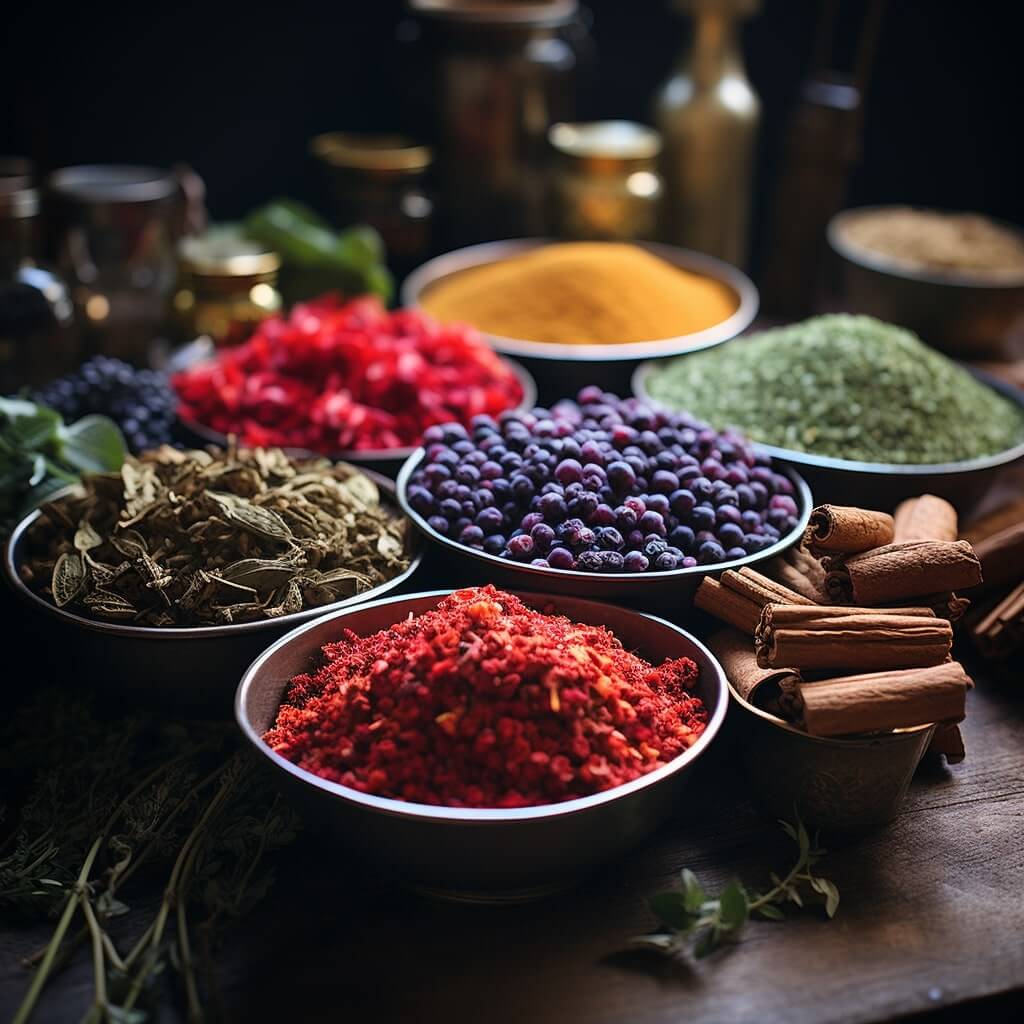
Plant adaptogens have a rich phytochemical composition. Some of the most important phytochemicals with adaptogenic properties include:
- triterpenoid saponins,
- phytosterols and ecdysone,
- lignans,
- alkaloids,
- flavonoids,
- vitamins.
Adaptogens for body endurance and stress
The action of adaptogens in physically and emotionally demanding situations examined on mice. The animals were administered a fixed combination of three natural extracts from the plants Eleutherococcus senticocus, Schisandra chinensis, and Rhodiola rosea, which contained compounds such as eleutherosides, schisandrins, salidroside, and tyrosol, for 7 days. The animals were divided into groups and the effectiveness of three different doses of the preparation (30, 90, and 180 mg/kg of body weight) was tested.
After a week, they were subjected to a forced swimming test to exhaustion. The mice receiving adaptogens showed significantly (up to seven times, depending on the dose) greater endurance. The researchers concluded that adaptogens increased the body's defense response to stress.
The serum concentration of a certain protein (Hsp72) was measured, the function of which is, among other things, to increase tolerance to stress, both emotional and physical, related to overloading the body with exercise.
The mechanism of action of adaptogens on stress
According to researchers, one of the mechanisms of action of adaptogens may be the stimulation of the production and release of this protein into the bloodstream, i.e., mediating the stress response and increasing the body's endurance, including by participating in the process of protein repair during physical exertion.
The Hsp72 protein plays an important role in the mechanism of removing stress-deformed or abnormally synthesized proteins from the cell, which would otherwise disrupt normal cellular function. This means that this protein is important for maintaining cellular balance and protecting the cell from stressful conditions, thereby increasing cell survival in the face of otherwise lethal cellular stress.
The release of this protein into the blood occurs naturally following exposure to stressful factors (physical or psychological). Assuming that levels of this protein are increased through the systematic use of adaptogens, the body's defense response to stress may be more effective, resulting in greater endurance.
Sources:
- Oliynyk S et al., The pharmacology of actoprotectors: practical application for improvement of mental and physical performance. Biomol Ther (Seoul), 2012: https://www.ncbi.nlm.nih.gov/pmc/articles/PMC3762282/
- Todorova V et al., Plant Adaptogens—History and Future Perspectives, Nutrients 2021: https://www.mdpi.com/2072-6643/13/8/2861
- Panossian A et al., Adaptogens exert a stress-protective effect by modulation of expression of molecular chaperones. Phytomedicine 2009: https://www.sciencedirect.com/science/article/abs/pii/S0944711308002250