
Adaptogens for Stress: How Do They Affect the Body and the HPA Axis?
Adaptogens and cortisol and the HPA axis: what studies really showed about ashwagandha, rhodiola, eleutherococcus, and ginseng. Drug interactions and legal status.
Adaptogens are sold as a natural way to lower cortisol, but most numbers circulating online do not come from the studies they are attributed to. We checked every source cited in this text in Europe PMC and had to retract some claims: the ashwagandha meta-analysis does not report cortisol decrease in percentages, the rhodiola study had no placebo group, and the ginseng review states no improvement in physical performance. Below you will find what these studies really say: the hypothalamic-pituitary-adrenal axis mechanism, results of individual studies with participant numbers and duration, documented drug interactions, and the legal status of adaptogenic supplements in Poland and the European Union. You will also learn where the evidence is strong and where it ends at the animal model.
KEY INFORMATION
• A meta-analysis of 12 studies involving 1002 people showed reduction of anxiety and stress after ashwagandha, but the certainty of evidence was rated low (Akhgarjand 2022).
• The mechanism was described at the level of heat shock proteins and neuropeptide Y, in cells and mice, not humans.
• In the ginseng meta-analysis, eight studies on physical fitness showed no improvement versus placebo.
• Eleutherococcus in endurance athletes increased, not decreased, hormonal stress markers.
• The best documented interaction: American ginseng lowers INR in people taking warfarin.
What Are Adaptogens in Pharmacology?
Adaptogens are plants and fungi attributed with increasing nonspecific resistance to stress and restoring physiological balance without strong stimulating effects. The Committee on Herbal Medicinal Products of the European Medicines Agency issued on May 8, 2008, a reflection paper on the adaptogenic concept (EMEA/HMPC/102655/2007), aimed at clarifying the term itself, not confirming product efficacy.
A modern pharmacological review describes adaptogens as substances with pleiotropic effects on the neuroendocrine-immune system, with a biphasic dose-response: at low doses, they act as mild stress mimetics activating adaptive response pathways that later help endure stronger stress (Panossian 2021, Medicinal Research Reviews). This logic is the same as in physical training: a subthreshold stimulus prepares the system for a greater one.
Classical adaptogenic plants include extracts of Panax ginseng, Eleutherococcus senticosus, Rhodiola rosea, Schisandra chinensis, and Rhaponticum carthamoides. Authors of a review published in “Nutrients” emphasize, however, that despite widespread use, clinical studies in humans remain few (Todorova 2021). A separate review in “Chinese Medicine” compares this category with tonic herbs of traditional Chinese medicine (Liao 2018).
The word “nonspecific” is literal here. By definition, an adaptogen does not target a single symptom or organ but raises the threshold at which the body fails to cope with any kind of burden. This sounds attractive but complicates research because the endpoint must be chosen arbitrarily. The 2021 review authors also point out that some combinations of adaptogenic plants produce effects not seen with any single ingredient alone, further complicating evaluation of individual raw materials.
The practical conclusion from these three works is one: adaptogen is a functional category described mainly by mechanism, not a set of products with confirmed clinical efficacy. Differences between them can be large and become visible only in individual studies, which we discuss further.
Where Did the Concept of Adaptogen Come From?
The concept originated in Soviet military pharmacology in the 1940s and 1950s and entered Western medicine only after 1991 with translations of Russian works. A historical review in “Nutrients” dates the first uses in competitive sports to about fifty years ago, linking them to the search for agents increasing resistance to load without increased oxygen consumption (Todorova 2021).
Schisandra chinensis is the best documented example here. It gained recognition not in China but in official USSR medicine in the early 1960s after two decades of pharmacological and clinical research. It entered the USSR State Pharmacopoeia and the state drug registry, and animal studies described protective effects against heat shock, burns, hypothermia, immobilization, and irradiation (Panossian and Wikman 2008, Journal of Ethnopharmacology).
This history explains why adaptogen literature looks different from literature on registered drugs in the EU. Much evidence comes from studies conducted under a different regulatory system, often without blinding or placebo control, and their replication under Western standards is rare. The review lists clinical reports on schisandra use in asthenia, neurotic disorders, low blood pressure, and gastrointestinal diseases. The wide range of indications says more about the methodology of those times than about the plant.
Therefore, in the rest of the text, for each claim we specify the population measured and study design. The phrase “studies confirm” without these two pieces of information means nothing, and in this supplement category it can mean even less than usual.
How Do Adaptogens Affect the HPA Axis?
The hypothalamic-pituitary-adrenal (HPA) axis is the main neuroendocrine stress response system and is the target of described adaptogen mechanisms. The hypothalamic paraventricular nucleus releases corticotropin-releasing hormone, which stimulates the pituitary to secrete adrenocorticotropic hormone, which triggers cortisol production in the adrenal cortex. Cortisol then inhibits release of the previous two hormones via negative feedback.
Chronic stress disrupts this loop. Bruce McEwen described it as allostatic load, the cost the body pays for maintaining adaptive mechanisms in a state of constant readiness (McEwen 2017, Chronic Stress). A systematic review of 267 original studies confirms the association of allostatic load with worse health outcomes but does not provide a single risk indicator for a specific disease (Guidi 2021, Psychotherapy and Psychosomatics).
The best described molecular trace of adaptogen action involves heat shock proteins. In a study on BALB/c mice, a fixed combination of eleutherococcus, schisandra, and rhodiola extracts given for seven days at doses around 30, 90, and 180 mg/kg extended swimming time to exhaustion from 3.0 to 21.1 minutes, about sevenfold. Baseline serum Hsp72 increased from 0.8-1.5 to 5.5-6.3 pg/ml (Panossian 2009, Phytomedicine). For comparison, physical and emotional stress alone raised it only to 3.2 pg/ml, while stress plus extract raised it to 15.1 pg/ml, maintained for a week.
The second element is neuropeptide Y. In isolated human glial cells, the same combination stimulated expression of neuropeptide Y and Hsp72, and silencing the NPY gene with small interfering RNA abolished the effect (Panossian 2012, Frontiers in Neuroscience). However, these are cells and mice. None of these studies measure translation of this mechanism to cortisol reduction in humans.
What Do Studies Really Show About Ashwagandha?
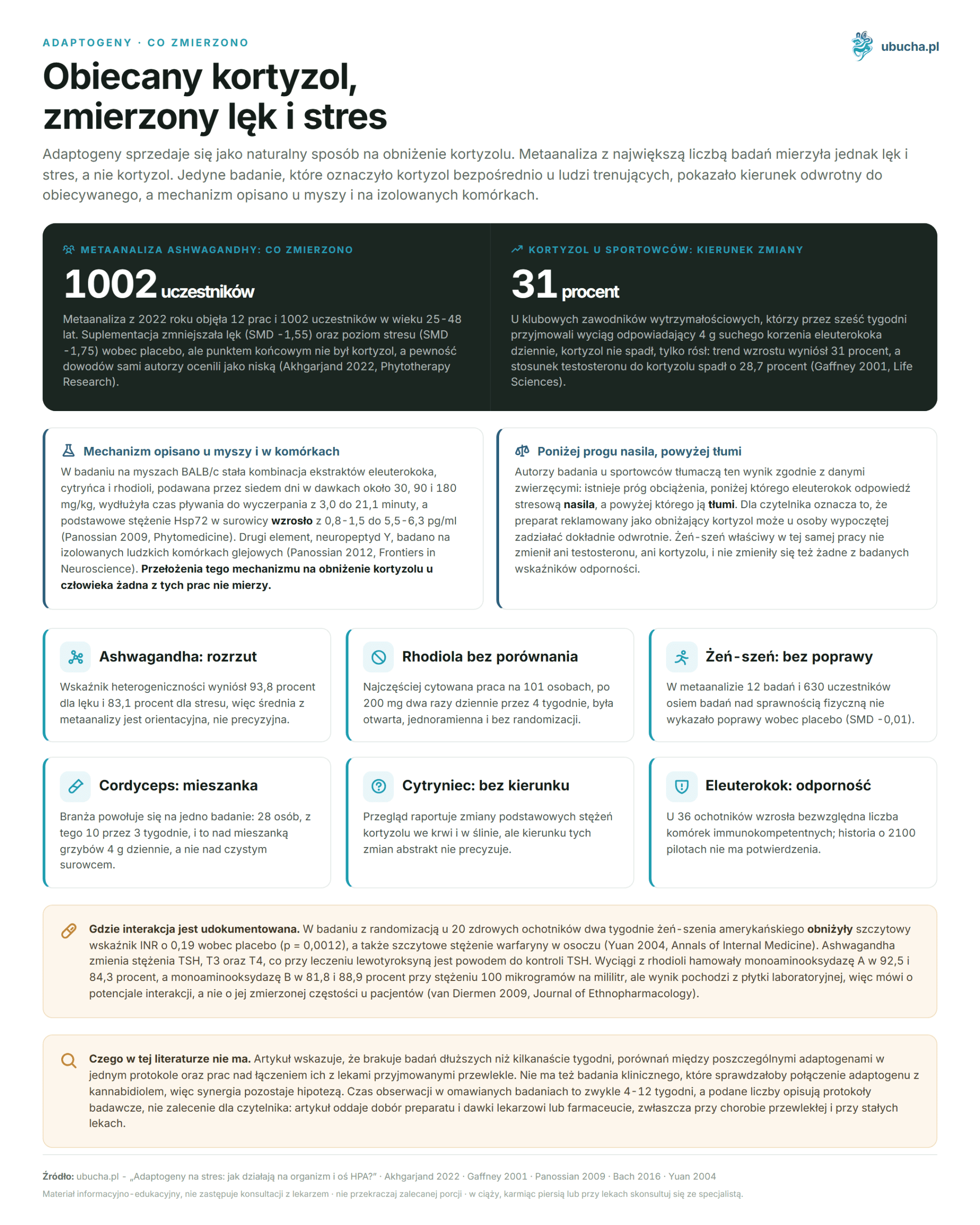
Ashwagandha has the most clinical studies among adaptogenic plants, and a 2022 meta-analysis included 12 studies with 1002 participants aged 25-48. Supplementation reduced anxiety (SMD -1.55) and stress (SMD -1.75) compared to placebo, with authors rating evidence certainty as low (Akhgarjand 2022, Phytotherapy Research).
Previously, the blog circulated the number “22.2 percent cortisol decrease” attributed to this meta-analysis and the journal name “Journal of Affective Disorders.” Neither comes from this work. The meta-analysis does not report cortisol in percentages and was published in “Phytotherapy Research.” Dose-response analysis indicated beneficial effects on stress at 300-600 mg daily, the only dosing number given. Note the heterogeneity: 93.8% for anxiety and 83.1% for stress, meaning studies measured very different things. With such spread, the meta-analytic average is approximate, not precise.
Individual double-blind studies measured cortisol directly and are consistent, though without impressive percentages in abstracts.
| Study | Participants | Protocol | Abstract Result |
|---|---|---|---|
| Chandrasekhar 2012 | 64 people with chronic stress | 300 mg twice daily, 60 days | cortisol lower than placebo, p = 0.0006 |
| Salve 2019 | 60 people, PSS score above 20 | 250 or 600 mg daily, 8 weeks | PSS and cortisol decrease at both doses, better sleep quality |
| Gopukumar 2021 | 130 stressed people | 300 mg extended release, 90 days | PSS-10 13.0 vs 18.7 placebo, cortisol p = 0.0443 |
Sources respectively: Chandrasekhar 2012, Salve 2019, and Gopukumar 2021. None report percentage cortisol decrease in abstracts, so numbers like “27.9 percent” are unsupported.
Does Ashwagandha Affect Sleep, Thyroid, and Testosterone?
It affects sleep moderately. In a double-blind study of 60 people with insomnia, 300 mg twice daily for 10 weeks, sleep onset measured by actigraphy was 29.00 minutes in the treatment group vs. 33.94 minutes placebo, and sleep efficiency increased from 75.63 to 83.48 percent (Langade 2019, Cureus). The difference between groups is about five minutes, not a quarter hour.
Thyroid effects are documented but not in the marketed direction. A pilot study in 50 people with subclinical hypothyroidism, 600 mg daily for 8 weeks, showed improvement in TSH, T3, and T4 compared to placebo (Sharma 2018, Journal of Alternative and Complementary Medicine). For a person with non-autoimmune hypothyroidism, this is beneficial. For someone treated with levothyroxine, it requires TSH monitoring because thyroid stimulation changes medication needs.
Effects on sex hormones are weaker than summarized. In a crossover study of 57 men aged 40-70, with extract providing 21 mg withanolide glycosides daily for 8 weeks, testosterone increased 14.7 percent more than placebo, and DHEA-S by 18 percent. No differences were found for cortisol and estradiol, nor for fatigue and vitality (Lopresti 2019, American Journal of Men’s Health).
Memory was studied in 50 adults with mild cognitive impairment, 300 mg twice daily for 8 weeks, showing improvement in Wechsler memory subtests and attention tasks (Choudhary 2017). The CANTAB scale appears in another study on stressed people, not this one. The chemical composition of raw material, i.e., withanolides and withaferin A, is described in a review in “Molecules” (Mirjalili 2009).
What Is Known and Unknown About Rhodiola?
Rhodiola rosea has two independent systematic reviews, both ending with the same caveat. A 2011 review included 11 randomized placebo-controlled studies and found possible beneficial effects on physical and mental performance and some psychiatric disorders, but no independent replications (Hung 2011, Phytomedicine).
The second review, focused on fatigue, analyzed 11 studies and was more cautious. Effectiveness was confirmed in two of six physical fatigue studies and three of five mental fatigue studies, all with high or unclear risk of bias (Ishaque 2012, BMC Complementary and Alternative Medicine). Authors state evidence is contradictory and call for one well-designed study.
The most cited rhodiola study on occupational stress is from 2012 on 101 people with life stress symptoms, 200 mg twice daily for 4 weeks. Improvement occurred in all seven questionnaires, some after three days (Edwards 2012, Phytotherapy Research). However, it was open-label, single-arm, and non-randomized, so there is no comparison for this improvement.
Separately, an in vitro study showed methanol and water extracts from rhodiola root inhibited monoamine oxidase A by 92.5% and 84.3%, and monoamine oxidase B by 81.8% and 88.9% at 100 µg/ml (van Diermen 2009, Journal of Ethnopharmacology). The most active single compound was rosiridin, inhibiting MAO-B over 80% at 10 µM. This strong inhibition explains why combining rhodiola with antidepressants requires a doctor’s consultation, not self-decision. Note this result is from lab assays, indicating interaction potential, not measured frequency in patients.
Does Eleutherococcus Really Lower Cortisol?
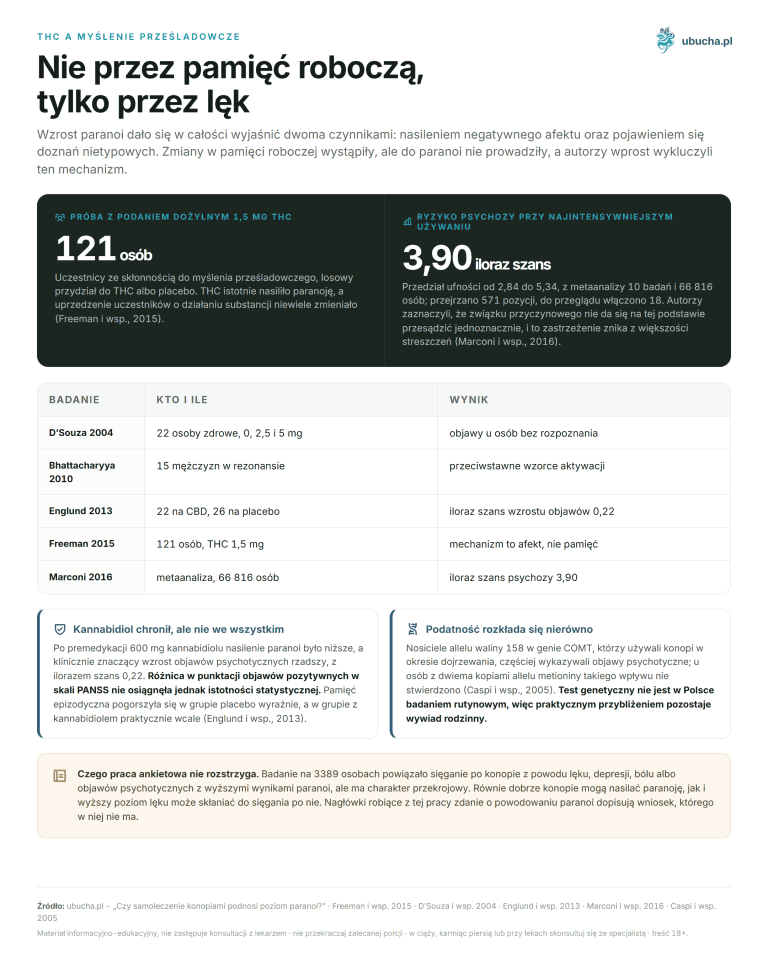
The only clinical study measuring this directly in athletes gave the opposite result. Endurance club athletes in a normal training cycle took an ethanol extract equivalent to 4 g dry eleutherococcus root daily for six weeks. The testosterone to cortisol ratio dropped by 28.7%, from 0.0464 to 0.0331 (p = 0.03), mainly due to a 31% cortisol increase (Gaffney 2001, Life Sciences).
Authors comment consistent with animal data: there is a load threshold below which eleutherococcus enhances stress response and above which it suppresses it. For readers, this means a product advertised as lowering cortisol may have the opposite effect in a rested person. Panax ginseng in the same study did not change testosterone or cortisol. No immune markers changed either, though both plants are studied for this. This is a single small study and does not close the topic but is the only one measuring both hormones in people training normally.
A second often cited study concerns immunity, not hormones. In a placebo-controlled trial of 36 healthy volunteers taking 10 ml extract three times daily for four weeks, flow cytometry showed a clear increase in absolute immune cell counts, strongest for helper T lymphocytes (Bohn 1987, Arzneimittel-Forschung). No adverse effects were reported during six months follow-up.
The internet story about a Soviet study on 2100 pilots and radar operators is not confirmed by any of these works. Bohn’s study involved 36 volunteers and flow cytometry, not military personnel. More on this plant’s profile is in the entry on eleuthero, immunity, and endurance.
What Do Studies Say About Schisandra?
Schisandra chinensis is the best pharmacologically described in this group but least studied with modern clinical trials. A comprehensive review of Russian studies lists protective effects against a wide range of harmful factors in animals and effects on the nervous, endocrine, and immune systems (Panossian and Wikman 2008). Protective factors include heat shock, skin burns, hypothermia, immobilization, irradiation, and heavy metal poisoning.
In healthy people, the same review reports increased endurance, movement accuracy, mental performance, and changes in basic nitric oxide and cortisol levels in blood and saliva. The direction of these changes is not specified in the abstract, so the statement “schisandra lowers cortisol” goes beyond the study’s findings.
Previously, the blog claimed a clinical study on 128 people with post-traumatic stress disorder, 28% CAPS symptom reduction, and 45% liver glutathione increase, citing this review. The cited review contains no such study or numbers, and these claims were removed along with the citation. We checked if another similarly titled study exists under that identifier. It does not: only the pharmacology review is listed.
What remains is a plant with well-described preclinical pharmacology, present in the Russian pharmacopoeia, with numerous clinical reports predating randomized trials. This is insufficient to promise a specific effect but enough to take it seriously for further research. The raw material and its uses are discussed in detail in the entry on schisandra, its effects on liver and performance.
What Do Studies Show About Ginseng and Cordyceps?
Ginseng performs worse in meta-analysis than its reputation suggests. The analysis included 12 randomized studies with 630 participants. Fatigue reduction was statistically significant (SMD 0.34, confidence interval 0.16-0.52) in a subgroup of four studies, but in eight studies on physical fitness no effect was found (SMD -0.01). Authors conclude evidence is insufficient to recommend ginseng for fatigue or performance (Bach 2016, Journal of Korean Medical Science).
This work was published in 2016 in a Korean journal, not in “PLoS One” in 2019 as an earlier article version stated. It also does not report 20% cognitive function improvement. Active saponins, ginsenosides, and their division into protopanaxadiol and protopanaxatriol types are described in a classic review (Attele 1999, Biochemical Pharmacology), and a newer review concludes higher quality evidence is needed (Ratan 2021, Journal of Ginseng Research).
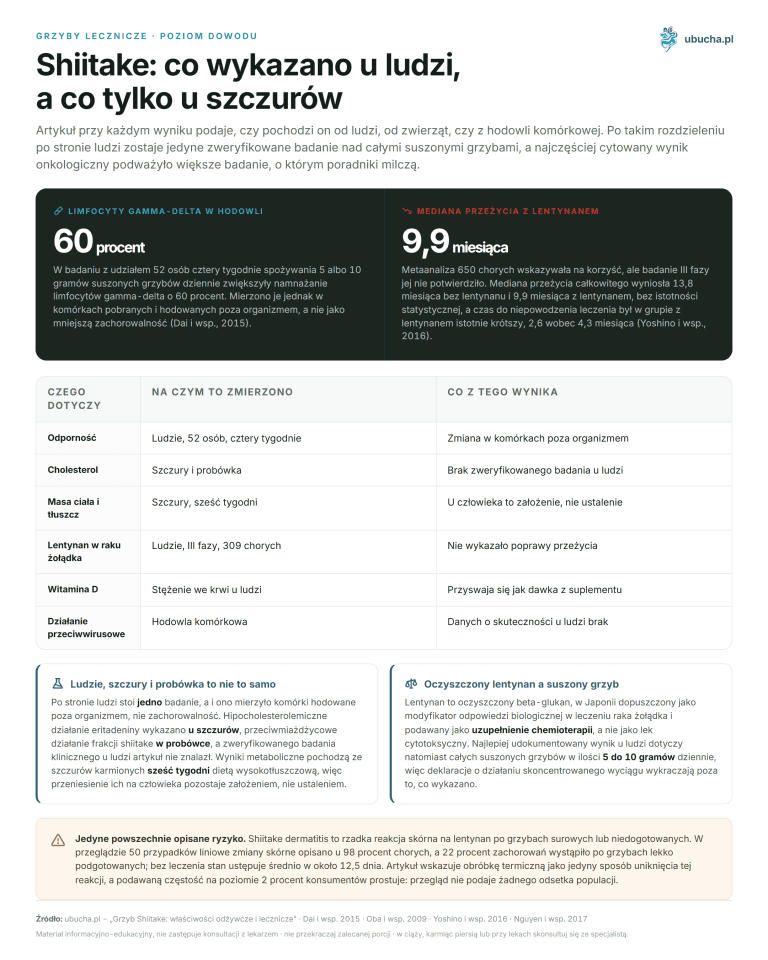
Cordyceps militaris has one study cited by the industry, and it is worth knowing what it really shows.
| Common Claims | Actual Study |
|---|---|
| meta-analysis of 5 studies, 197 athletes | one study, 28 people, 10 for 3 weeks |
| pure cordyceps 3-4.5 g daily | mushroom blend 4 g daily |
| VO2max increase 5.8% after 6 weeks | increase 4.8 ml/kg/min after 3 weeks, no effect after 1 week |
Data from a study published in “Journal of Dietary Supplements” (Hirsch 2017). Placebo group increased 0.9 ml/kg/min. After the first week, no measured parameters, including peak power and ventilatory threshold, differed significantly between groups. This pattern of misrepresentation regularly appears: results from a blend are attributed to a single ingredient, and absolute increases are converted to percentages.
Doses and Durations in Studies
The following numbers describe research protocols, not reader recommendations. Choice of product and dose belongs to a doctor or pharmacist, especially with chronic illness or medications. None of the discussed studies tested a regimen self-chosen by a supplement buyer.
Ashwagandha studies commonly use root extract 300 mg twice daily for 8-10 weeks; meta-analysis indicated beneficial effects on stress at 300-600 mg daily. Rhodiola was given 200 mg twice daily for 4 weeks. Eleutherococcus in athlete study corresponded to 4 g dry root daily for 6 weeks. Cordyceps blend was 4 g daily for 1-3 weeks.
Observation periods are usually 4-12 weeks. No study checks safety of continuous supplementation for a year or longer, so common internet recommendations for pulsed cycles are based on practice, not data.
One dose range has regulatory grounding and concerns cannabidiol, discussed in the next section. The EFSA panel derived in 2026 a provisional safe dose of 0.0275 mg/kg body weight daily, about 2 mg daily for a 70 kg person, with an uncertainty factor of 400 (EFSA 2026). The same document states CBD safety cannot be established in people under 25, pregnant or breastfeeding women, and those taking medications. This applies only to supplements with at least 98% pure cannabidiol without nanoparticles and does not transfer to other product forms.
When Should Adaptogens Not Be Used?
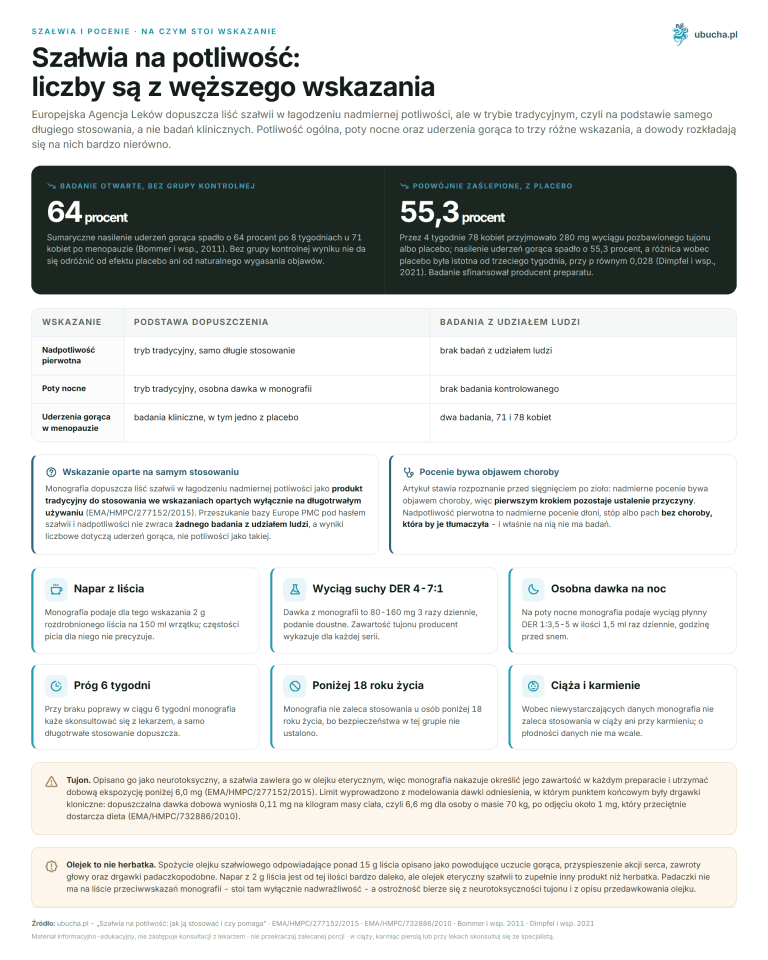
Three situations exclude self-supplementation without consultation: pregnancy and breastfeeding, autoimmune disease, and taking drugs with a narrow therapeutic window. The best documented single interaction concerns American ginseng and warfarin. In a randomized study of 20 healthy volunteers, two weeks of supplementation lowered peak INR by 0.19 versus placebo (p = 0.0012) and peak warfarin plasma concentration (Yuan 2004, Annals of Internal Medicine).
The second situation is thyroid treatment. Since ashwagandha changes TSH, T3, and T4 in subclinical hypothyroidism, it may disrupt previously adjusted dosing in someone on levothyroxine. TSH monitoring after several weeks is not a formality. The direction of change is beneficial only if hypothyroidism is non-autoimmune, determined by antibody testing, not symptoms.
The third is drugs acting on the serotonin system. Strong monoamine oxidase inhibition by rhodiola extracts was shown in lab conditions, so combining it with serotonin reuptake inhibitors or MAO inhibitors requires a doctor’s decision, not self-trial.
Besides these, general rules apply, not contradicted by any discussed study:
- During pregnancy and breastfeeding, adaptogens are excluded entirely due to lack of safety data;
- In autoimmune disease, the attending physician decides, as some plants stimulate cellular response, confirmed by eleutherococcus study in healthy volunteers;
- Before planned surgery, supplementation is stopped early due to effects on coagulation and glycemia;
- In children and adolescents, safety data is lacking, so supplementation remains a doctor’s decision.
Separate hormonal considerations for women are described in the entry on adaptogens for women.
Can Adaptogens Be Combined with CBD?
No clinical study tests adaptogen and cannabidiol combination, so all current knowledge concerns each substance separately. Adaptogens act via the hypothalamic-pituitary-adrenal axis and heat shock proteins, cannabidiol via serotonin receptors and the endocannabinoid system. These are two different levels of the same problem, but synergy remains a hypothesis.
A review of cannabidiol evidence in anxiety disorders states strong preclinical support for anxiolytic effects and human evidence limited to single administration. Few studies exist on chronic dosing, and even fewer in clinical populations (Blessing 2015, Neurotherapeutics). The “28 percent anxiety reduction” number previously in this article does not come from this work.
Cannabigerol is studied at the receptor level. A 2018 study showed it binds cannabinoid receptors CB1 and CB2 at low micromolar concentrations and acts as a partial CB2 agonist (Navarro 2018, Frontiers in Pharmacology). This work says nothing about adrenergic receptors and was conducted on cell lines, not humans.
There is also a rarely mentioned problem: when taking several plant preparations simultaneously, no one measures which is responsible for observed effects or how metabolism of others changes. Clinical studies test single standardized extracts or fixed combinations, not self-selected store assortments.
Practically, this means one thing. Combining oil with an adaptogenic extract is not an evidence-based protocol, and when taking medications simultaneously, it enters an area EFSA describes as impossible to assess for safety. We develop this topic in a separate text on CBD and adaptogen synergy.
How Does the Law Treat Adaptogens in Poland and the EU?
Adaptogens are not medicines in Poland. They function as dietary supplements, notified to the Chief Sanitary Inspectorate before marketing, or as traditional herbal medicinal products registered with the Office for Registration of Medicinal Products. These two paths differ in evidence requirements and what manufacturers may claim on packaging.
The term “adaptogen” has descriptive status at the EU level, not a registration category. The aforementioned HMPC document from 2008 was created to clarify how the agency understands the word when it appears in herbal product documentation.
Notifying a supplement to the sanitary inspection is not marketing authorization nor efficacy confirmation. It also does not change ingredient status: if a substance requires novel food authorization, notification does not replace it. A good example is cannabidiol, whose safety assessment as novel food was not positively closed by 2026, with EFSA panel noting persistent data gaps on liver, hormonal, and reproductive effects (EFSA 2026).
For readers, this has a practical consequence. A supplement label statement is not a regulatory authority-approved claim, and lack of approved health claim does not prove the ingredient does not work. It only proves evidence did not meet registration thresholds.
The second consequence concerns raw material quality. Dietary supplements are not subject to the same batch standardization requirements as medicinal products, so two packages with the same plant name may contain different amounts of active compounds. Clinical studies cited in this article were conducted on extracts with trade names and described marker content, and results apply only to such preparations.
What Does This Mean in Practice?
After checking all sources, the picture is clearly more modest than in a typical adaptogen article but not empty. Ashwagandha has the strongest evidence: a meta-analysis of 12 studies, three independent trials measuring cortisol, and separate studies on sleep, thyroid, and memory. The price of this strength is low evidence certainty, acknowledged by the meta-analysis authors.
Rhodiola has two systematic reviews both saying: signal present, replications lacking. Ginseng did not improve physical fitness in eight studies. Eleutherococcus increased hormonal stress markers in athletes instead of lowering them. Cordyceps has one study on 28 people, moreover on a mushroom blend, not pure raw material. Schisandra stands apart: well-described pharmacology, no modern randomized trials.
Also note what is missing in this literature. No studies longer than several weeks, no comparisons between adaptogens in one protocol, and no studies on combining them with chronic medications. Each gap concerns exactly what readers ask about most.
Three rules close this text. First, every number in supplement material can be checked in Europe PMC and usually should be, as numbers often migrate between texts without source relation. Second, choosing a preparation with chronic illness or medications belongs to a doctor or pharmacist. Third, supplements do not replace sleep, exercise, or talking about what specifically causes reader overload.
Frequently Asked Questions
Do adaptogens lower cortisol?
Partially. Three independent double-blind studies showed lower cortisol after ashwagandha than placebo, but none report percentage decrease. A meta-analysis of 12 studies reports reduction in stress and anxiety, not cortisol. Eleutherococcus in endurance athletes increased hormonal stress markers.
How long does it take to feel the effect of an adaptogen?
In clinical studies, observation periods are usually 4-12 weeks. Rhodiola was assessed after 4 weeks, ashwagandha after 8-10 weeks, and a study with extended-release extract lasted 90 days. These studies usually do not report shorter measurement points, so promises of effects in a few days are unsupported.
Are adaptogens addictive?
None of the discussed studies describe addiction syndrome or withdrawal symptoms. The eleutherococcus study conducted a six-month follow-up after administration ended and reported no adverse effects. Data on continuous use longer than several weeks is lacking, so nothing certain can be said about tolerance with long-term supplementation.
Do adaptogens interact with medications?
Yes. American ginseng lowered peak INR by 0.19 in people taking warfarin. Ashwagandha changes TSH, T3, and T4 levels, relevant when treated with levothyroxine. Rhodiola extracts strongly inhibit monoamine oxidase in lab conditions, so combining them with antidepressants requires a doctor’s decision.
Do adaptogens improve athletic performance?
Evidence is weak. A meta-analysis of eight studies on ginseng showed no improvement in physical fitness. A mushroom blend with cordyceps increased oxygen uptake by 4.8 ml/kg/min after three weeks in ten people, with no effect after one week. A sevenfold endurance increase was described only in mice.
Can adaptogens be used during pregnancy?
Not without a supervising doctor’s decision. Clinical studies on adaptogens were conducted on adults outside pregnancy, so no safety data exists for pregnant or breastfeeding women. The same rule applies to cannabidiol products: the EFSA panel stated in 2026 that CBD safety in this group cannot be established.
How to distinguish a good adaptogenic supplement from a poor one?
Check the botanical Latin name, declared extract standardization, the plant part used as raw material, and availability of a certificate of analysis from the manufacturer. Clinical studies were conducted on specific, standardized extracts, not powdered raw material, so a product without declared standardization does not correspond to what was tested.
Plant extracts and mushroom preparations discussed here can be found in the adaptogens category at u Bucha store.
This article is for informational and educational purposes and does not replace consultation with a doctor. If you are pregnant, breastfeeding, taking medications, or have chronic conditions, consult a specialist before using supplements or herbs.
Author: Michał Waluk · Published: 2026-05-04 · Updated: 2026-08-10