
Adaptogens from mushrooms – Chaga (Inonotus obliquus)
Chaga (Inonotus obliquus) – a complete guide: biochemistry, mechanisms, dosing, forms, limitations, and the risk of oxalate nephropathy. Based on PMC, Journal of Ethnopharmacology, Mycobiology.
Chaga (Inonotus obliquus, Inonotus obliquus) is a parasitic fungus that grows on birches in the boreal zone. For centuries, it has been used in Russian, Siberian, and Northern European folk medicine. Today, it attracts significant interest from scientific institutions due to its high content of beta-glucans, melanins, triterpenic acids (including inotodiolic and betulinic acids), and polyphenolic compounds. This text is a complete, literature-based guide to the biochemistry, mechanisms of action, forms, dosing, as well as, importantly, the real limitations, interactions, and contraindications of chaga.
KEY INFORMATION
- Taxonomy and ecology: Inonotus obliquus (Ach. ex Pers.) Pilát is a fungus from the family Hymenochaetaceae, primarily parasitizing on birches (Betula) in the cool climate zone of the Northern Hemisphere (Lu et al., Journal of Traditional and Complementary Medicine, 2021).
- Phytochemical richness: Chaga sclerotia contain up to 30% melanins and a wide profile of beta-glucans, lanostane triterpenoids (inotodiol, trametenolic acid), betulinic acid, and polyphenols (Zhao et al., International Journal of Medicinal Mushrooms, 2019).
- Strong antioxidant activity: extracts from I. obliquus exhibit some of the highest ORAC and DPPH values among medicinal mushrooms – up to 146% higher activity than Ganoderma lucidum in comparable models (Lee et al., Mycobiology, 2008).
- Nephrotoxic risk: Chaga contains very high concentrations of oxalates (even 2.5-6.9% dry mass), which is associated with documented cases of oxalate nephropathy and kidney failure (Kikuchi et al., CEN Case Reports, 2014).
- Level of evidence: Most data on anticancer, hypoglycemic, and immunomodulatory effects come from studies in vitro and animal models. There is a lack of large, randomized clinical trials in humans (Szychowski et al., Biomedicine & Pharmacotherapy, 2021).
What is chaga and why does it attract such scientific interest?
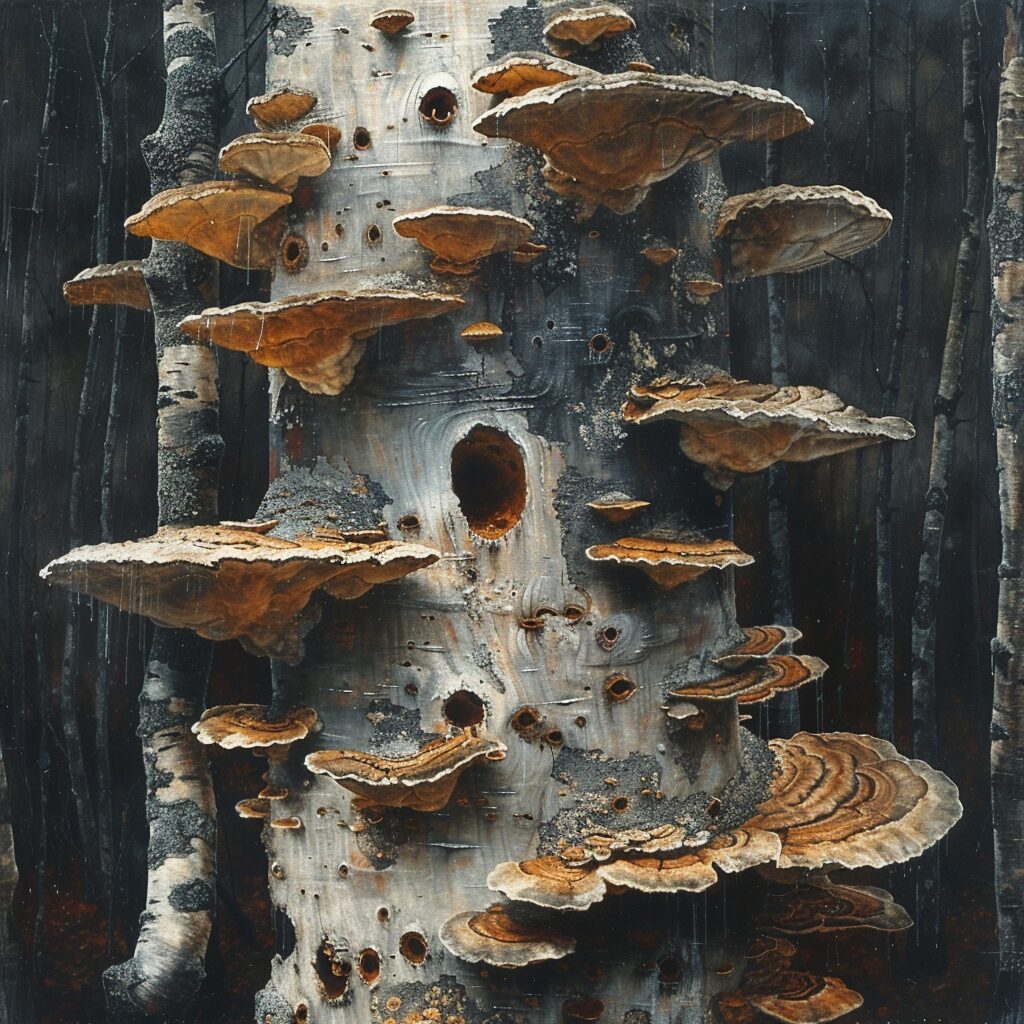
Chaga is the common name for Inonotus obliquus, a parasitic polypore fungus that produces characteristic black, cracked sclerotia on the trunks of birches. According to a review by Lu et al. in Journal of Traditional and Complementary Medicine , over 215 bioactive compounds have been documented to be isolated from this species (Lu et al., 2021).
The popularity of chaga is growing alongside interest in mycotherapy, a trend that uses fungi as supplements to support immunity, metabolism, and the central nervous system. According to a report by Grand View Research, the global medicinal mushroom market reached a value of $26.7 billion in 2022, with a projected CAGR growth of 9.9% by 2030 (Grand View Research, 2023).
[IMAGE: black, cracked chaga sclerotium growing on the trunk of a living birch in a winter boreal forest – macro photo]
Citation capsule: Inonotus obliquus is a parasitic birch fungus that produces sclerotia with a high phytochemical density. The review by Lu et al. in Journal of Traditional and Complementary Medicine (2021) identifies 215 bioactive compounds, including lanostane triterpenoids, beta-glucan polysaccharides, melanins, and polyphenols. This makes chaga one of the most chemically complex medicinal fungi.
What is the origin of the name 'subcortical polypore'?
The Polish name 'subcortical polypore' refers to the way the fungus develops. After the tree is infected by spores entering through cracks in the bark, the mycelium develops for years in the wood tissue. The sclerotium breaks through the bark from the inside, creating a rough, black mass resembling burnt coal. This atypical habit distinguishes chaga from typical woody fruiting bodies.
Where does chaga grow naturally?
Its natural range includes the belt of boreal and cool deciduous forests of the Northern Hemisphere: Siberia, Scandinavia, Canada, the northern states of the USA, Alaska, North Korea, and northern regions of Poland. In Poland, chaga is rare and considered a rare species. Harvesting from natural habitats poses serious ecological problems, which I will discuss further in the section on raw material sourcing.
What does the taxonomy and ecology of Inonotus obliquus look like?
Taxonomically, Inonotus obliquus it belongs to the kingdom Fungi, phylum Basidiomycota, class Agaricomycetes, order Hymenochaetales, and family Hymenochaetaceae. A complete systematic description is provided in the monograph by Balandajkin and Zmitrovich in International Journal of Medicinal Mushrooms, which summarizes 70 years of Russian-language research on the species (Balandajkin and Zmitrovich, 2015).
What does the life cycle of the fungus look like?
The cycle begins with spores released from hidden, short-lived fruiting bodies (teleomorphs), usually after the death of the tree. Spores land on damaged areas of the bark of another birch. The mycelium develops in the wood for 5-7 years before producing a visible sclerotium. According to observations by Zheng et al. in Applied Microbiology and Biotechnology , typical mature sclerotia are 10-15 years old, and the content of bioactive triterpenoids increases with age (Zheng et al., 2010).
Why does chaga only grow in cold climates?
The high content of melanins in the sclerotium is an adaptation to extreme conditions. The dark pigment protects the mycelium from UV radiation and extreme temperature fluctuations typical of the taiga. Studies by Babitskaya et al. have shown that the optimum for melanin production in I. obliquus lies in the range of 10-15 degrees Celsius, which explains the geographical range of the species (Babitskaya et al., Applied Biochemistry and Microbiology, 2002).
[GRAPH: map of the natural range Inonotus obliquus in the Northern Hemisphere with marked main harvesting regions – source: Balandajkin & Zmitrovich, 2015]
What bioactive compounds does chaga contain?
The chemical profile of chaga is exceptionally rich. A review by Szychowski et al. in Biomedicine & Pharmacotherapy lists six main classes of compounds: triterpenoids (over 60 identified), beta-glucan polysaccharides, melanins (up to 30% dry mass of the sclerotium), polyphenols, sterols, and numerous phenolic acids, totaling over 200 individual compounds (Szychowski et al., 2021).
What are beta-glucans and why are they important?
Beta-glucans are branched polysaccharides made up of glucose molecules linked by beta-(1,3) and beta-(1,6) bonds. This structure binds to Dectin-1 receptors and the complementary receptor CR3 on macrophages and dendritic cells. According to a review by Chan et al. in Journal of Hematology & Oncology beta-glucans activate the SYK-CARD9 pathway and stimulate the release of pro-inflammatory cytokines in a controlled, modulatory manner (Chan et al., 2009).
What triterpenoids distinguish chaga?
Chaga triterpenoids are mainly lanostane derivatives. The most studied are inotodiol, trametenolic acid, fecosterol, 3-beta-hydroxy-lanostan-11-one, and betulinic acid (derived from the host tree). According to Zhao et al., inotodiol at a concentration of 20-40 micromoles induces apoptosis in HeLa cancer cells by activating caspase-3 and degrading PARP (Zhao et al., 2019).
What are the melanins from chaga?
Melanins are high-molecular-weight pigments with indole polymer structures. In chaga, they serve a protective role for the mycelium. Studies in vitro show that isolated melanins exhibit antioxidant activity comparable to ascorbic acid and stabilize lipid membranes against oxidative stress (Kukulyanskaya et al., Applied Biochemistry and Microbiology, 2002). The blackness of mature sclerotia is a direct visual indicator of their content.
What polyphenols can we find in chaga?
The phenolic profile of chaga includes protocatechuic acid, gallic acid, syringic acid, hispidin, inonoblin A, B, and C, and phenylalanines. According to HPLC-MS analysis by Lee et al. in Mycobiology the total polyphenol content in aqueous extracts of chaga can reach 285 mg of gallic acid equivalent per gram of dry extract – this value is higher than in most commercially available mushroom extracts (Lee et al., 2008).
Citation capsule: The chemical profile Inonotus obliquus includes over 200 compounds grouped into six classes: triterpenoids (over 60), beta-glucans, melanins (up to 30% dry mass), polyphenols (up to 285 mg GAE/g), sterols, and phenolic acids. A review by Szychowski et al. in Biomedicine & Pharmacotherapy (2021) emphasizes that it is one of the most chemically complex fungi in pharmacognosy.
What are the documented mechanisms of action of chaga?
According to two independent reviews published between 2019-2021, chaga acts in multiple ways: antioxidant, immunomodulatory, anti-inflammatory, hypoglycemic, and – in preclinical studies – anti-proliferative against a range of cancer cell lines (Zhao et al., 2019). All these properties are supported by in vitro data. However, a reliable assessment requires caution regarding extrapolation to humans.
How does the antioxidant mechanism work?
Extracts from chaga effectively quench free radicals DPPH, ABTS, and hydroxyl radicals. Kim et al. demonstrated that an ethanol extract from I. obliquus at a concentration of 50 micrograms per milliliter reduces reactive oxygen species (ROS) levels in HaCaT keratinocyte cells by 67% compared to control exposed to H2O2 (Kim et al., Biological & Pharmaceutical Bulletin, 2006). The effect is associated with both direct radical scavenging and induction of endogenous enzymes, mainly SOD, catalase, and glutathione peroxidase.
How does chaga modulate the immune system?
The immunomodulatory mechanism mainly occurs through beta-glucans binding to Dectin-1 on macrophages, as well as through activation of NF-kB and MAPK in monocytes. According to Kim et al. in Journal of Ethnopharmacology the aqueous extract of chaga stimulates the release of TNF-alpha, IL-1 beta, and IL-6 in a dose-dependent manner, but at higher concentrations, it exhibits an inhibitory effect on excessive inflammatory response (Kim et al., 2005). This is a classic adaptogen profile, meaning bidirectional modulation rather than solely stimulation.
What do studies say about anticancer effects?
Preclinical data are numerous. Lemieszek et al. in International Journal of Medicinal Mushrooms demonstrated inhibition of proliferation of lung cancer line A549, breast cancer MCF-7, and colon cancer Caco-2 by 50-70% at extract concentrations of 100-200 micrograms per milliliter (Lemieszek et al., 2011). Animal model studies indicate a reduction in tumor volumes by 22-60% depending on the line and dose (Youn et al., Chemico-Biological Interactions, 2008).
Key limitation: results in vitro and in animals do not imply effectiveness in humans. There is a lack of large, randomized clinical trials with a placebo control group assessing chaga in oncology. Descriptions of individual cases do not constitute therapeutic evidence.
[IMAGE: graphic diagram of the mechanism of action of chaga beta-glucans on the Dectin-1 receptor and the SYK-CARD9-NF-kB signaling cascade]
How does chaga affect glucose metabolism?
The hypoglycemic potential is one of the best-documented actions of chaga in animal models. Wang et al. in Journal of Ethnopharmacology demonstrated that 4-week supplementation with extract from I. obliquus in db/db mice lowers fasting glucose levels by 32%, improves glucose tolerance in the OGTT test, and increases insulin sensitivity (HOMA-IR reduced by 41%) (Wang et al., 2021). The mechanism is associated with activation of PPAR-gamma, improvement of pancreatic beta cell function, and reduction of oxidative stress in liver tissue.
Hepatoprotective and neuroprotective effects
Chaga triterpenoids protect hepatocytes from damage caused by carbon tetrachloride and ethanol in rat models. Studies by Hu et al. in Biological & Pharmaceutical Bulletin showed a reduction in ALT and AST by 35-50% and a decrease in lipid peroxidation in the liver (Hu et al., 2017). In neuroprotective studies, chaga polysaccharides limited neurodegeneration in brain ischemia models, but these data are still poorly consolidated.
What do clinical studies in humans specifically show?
This is the most significant limitation. In the PubMed database and the ClinicalTrials.gov registry, the number of registered clinical studies with Inonotus obliquus in humans is small, and most are small pilot studies without randomization. According to a systematic review by Zhao et al. from 2019, only 4 out of 38 analyzed clinical publications met quality criteria (Zhao et al., 2019).
What pilot studies have been conducted?
The most frequently cited study by Shashkina et al. on Russian patients with gastrointestinal diseases involved 30 individuals and showed improvement in subjective symptoms after 3 months of supplementation with chaga extract, but without a blind trial and without a placebo control (Shashkina et al., Critical Reviews in Plant Sciences, 2006). Other reports concerned supportive use in oncology patients in Russia, but do not meet modern methodological standards.
Why is there a lack of large clinical studies?
There are three reasons. First, chaga is a fungus that cannot be mass-harvested from nature without ecological consequences. Second, laboratory cultivation (liquid fermentation of mycelium) produces a product with a variable chemical profile. Third, without uniform standardization, it is difficult to design RCTs. According to a market analysis by Transparency Market Research, differences in triterpenoid content between producers reach 400-900% (Transparency Market Research, 2022).
Citation capsule: clinical data on chaga in humans are scarce and of poor quality. Of the 38 clinical studies analyzed in the review by Zhao et al. (2019), only 4 met methodological criteria. There is a lack of large, randomized studies with a placebo group. Producers differ in triterpenoid content by even 900% (Transparency Market Research, 2022), which makes comparable RCTs impossible.
How is chaga harvested and cultivated?
Raw material for the market comes from two sources: harvesting from natural sites (wild harvesting) and laboratory cultivation. Each of these methods carries different biochemical, ecological, and pricing consequences. According to a report by IUCN and the Forest Stewardship Council, the dynamics of chaga harvesting in Russia and Scandinavia increased by over 350% between 2010 and 2022 (IUCN, 2023).
What does wild harvesting look like?
Classic harvesting involves cutting mature sclerotia from a living birch, usually with an axe or chisel. Once the sclerotium is harvested, it does not regrow, and the tree usually dies within a few years. Wild harvesting generates the richest phytochemical profile but is non-renewable at the population level of the fungus.
Can chaga be cultivated in the laboratory?
Yes, using submerged fermentation (SmF) or solid-state fermentation (SSF). Xu et al. in Bioresource Technology described a liquid fermentation protocol in bioreactors with volumes of 10-500 liters, yielding mycelial biomass after 5-7 days, but with a completely different profile of compounds than wild sclerotia (Xu et al., 2008). Laboratory mycelium contains significantly less betulinic acid (since it does not grow on birch) and melanins.
How to distinguish wild chaga from laboratory chaga?
In practice, good producers declare the source of raw material and the region of origin. Wild sclerotia have a characteristic yellow-brown color on the inside, a hard, corky structure, and a strong, earthy aroma. Laboratory biomass is usually a light, powdery product without a black shell.
[IMAGE: comparative photo of a cross-section of wild chaga sclerotium (light inner layer and black shell) next to powder from laboratory mycelium]
What forms of chaga are there and what are their differences?
Chaga is available on the market as raw pieces of sclerotium, fine powder, aqueous extract, double extract (water + alcohol), and alcoholic extract. Each form releases a different subset of compounds. According to Zheng et al., only double extraction allows for the simultaneous acquisition of both water-soluble beta-glucans and alcohol-soluble triterpenoids (Zheng et al., 2010).
What does water extract?
Hot water mainly extracts polysaccharides (beta-glucans), water-soluble melanins, and phenolic polyphenols. This is the traditional form known from Russian infusions, usually brewed from pieces of sclerotium for 4-8 hours at a temperature of 70-80 degrees Celsius.
What does alcohol extract?
Ethanol (40-70%) releases triterpenoids, sterols, betulinic acid, and lipophilic compounds. Alcoholic extracts are rich in inotodiol and inonotic acid but devoid of beta-glucans. They are mainly used as tinctures at doses of 1-3 ml daily.
What does double extraction extract?
This is a quality standard in modern mycotherapy. The process involves first alcohol extraction, then hot water extraction, followed by the combination of both fractions and standardization. The product contains both polysaccharides and triterpenoids. A label declaration such as 'standardized to 8% polysaccharides and 2% triterpenoids' helps the consumer assess quality.
Is chaga powder sufficient?
Raw powder contains all components, but many of them are biologically unavailable. The cell walls of the fungus are made of chitin, which human digestive enzymes do not hydrolyze. According to an analysis by Sari et al. in Food and Chemical Toxicology the bioavailability of beta-glucans from raw mushroom powder is 3-8 times lower than from aqueous extract (Sari et al., 2017).
How to dose chaga and what to pay attention to?
There are no official, regulatory dosing recommendations for chaga for humans. The most frequently cited doses in the literature come from Russian traditions and preclinical research protocols. According to a compilation by Kou et al., the ranges of commercially practiced doses are 1-5 grams of powder daily or 500-2000 milligrams of double extract daily (Kou et al., Molecules, 2021).
How much chaga daily?
- Infusion from raw pieces: 2-4 grams daily, brewed for 8-12 hours.
- Powder: 1-3 grams daily, dissolved in warm water.
- Standardized aqueous extract: 500-1500 milligrams daily.
- Double extract: 500-2000 milligrams daily, divided into 2-3 doses.
- Alcoholic tincture: 1-3 ml (usually 20-60 drops) daily.
What time of day to take chaga?
Chaga does not have a strong stimulating effect, so it can be consumed in the morning or afternoon with a light meal. Individuals sensitive to purine content should avoid taking it on an empty stomach. The caffeine content in chaga is negligible, which distinguishes this fungus from guarana or yerba mate.
How long to take chaga?
Traditional adaptogenic practice suggests cycles: 8-12 weeks of use, followed by 2-4 weeks of breaks. This model allows for assessing the body's response and preventing the accumulation of oxalates in the kidneys.
What are the risks, interactions, and contraindications?
This is the most important section of this article. Chaga has a real risk profile, which is rarely mentioned in marketing materials. Kikuchi et al. in CEN Case Reports described the case of a 72-year-old female patient with liver cancer, whose daily consumption of 4-5 tablespoons of chaga powder for 6 months led to acute oxalate nephropathy requiring dialysis (Kikuchi et al., 2014).
Oxalates and nephropathy risk
Chaga is among the fungi with the highest oxalate content. Various analyses indicate a range of 2.5-6.9% dry mass. Consuming 5 grams of powder daily for an extended period can provide 125-345 mg of oxalates per day, significantly exceeding safe dietary ranges (Kikuchi et al., 2014). Individuals with kidney stones, kidney failure, diabetes complicated by nephropathy, or hyperoxaluria should not take chaga..
Drug interactions
- Warfarin and anticoagulants: chaga contains compounds with potential anticoagulant effects. Concurrent consumption increases the risk of bleeding (Zhao et al., 2019).
- Insulin and oral hypoglycemic agents: the hypoglycemic effects of chaga may accumulate, posing a risk of dangerous hypoglycemia.
- Immunosuppressive drugs: beta-glucans from chaga stimulate the immune system. In transplant recipients and patients on biologics, this may weaken the drug's effect.
- Nephrotoxic drugs (NSAIDs, some antibiotics, cisplatin): the combination with high oxalate content increases the risk of kidney damage.
When to categorically avoid chaga?
- Pregnancy and lactation, lack of safety data.
- Kidney diseases (chronic kidney disease, oxalate nephropathy, hyperoxaluria).
- Autoimmune diseases (multiple sclerosis, lupus, rheumatoid arthritis), immunostimulation may exacerbate symptoms.
- Planned surgical procedures, discontinue at least 2 weeks prior.
- Children under 18 years of age, lack of safety data.
Can chaga be taken with other adaptogens?
Combining chaga with ashwagandha, reishi, or lion's mane is sometimes practiced in mycotherapy, but it requires individual assessment. Special caution should be exercised when simultaneously taking multiple preparations that affect glycemia or coagulation.
[IMAGE: infographic depicting the main contraindications for chaga with symbols: kidneys, pregnancy, anticoagulants, diabetes, immunosuppression, surgery]
How to choose a good quality chaga extract?
The quality of the raw material and extract is a key variable for real effectiveness. According to a 2022 report by ConsumerLab, as much as 47% of tested commercial medicinal mushroom extracts did not meet declared beta-glucan values, and some contained significant amounts of starch instead of actual mushroom polysaccharides (ConsumerLab, 2022).
What to look for on the label?
- Species in Latin: Inonotus obliquus, without 'proprietary blend'.
- Part of the fungus: sclerotium, not mycelium-on-grain.
- Standardization: declared content of beta-glucans (minimum 8-20%) and triterpenoids.
- Tests for heavy metals: chaga accumulates lead, cadmium, arsenic from birches growing on contaminated soils.
- Origin: harvesting region, years of harvesting, certifications (Ecocert, USDA Organic).
- Extraction method: double extraction preferred over just aqueous.
What to avoid?
Avoid "mycelium-on-grain" products without sifting the grain substrate, non-standardized powders at low prices (<50 PLN for 100 g is often a sign of falsification), and products without microbiological and toxicological purity certificates.
Is chaga the same as other adaptogenic mushrooms?
Chaga belongs to the family of medicinal fungi but differs significantly from others. Reishi (Ganoderma lucidum), lion's mane (Hericium erinaceus), cordyceps, and shiitake have different bioactive profiles and mechanisms of action. According to a comparative review by Venturella et al. in International Journal of Molecular Sciences each of these species has a unique chemical identity and are not interchangeable (Venturella et al., 2021).
Chaga vs reishi
Reishi is dominated by ganoderic acid triterpenoids with strong relaxing and hypotensive effects. Chaga focuses on melanins and extreme antioxidant activity.
Chaga vs lion's mane
Lion's mane contains hericenones and erinacines that stimulate NGF and BDNF, specificity related to neuroregeneration. Chaga does not exhibit such effects.
Chaga vs cordyceps
Cordyceps (mainly Cordyceps militaris) contains cordycepin and adenosine, affecting aerobic performance and ATP production. Chaga acts differently, mainly through immune modulation and antioxidant profile.
How does chaga fit into the tradition of adaptogens?
The concept of adaptogen was introduced in 1947 by Russian toxicologist Nikolai Lazarev. The classic criteria for an adaptogen were formulated by Brekhman and Dardymov in 1969: non-specific protective action, normalization of body functions, low toxicity. According to a review by Panossian et al. in Medicinal Research Reviews chaga partially meets these criteria, but with reservations due to its high oxalate content (Panossian et al., 2021).
The role of chaga in traditional medicine
The first mentions of chaga date back to the 11th-12th century – Avicenna mentions the birch mushroom in the treatise 'Canon of Medicine', and a Russian prince from Kiev was said to have treated a lip lesion with chaga drinks. The modern Russian pharmacopoeia registered the chaga-based preparation Befungin as an adjunctive treatment for gastrointestinal diseases as early as 1955 (Lu et al., 2021).
Chaga in Western culture
In Western Europe, interest in chaga surged dramatically after the publication of Alexander Solzhenitsyn's novel "The Cancer Ward" (1967), where the theme of the "birch fungus" as a cancer remedy appears. This literature sparked a wave of popularity but simultaneously distorted the scientific picture of the actual, limited clinical knowledge about the fungus.
Frequently Asked Questions (FAQ)
Does chaga cure cancer?
There is no clinical evidence in humans that chaga cures cancer. Data on anti-proliferative effects come exclusively from in vitro studies and animal models. Lemieszek et al. (2011) demonstrated a reduction in proliferation of the A549 line by 50-70%, but extrapolation to clinical patients is unjustified. Chaga should be treated as a supplement, not a therapy.
Does chaga lower blood sugar?
In animal models, a 32% reduction in fasting glucose and improved glucose tolerance have been demonstrated (Wang et al., Journal of Ethnopharmacology, 2021). There is a lack of large RCTs in humans. Individuals with type 2 diabetes using insulin or oral medications should consult a doctor, as the risk of hypoglycemia when combined may be significant.
Can chaga be taken daily?
Daily, long-term use increases the risk of oxalate nephropathy. Kikuchi et al. (2014) described a case of kidney failure after 6 months of daily consumption of 4-5 tablespoons of powder. The recommended model is cycles of 8-12 weeks with breaks of 2-4 weeks and doses in the lower ranges of traditional.
How to brew chaga?
Traditional infusion: 2-3 grams of crushed sclerotium in 250 ml of water at a temperature of 70-80 degrees Celsius. Steep for 4-8 hours (preferably overnight), do not boil. Boiling degrades thermosensitive beta-glucans. One 'batch' of chaga can be infused 2-3 times. Adding citric acid improves the extraction of polyphenols.
Is chaga legal in Poland?
Yes, chaga is legal as a dietary supplement, but harvesting from protected forests is subject to regulations by the State Forests. Some regions require permits. In foreign trade, chaga sclerotia are not listed on the CITES list. In Poland, it is recommended to buy only from certified sources due to the risk of contamination with heavy metals.
Does chaga have side effects?
Yes, the most commonly reported are: gastrointestinal disturbances, diarrhea, headaches, risk of hypoglycemia (especially in diabetics), risk of bleeding in individuals on warfarin, and with long-term use, the risk of oxalate nephropathy. Allergic reactions in individuals allergic to fungi are rare but possible. In case of any concerning symptoms, discontinue the product and consult a doctor.
Does chaga contain caffeine?
No, chaga does not contain significant amounts of caffeine or other stimulants. This is an important distinction from yerba mate or guarana. The feeling of 'energy' after chaga likely results from improved mitochondrial function and its effect on glucose metabolism, rather than from stimulating adenosine receptors.
How long does it take to produce a good double extract?
The full cycle of producing high-quality double extract takes 6-12 weeks. It includes alcohol extraction (2-6 weeks), water extraction (8-24 hours), combining fractions, evaporation, spray drying, and standardization. Shorter processes usually indicate a lower quality product.
Summary, what do we really know about chaga?
Chaga (Inonotus obliquus, Inonotus obliquus) is an extremely interesting medicinal fungus with a centuries-old history of use and a rich, well-documented chemical profile. Beta-glucans, lanostane triterpenoids, melanins, and polyphenols create a unique combination. Preclinical data indicate real antioxidant, immunomodulatory, hypoglycemic, and anti-proliferative effects. in vitro.
At the same time, chaga is not a miracle cure.There is a lack of large clinical studies in humans, the standardization of market products is highly variable, and the high content of oxalates poses a real risk of nephrotoxicity with long-term use. Interactions with warfarin, insulin, and immunosuppressive drugs are serious.
A sensible approach is: careful selection of a certified product with double extraction, use in cycles with breaks, doses in the lower ranges of traditional, and prior consultation with a doctor for individuals with chronic diseases. Chaga is an interesting complement to a healthy lifestyle but not a substitute for evidence-based medicine.
Author: Michał Waluk, founder of the u Bucha store, educator in herbs and adaptogenic plants.
SOOL Broad Spectrum CBD 5% 10ml
SOOL Broad Spectrum CBD 10% 10ml
Cannova CBG 15% 10ml
Mars Dry CBD 9%
Adaptogens, 100% natural plant extracts, liquid 50 ml
Ashwagandha (Withania somnifera) Extract 5% – 10G