
Lemon verbena: properties for relaxation, weight loss, and aroma
Lemon verbena properties – citral, geranial, relaxation, digestion, weight loss. Extract 600 mg/d, Mauriello study 2017. What distinguishes its aroma and how to use it. 2026.
When we talk about lemon aroma in herbs, we often think of lemon balm or lemongrass. However, lemon verbena (Aloysia citrodora) has a much more intense and pure aroma than both – it is the true queen of lemon herbal teas. Brought to Europe in the 18th century by Spanish colonizers from Argentina and Chile, it quickly became a favorite among pharmacies, confectioners, and botanical gardens on the continent – its leaves were dried as a flavoring for desserts and liqueurs. Its main active ingredient – citral (a mixture of geranial and neral) – not only gives it a characteristic scent but also exhibits documented anti-inflammatory and anxiolytic effects and influences fat metabolism. This article explains the biological properties of lemon verbena, how it differs from similar lemon-scented herbs, and how to use it in daily life.
KEY INFORMATION
• Mauriello et al. (Journal of Ethnopharmacology, 2017) in a RCT showed that 600 mg/d of lemon verbena extract reduced oxidative stress and improved recovery markers in athletes after exercise.
• Citral (up to 35% of the essential oil) is the main active ingredient responsible for the aroma and biological properties.
• Actions: anxiolytic (flavonoids), anti-inflammatory (luteolin, verbascoside), digestive support, and potentially modulating adipogenesis.
• Tea: 1–2 teaspoons of dried leaves per cup of water at 85°C, steep for 7–10 minutes – an excellent substitute for sweet afternoon drinks.
What is lemon verbena and what distinguishes it from other herbs?
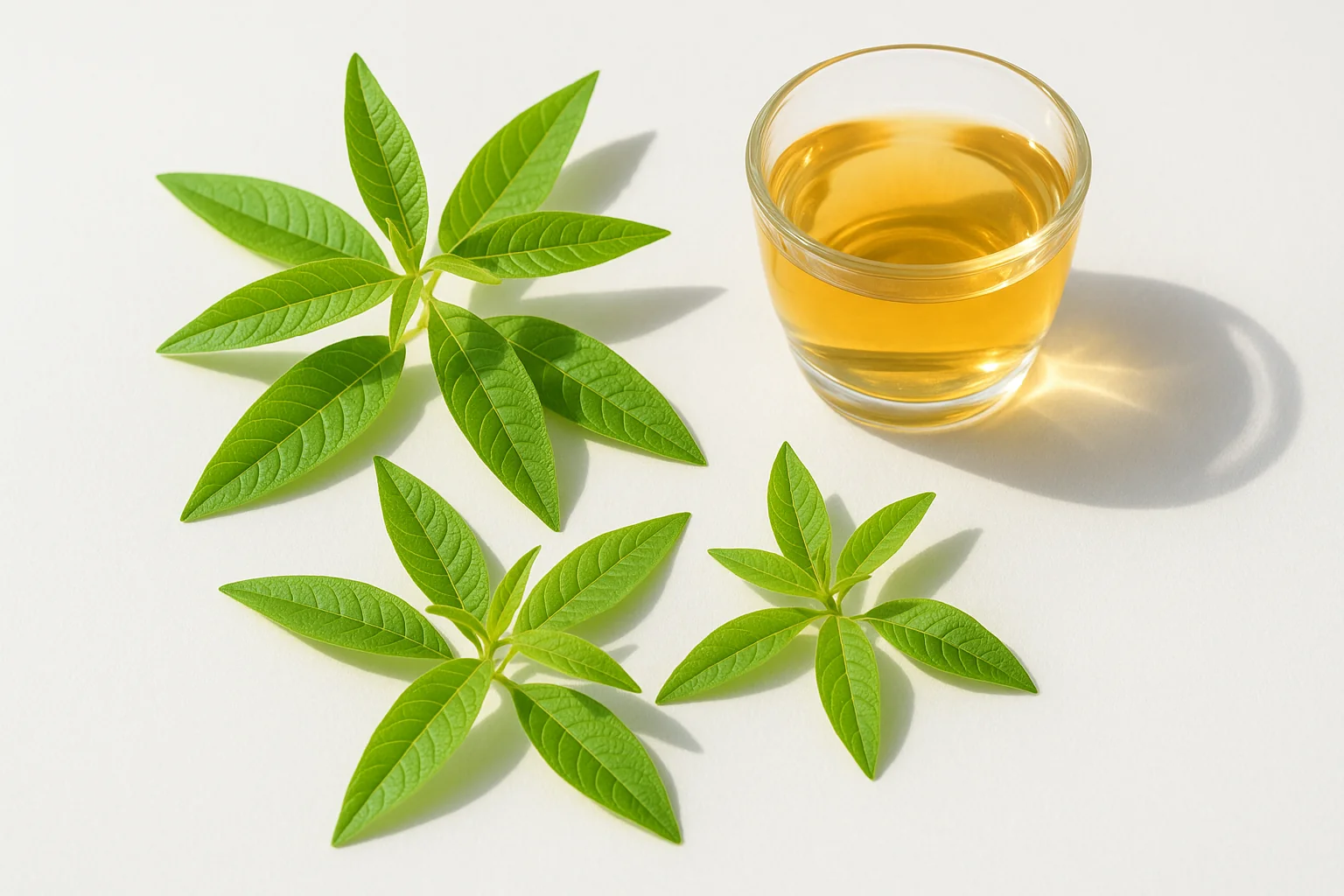
Aloysia citrodora (formerly classified as Lippia citriodora) is a shrub from the Verbenaceae family, growing wild in Argentina and Chile at altitudes up to 2000 m above sea level. In Europe, it is mainly cultivated as a balcony and garden plant – it can withstand temperatures down to -5°C. Leaves are harvested in summer and early autumn when the citral content is highest. The raw material is usually dried in the shade at temperatures not exceeding 40°C to preserve the volatile oils.
To, co wyróżnia werbenę cytrynową na tle innych ziół „o zapachu cytryny” (melisa, trawa cytrynowa, limonka kaffir), to wyjątkowa czystość i intensywność aromatu. Cytral w werbenie cytrynowej stanowi 30–35% olejku eterycznego (w melisie zaledwie 5–10%, w trawie cytrynowej 70–80%, ale z dominacją zielonej nuty trawiastej). Geranial (cytral A) nadaje świeży, ostry cytrynowy zapach, neral (cytral B) – słodszy, bardziej kwiatowo-cytrynowy. Razem tworzą aromat, który nawet przy małej ilości suszu zdominuje herbatę lub danie.
Lemon verbena grows readily in pots on balconies and terraces – and it is easy to cultivate yourself. It needs plenty of sunlight (at least 6 hours a day), well-draining soil, and moderate watering. In winter, bring it indoors (minimum temperature of -5°C will damage it). Harvest fresh leaves in the morning after the dew has dried – they have the highest concentration of essential oils at that time. Dry in the shade at room temperature for 7–10 days or in a dehydrator at 35–40°C. Store the dried material in airtight jars away from light – the aroma lasts for 12–18 months.
What biological properties does lemon verbena exhibit?
Lemon verbena is one of the better-studied aromatic herbs regarding biological properties, although it appears less frequently in Polish studies than lemon balm or lavender. The active ingredients include: citral (geranial + neral), limonene, linalool, verbascoside (iridoid phenolic glycoside), and luteolin (flavonoid). Each of them has a different pharmacological profile.
Mauriello et al. (Journal of Ethnopharmacology, 2017) conducted a RCT with 36 trained athletes using 600 mg/d of lemon verbena extract for 3 weeks of intensive training. Results: significant reduction in oxidative stress markers (TBARS, MDA) and protein carbonylation compared to placebo. The antioxidant effect was clearly stronger than in the control group, suggesting that lemon verbena may support recovery after physical exertion and reduce exercise-induced inflammation.
Luteolin – the flavonoid in verbena – is one of the better-studied anti-inflammatory flavonoids. It inhibits the NF-κB pathway, reducing the production of pro-inflammatory cytokines (TNF-α, IL-6). Verbascoside exhibits anxiolytic effects in animal models (similar to apigenin from damiana) by modulating GABA-A receptors. Citral in vitro inhibits the differentiation of 3T3-L1 preadipocytes into fat cells by modulating the expression of PPARγ and C/EBPα genes – which forms the basis for the theory about the role of lemon verbena in modifying fat metabolism.
Dodatkowe właściwości biologiczne werbeny cytrynowej obejmują działanie karminatywne (cytral rozluźnia mięśnie gładkie jelit, redukując skurcze i wzdęcia), słabe działanie przeciwbakteryjne i przeciwgrzybicze olejku eterycznego (aktywne szczególnie wobec Candida albicans in vitro) oraz modulację agregacji płytek krwi przez luteoliny. Linalol, obecny w mniejszych ilościach niż w lawendzie, dodaje delikatne działanie uspokajające. To zestawienie składników czyni werbenę ziołem o szerokim, ale subtelnym działaniu ogólnoustrojowym – nie jest to zioło „na jeden problem”, ale raczej ogólny tonik aromatyczny.
Our observations: Werbena cytrynowa jako herbata wieczorna wyróżnia się tym, że jest jednocześnie relaksująca i „orzeźwiająca” aromatycznie – co jest rzadką kombinacją wśród ziół na sen i relaks. Melisa i rumianek mają aromat bardziej „ziołowy”, chmiel – gorzki i ziemisty. Werbena cytrynowa ma aromat, który sprawia, że sama w sobie zachęca do rytuału herbacianego – bez goryczy, bez ziołowego zapachu. To przekłada się na lepszą regularność stosowania, co jest często ważniejsze niż siła działania jednorazowej dawki.
Lemon verbena and weight loss – how justified is it?
Werbena cytrynowa jest sporadycznie promowana jako „zioło na odchudzanie”. Dane in vitro dotyczące cytralu i adipogenezy są rzeczywiste i interesujące naukwo, ale droga od wyników in vitro do klinicznie istotnej redukcji masy ciała jest długa i niepewna. Cytral hamuje różnicowanie preadipocytów 3T3-L1 w modelu hodowli komórkowej, modyfikując ekspresję transkrypcyjnych regulatorów tkanki tłuszczowej. Jednak stężenia cytralu potrzebne do tego efektu in vitro są znacznie wyższe niż te osiągane przy typowym spożyciu herbaty.
Werbena cytrynowa może wspierać utrzymanie prawidłowej masy ciała pośrednio przez kilka mechanizmów. Jako aromatyczny, smaczny napój bez kalorii zastępuje słodzone herbaty, soki i napoje energetyczne – bezpośrednia korzyść kaloryczna. Luteolina i werbaskozyd mają działanie przeciwzapalne – przewlekłe zapalenie jest związane z insulinoopornością i gromadzeniem tłuszczu trzewnego. Redukcja stresu (przez cytral i linalol) obniża kortyzol, który sprzyja gromadzeniu tłuszczu na brzuchu. Poprawa trawienia przez działanie karminatywne cytralu może zmniejszyć wzdęcia i dolegliwości po posiłkach. To realny potencjał wspierający – ale nie „spalacz tłuszczu”.
Werbena cytrynowa pojawia się też jako składnik suplementów sportowych i herbat „detox” – zazwyczaj w połączeniu z jeżówką, aloesem lub koenzymem Q10. W tych preparatach jej rola to głównie antyoksydacja i poprawa regeneracji, a nie bezpośrednie działanie odchudzające. Jeśli interesuje Cię wsparcie podczas odchudzania, werbena cytrynowa może być częścią strategii obejmującej regularne spożycie wody, redukcję kalorii i aktywność fizyczną – ale sama w sobie nie zastąpi tych elementów. Jej dodatkowa wartość to aromat, który sprawia, że picie wody lub herbaty staje się przyjemniejsze – co pomaga w nawodnieniu, często zaniedbywanym podczas diet.
How to use lemon verbena in the kitchen and as tea?
Lemon verbena is one of the most versatile culinary herbs in Mediterranean and South American traditions. Tea is the simplest and most common use: 1–2 teaspoons of dried leaves (or 3–4 fresh leaves) per cup of water at 85–90°C, steeped covered for 7–10 minutes. Temperature is important: boiling water destroys some sensitive terpenoids and makes the tea more bitter. A shorter steeping time gives a fresher and brighter tea; a longer one results in a more intense aroma and more flavonoids.
In the kitchen: chopped fresh leaves of lemon verbena for fruit salads, desserts, and ice creams (a classic use in Provençal cuisine), for sauces for fish and poultry, as an aromatic ingredient in homemade lemonade. Dried leaves added to potpourri retain their aroma for months – one of the most durable aromatic dried plants. Tincture in wine or vodka: 20–30 g of fresh leaves in 500 ml of alcohol, macerate for 2 weeks in a dark place – an excellent digestif after dinner.
Lemon verbena and relaxation and stress – how to use it in the evening?
Działanie relaksujące werbeny cytrynowej jest znacznie subtelniejsze niż lawendy czy kozłka, ale ma ważną zaletę – łączy relaksację z odświeżającym, cytrusowym aromatem, który nie kojarzy się z „senną ziołową” herbatą. Dla wielu osób jest to ważne: melisa i rumianek pachną i smakują „medycznie”, werbena cytrynowa – przyjemnie i orzeźwiająco. To ułatwia stworzenie regularnego wieczornego rytuału, który nie wymaga przyzwyczajenia się do nieprzyjemnego smaku.
The relaxing mechanism of lemon verbena is multifaceted. Verbascoside and iridoid glycosides modulate GABA-A receptors, resulting in a mild anxiolytic effect. Limonene, alongside citral, is a component with documented anxiolytic effects in animal models – it stimulates the serotonin pathway through 5-HT1A receptors. Inhaling lemon verbena essential oil in a diffuser activates olfactory receptors connected to the limbic system, triggering an emotional response – faster than systemic absorption.
Praktyczny protokół wieczorny z werbeną cytrynową: 30–40 minut przed snem zaszyj się w ulubione miejsce, przygotuj filiżankę herbaty z werbeny (1,5 łyżeczki suszu, 8 minut parzenia), wyłącz ekrany i przez 20–30 minut czytaj książkę lub medytuj. Aromat herbaty i ciepło napoju tworzą „sygnał” dla mózgu, że czas zasypiania się zbliża. Regularność rytuału – co wieczór przez 2–3 tygodnie – wzmacnia ten efekt przez warunkowanie klasyczne, niezależnie od farmakologii. Możesz też dodać kilka suszonych liści werbeny do dyfuzora z wodą – aromat cytralu łagodnie wypełni sypialnię, uzupełniając efekt herbaty.
Compare with lemongrass – different plants, similar aroma, different properties
Safety of lemon verbena and interactions
Lemon verbena as tea and culinary spice is very safe with normal consumption. Essential oil requires caution: citral is phototoxic – after topical application (e.g., in creams) and exposure to sunlight, it can cause phototoxic reactions and discoloration. Always dilute lemon verbena essential oil in a base (max 1% in creams for daily use) and do not apply to areas exposed to sunlight.
Pregnancy and lactation: insufficient safety data for supplements and extracts – tea in moderate amounts (1–2 cups daily) is considered safe, but concentrated extracts require caution. Potential interactions: citral may inhibit CYP2D6 at very high doses in vitro – clinically insignificant with typical tea consumption. Luteolin may slightly inhibit calcium absorption – not applicable to typical tea consumption.
Allergies: Lemon verbena belongs to the Verbenaceae family and may cause allergic reactions in individuals sensitive to other plants from this family. Upon first use of the essential oil, perform a skin test (1 drop of diluted oil on the wrist, observe for 24 hours before full use). As with any herb: if you notice itching, rash, or shortness of breath after consuming tea – discontinue use and consult an allergist.
Children: lemon verbena tea (strongly diluted, 1/3 of the adult dose) is generally considered safe for children over 3 years old. Essential oil – avoid aromatherapy in a closed room for children under 3 years due to the presence of citral and linalool, which may irritate the sensitive respiratory tracts of infants. When in doubt – consult a pediatrician.
Check herbal blends for sleep with lemon verbena and lemon balm
Frequently Asked Questions
What is lemon verbena and what makes it unique?
Aloysia citrodora is a shrub from South America with one of the most intense lemon aromas among herbs. Citral (30–35% of the essential oil) gives a pure, floral-lemon scent stronger than lemon balm or lemongrass. The active ingredients are citral, luteolin, verbascoside, and limonene – with multifaceted biological effects.
What health benefits does lemon verbena have?
Mauriello et al. (Journal of Ethnopharmacology, 2017) demonstrated in an RCT a reduction in oxidative stress with 600 mg of extract daily in athletes. Effects: anxiolytic (flavonoid verbascoside), anti-inflammatory (luteolin), digestive support (carminative citral), and potentially modulating fat metabolism. There is a lack of RCTs directly related to weight loss in humans.
How to use lemon verbena?
Tea: 1–2 teaspoons of dried herb per cup of water at 85–90°C, steep for 7–10 minutes covered. Drink 1–3 times a day. Essential oil: 2–3 drops in a diffuser (do not use topically without dilution – phototoxic). Standardized extract: 300–600 mg daily, used in clinical studies as a dietary supplement for athletes. Culinary: for salads, desserts, lemonade as an aromatic spice.
Does lemon verbena help with weight loss?
Cytral hamuje adipogenezę in vitro, ale brakuje RCT o wpływie na masę ciała u ludzi. Pośrednie wsparcie: redukcja stresu (kortyzolu) przez luteoliny i werbaskozyd, jako niskokaloryczny napój zastępujący słodkie napoje, poprawa trawienia przez działanie karminatywne. Nie traktuj jej jako „spalacza tłuszczu” – bardziej jako wspierający element zdrowego stylu życia.
Is lemon verbena safe?
As tea and spice – very safe with typical consumption (1–3 cups daily). Essential oil is phototoxic – do not apply to skin without dilution before going out in the sun. During pregnancy: tea in moderate amounts is likely safe, concentrated extracts – caution and medical consultation. No serious drug interactions with typical tea consumption.
How does lemon verbena taste and how can it be distinguished from other lemon-scented herbs?
Najintensywniejszy i najczystszy cytrusowy aromat z grupy „ziół cytrynowych” – bez ziołowej goryczy melisy ani trawiastej nuty trawy cytrynowej. Werbena cytrynowa to czysta, kwiatowo-cytrynowa nuta z delikatną słodyczą. Aromat zachowuje się przez 12–18 miesięcy po wysuszeniu, co czyni ją jednym z najtrwalszych aromatycznych ziół suszonych do herbat i potpourri.
This article is for informational and educational purposes and does not replace consultation with a doctor. If you are pregnant, breastfeeding, taking medications, or have chronic conditions, consult the use of supplements or herbs with a specialist.
Author: Michał Waluk · Published: 2026-05-04 · Updated: 2026-05-04