
Tremella - the beauty mushroom: what it is and why it is associated with collagen
Tremella fuciformis – the beauty mushroom rich in polysaccharides that moisturize the skin. What it is, how it works, why it is associated with collagen, and what dosage is recommended.
Tremella fuciformis is a mushroom that looks like white jelly hanging on a tree - and it is this gelatinous, translucent structure that is key to its unique properties. In traditional Chinese and Korean medicine, tremella has been used for over 2000 years as a beauty supplement that was said to keep the skin 'like that of the imperial concubine Yang Guifei' - a beauty regarded as an ideal in the Tang dynasty (8th century AD). Modern science has discovered that behind this legend lie real polysaccharides with strong moisturizing effects, comparable to hyaluronic acid. Is it really 'vegan hyaluronic acid'? How does tremella relate to collagen? And what exactly does its oral supplementation provide? This article answers these questions based on available scientific research.
KEY INFORMATION
• Tremella polysaccharides have a molecular weight of about 100-400 kDa - smaller than traditional hyaluronic acid (1500 kDa) - allowing for deeper penetration into the skin layers.
• A study by Wen et al. (Journal of Cosmetic Science, 2016) showed in an in vitro model an increase in skin cell hydration by 22-35% and stimulation of NMF (natural moisturizing factor) when using tremella extract.
• Tremella contains glucuronic acid and β-(1→3)-glucans - two key polysaccharides with documented water-binding and immunomodulating effects.
• Effective oral dosage: 1000-2000 mg of standardized extract daily for a minimum of 4-8 weeks, preferably in combination with collagen or vitamin C.
What is tremella and where does it grow?
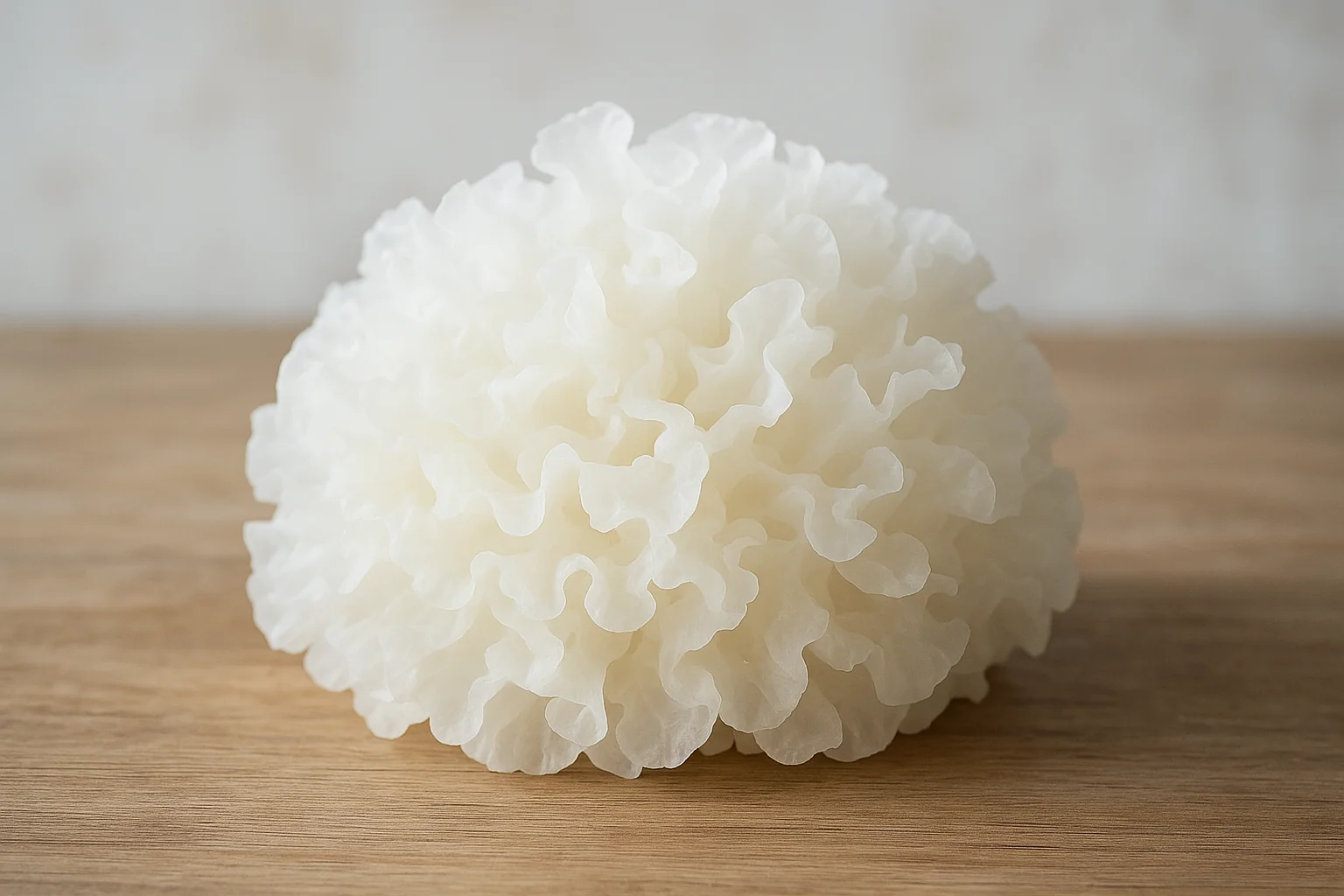
Tremella fuciformis (snow fungus, white fungus, snow fungus, tremella) is a uredinomycota - a parasitic fungus growing on dead hardwood in tropical and subtropical forests of East Asia, Latin America, and Africa. Its fruiting body has a characteristic gelatinous, multi-lobed structure of white or cream color, resembling jelly or cartilage. In its fresh state, it is almost transparent and shimmering. When dried, it shrinks to a whitish, paper-like flake.
In Chinese cuisine, tremella is an ingredient in traditional desserts, soups, and wellness drinks - especially the popular 'tremella and jujube' drink consumed as a daily beauty supplement. In traditional TCM, it is classified as a yin-tonifying agent: moisturizing, cooling, and strengthening the kidneys and lungs. Review by Ma et al. (International Journal of Biological Macromolecules, 2021) describes tremella as one of the medicinal mushrooms with the longest documented history of cosmetic and medical use.
How tremella polysaccharides moisturize the skin - mechanism of action
The secret of tremella lies in its polysaccharides. The mushroom contains high concentrations of glucuronic acid and xylan mannuron - long-chain polysaccharides that form a gel-like network binding water. The mechanism is similar to hyaluronic acid (HA), but with one key difference: the molecular weight of tremella polysaccharides is about 100-400 kDa, while native HA in the dermis has a weight of 1-1.5 MDa (megadalton).
This lower molecular weight translates to a better ability to penetrate the layers of the epidermis. High molecular weight HA applied to the skin creates a moisturizing film on the surface but does not penetrate deeper. Low molecular weight polysaccharides from tremella can reach the stratum spinosum of the epidermis and the dermis. Wen et al. (Journal of Cosmetic Science, 2016) they tested tremella extract on keratinocyte cultures and demonstrated an increase in the expression of AQP3 genes (aquaporin-3 - water channel in skin cells) by 30-45%, which translated into an increase in cellular hydration of 22-35%.
Our observations: Tremella as an oral supplement is particularly interesting for those who have dry skin despite external hydration with cosmetics. Hydration "from the inside" through the polysaccharides of tremella addresses the problem of the skin's inability to retain water, not just the lack of an external moisturizer. In practice, users describe their skin as "softer from the inside" after 4-6 weeks of taking 1500 mg of extract daily.
Why is tremella associated with collagen?
The combination of tremella + collagen is one of the most thoughtfully designed stacks in beauty supplementation. The mechanisms of both ingredients are complementary and mutually reinforcing.
Collagen (especially hydrolyzed collagen types I and III) provides amino acids (glycine, proline, hydroxyproline), which are direct substrates for fibroblasts synthesizing new collagen in the dermis. Clinical studies show that oral supplementation with hydrolyzed collagen at 2.5-10 g/day for 8-12 weeks improves skin elasticity and reduces wrinkles. Proksch et al. (Skin Pharmacology and Physiology, 2014) demonstrated in an RCT with 69 women an increase in skin elasticity of 7% and improvement in hydration after 8 weeks of 2.5 g of hydrolyzed collagen daily.
Tremella complements the action of collagen in two ways: first, the polysaccharides of tremella hydrate the extracellular matrix, creating an optimal environment for the synthesis of new collagen (fibroblasts need a properly hydrated ECM to work effectively). Second, tremella may inhibit MMP-1 and MMP-3 - matrix metalloproteinases that break down collagen - which slows down the catabolism of collagen already present in the skin. The combination means: collagen provides building blocks + tremella provides the environment and inhibits breakdown = double support for the skin.
Tremella and dry and atopic skin - what do studies say?
Dry skin and atopic dermatitis (AD) are two conditions where the polysaccharides of tremella may have particular applications. In AD, a key pathological mechanism is the disruption of the epidermal barrier function - reduced production of ceramides, filaggrin, and NMF (Natural Moisturizing Factor) leads to excessive transepidermal water loss (TEWL).
Tremella polysaccharides, by stimulating AQP3 and NMF, may supplement the deficit of water-binding factors in atopic skin. Badanie Wu et al. (Biomolecules, 2022) evaluated the impact of oral supplementation with tremella polysaccharides on mice with induced AD and showed a significant reduction in TEWL, decreased inflammation, and improved integrity of the epidermal barrier. This is an animal model, but the biological mechanism is credible for translation to human clinics.
For dry skin without atopy, tremella can be a valuable addition to a hydrating diet. Instead of relying solely on occlusive creams (petrolatum, shea butter) that block water evaporation from the skin, tremella improves the skin cells' ability to retain water - addressing the cause, not just the symptom of dryness. Oral polysaccharides from tremella reach the dermis through circulation and act directly on fibroblasts and keratinocytes, which distinguishes them from moisturizing creams that only work on the surface.
Tremella and immunity - immunomodulating effects of β-glucans
Tremella is not just a "beauty" supplement - its β-glucans exhibit immunomodulating effects similar to other medicinal mushrooms. β-(1→3)-glucans from tremella activate the Dectin-1 receptor on macrophages and dendritic cells, stimulating the production of pro-inflammatory cytokines and the activation of the innate response against pathogens.
The polysaccharides of tremella also show anti-proliferative effects against cancer cells in vitro - particularly against breast cancer cells and HeLa cells. Badanie Chen et al. (International Journal of Molecular Sciences, 2017) It has been shown that the polysaccharides of tremella inhibit the proliferation of HeLa cells by inducing apoptosis and arresting the cell cycle in the G2/M phase. This is an in vitro study - there are no clinical data - but it demonstrates the broad biological activity of this mushroom beyond cosmetics.
From a practical point of view: tremella used as a beauty supplement automatically provides immunomodulating β-glucans as well. This means that daily 1000-2000 mg of tremella extract provides support for both the skin and the immune system - two effects in one capsule. The synergy of tremella + reishi (additional immunomodulator + adaptogen) is described by users of wellness protocols focused on skin and winter immunity.
Tremella and skin aging - antioxidant action
Skin aging has two main mechanisms: chronic aging (genetically programmed) and photoaging (caused by UV and oxidative stress). Tremella addresses the latter through its antioxidant properties. The polysaccharides of tremella demonstrate radical scavenging activity in DPPH, ABTS, and superoxide dismutase (SOD) tests. Wen et al. (2016) It has been shown that tremella extract at a concentration of 200 μg/ml exhibits 68% DPPH radical scavenging activity - comparable to vitamin E under the same conditions.
In the context of photoaging, it is interesting to note the inhibition of MMP by tremella. UVA radiation activates MMP-1 in skin fibroblasts, leading to collagen degradation and wrinkle formation. If the polysaccharides of tremella inhibit MMP-1 both through an antioxidant mechanism (scavenging ROS that activate NF-κB) and through direct enzyme inhibition, their photoprotective action is biologically credible. This is an area that requires further clinical research in humans.
How to choose a good tremella supplement - what to pay attention to?
The market for tremella supplements is still relatively niche in Europe, but the availability of products is rapidly increasing. The quality of products varies - it's worth knowing what to look for when purchasing.
First: forma surowca. The best products use tremella fruiting bodies, not mycelium grown on grain substrates. Mycelium on grains has a lower content of active polysaccharides and a higher starch content from the substrate. The label should state "Tremella fuciformis fruiting body extract" or "extract from snow mushroom fruiting body".
Second: standardization of polysaccharides. Good products specify the percentage of polysaccharides (minimum 20-30%) or β-glucans. Products without information on standardization may contain low-quality raw material.
Po trzecie: metoda ekstrakcji. Water extract (hot water) is optimal for tremella because the polysaccharides are hydrophilic. Alcohol extracts are unnecessary - the active ingredients of tremella are not lipophilic like, for example, erinacines in lion's mane. "Dual extraction" products for tremella do not provide significant advantages over water extract alone.
Tremella used externally in cosmetics is a separate category. A serum with 1-3% tremella acts as a surface humectant and is an alternative to hyaluronic acid serums - more biodegradable and "plant-based". It can be used both orally and externally at the same time, combining both moisturizing effects.
Tremella and collagen - how to use them together?
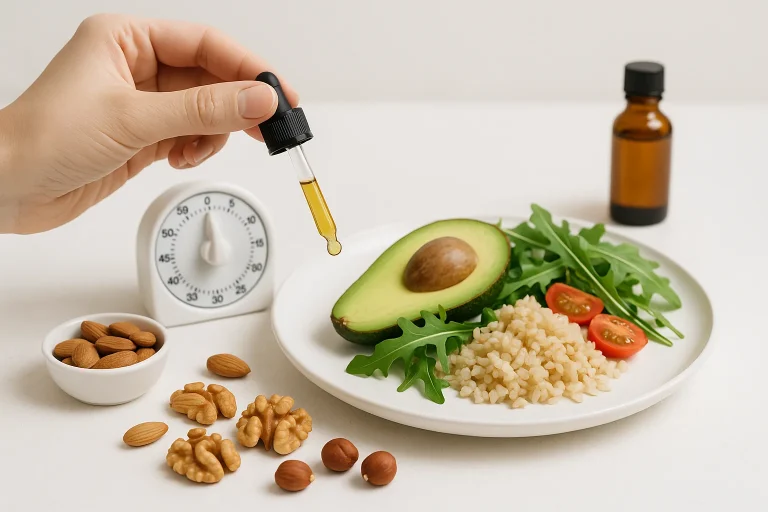
Oral protocol for the combination of tremella + collagen: hydrolyzed collagen 2.5-5 g daily (morning or evening - the timing is not clinically significant) + tremella extract 1000-2000 mg daily with a meal. Both supplements should be taken for a minimum of 8 weeks to assess effects - the first visible changes in skin hydration are often reported after 4-6 weeks.
An important addition is vitamin C (minimum 200 mg/day) as a cofactor for prolidase and prolyl-4-hydroxylase - enzymes essential for the synthesis of hydroxyproline in collagen. Without vitamin C, collagen synthesis is impaired even with optimal amino acid intake from hydrolysate. The combination of tremella + collagen + vitamin C is a complete supplementation protocol for supporting the skin from within. The effects of oral supplementation are subtler and slower than those of cosmetic preparations, but deeper - addressing cellular mechanisms, not just the surface.
Tremella as a functional mushroom with a beauty profile complements the effects of reishi described in the article. Reishi - the mushroom of immortality for immunity and stress.
A typical "inside-out beauty" protocol for 8 weeks: tremella 1500 mg in the morning + hydrolyzed collagen 5 g at any time + vitamin C 200-500 mg + reishi 500-1000 mg in the evening. This regimen addresses skin hydration (tremella + collagen), immunity (reishi + β-glucans from tremella), and collagen synthesis (vitamin C as a cofactor). It is a concentrated but safe protocol for healthy adults. Users report effects on the skin: softer, better-hydrated skin after 4-6 weeks, reduced visibility of fine lines with proper overall hydration, better elasticity under pressure. Remember that supplements cannot replace the basics: hydration (at least 1.5-2 liters of water daily), a diet rich in antioxidants, and sun protection are the foundation of healthy skin, on which beauty supplements build additional effects.
Frequently Asked Questions
What is tremella and why is it called the beauty mushroom?
Tremella fuciformis is a gelatinous white mushroom rich in moisturizing polysaccharides, used in Asia as a beauty supplement for over 2000 years. It contains glucuronic acid and β-glucans, which act similarly to hyaluronic acid. In Chinese culture, it is an iconic ingredient in beauty diets - for centuries, the legendary beauty Yang Guifei used it at the Tang dynasty court. History attributes her eternal youth to the regular consumption of tremella and lotus leaves in the form of drinks and desserts. Although this is a legend, its biochemical basis - water-binding polysaccharides - is very real.
How does tremella moisturize the skin?
The polysaccharides of tremella (100-400 kDa) are smaller than HA (1500 kDa), allowing for deeper penetration into the skin layers. They stimulate the production of aquaporin-3 (water channel in skin cells) by 30-45% and increase cellular hydration by 22-35% according to Wen et al. (2016). Orally, they act "from the inside" on the extracellular matrix.
Why is tremella associated with collagen?
The mechanisms are complementary: collagen provides amino acids that build the skin matrix, tremella hydrates the extracellular matrix and inhibits enzymes (MMP) that break down collagen. Together they provide double support - building blocks and an environment for their action. The combination with vitamin C as a cofactor for collagen synthesis creates a complete protocol.
Jakie dawkowanie tremelli jest skuteczne?
Orally: 1000-2000 mg of standardized extract daily for a minimum of 4-8 weeks. Externally: cosmetic products with tremella at a concentration of 1-5% act as surface moisturizers. Combining oral and external routes yields the best results - each route addresses a different layer of the skin.
Does tremella have anti-aging effects?
Laboratory studies confirm the inhibition of MMP-1 and MMP-3 (collagen-degrading enzymes), antioxidant activity (DPPH scavenging 68% at 200 μg/ml), and stimulation of AQP3. There are no large RCTs in humans - most data comes from in vitro studies. The mechanisms are biologically plausible but require confirmation in clinical trials.
Does tremella have antioxidant properties?
Tak - Wen et al. (2016) demonstrated DPPH radical scavenging activity comparable to vitamin E at a concentration of 200 μg/ml. The antioxidant action of tremella complements its moisturizing effects, protecting the skin from photoaging and oxidative damage.
This article is for informational and educational purposes and does not replace consultation with a doctor. If you are pregnant, breastfeeding, taking medications, or have chronic conditions, consult the use of supplements or herbs with a specialist.
Author: Michał Waluk · Published: 2026-05-04 · Updated: 2026-05-04