
HHC, HHC-O i THCP w Polsce 2026 - co jest legalne (tabela)
HHC, HHC-O, and THCP in Poland 2026: interactions, contraindications, and precautions in a clear table. u Bucha.
In 2022, HHC appeared in Polish hemp stores almost overnight. A year later, THCP joined. Today, shelves - and the internet - are full of products with names that sound like a cannabinoid alphabet. The problem is that the legal status of most of them is either ambiguous or outright illegal. The European Monitoring Centre for Drugs and Drug Addiction (EMCDDA) noted HHC as a new psychoactive substance as early as 2022, and THCP raises even more serious questions due to its very high activity at CB1 receptors. This article compiles legal and scientific facts in one table - without encouraging any illegal actions.
KEY INFORMATION
• The European Monitoring Centre for Drugs and Drug Addiction classified HHC as a new psychoactive substance in 2022, and by mid-2023 at least 20 EU countries had placed it under legal control (EUDA, Technical Report on HHC, 2023).
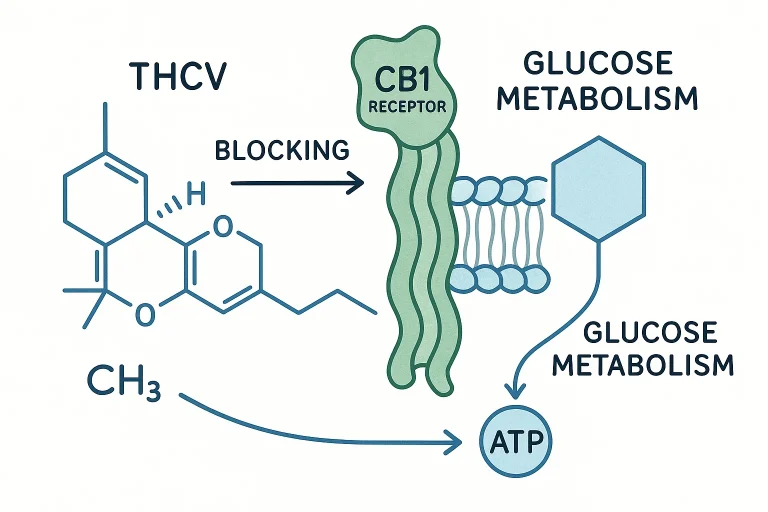
• THCP exhibits an affinity for CB1 receptors estimated to be ~33x higher than Delta-9 THC (Citti et al., Nature Scientific Reports, 2019).
• CBD and CBG from industrial hemp (below 0.3% THC) remain legal in Poland and the EU - these are the only cannabinoids with a clear legal basis for consumers.
• The legal status of cannabinoids in Poland can change at any moment due to amendments to the law or regulations - 'not on the list' does not mean 'is legal.'
Why is the legal status of HHC, HHC-O, and THCP so difficult to determine?
Polish law regarding psychoactive substances is based on lists in the annexes to the Act on Counteracting Drug Addiction (consolidated text: Journal of Laws of 2023, item 172). EMCDDA registered HHC as a new psychoactive substance, and by March 2023 at least 20 EU member states had introduced its legal control (EUDA, Technical Report on HHC, 2023). Poland does not formally list HHC by name in the controlled substances list until the amendment, but legal loopholes are not a protection.
The problem is that lawmakers are not keeping pace with the speed at which the market creates new molecules. Producers modify the structure of cannabinoids minimally - just adding a hydrogen atom, an acetate group, or changing the length of the side chain - and a substance is created that is not on the list. This does not mean it is legal. Law enforcement may apply regulations regarding analogs or new psychoactive substances.
Our observations indicate that many online stores selling HHC or THCP in Poland cite the absence of the substance's name in Polish statutory annexes as proof of legality. This is a logical fallacy. The absence of a name on the list is not the same as permission - it is simply a lack of legal updates, which can be rectified at any moment with retroactive effect from the date of publication in the Journal of Laws.
Is HHC legal in Poland?
HHC (hexahydrocannabinol) is a cannabinoid obtained by hydrogenating THC or CBD. EUDA described it as a psychoactive substance with effects comparable to Delta-9 THC, and its technical report from 2023 indicates that by mid-2023 over 20 EU countries had placed HHC under legal control (EUDA, Technical Report on HHC, 2023). Poland does not formally list HHC by name on the controlled substances lists as of the publication date of this article.
However, the situation is more complicated. HHC has psychoactive properties similar to THC - it binds to CB1 and CB2 receptors of the endocannabinoid system. EUDA has recorded cases of serious health effects after consuming HHC products, including hospitalizations. The lack of long-term toxicological studies means that health risks are unknown, not zero. This is an area requiring consultation with a lawyer.
What is THCP and why does it raise particular concerns?
THCP (tetrahydrocannabiphorol) was discovered only in 2019 by an Italian research team. A study by Citti et al. published in Nature Scientific Reports showed that THCP has an affinity for CB1 receptors estimated to be about 33 times higher than Delta-9 THC (Citti et al., Scientific Reports, 2019). This means a potentially significantly stronger psychoactive effect at a very small dose - which translates to a higher risk of unintentional overdose.
THCP naturally occurs in the cannabis plant in trace amounts. However, products available on the market contain THCP obtained synthetically or semi-synthetically. There is a lack of clinical studies on humans regarding its safety, pharmacokinetics, and potential for addiction. EUDA monitors THCP as part of the early warning system for new psychoactive substances.
We are observing an increasing number of inquiries about THCP from people seeking a stronger effect than CBD or CBG. This is understandable but concerning. The difference between a therapeutic dose and one that causes undesirable effects - the so-called therapeutic window - is extremely narrow with such high affinity for CB1. There is no data that would allow for safe dosing of THCP in home conditions.
Table: Legal status of cannabinoids in Poland 2026
The table below compares the most important cannabinoids available on the Polish market and their current legal status. Remember: the table reflects the state as of the publication date of the article. Regulations may change. The entry 'not directly regulated' does not imply legality - it indicates a legal gap that may be closed.
| Cannabinoid | Legal status in Poland 2026 | Legal basis | Notes / risk |
|---|---|---|---|
| HHC | Gray area / not directly regulated | Not directly mentioned in the Journal of Laws 2023 item 172; NSP according to EUDA 2022 | 20+ EU countries have banned it; hospitalizations recorded by EUDA; risk of status change in Poland |
| HHC-O (HHC acetate) | Gray area / not directly regulated | Not directly mentioned in Polish lists; monitored by EUDA 2023 | HHC derivative with higher lipophilicity; lack of safety studies; analogy to THC-O |
| THCP | Gray area / not directly regulated | Not directly mentioned in the Journal of Laws; EUDA early warning system | ~33x higher affinity for CB1 than THC (Citti 2019); extremely narrow dosing window; lack of clinical studies |
| Delta-8 THC | Probably controlled | Delta-9 THC isomer from list I-N; drug addiction prevention act | THC isomers may be subject to the same regulations as Delta-9; legal consultation necessary |
| CBD / CBG (industrial hemp) | Legal with THC below 0.3% | EUR-Lex regulation 1307/2013; drug addiction prevention act art. 4 point 27 | Clear legal basis; certified EU varieties; best-studied safety profile |
| CBDA | Legal within industrial hemp | Like CBD - it is not a controlled substance; no separate entry. | Acidic form of CBD; does not require special control; risk profile similar to CBD |
| THC (Delta-9) | Kontrolowany - nielegalny | List I-N and IV-P, drug addiction prevention act (Journal of Laws 2023 item 172) | Possession is punishable by imprisonment; exception: prescription medications with delta-9 THC (art. 33d of the act) |
What are new psychoactive substances and how does EUDA monitor them?
EUDA (European Union Drugs Agency, formerly EMCDDA) operates a European early warning system monitoring new psychoactive substances (NSP). In 2023 alone, it identified over 50 new substances on the EU market (EUDA, European Drug Report 2024). HHC made it onto this list in 2022 as one of the first cannabinoid derivatives with a real retail sales scale.
The system is based on a network of national contact points collecting data on new substances and hospitalizations. When a substance enters the system, EU countries receive a notification and can decide on control measures. Poland participates through the National Center for Counteracting Addiction (KCPU).
The inclusion of a substance in the EUDA system does not automatically equate to its prohibition in Poland - it is a signal for lawmakers. The more substances enter the system, the faster amendments to national controlled lists occur.
Legal does not mean safe: what should consumers know?
The absence of a substance on the controlled list in Poland is not a safety certificate. The 2023 EUDA report on HHC documents cases of serious side effects after its consumption, including hospitalizations due to tachycardia and psychotic episodes (EUDA, Technical Report on HHC, 2023). The profile of HHC's adverse effects is similar to that of THC, and its addictive potential has not been studied.
THCP carries a different risk: with an affinity for CB1 about 33 times higher than THC, the difference between a dose that produces a pleasant effect and a dose that causes undesirable reactions is extremely small. In practice, this means that individuals unaccustomed to cannabinoids may accidentally consume multiple 'effective doses of THC' in one serving of the product. In comparison, CBD and CBG from industrial hemp do not bind to CB1 receptors in a way that causes psychoactive effects.
HHC-O is a separate case. The added acetate group causes the substance to be absorbed differently than HHC - analogous to the controversies surrounding THC-O, which some researchers have linked to lung toxicity when inhaled. The lack of clinical studies on HHC-O means that consumers are essentially participants in an uncontrolled experiment.
Which cannabinoids are legally available to consumers in Poland?
CBD and CBG from industrial hemp are the only cannabinoids with a clear, stable legal basis for consumers in Poland in 2026. Industrial hemp must contain less than 0.3% THC in dry mass according to EU regulation 1307/2013 (EUR-Lex, Regulation 1307/2013). This requirement encompasses the entire production chain - from seeds of certified strains to the finished product.
CBD has a more solid research background: the European Medicines Agency (EMA) has approved a CBD-based drug (Epidyolex) for the treatment of certain forms of drug-resistant epilepsy. CBG raises no legal doubts as a cannabinoid naturally present in industrial hemp.
The difference comes down to one thing: by purchasing CBD or CBG hemp flower from legal European crops, you know what you are buying. The producer must provide the composition, meet standards, and be responsible for the product. With HHC or THCP from the internet - none of these guarantees exist.
Frequently Asked Questions
Is HHC legal in Poland in 2026?
HHC is not explicitly listed on the controlled substances lists in the Polish drug prevention law (Journal of Laws of 2023). However, EUDA classified HHC as a new psychoactive substance as early as 2022, and over 20 EU countries included it in control by 2023 (EUDA, HHC Report, 2023). The status in Poland may change without warning. Consult a lawyer before purchasing or possessing.
Is THCP dangerous?
THCP shows an estimated affinity for CB1 receptors about 33 times higher than classic THC (Citti et al., Scientific Reports, 2019). This means that psychoactive effects can be significantly stronger at much lower doses. There is a lack of toxicological studies on humans. The risk of overdose is real, and safety assessment is impossible without clinical data.
What is HHC-O and how does it differ from HHC?
HHC-O (hexahydrocannabinol acetate) is a derivative of HHC with an added acetate group. Theoretically, it works stronger than HHC due to higher lipophilicity and potentially faster absorption. EUDA lists HHC-O in reports on new cannabinoid derivatives as a substance requiring monitoring. The lack of clinical studies means its risk profile is unknown.
Is Delta-8 THC legal in Poland?
Delta-8 THC is an isomer of Delta-9 THC, a substance directly controlled under Schedule I-N of the Act on Counteracting Drug Addiction. Polish regulations may encompass isomers and analogs of controlled substances - which may mean that Delta-8 THC is subject to the same restrictions as Delta-9. This is an area that requires consultation with a lawyer specializing in pharmaceutical or criminal law.
Why is Hemp Gru CBG or CBD flower a safer choice than HHC or THCP?
Hemp Gru CBG and CBD comes from certified European industrial hemp farms and contains less than 0.3% THC in accordance with regulations. EUR-LexThe product operates within clearly defined regulations, is not a new psychoactive substance, and has a significantly better-studied safety profile than synthetic or semi-synthetic HHC, HHC-O, or THCP.
This article is for informational and educational purposes and does not constitute legal advice. The legal status described in the article is valid as of the publication date - regulations regarding cannabis may change. Consult a lawyer or current legal acts before making decisions.
Author: Michał Waluk · Published: 2026-05-04 · Updated: 2026-05-04