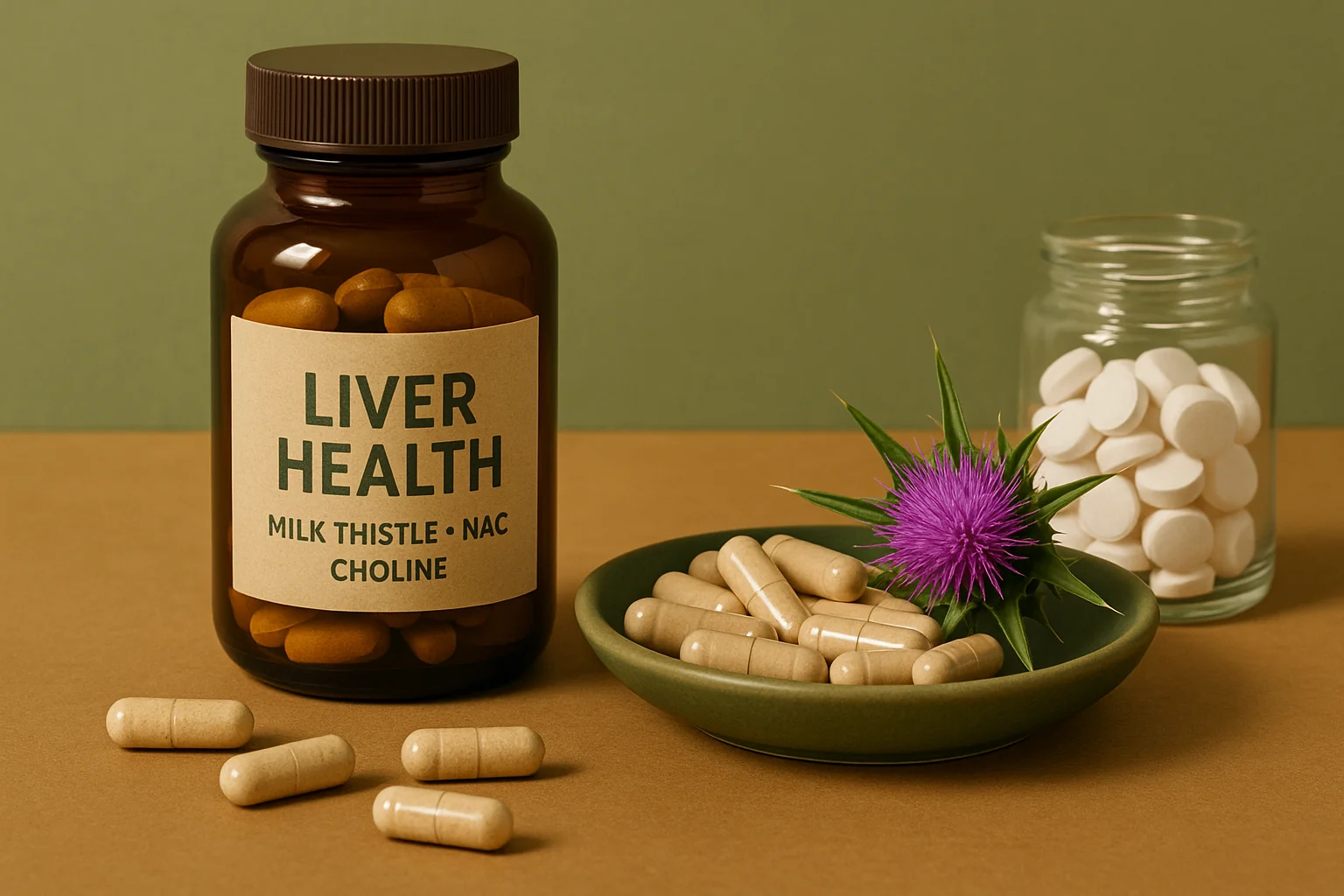

Liver supplements: milk thistle, NAC, and choline – what protects the liver naturally
Milk thistle (silymarin 200–400 mg), NAC 600–1200 mg, choline 250–550 mg, TUDCA, curcumin – liver supplements with clinical evidence. NAFLD, hepatoprotection, dosages.
The liver is the largest internal organ – it processes about 1.5 liters of blood per minute, produces over 500 biochemical substances, and is the main detoxification center of the body. At the same time, it is particularly vulnerable to damage: alcohol, medications (especially excessive paracetamol), obesity, insulin resistance, and chronic oxidative stress. NAFLD (non-alcoholic fatty liver disease) affects about 25% of the adult population in Poland – and mostly occurs asymptomatically. This article describes supplements with clinical evidence for hepatoprotection, with a particular focus on milk thistle, NAC, and choline.
KEY INFORMATION
• Silymarin (milk thistle) 420 mg/day for 12 weeks – reduction of ALT by 30% and improvement of liver histology in NAFLD patients in RCT Loguercio et al. (World Journal of Gastroenterology, 2012, n=179).
• NAC 600–1200 mg/day regenerates glutathione – a key liver antioxidant; medical standard in paracetamol poisoning.
• Choline is essential for the transport of fats from the liver via VLDL – its deficiency leads to fatty liver.
• NAFLD affects about 25% of the adult population in Poland and occurs asymptomatically – it is advisable to monitor ALT, AST, and GGT as a preventive measure.
What is NAFLD and why does the liver need support?
NAFLD (nonalcoholic fatty liver disease, niealkoholowe stłuszczenie wątroby) to spektrum chorób – od prostego stłuszczenia (bez zapalenia) przez NASH (niealkoholowe stłuszczeniowe zapalenie wątroby) po marskość i raka wątrobowokomórkowego. Epidemiologia globalna (Younossi et al., Hepatology, 2016, metaanaliza 86 badań, n=8 515 431): NAFLD dotyka 25,24% populacji globalnej i 25–30% populacji europejskiej. Polska: szacunkowo 5–7 milionów dorosłych ma NAFLD. Czynniki ryzyka: otyłość (BMI >30), insulinooporność, cukrzyca typu 2, dyslipidemia, nadużywanie alkoholu, leki hepatotoksyczne (metotreksat, statyny w wysokich dawkach, amiodarone). Problem: NAFLD przez lata przebiega bezobjawowo. Pierwsze sygnały to podwyższone ALT, AST, GGT w badaniach krwi. Badanie USG wątroby – „jasna wątroba” – potwierdza stłuszczenie. Każdy dorosły z otyłością centralną lub insulinoopornością powinien badać próby wątrobowe (ALT, AST, GGT) raz w roku.
Mechanisms of liver damage common to NAFLD, alcohol, and drug-induced hepatotoxicity: oxidative stress (reactive oxygen species damage membrane lipids and hepatocyte DNA), activation of NF-kB (inflammatory response triggering cytokines TNF-α, IL-6, IL-1β), steatosis (accumulation of triglycerides in hepatocytes), induction of apoptosis and necrosis of hepatocytes. Hepatoprotective supplements target one or several of these mechanisms.
Milk thistle (silymarin) – the most researched liver supplement
Milk thistle (Silybum marianum) contains a complex of flavonoids called silymarin – a mixture of silybin A and B, silicristin, silidianin, and other flavonolignans. Mechanisms of silymarin hepatoprotection: stabilization of hepatocyte membranes (prevents the entry of toxins), inhibition of NF-kB (reduction of inflammatory cytokine production), stimulation of ribosomes and RNA polymerase I synthesis (regeneration of liver cells), scavenging of free radicals and chelation of iron. Meta-analysis by Camini et al. (World Journal of Hepatology, 2017, 19 RCT): silymarin significantly reduced ALT and AST in patients with NAFLD, cirrhosis, and toxic liver damage.
Loguercio et al. (World Journal of Gastroenterology, 2012, RCT, n=179): silymarin 420 mg/day for 12 weeks in patients with NAFLD and biopsy qualifying for NASH – reduction of ALT by about 30%, histological improvement (reduction of steatosis and inflammation in biopsy). This is one of the better-designed RCTs with hard endpoints (biopsy histology, not just enzymes). The bioavailability of silymarin is limited (poorly soluble in water) – forms with improved bioavailability: Siliphos (phospholipid complex), micronized silymarin or nanoformulations increase absorption by 2–4 times. Dosage: 200–400 mg of standardized extract (70–80% silymarin) three times a day (300–420 mg/day) with meals. Safety: exceptionally good profile, safe for long-term use; possible laxative effects at higher doses.
NAC (N-acetylcysteine) – a precursor of glutathione and standard in poisonings
NAC is a precursor of L-cysteine, from which cells synthesize glutathione – a tripeptide that is the most important intracellular antioxidant. The liver has an exceptionally high demand for glutathione: it neutralizes reactive drug metabolites (especially NAPQI – a metabolite of paracetamol), removes free radicals generated in alcohol and xenobiotic metabolism, and participates in the detoxification of heavy metals through conjugation (conjugation with glutathione by glutathione transferases). Intravenous NAC is the medical standard (SOR A) in the treatment of paracetamol poisoning – it effectively prevents cirrhosis and death when administered within 24 hours of overdose. This is the strongest evidence of the importance of glutathione for the liver.
Chronic oral supplementation of NAC: Zheng et al. (Hepatology Research, 2016): NAC + metformin vs metformin alone in patients with NAFLD and diabetes – NAC significantly improved oxidative markers and liver enzymes after 12 weeks. Purnak et al. (Liver International, 2011, n=30, RCT): NAC 600 mg/day for 3 months in patients with NASH – significant improvement in ALT, AST, and lipid markers. Dosage: 600–1200 mg of NAC daily in the morning on an empty stomach or with a light meal. Standard preparations: effervescent tablets of 600 mg or capsules. Possible side effects at higher doses: nausea, sulfur smell in urine (normal). Important interaction: NAC may enhance the effects of blood-thinning medications (warfarin) and nitroglycerin – consult your doctor when using them. NAC details
Choline – essential for the transport of fats from the liver
Choline is a vitamin-like dietary component, synthesized endogenously in insufficient amounts and requiring supplementation from diet or supplements. Key functions of choline in the liver: synthesis of phosphatidylcholine (lecithin) – the main component of hepatocyte cell membranes; production of VLDL (very low-density lipoprotein) – molecules that transport triglycerides from the liver to peripheral tissues. Without choline, triglycerides cannot leave the liver and accumulate in hepatocytes – a classic mechanism of steatosis. Fischer et al. (Journal of Nutrition, 2007): 4 weeks of a very low choline diet in healthy adults – increased ALT, AST, and echogenicity of the liver (steatosis on ultrasound) in 77% of participants. Restoring choline to the diet – normalization after 2 weeks.
Recommended choline intake: women – 425 mg/day, men – 550 mg/day. Deficiencies are particularly common among vegans, pregnant women (high fetal demand for choline for brain development), and individuals on low-fat diets (eggs and meat – main sources of choline). Supplementation: CDP-choline (cytidine diphosphate choline) or alpha-GPC are the best-absorbed forms of choline – but more expensive; choline chloride and choline bitartrate – cheaper and sufficient for liver purposes (do not cross the BBB as well as CDP-choline). Dosage: 250–500 mg of choline daily with meals. Possible at very high doses (>2 g/day): fishy odor (TMAO production by gut bacteria – reduced by choline bitartrate).
TUDCA and ursodeoxycholic acid – bile acids for endoplasmic reticulum stress
TUDCA (tauroursodeoxycholic acid) is a hydrophilic bile acid with hepatoprotective action by reducing ER stress – a mechanism key in the pathogenesis of NAFLD and NASH. Cortez-Pinto et al. (JAMA, 1999): UDCA (ursodeoxycholic acid, precursor of TUDCA) in patients with NASH – significant reduction of ALT, AST, and steatosis in biopsy. TUDCA has a stronger effect than UDCA due to conjugation with taurine. Invernizzi et al. (Hepatology, 1999): TUDCA more effective than UDCA in cholestatic diseases. Dosage: TUDCA 250–500 mg daily; UDCA (cheaper, available over the counter) 10–15 mg/kg body weight daily. Particularly indicated in cholestasis, primary biliary cirrhosis (PBC), and when using potentially hepatotoxic medications.
Our observations: TUDCA jest niedocenionym suplementem w Polsce, podczas gdy w środowiskach fitness jest stosowane jako „ochrona wątroby” przy cyklach hormonalnych lub wysokich dawkach leków. To jeden z nielicznych suplementów hepatoprotekcyjnych, który działa przez inny mechanizm niż sylimaryna i NAC – ER-stress i płynność błon mitochondrialnych. Połączenie sylimaryny + NAC + TUDCA to trzy komplementarne mechanizmy hepatoprotekcji, uzasadnione przy NAFLD lub przewlekłym przyjmowaniu leków obciążających wątrobę.
Omega-3 and curcumin – anti-inflammatory and lipid effects in the liver
Omega-3 EPA/DHA wykazuje wielokierunkowe działanie na NAFLD: obniża triglicerydy wątrobowe przez aktywację PPAR-α (czynnik transkrypcji regulujący beta-oksydację kwasów tłuszczowych) i supresję SREBP-1c (regulatora lipogenezy de novo); redukuje CRP i IL-6 (stan zapalny w wątrobie); poprawia insulinooporność wątrobową. Metaanaliza Yan et al. (Nutrition, 2015, 8 RCT): omega-3 2–3 g/dzień przez 12–24 tygodnie – redukcja zawartości tłuszczu w wątrobie (mierzona MRI) o ok. 25–30% vs placebo. Dawkowanie: 2–3 g EPA+DHA dziennie z posiłkiem. Forma TG – lepsza biodostępność. Kurkumina (forma liposomalna lub z piperyna): mechanizm hepatoprotekcji przez hamowanie NF-kB (redukcja cytokin zapalnych), TGF-β (redukcja fibrogenezy – powstawania włóknienia wątroby) i aktywacja Nrf2 (indukcja enzymów detoksykujących). Badanie Rahmani et al. (Phytotherapy Research, 2016, n=75, RCT): kurkumina 1000 mg/dzień przez 8 tygodni u pacjentów z NAFLD – istotne obniżenie ALT, AST, LDL i redukcja stłuszczenia w USG. Kluczowe: kurkumina standardowa – biodostępność <1%; wymagana forma z piperyna lub liposomalna. Dawka: 500–1000 mg z piperyna z posiłkiem.
Berberine and inositol – interventions for liver insulin resistance
Liver insulin resistance (excess gluconeogenesis and hepatic glycogenolysis with impaired insulin signaling) is a central mechanism of NAFLD. Berberine (an isoquinoline alkaloid from barberry) activates AMPK (AMP-activated protein kinase) – a key sensor of cellular energy, which: inhibits de novo lipogenesis (synthesis of new fatty acids in the liver), activates beta-oxidation (burning fatty acids in mitochondria), improves insulin sensitivity. Meta-analysis by Liang et al. (Phytomedicine, 2019, 11 RCT): berberine significantly reduced ALT, AST, TG, and glycemia in patients with NAFLD. Dosage: 500–1000 mg of berberine daily, divided into 2–3 doses with meals. Interactions: berberine inhibits CYP3A4 and P-glycoprotein – caution with drugs metabolized by these enzymes (statins, immunosuppressants, cardiovascular drugs). Inositol (myo-inositol): modulates insulin signaling pathway in the liver. Studies in PCOS (polycystic ovary syndrome) suggest improvement in insulin resistance; in NAFLD – preliminary data. Dosage: 1–4 g/day with meals.
Diet for the liver – what to eat and what to avoid with NAFLD?
Supplements support, but do not replace a hepatoprotective diet. Key principles of a liver diet: elimination or drastic reduction of alcohol (alcohol is directly hepatotoxic due to the metabolite acetaldehyde and by inducing CYP2E1 producing reactive oxygen species); reduction of fructose and high-fructose corn syrup (fructose is metabolized solely in the liver and in excess triggers de novo lipogenesis); increase in fiber intake (a prebiotic modulating the gut microbiome, which produces short-chain fatty acids protecting the liver through the gut-liver axis); increased coffee consumption (4–6 mg caffeine/kg/day – meta-analysis by Kennedy et al. 2016: each additional cup of coffee daily reduces the risk of cirrhosis by 22% and hepatocellular carcinoma by 17%); cruciferous vegetables (broccoli, cauliflower – sulforaphane activates Nrf2 and phase II detoxifying enzymes). Weight loss of 7–10% in obese individuals with NAFLD is the most effective therapeutic intervention – better than any supplement.
When is a medical consultation necessary instead of supplements?
Hepatoprotective supplements can be a valuable addition to treatment – but they can never replace medical diagnostics and treatment in serious liver diseases. Signals requiring urgent medical consultation: ALT or AST above 3× the norm (>120 U/l); jaundice (yellowing of the skin and sclera); dark urine and pale stools (cholestasis); ascites (abdominal swelling – advanced cirrhosis); hepatic encephalopathy (confusion, behavioral disturbances in cirrhosis). With these symptoms, supplements are inappropriate as a first line of action. Diagnostics when liver disease is suspected: liver tests (ALT, AST, GGT, alkaline phosphatase); bilirubin (total, direct, and indirect); albumin and PT/INR (synthetic liver function); abdominal ultrasound; when hepatitis is suspected: HBsAg, anti-HCV, IgM anti-HAV. NAFLD with BMI above 30 or diabetes – it is advisable to consult a gastroenterologist or hepatologist every 2 years.
How to build a liver supplementation protocol?
Podstawa (każda osoba z podwyższonymi próbami wątrobowymi lub NAFLD): sylimaryna 200–400 mg rano; NAC 600 mg rano; cholina 250–500 mg z posiłkiem. Koszt: ok. 100–150 zł/miesiąc. Rozszerzenie (NAFLD z aktywnym stanem zapalnym lub NASH): omega-3 EPA+DHA 2–3 g z obiadem; TUDCA 250–500 mg wieczorem lub rano; kurkumina liposomalna 400–500 mg z posiłkiem. Monitoring: próby wątrobowe (ALT, AST, GGT) co 3 miesiące w pierwszym roku suplementacji, potem co 6 miesięcy. Cel terapeutyczny: obniżenie ALT i AST do normy (<40 U/l), redukcja GGT (marker stłuszczenia i alkoholu), poprawa obrazu USG wątroby. Pamiętaj: suplementy hepatoprotekcyjne wspierają, ale nie zastąpią eliminacji przyczyn uszkodzenia: redukcji masy ciała (przy NAFLD i otyłości), ograniczenia alkoholu, kontroli cukrzycy i insulinooporności.
Probiotics and liver health – the gut-liver axis
Wątroba i jelita są połączone przez żyłę wrotną – krew z jelit przepływa bezpośrednio do wątroby, niosąc metabolity mikrobioty jelitowej. Dysbioza jelitowa (zaburzony skład mikrobiomy) jest powiązana z NAFLD przez kilka mechanizmów: wzrost przepuszczalności bariery jelitowej (tzw. „leaky gut”) pozwala lipopolisacharydom (LPS) z bakterii gram-ujemnych przechodzić do krążenia wrotnego; LPS aktywują receptor TLR4 na komórkach Kupffera (makrofagi wątrobowe), wyzwalając stan zapalny; bakterie produkujące alkohol (gatunek Klebsiella pneumoniae) mogą generować endogenny alkohol u niektórych pacjentów z NAFLD. Suplementacja probiotykami (Lactobacillus rhamnosus GG, L. acidophilus, Bifidobacterium longum) wykazuje umiarkowane efekty na enzymy wątrobowe i markery stanu zapalnego w kilku RCT przy NAFLD. Metaanaliza Sharpton et al. (Hepatology Communications, 2019, 8 RCT): probiotyki istotnie obniżyły ALT o ok. 12% u pacjentów z NAFLD. Prebiotyki (błonnik inulinowy, FOS) stymulują wzrost bakterii produkujących maślan – metabolit ochronny dla enterocytów i barierę jelitową. Dawkowanie probiotyków przy NAFLD: preparaty wieloszczepowe 10^9–10^10 CFU dziennie przez minimum 3 miesiące.
Frequently Asked Questions
Below are answers to the most frequently asked questions regarding liver supplementation.
Does milk thistle really protect the liver?
Meta-analysis by Camini et al. (World Journal of Hepatology, 2017, 19 RCT): silymarin significantly reduced ALT and AST in patients with NAFLD and cirrhosis. Loguercio et al. (2012, n=179): silymarin 420 mg/day for 12 weeks – reduction of ALT by 30% and improvement of biopsy histology. Yes – milk thistle has solid clinical evidence for hepatoprotection.
What is the action of NAC on the liver?
NAC regenerates glutathione – the main hepatic antioxidant neutralizing toxic metabolites of drugs and alcohol. It is the medical standard in paracetamol poisoning (intravenously). Orally 600–1200 mg/day supports long-term detoxification. It works well with silymarin (complementary mechanisms).
What is NAFLD and which supplements help?
NAFLD (non-alcoholic fatty liver disease) affects 25% of Poles. The best-studied supplements: silymarin + NAC + choline (basic set); omega-3 2–3 g/day (reduction of liver fat by 25–30% – Yan et al., 2015); TUDCA (reduction of ER stress); liposomal curcumin (inflammation, fibrosis).
Can you take milk thistle and NAC together?
Yes – silymarin and NAC have complementary mechanisms and do not interact. Silymarin: membrane stabilization, inhibition of NF-kB. NAC: regeneration of glutathione. The combination may provide a synergistic effect. Standard protocol: silymarin 300 mg + NAC 600 mg in the morning with meals.
How long should liver supplements be taken?
For therapeutic effects in NAFLD: a minimum of 12 weeks, optimally 6–12 months. Monitor ALT, AST, GGT every 3 months – this is an objective measure of effectiveness. Long-term use is safe with systematic laboratory monitoring.
Does choline protect against fatty liver?
Fischer et al. (Journal of Nutrition, 2007): a choline-deficient diet for 4 weeks caused fatty liver in 77% of participants. Choline is essential for the synthesis of VLDL transporting fats from the liver. RDA: 425 mg/day for women, 550 mg for men. The richest sources: eggs, beef liver, fish.
This article is for informational and educational purposes and does not replace consultation with a doctor. If you are pregnant, breastfeeding, taking medications, or have chronic conditions, consult the use of supplements or herbs with a specialist.
Author: Michał Waluk · Published: 2026-05-04 · Updated: 2026-05-04