
Supplements for Chronic Fatigue: When It's Not Laziness and How to Rise from the Bottom
How to distinguish chronic fatigue from CFS/ME? TSH, ferritin, B12, vitamin D3 – what to test. CoQ10, magnesium, ALCAR, rhodiola – supplements for chronic fatigue with evidence.
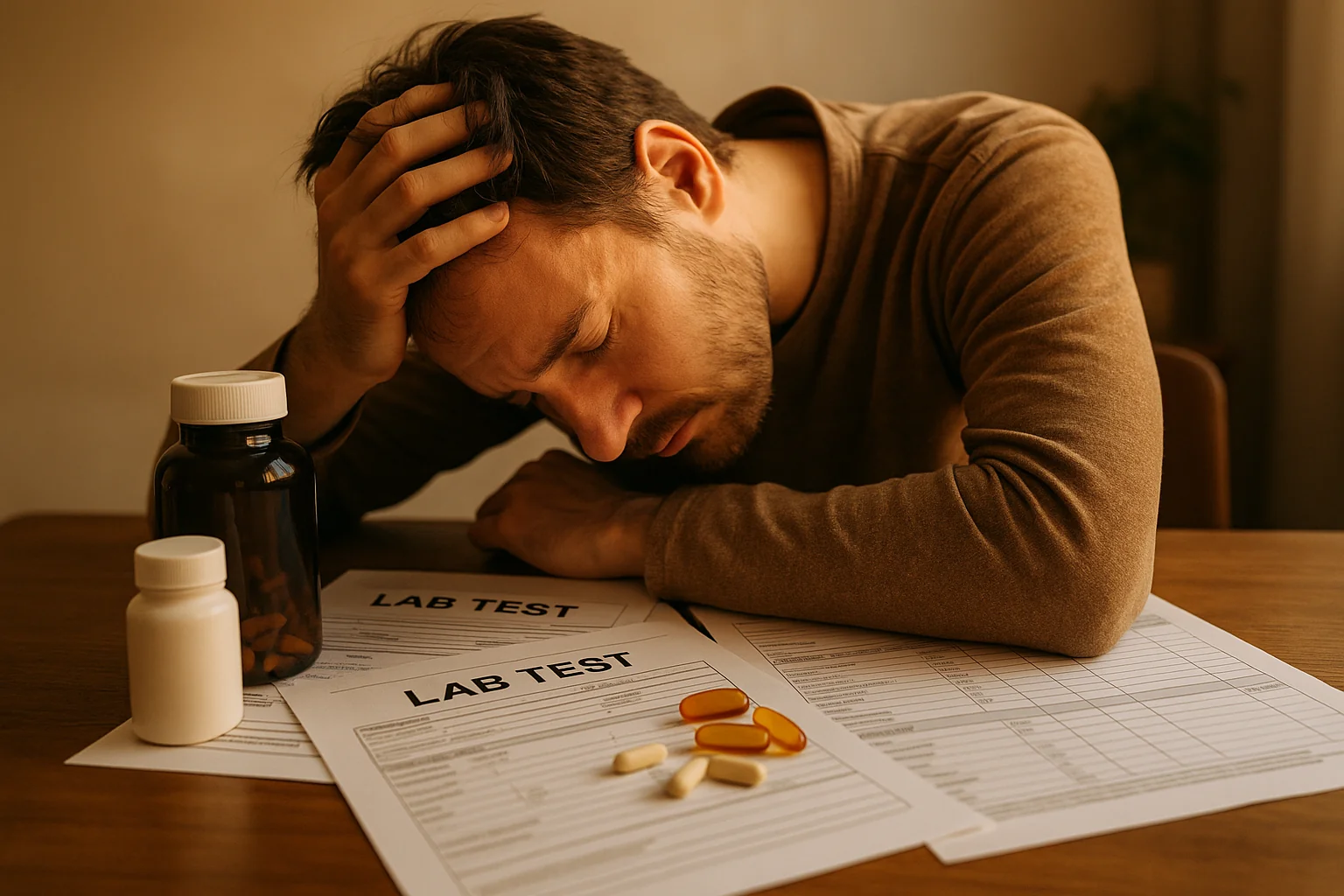
Chroniczne zmęczenie to jeden z najczęstszych powodów wizyt u lekarza pierwszego kontaktu – i jeden z najczęściej błędnie ocenianych. „Powinnaś więcej spać” i „to stres” to odpowiedzi, które słyszy wiele osób z realnym, biochemicznym problemem. Niedobór ferrytyny, niedoczynność tarczycy, niedobór B12 i D3, przewlekły stan zapalny – każde z nich może powodować paraliżujące zmęczenie, które nie ustępuje po urlopie ani kawie. Ten artykuł pokazuje, jak odróżnić zmęczenie „do zbadania” od stylu życia, jakie badania zrobić, i jakie suplementy mają realne dowody na poprawę energii.
KEY INFORMATION
• Przed suplementami wyklucz leczalne przyczyny: TSH (niedoczynność tarczycy), ferrytyna <50 µgl (niedobór żelaza bez anemii), b12, 25(oh)d3 – ich niedobory powodują zmęczenie, które dosłownie nie reaguje na suplementy energetyczne.
• CoQ10 200 mg + NADH 20 mg improved fatigue, sleep, and concentration in CFS/ME patients in RCT Castro-Marrero et al. (2015).
• Rhodiola rosea 200–400 mg in the morning has good RCT evidence for mental fatigue and stress adaptation.
• CFS/ME (Chronic Fatigue Syndrome) is a serious neurological disease – not laziness and not depression.
When is fatigue a warning signal, not a lifestyle problem?
Fatigue after poor sleep, an intense work week, or emotional stress – this is a normal symptom requiring rest, not supplements. Fatigue requiring diagnostic investigations includes: lasting >4 weeks without a clear cause; not improving with rest or vacations; worsening after physical or mental exertion (post-exertional malaise – PEM – a key symptom of CFS/ME); accompanied by memory and concentration problems, muscle and joint pain; coexisting with orthostatic intolerance (dizziness upon standing), fever, or night sweats.
Szczególnie ważny jest PEM (post-exertional malaise): nasilenie zmęczenia przez 12–48 godzin po minimalnym wysiłku, który wcześniej był tolerowany. To patognomoniczny objaw CFS/ME (Myalgic Encephalomyelitis) i sygnał, że natychmiastowe „ćwicz więcej” jest błędem mogącym nasilić chorobę. Jeśli rozpoznajesz PEM u siebie – konsultacja z lekarzem jest koniecznością, nie opcją.
Step-by-step diagnostics – what to test before supplements?
Minimalne badania przy zmęczeniu chronicznym trwającym >4 tygodnie: morfologia z rozmazem (anemia, zaburzenia leukocytarne); ferrytyna (niedobór żelaza – próg diagnostyczny to ferrytyna <30 µgl, ale optimum dla energii to>50 µg/l); TSH + fT4 (niedoczynność tarczycy dotyka ok. 2–4% kobiet i jest częstą, przeoczywaną przyczyną zmęczenia); 25(OH)D3 (niedobór witaminy D3 powoduje zmęczenie u ok. 70% osób z poziomem <20 ng/ml); witamina B12 (niedobór szczególnie u wegan, seniorów, osób z metformina); glukoza na czczo + HbA1c (cukrzyca i insulinooporność powodują zmęczenie poposiłkowe); CRP-hs i OB (przewlekły stan zapalny); kortyzol poranny (nevydolność kory nadnerczy – rzadka, ale poważna).
Additional tests when specific causes are suspected: TSH with fT3 (conversion T4→T3 may be impaired with normal TSH); EBV IgG/IgM (viral post-infectious fatigue – EBV, CMV); tests for celiac disease (IgA EmA, tTG IgA) – gluten intolerance is 10× more often undiagnosed than diagnosed; morning cortisol at 8:00 AM (to rule out primary or secondary adrenal insufficiency – Addison). Without these tests, supplements may mask the underlying disease and delay proper diagnosis. Ferritin and TSH are the absolute minimum.
Hypothyroidism as a hidden cause of fatigue
Niedoczynność tarczycy jest jednym z najczęstszych schorzeń endokrynologicznych i jedną z najczęstszych, lecz często przeoczonych przyczyn przewlekłego zmęczenia. Hormony tarczycy (T4, T3) są głównymi regulatorami metabolizmu komórkowego – kontrolują tempo syntezy ATP we wszystkich tkankach. Przy niedoborze T3/T4: spada produkcja energii w mitochondriach, obniżają się tętno, temperatura ciała i ogólne tempo metabolizmu, wzrastają zmęczenie, senność, mrowienie, suchość skóry i włosów, przybieranie na wadze. Typowy obraz kobiety z nieleczoną niedoczynnością tarczycy: „jestem zmęczona przez cały czas, mimo że śpię 9 godzin, tyję bez powodu i marzę, że mam więcej energii”. To przypadek wymagający TSH i fT4, nie suplementów energetycznych.
TSH powyżej 4–5 mIU/l (przy objawach) kwalifikuje do rozpoznania niedoczynności i rozważenia leczenia (lewotyroksyna). Ważna subtelność: poziom TSH 2,5–4,5 mIU/l z objawami („subkliniczna niedoczynność”) jest kontrowersyjny – część endokrynologów leczy, część obserwuje. Konwersja T4 do T3 może być zaburzona przy normalnym TSH i fT4 (stres, niedobór selenu, stan zapalny) – dlatego czasem warto sprawdzić fT3 oddzielnie. Selen 100–200 µg/dzień wspiera enzym dejodynazę jodotyreoninową (DIO) konwertującą T4 do aktywnego T3. Nie suplementuj jodu bez testu – nadmiar jodu może nasilać autoimmunizację tarczycy (choroba Hashimoto). Leczenie niedoczynności tarczycy lewotyroksyna przywraca poziom energii w ciągu tygodni do miesięcy – żaden suplement tego nie zastąpi.
Ferritin and Iron – Energy Without Anemia Diagnosis
Jednym z najczęściej przeoczanych powodów chronicznego zmęczenia jest niedobór żelaza bez anemii (hemoglobina w normie, ale ferrytyna niska). Ferrytyna poniżej 30–50 µg/l może powodować zmęczenie, słabą koncentrację, wypadanie włosów i duszność wysiłkową – nawet gdy morfologia wygląda „normalnie”. Auerbach et al. (JAMA Internal Medicine, 2018, metaanaliza 18 RCT): suplementacja żelazem u kobiet z ferrytyną <45 µg/l, bez anemii – istotna redukcja zmęczenia po 12 tygodniach. Efekt na zmęczenie był niezależny od poprawy hemoglobiny. Optimum ferrytyny dla energii i dobrego samopoczucia: 50–100 µg/l. Suplementacja: żelazo chelatowane (bisglicynian żelaza) 25–50 mg żelaza elementarnego co 2. dzień (badanie Moretti et al., 2015: dawkowanie co drugi dzień poprawia wchłanianie vs codzienne podawanie, przez regulację hepcydyny). Zawsze z witaminą C (250–500 mg), bez jednoczesnej kawy, herbaty, wapnia. Kontrola po 3 miesiącach.
CoQ10 and NADH – Mitochondrial Support for Cellular Energy
Koenzym Q10 (ubichinon) jest kluczowym komponentem kompleksów I, II i III mitochondrialnego łańcucha oddechowego – transportuje elektrony i jest niezbędny do produkcji ATP. Poziom CoQ10 spada z wiekiem (o ok. 25% między 20. a 60. rokiem życia), jest obniżany przez statyny (inhibitory HMG-CoA reduktazy, które blokują syntezę koloesterolu i CoQ10 na tym samym szlaku) i może być niższy przy CFS/ME. Badanie Castro-Marrero et al. (Antioxidants & Redox Signaling, 2015, n=73 pacjentów CFS/ME, RCT): CoQ10 200 mg + NADH 20 mg/dzień przez 8 tygodni – istotna poprawa zmęczenia wg skali FAS (Fatigue Assessment Scale), poprawa snu i funkcji kognitywnych vs placebo. Efekt był szczególnie silny u pacjentów z udokumentowanym niskim poziomem CoQ10 w surowicy.
NADH (reduced nicotinamide adenine dinucleotide) is the biologically active form of NAD+. As a supplement, it shows effects on CFS/ME in several small RCTs. CoQ10 dosing: 200–300 mg daily (the ubiquinol form has about 2 times higher bioavailability than ubiquinone in people over 40); take with a fatty meal. NADH: 10–20 mg in the morning on an empty stomach (not combined with other supplements). Cost: 100–300 PLN/month. People on statins should consider CoQ10 as a standard complementary supplement. CoQ10 Details
Magnesium and ALCAR – Cellular Energy and Fatty Acid Transport
Magnesium is a cofactor for ATP synthase enzymes and is essential for energy production in mitochondria (ATP is biologically active as Mg-ATP). Magnesium deficiency directly limits cellular energy production. Magnesium also improves sleep quality (through GABA-A receptors), which indirectly enhances daily energy. Dosing: 200–400 mg of elemental Mg in the evening in the form of glycinate (less diarrhea, better absorption) or citrate. L-carnitine and its acylated form ALCAR (acetyl-L-carnitine) transport activated fatty acids to mitochondria, where they are oxidized to ATP. Without carnitine, fatty acids cannot cross the mitochondrial membrane.
The study by Malaguarnera et al. (Psychosomatic Medicine, 2008, n=96 seniors with chronic fatigue): ALCAR 2 g/day for 6 months – significant improvement in physical and mental fatigue, improved muscle strength, and reduced depression. The study by Tomassini et al. (Journal of the Neurological Sciences, 2004) in multiple sclerosis: ALCAR 1 g/day – reduction in fatigue. Additional effect of ALCAR: neuroprotection and improvement of mitochondrial function in the brain (ALCAR crosses the blood-brain barrier). Dosing: ALCAR 500–2000 mg in the morning or divided into 2 doses. Do not take in the evening (stimulating). Possible: nausea at higher doses – start with 500 mg. Safe for long-term use.
Rhodiola rosea and Ashwagandha – Adaptogens for Stress and Fatigue
Rhodiola rosea (golden root) is an adaptogen with the strongest clinical evidence for stress-induced fatigue. Darbinyan et al. (Phytomedicine, 2000, n=56, RCT): 170 mg of extract for 14 days – significant improvement in mental performance and reduction of fatigue in students during exams. Spasov et al. (Phytomedicine, 2000): 50 mg/day in doctors on night shifts – reduction of fatigue and improvement in concentration. The main active compounds: rosavins and salidroside – modulate cortisol and HPA. Timing: in the morning or at noon, on an empty stomach or with a light meal. Do not take in the evening – it has a stimulating effect. Dosing: 200–400 mg of standardized extract (1% rosavins, 3% total phenols) in the morning.
Our observations: Rhodiola is particularly effective for fatigue caused by stress and sleep deprivation – which is why it suits the fatigue of shift workers, parents of small children, and those in intense project phases. However, it is not a miracle cure for organic fatigue (hypothyroidism, anemia) – there, the cause is needed, not an adaptogen. If your ferritin is 15 µg/l and you take rhodiola instead of iron – you are wasting money and time.
Witamina D3 i B12 – dwa „ciche” niedobory powodujące zmęczenie
Vitamin D3 influences the expression of genes related to mitochondrial energy metabolism, immune system regulation, and serotonin synthesis. A deficiency of D3 (25(OH)D3 level below 20 ng/ml) correlates with fatigue, muscle and bone pain, and low mood in many observational studies. Importantly – 85% of Poles have D3 levels below 30 ng/ml in winter (Płudowski et al., Nutrients, 2021). The study by Stokes et al. (Pain, 2005): D3 supplementation in patients with nonspecific musculoskeletal pain and D3 deficiency – significant improvement in pain and fatigue after 12 weeks. Previous studies: with D3 levels below 20 ng/ml and symptoms of fatigue – D3 supplementation has a clear, rapid effect. At levels of 30–50 ng/ml – the effect is smaller and less certain. Dosage: 2000–4000 IU D3 + K2 MK-7 100 µg in the morning with a fatty meal. Goal: 25(OH)D3 level 50–80 ng/ml.
Witamina B12 (cyjanokobalamina lub metylokobalamina) jest kofaktorem niezbędnym dla syntezy DNA, mielinizacji nerwów i produkcji czerwonych krwinek. Niedobór B12 – podstępny, bo może trwać lata zanim pojawią się klasyczne objawy neurologiczne – powoduje: zmęczenie, „mgłę mózgową”, parestezje (mrowienie rąk i nóg), depresję, problemy z pamięcią. Grupy ryzyka niedoboru: osoby przyjmujące metforminę (lek na cukrzycę blokuje wchłanianie B12 w jelicie), weganie i wegetarianie (B12 tylko w produktach zwierzęcych), seniorzy (atrofia śluzówki żołądka zmniejsza wydzielanie czynnika Castle’a), osoby po gastrektomii lub operacji bariatrycznej, alkoholicy. Badanie Andrès et al. (CMAJ, 2004): suplementacja B12 u pacjentów z niedoborem – szybka poprawa objawów neurologicznych i energetycznych. Dawkowanie przy niedoborze: 1000 µg B12 dziennie doustnie (cyjankobalamina lub metylokobalamina) lub 1 mg domięśniowo raz w tygodniu (przy ciężkim niedoborze lub zaburzeniach wchłaniania). Kontrola po 3 miesiącach.
Oxidative stress and inflammation – how do they block energy?
Chronic oxidative stress and low-grade inflammation are mechanisms that can sustain fatigue even after deficiencies are addressed. Reactive oxygen species (ROS) damage the lipids of mitochondrial membranes and proteins of the respiratory chain, reducing the efficiency of ATP production. CRP-hs above 1 mg/l (subclinical inflammation) is independently associated with fatigue symptoms in population studies. Antioxidants can support energy recovery in this context: NAC (N-acetylcysteine) 600 mg/day is a precursor to glutathione – the most important endogenous mitochondrial antioxidant. Studies on CFS/ME suggest reduced levels of glutathione. Curcumin with piperine (500 mg/day) exhibits strong anti-inflammatory effects by inhibiting NF-kB and COX-2. Omega-3 EPA/DHA 2–3 g/day – production of resolvins and protectins, active mediators of inflammation resolution. A diet rich in cruciferous vegetables (broccoli, cabbage) activates the Nrf2 pathway and the production of endogenous antioxidants through sulforaphane. This is an important addition to the protocol when CRP-hs is above 1 mg/l and nonspecific fatigue is present.
Protocol for getting out of energy depletion – step by step
Etap 1 – diagnostyka (obowiązkowy): zrób minimum TSH, ferrytynę + morfologię, 25(OH)D3 i B12. Wyniki pokażą, czy zmęczenie ma leczalną przyczynę biochemiczną. Etap 2 – uzupełnienie niedoborów (tygodnie 1–12): witamina D3 + K2 rano; żelazo przy ferrytynie <50 µg/l (bisglicynian żelaza co drugi dzień z witaminą C); B12 przy poziomie <400 pmol/l; B-kompleks przy diecie wegańskiej lub przyjmowaniu metforminy. Etap 3 – wsparcie mitochondrialne (po 8 tygodniach, przy nieustępującym zmęczeniu mimo uzupełnienia niedoborów): CoQ10 ubichinol 200 mg z posiłkiem; ALCAR 500–1000 mg rano; magnez glicynian 300–400 mg wieczorem; omega-3 EPA+DHA 2 g/dzień. Etap 4 – adaptogeny (po 3 miesiącach): rhodiola 200–400 mg rano; ashwagandha KSM-66 300 mg wieczorem (przy dominujących problemach ze snem i wysokim kortyzolu). Zaznacz: jeśli po 12 tygodniach etap 1+2 nie przynosi poprawy – wróć do lekarza i rozszerz diagnostykę.
Frequently Asked Questions
Below are answers to the most frequently asked questions regarding chronic fatigue and supplementation.
What is the difference between chronic fatigue and CFS/ME?
Chronic fatigue is a nonspecific symptom with many causes. CFS/ME is a disease entity with ICD-11 criteria: persistent fatigue >6 months + post-exertional malaise (worsening after exertion) + sleep disturbances + cognitive disturbances or orthostatic intolerance. Diagnosis is made by a doctor after excluding other causes.
What tests should be done for chronic fatigue?
Minimum: TSH + fT4, ferrytyna + morfologia, 25(OH)D3, B12, glukoza + HbA1c, CRP-hs. Bez tych badań suplementy mogą maskować leczalną przyczynę (niedoczynność tarczycy, anemia, niedobór D3 lub B12). Ferrytyna i TSH to absolutne minimum – aż 40% kobiet z „zmęczeniem” ma ferrytyną poniżej optimum.
Does CoQ10 help with chronic fatigue?
Castro-Marrero et al. (2015, n=73 CFS/ME, RCT): CoQ10 200 mg + NADH 20 mg for 8 weeks – significant improvement in fatigue, sleep, and concentration. The effect is strongest with low serum CoQ10. The ubiquinol form (active) – better bioavailability after age 40. 200–300 mg with a fatty meal.
Does rhodiola help with fatigue?
Darbinyan et al. (2000) and Spasov et al. (2000): rhodiola 170–200 mg/day improves mental performance and reduces stress-related fatigue. The mechanism is through modulation of cortisol and HPA. In the morning on an empty stomach, 200–400 mg of standardized extract. Do not take in the evening – it is stimulating.
How does ferritin affect energy levels?
Ferrytyna poniżej 30–50 µg/l powoduje zmęczenie, słabą koncentrację i wypadanie włosów nawet bez anemii. Auerbach et al. (JAMA, 2018): suplementacja żelaza przy ferrytynie <45 µg/l bez anemii – istotna redukcja zmęczenia po 12 tygodniach. Optimum ferrytyny dla energii: 50–100 µg/l.
When does chronic fatigue require a doctor?
Always in cases of: fatigue lasting >4 weeks without a clear cause, worsening after exertion (PEM), fever, night sweats, weight loss, swollen lymph nodes. Supplements can complement treatment but will not replace diagnostics. Undiagnosed hypothyroidism or anemia is a waste of time and money on supplements.
This article is for informational and educational purposes only and does not constitute medical advice. Before starting to use cannabis or CBD for therapeutic purposes, consult with a doctor, especially if you are taking other medications, are pregnant, or breastfeeding.
Author: Michał Waluk · Published: 2026-05-04 · Updated: 2026-05-04