


The gut-brain axis: how microbiota affects stress, sleep, and well-being
The gut-brain axis: microbiota influences serotonin (90% in the gut), the vagus nerve, and cortisol. How probiotics, diet, and SCFAs regulate stress and sleep. 2026 study.
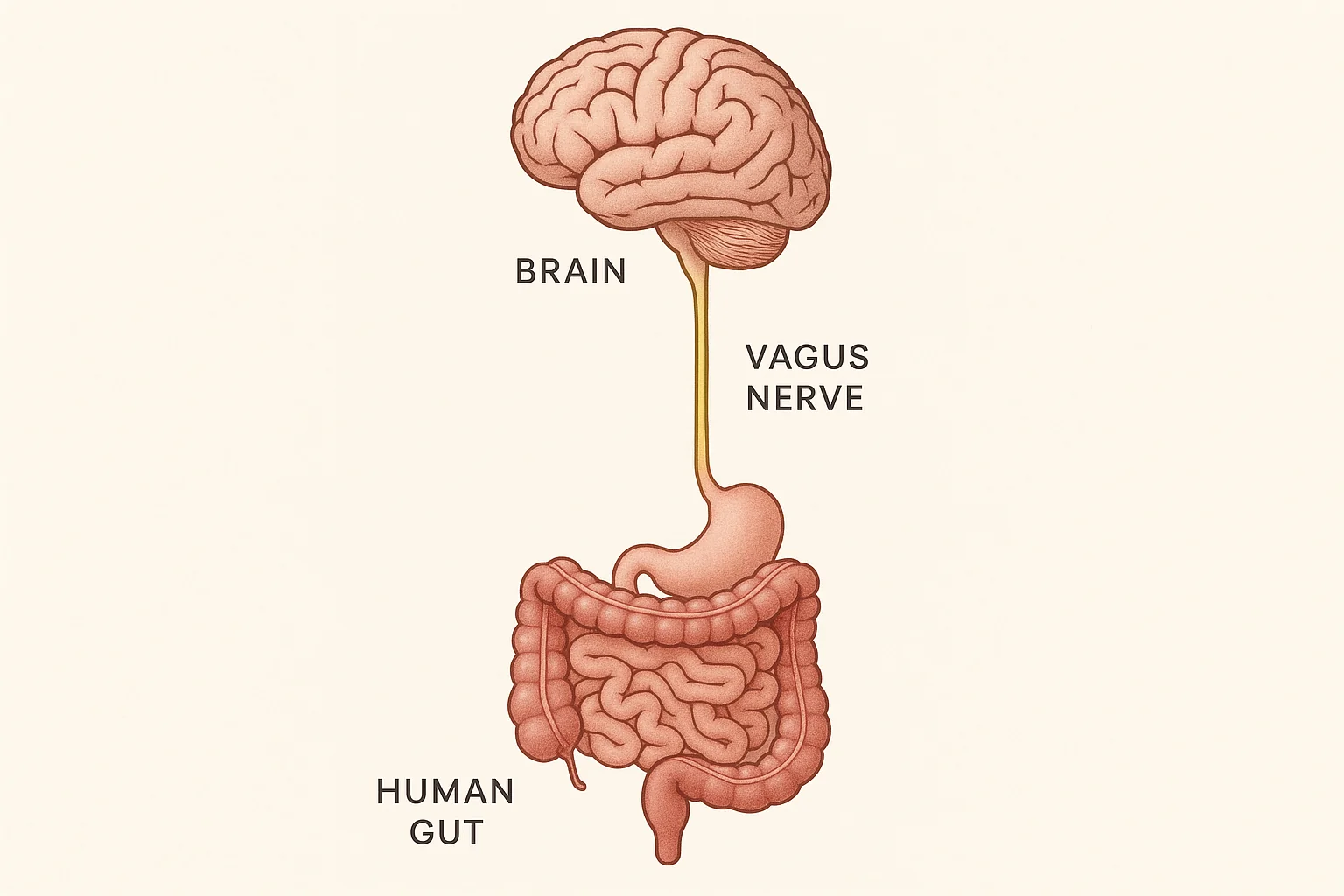
For decades, the brain was treated as the supreme command center of the body - the intestines were merely a digestive tube. Today we know that this simplification hindered the understanding of mental health. The intestines have their own nervous system - the enteric nervous system (ENS) - containing about 500 million neurons, often referred to as the "second brain." They communicate with the brain via the vagus nerve, hormones, and bacterial metabolites in both directions - the intestines influence the brain as strongly as the brain influences the intestines. This gut-brain axis regulates mood, stress response, sleep quality, and cognitive functions. And the microbiota - trillions of bacteria residing in the intestines - is a key player in this system. What do studies say and what can you do about it?
KEY INFORMATION
• About 90-95% of serotonin in the body is produced in the intestines, not in the brain - gut microbiota directly influences this process (Yano et al., Cell, 2015).
• The vagus nerve is the main communication pathway between the gut and the brain: 80% of fibers run from the intestines to the brain, not the other way around.
• Short-chain fatty acids (SCFA) - butyrate, acetate, propionate - produced by fiber bacteria strengthen the blood-brain barrier and modulate mood.
• Psychobiotics - probiotics and prebiotics acting on the gut-brain axis - reduce cortisol and anxiety symptoms in RCT studies (Cryan et al., Physiol Rev, 2019).
What is the gut-brain axis and how does it work?
The gut-brain axis is a term describing a bidirectional, multi-channel communication system between the gut and the brain. It is not about a single mechanism, but rather a network of at least four parallel pathways: neural (vagus nerve and spinal cord), endocrinological (gut hormones like GLP-1, PYY, ghrelin), immunological (inflammatory cytokines produced by the MALT system in the gut), and metabolic (bacterial metabolites transported through the blood, particularly SCFA and tryptophan). Cryan et al. (Physiological Reviews, 2019) described in a monumental review of 1000+ works this system as the "gut-brain-microbiota axis" - indicating that without gut microbiota, this axis functions improperly.
Key asymmetry: the vagus nerve contains about 80% of afferent fibers (from the gut to the brain) and only 20% of efferent fibers (from the brain to the gut). The intestines constantly "report" to the brain the composition of the microbiota, bacterial metabolites, and inflammation levels. Gut factors can be as important for mood as brain neurochemistry - this is the foundation of gut psychiatry.
Dlaczego 90% serotoniny jest w jelitach - i co to oznacza?
Serotonin is a neurotransmitter associated with mood, but its brain pool is only 5-10% of the total. The rest is produced by enterochromaffin (EC) cells in the intestinal epithelium. This intestinal serotonin does not cross the blood-brain barrier, so it does not directly affect mood in a brain sense - it regulates intestinal motility, secretion of digestive juices, and the feeling of satiety. However, through the vagus nerve and local serotonin receptors, it signals to the brain the state of the intestines, which indirectly affects mood, appetite, and pain response.
What does the microbiota do? Yano et al. (Cell, 2015) demonstrated in a groundbreaking study that mice raised in sterile conditions (without microbiota) had 60% lower levels of serotonin in the gut than mice with normal microbiota. After transplanting specific bacteria (mainly Clostridiales), serotonin levels returned to normal. These bacteria produce short-chain fatty acids that stimulate EC cells to synthesize serotonin via the enzyme TPH1 (tryptophan hydroxylase type 1). In other words: without a healthy microbiota, the gut does not produce the proper amount of serotonin, which affects the entire gut-brain signaling axis.
SCFA - short-chain fatty acids as messengers of microbiota to the brain
Short-chain fatty acids (SCFA) - butyrate, acetate, and propionate - are metabolites produced by bacteria fermenting dietary fiber in the large intestine. They are one of the key mechanisms through which diet and microbiota affect the brain. Dinan et al. (Journal of Physiology, 2015) demonstrated that mice without microbiota have dramatically reduced levels of SCFA and exhibit abnormal stress-related behaviors that normalize after restoring healthy microbiota.
Each SCFA acts slightly differently. Butyrate strengthens tight junctions - sealing connections of the intestinal barrier and the blood-brain barrier - and reduces neuroinflammation. Acetate crosses the blood-brain barrier and regulates gene expression in the hippocampus. Propionate affects the brain's energy metabolism. How to increase their production? The key is fermentable fiber: inulin (garlic, onion), pectins (apples), beta-glucan (oats), and resistant starch (chilled potatoes, green bananas). A fiber-poor diet reduces SCFA production within just 2-4 weeks.
How does stress affect microbiota and microbiota affect stress?
The relationship between stress and microbiota is bidirectional - creating a vicious circle: stress alters microbiota, and altered microbiota exacerbates stress. The HPA axis (hypothalamic-pituitary-adrenal) - the central mechanism of the stress response, producing cortisol - responds to signals from the intestines. In gut dysbiosis (imbalance of microbiota), the HPA axis is permanently overactive, leading to elevated cortisol even in the absence of external stressors.
The mechanism also works in the other direction. Cortisol increases intestinal permeability - through a leaky barrier, lipopolysaccharides (LPS) from gram-negative bacteria enter the bloodstream, causing low-grade systemic inflammation. This inflammation activates microglia (immune cells of the brain), worsening mood and concentration. Cryan et al. (2019) they linked this mechanism to the pathophysiology of depression and anxiety.
Our observations: Patients with IBS (irritable bowel syndrome) statistically have higher levels of anxiety and depression than the general population - and this is not a case of comorbidity, but likely a common mechanism of HPA axis hyperreactivity and gut dysbiosis. Treating IBS through dietary changes and probiotics often simultaneously improves sleep quality and reduces anxiety - confirming that the gut and mind are a system, not two separate issues.
Psychobiotics - probiotics and prebiotics for mood and stress
The term „psychobiotic” - a probiotic or prebiotic that provides psychological benefits through the gut-brain axis - was proposed by Dinan, Stanton, and Cryan in 2013. Since then, an impressive body of evidence has been gathered, although the quality of studies varies.
The most studied strains. Lactobacillus rhamnosus JB-1 reduced anxiety and cortisol in animal studies (Bravo et al., PNAS, 2011) and showed an effect on vagus nerve activity in humans. Bifidobacterium longum 1714 in a double-blind RCT (Allen et al., Translational Psychiatry, 2016) with 22 volunteers reduced stress severity and morning cortisol. Multi-strain combinations of Lactobacillus + Bifidobacterium decreased cognitive reactivity to sadness (Steenbergen et al., Brain Behavior and Immunity, 2015) - a marker of depression risk. Dosage: 1-10 billion CFU/day for a minimum of 4 weeks. The strain matters - look for products with labels specifying the exact strain. A detailed discussion can be found in the article. Probiotics - which strain to choose.
Microbiota and sleep - how do the intestines affect the circadian rhythm?
The relationship between microbiota and sleep quality is a relatively new area of research, but the results are fascinating. The gut microbiota follows its own circadian rhythms - its composition and metabolic activity change rhythmically every 24 hours. Disruption of the circadian rhythm due to shift work or jet lag alters the composition of the microbiota within a few days, as confirmed by studies by Thaiss et al. (Cell, 2014).
The mechanism by which microbiota affects sleep is multifaceted. Tryptophan produced or stimulated by Clostridiales bacteria is a precursor to melatonin - its deficiency lowers nighttime melatonin levels. Butyrate increases the proportion of NREM sleep through GABAergic mechanisms. Gut dysbiosis enhances IL-1β and TNF-α - inflammatory cytokines that disrupt REM sleep architecture.
Diet for a healthy gut-brain axis - what to eat to improve mood?
Diet is the most powerful tool for modulating the microbiota. The SMILES study (Jacka et al., BMC Medicine, 2017) divided 67 adults with MDD into a Mediterranean diet group and a social support group. After 12 weeks, 32% of the dietary group achieved remission vs 8% of the control group - a result comparable to psychotherapy.
What foods support the gut-brain axis? Prebiotics: garlic, onion (inulin and FOS), oats (beta-glucan), apples and carrots (pectins), unripe bananas (resistant starch). Probiotics from food: kefir (about 30 strains), sauerkraut and pickles (L. plantarum), kimchi, natural yogurt. Polyphenols from blueberries, dark chocolate, and green tea selectively stimulate the growth of Bifidobacterium and Lactobacillus. What to avoid: ultra-processed foods (emulsifiers disrupt the gut mucus layer), excess sugar and alcohol reduce microbiota diversity. More can be found in the article. Probiotics - which strain to choose.
The gut-brain axis and mental health - what do studies show?
Gut dysbiosis is regularly associated with depression, anxiety, and ADHD. A review by Simpson et al. (Neuroscience and Biobehavioral Reviews, 2021) of 34 RCTs showed that multi-strain probiotics reduced symptoms of depression and anxiety (d = 0.30-0.45). The effects were stronger with simultaneous dietary changes. Conclusion: psychobiotics work best on a prebiotic substrate.
Frequently Asked Questions
What is the gut-brain axis?
The gut-brain axis is a bidirectional communication system between the enteric nervous system (ENS) and the brain, operating through the vagus nerve, gut hormones, the immune system, and bacterial metabolites (SCFA). Cryan et al. (Physiological Reviews, 2019) it has been described as a system regulating mood, stress, sleep, and cognitive functions.
What percentage of serotonin is produced in the gut?
About 90-95% of the total serotonin in the body is produced by enterochromaffin cells in the intestines. Yano et al. (Cell, 2015) they demonstrated that gut microbiota (especially Clostridiales) directly stimulates serotonin synthesis in the gut through SCFA.
Which probiotics are best for stress and mood?
The best-studied are Lactobacillus rhamnosus JB-1, Bifidobacterium longum 1714, and multi-strain combinations of Lactobacillus + Bifidobacterium. Required dosage: a minimum of 1×10⁹ CFU for at least 4 weeks. Effects are stronger with a concurrent prebiotic-rich diet.
Does gut microbiota affect sleep?
Yes. The microbiota affects sleep through tryptophan (a precursor to melatonin), SCFA (butyrate increases NREM sleep ratio), and inflammatory cytokines. Gut dysbiosis correlates with disrupted REM sleep and frequent awakenings. A diet rich in fiber and fermented products improves sleep quality in 4-8 weeks.
What are SCFA and how do they affect the brain?
SCFA (butyrate, acetate, propionate) are metabolites of fiber-fermenting bacteria. Butyrate strengthens the blood-brain barrier and reduces neuroinflammation; acetate regulates gene expression in the hippocampus; propionate affects brain energy metabolism. They are produced by bacteria that feed on fiber in the diet.
How does diet affect the gut-brain axis?
A Mediterranean diet rich in fiber, prebiotics, and fermented products increases microbiota diversity and SCFA production. A study by Jacek et al. (BMC Medicine, 2017) showed that switching to a Mediterranean diet reduced MDD depression symptoms as effectively as psychotherapy over 12 weeks.
How long does it take for diet to change the microbiota?
Initial changes are visible after 3-4 days of dietary change, as shown by a study by David et al. (Nature, 2014). Lasting changes in the microbiota profile require 4-6 weeks of a consistent fiber-rich and fermented diet. Returning to a poor diet reverses changes in a similar timeframe.
This article is for informational and educational purposes and does not replace consultation with a doctor. If you are pregnant, breastfeeding, taking medications, or have chronic conditions, consult the use of supplements or herbs with a specialist.
Author: Michał Waluk · Published: 2026-05-04 · Updated: 2026-05-04