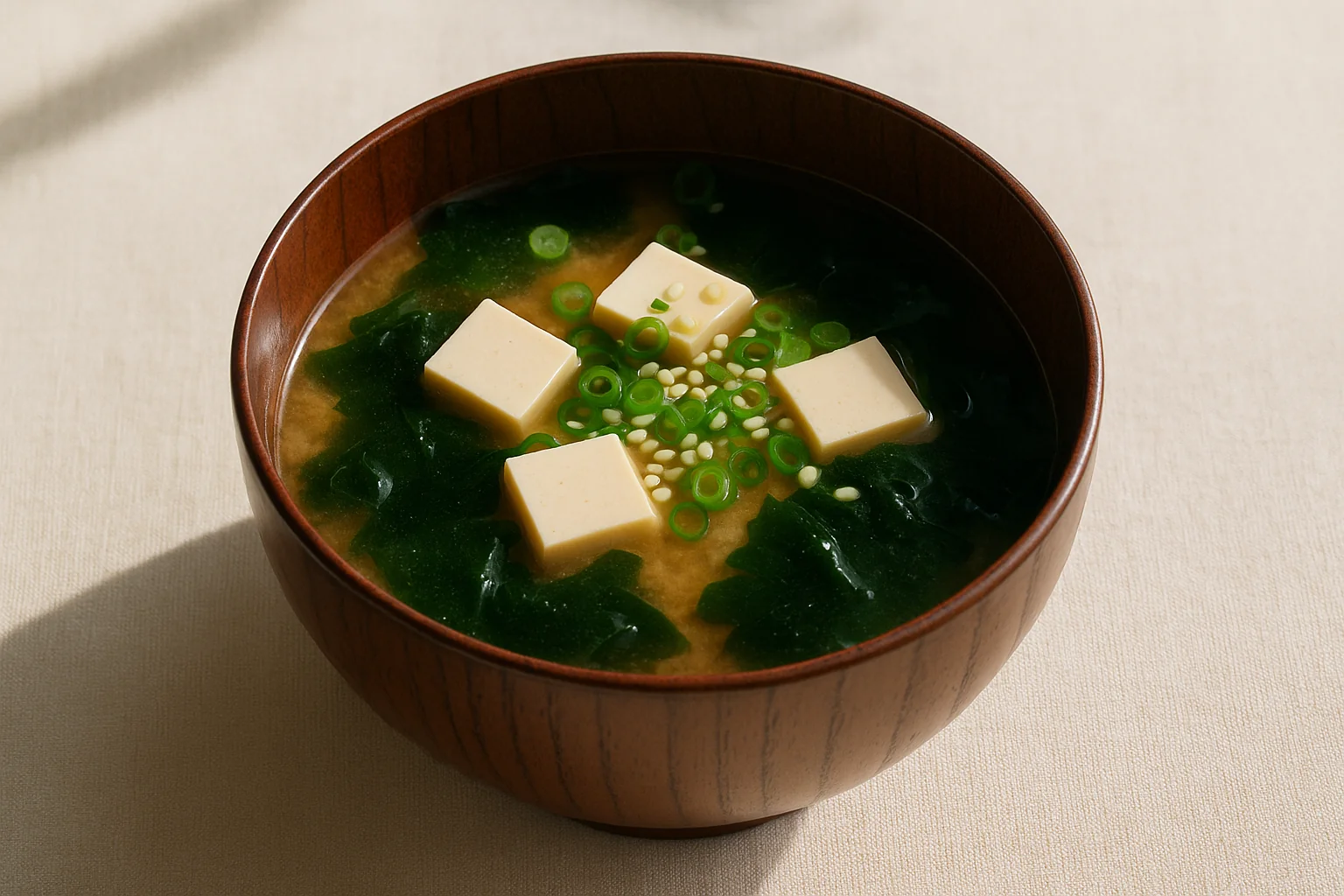

Miso z nasionami konopi: japońska zupa po polsku
Zupa miso z prażonymi nasionami konopi w 10 minut. Ile białka daje porcja, dlaczego pasta miso nie może się gotować i co o probiotykach mówią badania.
Zupa miso powstaje w dziesięć minut i tyle samo czasu wystarczy, żeby ją zepsuć: wystarczy zagotować pastę razem z wodą. W japońskiej kuchni miso jest lekkim dodatkiem do obiadu, a nie obiadem. Nasiona konopi zmieniają to jednym ruchem nadgarstka. Trzy łyżki nasion na dwie miseczki to niecałe dziesięć gramów białka, 210 miligramów magnezu i orzechowy kontrast dla słonego umami. Nie zamieniają miso w białko pełnowartościowe i niczego nie leczą, ale sprawiają, że pół godziny później nie sięgasz po kanapkę. Poniżej znajdziesz przepis krok po kroku, tabelę składu trzech postaci nasion konopi, listę sprawdzonych wariantów oraz uczciwą odpowiedź na pytanie o probiotyki w miso.
KLUCZOWE INFORMACJE
• Trzy łyżki łuskanych nasion konopi to 30 g: 166 kcal, 9,5 g białka, 14,6 g tłuszczu i 210 mg magnezu (USDA FoodData Central, rekord 170148).
• Lizyna jest pierwszym aminokwasem ograniczającym we wszystkich badanych produktach z konopi, a PDCAAS nasion łuskanych wynosi 63-66% (House i in., 2010).
• Stosunek omega-6 do omega-3 w oleju z nasion konopi mieści się zwykle między 2:1 a 3:1 (Callaway, Euphytica, 2004).
• Miso powstaje w dwóch etapach: najpierw pleśń koji, potem bakterie i drożdże (Allwood i in., 2021).
Co nasiona konopi wnoszą do zupy miso?
Białko, tłuszcz i minerały, których zupa z samym tofu ma niewiele. Baza USDA FoodData Central pod rekordem 170148 (łuskane nasiona konopi) przelicza trzy łyżki na 30 gramów, a w tej porcji stoi 166 kcal, 9,5 grama białka, 14,6 grama tłuszczu i 210 miligramów magnezu. Magnezu jest wyjątkowo dużo: 700 mg na 100 gramów wobec 197 mg w komosie ryżowej, według rekordów tej samej bazy.
Jakość tego białka to osobna sprawa i tu bywa ono przereklamowane. House i współpracownicy zmierzyli je metodą PDCAAS: dla nasion łuskanych wyszło 63-66 procent, a lizyna okazała się pierwszym aminokwasem ograniczającym we wszystkich badanych produktach z konopi (House i in., Journal of Agricultural and Food Chemistry, 2010). Konopie nikomu więc lizyny nie uzupełniają, bo same mają jej najmniej. Autorzy podsumowują ostrożnie: białko konopne wypada na poziomie części zbóż i orzechów albo lepiej.
Tłuszcz wygląda ciekawiej. W rekordzie USDA na 48,8 grama tłuszczu przypada 38,1 grama kwasów wielonienasyconych, czyli 78 procent. Callaway podaje dla samego oleju wartość ponad 80 procent i stosunek omega-6 do omega-3 zwykle między 2:1 a 3:1 (Callaway, Euphytica, 2004). To sam autor nazywa ten zakres optymalnym dla człowieka; nie jest to zalecenie WHO ani FAO, bo żadna z tych instytucji konkretnej proporcji omega nie zaleca.
Smak działa niezależnie od tabel. Miso jest słone i fermentowane, prażone nasiona orzechowe i lekko słodkie. Wsypane na wierzch, a nie wrzucone do garnka, zostają chrupiące do końca posiłku.
Które nasiona konopi mają najwięcej białka?
Makuch po tłoczeniu oleju, ale to nie on wygrywa. House i współpracownicy zbadali trzydzieści próbek produktów konopnych z zachodniej Kanady i rozbili je na trzy postacie: całe nasiono, nasiono po zdjęciu łuski oraz makuch. Różnice idą w dwie strony naraz.
| Postać nasion | Białko | Tłuszcz | Strawność białka | PDCAAS |
|---|---|---|---|---|
| całe nasiona | 24,0% | 30,4% | 84,1-86,2% | 49-53% |
| nasiona łuskane | 35,9% | 46,7% | 83,5-92,1% | 63-66% |
| makuch po tłoczeniu oleju | 40,7% | 10,2% | 90,8-97,5% | 46-51% |
Makuch ma najwięcej białka i jednocześnie najwyższą strawność, a mimo to najniższy PDCAAS. Ogranicza go więc nie strawność, lecz wynik aminokwasowy. Nasiona łuskane mają najwyższy PDCAAS z całej trójki i to jest powód, dla którego trafiają do zupy. House zapisał ten wniosek wprost: zdjęcie frakcji łuski poprawia strawność białka i podnosi PDCAAS.
Dwa rzetelne źródła podają przy tym różne liczby: House zmierzył w nasionach łuskanych 35,9 procent białka, USDA podaje 31,6 procent. Rozrzut zależy od odmiany i dokładności łuskania, więc czytaj takie wartości jako przybliżenie.
Czy zupa miso jest probiotyczna?
Miso niesie żywe mikroorganizmy, ale to nie to samo co udowodnione działanie na jelita. Przegląd Dimidi i współpracowników wymienia miso wśród produktów fermentowanych, dla których nie przeprowadzono ani jednego badania z randomizacją nad wpływem na zdrowie przewodu pokarmowego (Dimidi i in., Nutrients, 2019). Dowodów klinicznych po prostu nie ma.
Przy okazji warto zdjąć z miso jedną powtarzaną nieścisłość. Aspergillus oryzae to pleśń, a nie bakteria. Allwood i współpracownicy opisują produkcję miso jako fermentację dwuetapową: najpierw pleśń zaszczepia się na ziarnie i powstaje koji, a dopiero potem koji trafia do zasolonej masy sojowej, gdzie pracują bakterie oraz drożdże (Allwood i in., Journal of Food Science, 2021). Całość dojrzewa nawet dwa lata, a autorzy zaznaczają, że skład mikrobiologiczny miso jest wciąż słabo opisany.
Praktyczny wniosek jest ten sam, do którego japońska kuchnia doszła dawno temu: pastę dodaje się po zdjęciu garnka z ognia. Wrzątek zabija mikroorganizmy i spłaszcza aromat, który powstawał miesiącami. Nie musisz w to wierzyć ze względu na probiotyki, wystarczy raz porównać smak zupy zagotowanej z niezagotowaną.
Zauważyliśmy w testach, że różnica jest wyraźniejsza przy jasnej paście shiro niż przy ciemnej aka. Ciemne miso ma tak mocny profil, że gotowanie odbiera mu mniej.
Czego potrzebujesz na dwie porcje?
Sześciu składników podstawowych i dziesięciu minut. Ilości poniżej dają dwie miseczki po około 250 ml. Pasta miso jest bardzo słona, więc zupy nie dosalaj, dopóki jej nie spróbujesz.
- 500 ml wody albo bulionu dashi (w wersji wegańskiej wystarczy samo kombu)
- 3 łyżki łuskanych nasion konopi do uprażenia, czyli około 30 g
- 2 łyżki pasty miso: shiro, aka albo awase
- 100 g tofu jedwabistego albo półtwardego
- 1 łyżeczka suszonych alg wakame
- 2 łodygi szczypiorku albo dymki
- opcjonalnie kilka kropel oleju sezamowego do miseczki
- opcjonalnie plasterki shiitake, nori albo kiełki fasoli mung
Wakame pęcznieje kilkakrotnie, więc łyżeczka suszonych alg spokojnie wystarcza na dwie miseczki. Wsypana garść zamienia zupę w gęstwinę alg. Tofu jedwabiste rozpada się na delikatne płatki, a półtwarde trzyma kostkę, więc wybierz to, co wolisz gryźć.
Dashi możesz pominąć, ale zupa wyjdzie wtedy płaska. Najprostszy wegański skrót to kawałek suszonego kombu wrzucony do zimnej wody na dwadzieścia minut i wyjęty przed podgrzaniem. Nasiona konopi trzymaj w lodówce: tłuszcz wielonienasycony jełczeje szybko, a zjełczałe poznasz po zapachu starego oleju.
Jak przygotować zupę miso z nasionami konopi krok po kroku?
W pięciu krokach, z których tylko jeden bywa mylony: pasta miso wchodzi do garnka już zdjętego z ognia. Reszta to podgrzanie wody, uprażenie nasion na suchej patelni i złożenie miseczki. Całość zajmuje dziesięć minut, licząc od zapalenia palnika.
Bezpieczeństwo: pasta miso niesie żywe mikroorganizmy, więc dodawaj ją po zdjęciu garnka z ognia i nie podgrzewaj zupy ponownie. Nasion konopi nie zostawiaj na patelni bez mieszania, bo przechodzą od złotych do przypalonych w kilkadziesiąt sekund.
- Podgrzej 500 ml wody albo dashi tak, żeby lekko parowało, ale nie bulgotało. Termometr nie jest potrzebny: pierwsze drobne bąbelki przy dnie to znak, że pora zdjąć garnek.
- Równolegle upraż nasiona konopi na suchej patelni przez 3-4 minuty na średnim ogniu, mieszając bez przerwy. Złociste i pachnące od razu przesyp na talerz, bo gorąca patelnia praży je dalej.
- Wrzuć do gorącej wody pokrojone tofu i wakame. Trzymaj na małym ogniu 2-3 minuty, aż algi się rozwiną, a tofu przejdzie temperaturą.
- Zdejmij garnek z ognia. Rozetrzyj pastę miso z kilkoma łyżkami gorącej wody z garnka, aż znikną grudki, i wlej z powrotem. Wymieszaj delikatnie i już nie podgrzewaj.
- Przelej zupę do miseczek, wsyp po 1,5 łyżki prażonych nasion konopi, posyp szczypiorkiem i podaj od razu.
Zupa nie znosi odgrzewania. Robiąc ją na później, przechowaj osobno wywar, a pastę i nasiona dodaj tuż przed jedzeniem. Prażone nasiona w roli posypki wracają też w kremie z dyni z prażonymi nasionami konopi.
Co jeszcze możesz dodać do tej zupy?
Trzy warianty, które sprawdziły się u nas najlepiej. Każdy zostawia zasadę o niegotowaniu miso nietkniętą i żaden nie wydłuża przygotowania powyżej kwadransa.
Grzyby shiitake wrzuć do wody razem z tofu, trzy albo cztery sztuki. Dokładają zupie głębi umami, przez co pasty może być o pół łyżki mniej. Jajko ugotowane na miękko wchodzi do gorącej zupy przed dodaniem pasty i wyraźnie podnosi białko miseczki.
Białko konopne rozpuszczone w kilku łyżkach wody i wlane razem z miso zagęszcza zupę bez zmiany smaku. Wang i współpracownicy zmierzyli strawność izolatu białka konopnego po trawieniu pepsyną i trypsyną na 88-91 procent wobec 71 procent dla izolatu sojowego (Wang i in., Food Chemistry, 2008). Ta sama praca zaznacza, że izolatowi z konopi brakuje lizyny oraz aminokwasów siarkowych, co zgadza się z wynikiem House’a.
Najczęstszy błąd to wrzucenie pasty prosto z opakowania do garnka: miso rozejdzie się nierówno i zostawi grudki. Drugi to za dużo pasty, bo jedna łyżka na miseczkę wystarcza. Jeśli szukasz cięższej wersji japońskiego bulionu, zajrzyj do przepisu na wegański ramen z nasionami konopi albo do kremu z kalafiora z nasionami konopi i curry.
Najczęściej zadawane pytania
Dlaczego nasiona konopi pasują do zupy miso?
Zupa miso z samym tofu daje mało białka i prawie żadnego tłuszczu. Trzy łyżki łuskanych nasion konopi to 30 gramów, a w nich 9,5 grama białka, 14,6 grama tłuszczu i 210 miligramów magnezu (USDA FoodData Central, rekord 170148). Orzechowy smak prażonych nasion równoważy słony profil pasty.
Dlaczego nie należy gotować pasty miso?
Pasta miso niesie żywe mikroorganizmy z dwuetapowej fermentacji: pleśń koji, a po niej bakterie i drożdże (Allwood i in., 2021). Wrzątek je zabija i spłaszcza aromat budowany przez miesiące dojrzewania. Dlatego pastę rozprowadza się w garnku zdjętym z ognia i nie podgrzewa zupy ponownie.
Czy nasiona konopi w miso dają pełnowartościowe białko?
Nie w sensie, w jakim używa się tego określenia w reklamach. House i współpracownicy zmierzyli PDCAAS nasion łuskanych na 63-66 procent i wskazali lizynę jako pierwszy aminokwas ograniczający we wszystkich produktach z konopi. To dobre białko roślinne, ale nie odpowiednik jaja czy mleka.
Jaką pastę miso wybrać do zupy z nasionami konopi?
Shiro, czyli białe miso, ma najłagodniejszy i lekko słodki profil, więc najlepiej wypuszcza orzechowość nasion. Aka, czyli czerwone, jest znacznie intensywniejsze i potrafi ją przykryć. Awase to mieszanka obu i dobry wybór na pierwsze próby, jeśli nie wiesz, co lubisz.
Czym zastąpić wakame w zupie miso?
Innymi algami: nori pociętym w paski, hijiki albo kombu. Bez alg zupa dalej jest smaczna, ale traci morski, mineralny aromat. Jeśli nie masz żadnych, wrzuć garść szpinaku baby albo pak choi. Rozwiną się w gorącej wodzie w dwie minuty i dodadzą zupie koloru.
Gotowe produkty spożywcze z konopi znajdziesz w kategorii żywność konopna w sklepie u Bucha.
Artykuł ma charakter informacyjno-edukacyjny i nie zastępuje konsultacji z lekarzem. Jeśli jesteś w ciąży, karmisz piersią, przyjmujesz leki lub masz schorzenia przewlekłe, skonsultuj zastosowanie suplementów lub ziół ze specjalistą.
Autor: Michał Waluk · Opublikowano: 2026-06-15 · Aktualizacja: 2026-08-16