
L-arginine and citrulline for erection and blood pressure - what do studies say
L-arginine and citrulline for erection and blood pressure: a reliable answer based on research. u Bucha.
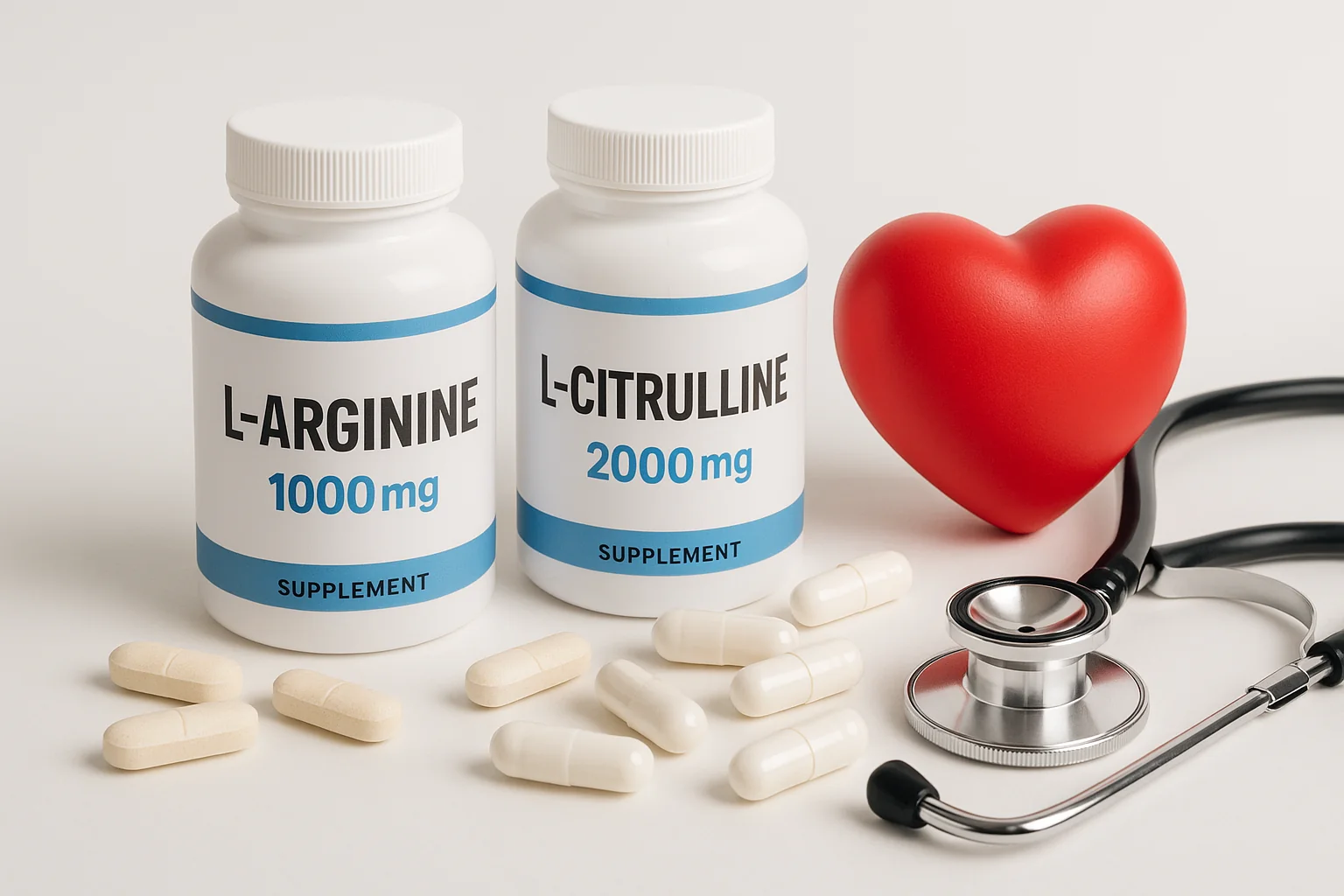
L-arginine is an amino acid that has appeared in "potency" supplements for years as a natural alternative to erectile medications. The mechanism makes biological sense: arginine is a substrate for the production of nitric oxide (NO), which dilates blood vessels - the same mechanism that sildenafil operates on. However, oral arginine has a bioavailability issue. Citrulline, an amino acid from watermelon, handles this better. Key RCT by Chen et al. (1999) showed improvement in erection in men with mild to moderate dysfunction after 5 g of arginine daily, and the meta-analysis by Dong et al. (2011) confirmed the hypotensive effect of arginine in 11 studies (Chen et al., BJU International, 1999; Dong et al., American Heart Journal, 2011). This article explains when these substances work and when they cannot replace a doctor.
KEY INFORMATION
• L-arginine is a substrate for eNOS - the enzyme that produces nitric oxide (NO), crucial for erection and vasodilation.
• Citrulline is more effective than arginine orally - it bypasses the first-pass effect and provides higher levels of arginine in the plasma.
• A meta-analysis of 11 RCTs showed a reduction in systolic blood pressure by 5.4 mmHg with arginine supplementation (Dong et al., 2011).
• An RCT with citrulline malate (1.5 g/day, 1 month) improved erection hardness in IIEF-EF (Cormio et al., 2011).
• Note: arginine is contraindicated after a heart attack - VINTAGE MI (2006) showed a higher risk of death.
Mechanism of action - the arginine-NO-erection pathway
Erection is a vascular event. Sexual arousal causes the release of acetylcholine and other neurotransmitters that activate endothelial nitric oxide synthase (eNOS) in the endothelial cells of the penile arterioles. eNOS converts l-arginine to l-citrulline and NO. NO diffuses into the smooth muscle cells of the vessels, activating guanylate cyclase, which raises cGMP levels - and the smooth muscles relax, arteries dilate, and blood flow to the corpora cavernosa increases (Chen et al., 1999).
Sildenafil (Viagra) and other PDE5 inhibitors block the enzyme that breaks down cGMP - allowing cGMP to persist longer. This is a stronger and more precise point of intervention than providing a substrate for eNOS. So why might arginine/citrulline work? In men with mild erectile dysfunction related to vascular factors (hypertension, atherosclerosis, smoking), a deficiency of NO may partially result from limited availability of arginine or damaged eNOS. In such cases, increasing the substrate pool may have clinical significance - although the effect will be weaker than with PDE5 inhibitors.
Why does citrulline work better than arginine orally?
The problem with oral arginine is the arginase enzymes in the intestines and liver. Arginase breaks down arginine into ornithine and urea before it reaches the systemic circulation. It is estimated that with oral administration of large doses of arginine (above 6 g), a proportionally smaller amount of the substance reaches the systemic circulation compared to low doses - arginase enzymes become saturated and bioavailability paradoxically decreases.
Citrulline bypasses this problem. Absorbed in the small intestine, citrulline is transported to the kidneys, where the enzyme argininosuccinate synthase (ASS1) converts it back to arginine. This "renal" arginine goes directly into the systemic circulation, bypassing the first-pass effect in the liver. The study by Sureda et al. (2015) showed that oral citrulline raises blood arginine levels more effectively than an equivalent molar dose of arginine (Sureda et al., Nutrients, 2015).
We noticed that in "pump" supplements for athletes, citrulline malate is mixed in a ratio of 2:1 or 1:1 with malate - which alters absorption and may have its own effects on energy metabolism. When comparing doses, it is important to check whether the manufacturer specifies the dose of citrulline malate or pure citrulline - 6 g of citrulline malate is only about 4 g of pure citrulline. This is a common source of misunderstanding when interpreting labels.
Dowody kliniczne - erekcja
A randomized study by Chen et al. from 1999 (BJU International) randomized 50 men with mild to moderate erectile dysfunction to 5 g of l-arginine daily or placebo for 6 weeks. Results: 31% of men in the arginine group reported subjective improvement in erection vs 12% in the placebo group - a statistically significant difference. The effect was selective: only men with low baseline NO levels in urine (a marker of NO production) responded to supplementation. In men with normal baseline NO, arginine did not help.
Cormio et al. study from 2011 (Urology) randomized 40 men with mild erectile dysfunction to 1.5 g of citrulline daily or placebo for a month. The IIEF-EF (International Index of Erectile Function - Erectile Function domain) score improved significantly in the citrulline group, and the percentage of men with a firm erection (IIEF-EF score ≥ 26) increased from 8% to 50%. The dose of 1.5 g/day is relatively low - sports studies use 6-8 g. Would higher doses provide a better erectile effect? Unknown - no studies.
| Substance | Dose (RCT) | Indication | Primary outcome | Strength of evidence |
|---|---|---|---|---|
| L-arginina | 5 g/day / 6 weeks | Mild ED | 31% vs 12% subjective improvement | Low-moderate (1 small RCT) |
| Citrulline malate | 1.5 g/day / 1 month | Mild ED | Improvement in IIEF-EF; 50% vs 8% firm erections | Low-moderate (1 small RCT n=40) |
| L-arginina | 4-24 g/day / 4-24 weeks. | Blood pressure | -5.4 mmHg systolic, -2.7 mmHg diastolic | Moderate (meta-analysis of 11 RCTs) |
| Citrulline malate | 6-8 g przed treningiem | Performance / exercise pressure | Improvement in performance, reduction of DOMS | Moderate (several RCTs) |
L-arginine and blood pressure - data from meta-analysis
The meta-analysis by Dong et al. from 2011 gathered data from 11 RCTs with a total of 387 participants. Arginine supplementation (4-24 g/day for 4-24 weeks) reduced systolic blood pressure by 5.4 mmHg and diastolic by 2.7 mmHg compared to placebo - statistically significant effects (Dong et al., 2011). A reduction in systolic blood pressure of about 5 mmHg is clinically significant - estimated to reduce the risk of stroke by approximately 14%.
Hypotensive mechanism: NO produced from arginine by eNOS acts as a vasodilator - it dilates peripheral arterioles and reduces vascular resistance. Arginine may also inhibit the renin-angiotensin system by modulating the activity of angiotensin-converting enzyme (ACE). The interaction with antihypertensive drugs is real: combining arginine with ACE inhibitors, calcium channel blockers, or diuretics may cause excessive blood pressure reduction.
An important warning for cardiologists and patients: the large RCT VINTAGE MI from 2006 randomized 153 patients after a recent heart attack to arginine supplementation (9 g/day) or placebo. The study was prematurely terminated when a higher mortality rate was observed in the arginine group (8.6% vs 0% in the placebo group). The authors suggest that arginine after a heart attack may exacerbate inflammation or adversely modulate cardiac remodeling (Schulman et al., JAMA, 2006). Arginine is contraindicated in patients in the acute phase or immediately after a heart attack.
We have noticed that questions about arginine for "potency" mainly come from middle-aged men who do not want to immediately reach for PDE5 inhibitors. An honest answer: arginine and citrulline may help with mild, vascular erectile dysfunction - particularly in men with hypertension, smokers, or those with glycemic disorders. However, erectile dysfunction is also a symptom of cardiovascular and metabolic diseases. Improvement in erections after arginine does not exempt one from diagnostics - it may be a warning sign worth discussing with a doctor.
Frequently Asked Questions
How does l-arginine work for erection?
L-arginine is a substrate for the eNOS enzyme, which produces nitric oxide (NO). NO relaxes the smooth muscles of the penile arteries, causing an influx of blood into the corpora cavernosa. With a deficiency of NO (e.g., in men with hypertension or after smoking), increasing the pool of arginine may improve erection. The effect is weaker than with PDE5 inhibitors (sildenafil, tadalafil) (Chen et al., 1999).
Is citrulline better than arginine?
Yes - for the purpose of increasing arginine in plasma, citrulline is more effective orally. It bypasses the first-pass effect (arginase in the intestines and liver), is converted to arginine in the kidneys, and provides higher and more sustained levels of arginine in circulation (Sureda et al., 2015). For most clinical applications, citrulline is a more effective form of delivering arginine.
How much l-arginine or citrulline daily for erection?
Arginine: 5 g/day in a key RCT (Chen et al., 1999). Citrulline: 1.5 g/day in the study by Cormio et al. (2011, n=40). For sports effects (muscle pump, endurance), higher doses of citrulline are used - 6-8 g of citrulline malate before training. There is no data indicating that higher doses provide better erectile effects (Cormio et al., 2011).
Does l-arginine work like Viagra?
The mechanism is similar (both act through NO), but the strength of action is incomparable. Sildenafil blocks PDE5 (the enzyme that breaks down cGMP) - this is a precise, strong mechanism. Arginine provides substrate for NO production - a weaker, more subtle effect. Arginine and citrulline may be helpful for mild ED, but they will not replace medications for moderate or severe dysfunction.
Does l-arginine lower blood pressure?
Yes. A meta-analysis by Dong et al. (2011, American Heart Journal, 11 RCTs, n=387) showed a reduction in systolic blood pressure of 5.4 mmHg and diastolic pressure of 2.7 mmHg with supplementation of 4-24 g/day for 4-24 weeks (Dong et al., 2011). Clinically significant effect, but does not replace antihypertensive medications. Interaction with blood pressure medications - may cause hypotension.
What are the side effects of l-arginine?
At doses up to 6 g/day, arginine is well tolerated. Above 9 g, gastrointestinal complaints (nausea, diarrhea) may occur. Individuals with herpes: arginine is a substrate for Herpes simplex viruses - risk of exacerbations. Key contraindication: patients after a heart attack - VINTAGE MI (2006) showed a higher mortality rate in the arginine supplementation group (Schulman et al., 2006).
Can arginine be combined with citrulline?
Yes - the combination is synergistic. Citrulline provides arginine through the renal pathway, and additional arginine directly fuels eNOS. Sports protocols use 2-4 g of arginine + 6 g of citrulline malate before training with good results for muscle pump and endurance. There are no large RCTs for this combination in the context of erections or blood pressure.
Who should avoid l-arginine?
Absolute contraindication: patients after a recent heart attack (VINTAGE MI, 2006). Relative: individuals with recurrent herpes, taking sildenafil or tadalafil (risk of hypotension), taking antihypertensive medications. Pregnant or breastfeeding women - lack of safety data, caution is advised (Schulman et al., 2006).
This article is for informational and educational purposes and does not replace consultation with a doctor. If you are pregnant, breastfeeding, taking medications, or have chronic conditions, consult the use of supplements or herbs with a specialist.
Author: Michał Waluk · Published: 2026-05-04 · Updated: 2026-05-04