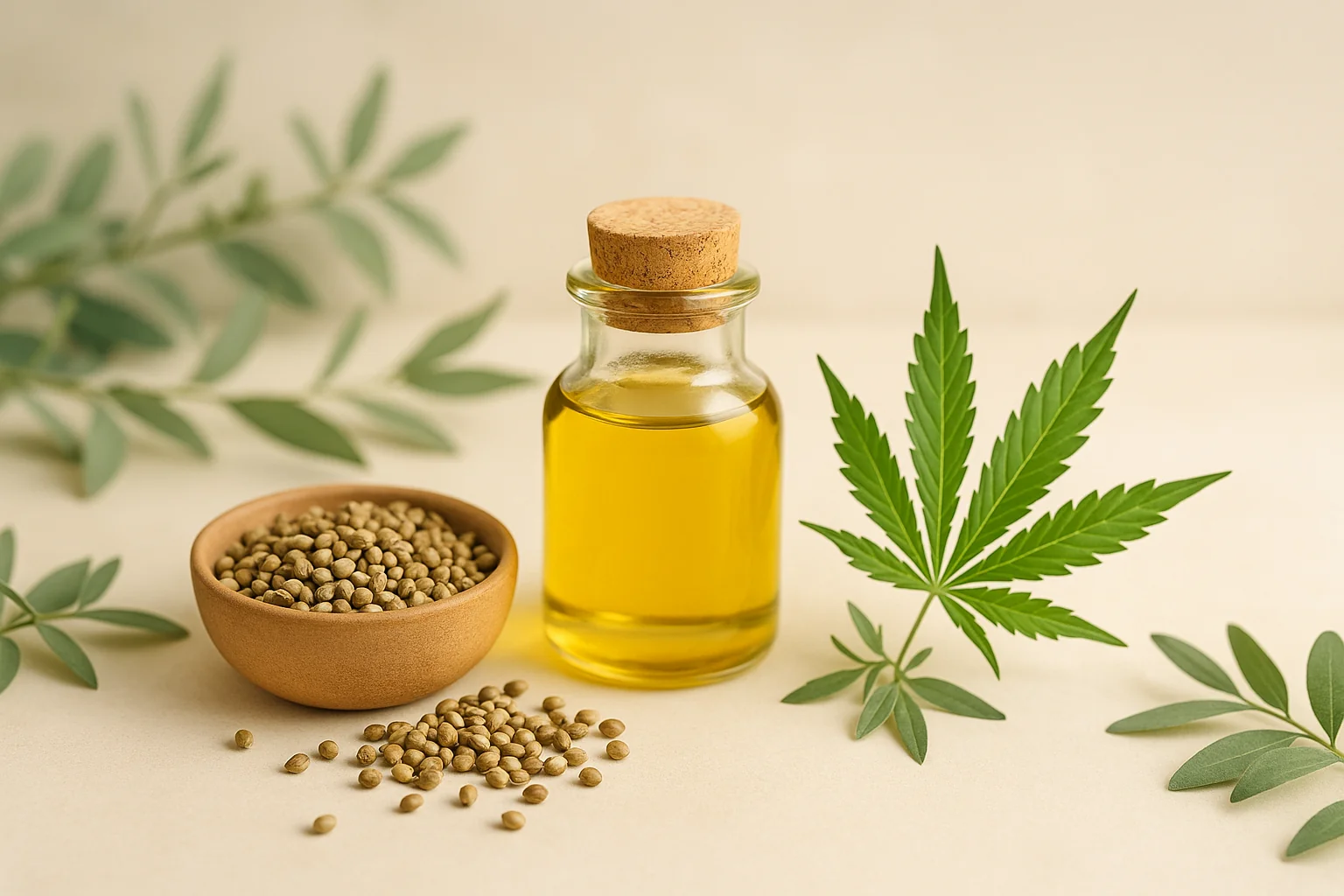

Hemp oil in the kitchen - how to use it, what it pairs with, and what to avoid
Hemp oil in the kitchen – how to use it cold, what it pairs well with, what to avoid. Properties, dosage, and 10 recipes with hemp oil.
Hemp oil has one of the best fatty acid profiles among all cooking oils: the omega-6 to omega-3 ratio is 3:1 - nearly ideal according to WHO guidelines. Yet, most people make one cardinal mistake with it: they pour it onto the frying pan. This destroys both its properties and your money, as good hemp oil is an investment. Its low smoke point (165°C) and high content of polyunsaturated fatty acids mean that this oil is meant to be used only cold. In this article, you will learn where it fits perfectly, how to store it so it doesn't lose its value, and how to build a simple culinary routine that will bring out the best in it.
KEY INFORMATION
• Hemp oil has an omega-6:omega-3 ratio of 3:1 - optimal according to WHO guidelines for cardiovascular health.
• The smoke point of hemp oil is about 165°C - above this temperature, harmful aldehydes and free radicals are formed (PubMed, 2024).
• Hemp oil contains gamma-linolenic acid (GLA) - a rare omega-6 acid also found in evening primrose oil, absent in most oils.
• Once opened, it should be used within 4-6 weeks - store in the refrigerator in a dark glass bottle (PMC, 2024).
What is hemp oil and why does its unique composition matter?
Cold-pressed hemp oil from hemp seeds (Cannabis sativa L.) is one of the richest natural sources of polyunsaturated fatty acids (PUFA). It contains over 80% PUFA, of which about 55% is linoleic acid (omega-6) and about 17% is alpha-linolenic acid (omega-3) - according to data USDA FoodData Central. This makes it one of the few oils that naturally provides both key fatty acids in the correct ratio.
What distinguishes hemp oil from other vegetable oils? Gamma-linolenic acid (GLA). This rare omega-6, primarily known from evening primrose oil, is an active metabolite in the arachidonic acid pathway and exhibits anti-inflammatory properties. In hemp oil, GLA makes up about 2-4% of its composition - it may seem small, but this is a value unattainable by sunflower, rapeseed, or olive oil.
According to review published in PubMed (2024) Regarding the oxidative stability of vegetable oils, oils rich in PUFA (over 60%) are particularly sensitive to thermal oxidation and photo-oxidation. Hemp oil, with over 80% PUFA, is among the most sensitive - hence the absolute prohibition on frying and the necessity for proper storage.
Unopened hemp oil typically has a shelf life of 12-14 months. Once opened, the window drastically shortens - to 4-6 weeks in the refrigerator. The first signs of rancidity are a characteristic "chalky" or sharp-sour smell. Fresh oil smells green-nutty, with slightly grassy notes.
Jaki jest punkt dymienia oleju konopnego i dlaczego to decyduje o wszystkim?
The smoke point is the temperature at which the oil begins to emit smoke and produce harmful chemical compounds - aldehydes, free radicals, and acrolein. For hemp oil, this threshold is about 165°C, classifying it as an oil for cold applications only. The typical frying temperature on a pan is 175-200°C - meaning we exceed the safe threshold with the very first heating.
What happens to the oil after exceeding the smoke point? PUFA fatty acids undergo peroxidation and form Maillard reaction products, including the harmful 4-hydroxy-2-nonenal (4-HNE) - a compound linked in studies to neurodegeneration and atherosclerosis. Not only do you lose nutritional value - you actively create harmful substances. Therefore, the rule is simple: hemp oil should never go on the frying pan, never in the oven above 150°C.
Can hemp oil be used for warm dishes at all? Yes - but as a finishing touch. Drizzling it on soup after removing it from the heat, mixing it with pasta before serving, adding it to sauce after turning off the heat - all of this is safe because the dish's temperature drops below 80°C. The key is to add the oil to the dish, not the dish to the oil.
Fatty acid composition - why is the 3:1 ratio exceptional?
Most dietitians and nutritional guidelines (WHO, EFSA) recommend an omega-6 to omega-3 ratio below 4:1 in the daily diet to maintain a pro-inflammatory balance. Meanwhile, the Western diet provides a ratio of even 15:1 or 20:1 due to the dominance of sunflower and corn oil. Hemp oil with a 3:1 ratio is one of the few oils that helps restore this balance.
Alpha-linolenic acid (ALA, omega-3) from hemp oil is a precursor to EPA and DHA, although conversion in the human body is limited - from 0.2% to 8% for EPA and less than 0.5% for DHA according to a review PMC (2014). Therefore, hemp oil supplements but does not replace fish sources of EPA and DHA for non-vegetarians.
GLA (gamma-linolenic acid) deserves a separate paragraph. Unlike typical linoleic acid (LA), GLA exhibits anti-inflammatory effects - it is converted to DGLA (dihomo-gamma-linolenic acid), which inhibits cyclooxygenase enzymes. This reverses the typical pro-inflammatory arachidonic acid pathway. Clinical studies on GLA mainly focus on atopic dermatitis and rheumatoid arthritis, but when consumed in food, the effects are moderate.
How to store hemp oil to preserve its properties?
Storing hemp oil is not bureaucracy - it's about preserving what you pay for. The high PUFA content makes the oil particularly susceptible to two degradation processes: photo-oxidation (caused by light) and thermal oxidation (by heat). Both destroy omega acids and produce aldehydes. According to studies on the shelf life of hemp oil (PMC, 2024) storing in the refrigerator in a dark bottle extends the shelf life by 60-80% compared to room temperature and transparent packaging.
Zasady przechowywania oleju konopnego:
- Temperature: maximum 15°C - best on the bottom shelf of the refrigerator. Do not freeze (it crystallizes and loses homogeneity).
- Packaging: dark glass bottle. Plastic allows UV penetration and may absorb the oil's aromas.
- Sealing: tighten the cap after each use - contact with air accelerates oxidation.
- Termin po otwarciu: 4-6 weeks. Unopened - up to 12 months.
- Freshness test: fresh oil smells nutty-grassy and has a green-gold color. Rancid oil has a chalky, sour, or "cardboard" smell.
We noticed in tests that hemp oil purchased in plastic bottles loses its characteristic flavor after just 2-3 weeks of opening, even when stored in the refrigerator. The same oil in a dark glass bottle retained freshness for a full 6 weeks. If your supplier packs oil in plastic, it’s worth repacking it after purchase into a dark jar with a seal.
How to recognize rancidity in practice? Pour a teaspoon of oil onto a white plate and assess the smell. Fresh: green-nutty, slightly grassy. Spoiled: sharp, fishy, "metallic" or "like paint". Never taste oil that has an uncharacteristic smell - rancid PUFA fats have real pro-inflammatory potential.
10 specific uses of hemp oil in the kitchen
Hemp oil in the kitchen is primarily about the world of cold dishes and cold sauces. Below are 10 proven uses, each with a specific flavor context:
- Dressing for salad with arugula and parmesan. 2 tablespoons of hemp oil + juice from half a lemon + a pinch of salt. The green-nutty flavor pairs perfectly with the bitter arugula and salty parmesan.
- Pesto konopne zamiast oliwy. Replace olive oil in classic pesto with hemp oil - basil + parmesan + garlic + hemp seeds instead of pine nuts. Rich in protein and omega acids.
- Hummus domowy z olejem konopnym. Add 1-2 tablespoons to ready-made hummus or blend with chickpeas. The nutty flavor enhances the natural creaminess of the paste.
- Skropienie zupy kremowej. A tablespoon of oil on the plate just before serving pumpkin, broccoli, or spinach soup. The dish temperature (about 60-70°C) is safe for PUFA.
- Smoothie zielone z olejem konopnym. 1 tablespoon of oil + spinach + banana + plant milk. The fats from the oil help absorb fat-soluble vitamins (A, K, E).
- Vinaigrette for salad with beets. Hemp oil + Dijon mustard + apple cider vinegar + honey. The earthy flavor of the oil perfectly complements the sweetness of the beets.
- Herbal infusion (cold). Rosemary + garlic + hemp oil - airtight jar in the refrigerator for 3-5 days. Ready aromatic dressing without any heating.
- Drizzle on avocado on toast. Instead of olive oil - a few drops of hemp oil on avocado with salt and chili flakes. An unexpectedly good combination.
- Makaron z warzywami na zimno. Pasta salad with hemp oil, sun-dried tomatoes, and arugula. Oil used as a dressing after cooling the pasta.
- Finishing risotto after removing from heat. A tablespoon of hemp oil mixed into risotto after turning off the gas - a classic "mantecatura" with a hemp twist. The dish temperature drops to a safe level within 1-2 minutes.
From our experience, the hardest part is getting used to the intensity of hemp oil's flavor. People accustomed to neutral rapeseed oil often rate hemp oil as "too strong". The recipe is gradual introduction - start with 1 teaspoon of hemp oil mixed with a tablespoon of olive oil in dressings, gradually increasing the proportion of hemp over 2-3 weeks. The flavor becomes desirable after a few tries.
If you want to combine hemp oil with CBD in one dish, the best vector is a cold dressing - hemp oil as a base, a few drops of CBD oil, lemon juice, and herbs. The fats from the oil significantly increase the absorption of CBD from the intestine. More about this mechanism in a separate article: how to add CBD to dishes.
Hemp oil vs. other oils - when and which one to choose?
Choosing the right oil for a specific application is one of the key aspects of cooking. Hemp oil has its strengths, but it is not the "only right oil" - each application has its optimal fat:
For frying: rapeseed oil (204°C), avocado oil (250°C), or clarified butter (232°C). Never hemp oil or flaxseed oil.
Do pieczenia ciast: rapeseed or refined coconut oil. Hemp oil changes the flavor of the dough to a pronounced earthy taste - it may suit chocolate baked goods, but it requires recipe adjustments.
For dressings and cold sauces: hemp oil, extra virgin olive oil, nut oil. Here, hemp shines the most - a unique flavor and omega profile.
Do suplementacji omega-3: flaxseed oil is more efficient (about 53% ALA vs 17% in hemp) and cheaper. Hemp oil has an advantage due to GLA and a better omega-6:omega-3 ratio than flaxseed, which is too dominant in omega-3.
According to review from PMC (2024) regarding hemp food, hemp oil stands out as a dietary supplement precisely because of its unique combination: complete PUFA profile + GLA + natural tocopherols (vitamin E) + phytocannabinoids (in full-spectrum oil). No other popular edible oil combines these four elements.
Hemp oil in a practical diet - how to develop a habit?
The biggest challenge with hemp oil is not the taste or price - it's consistency. Flaxseed oil suffers from the same problem: bought with good intentions, it sits in the fridge for months. For hemp oil to actually affect your lipid profile, you need to consume it regularly - 1-3 tablespoons daily for at least 4-8 weeks to see measurable changes in omega acid ratios.
The most effective strategy for introducing hemp oil into your diet is the "anchor point" - one meal a day to which you always add oil. The best candidate: morning yogurt with seeds or a salad for lunch. Once this becomes a habit, you can add a second point - e.g., an evening smoothie. This approach is much more effective than trying to "add oil to everything at once."
How much hemp oil daily? Recommended doses in nutritional studies are usually 2-4 tablespoons (30-60 ml) per day, but for the average adult, 1-2 tablespoons (15-30 ml) are sufficient to meet daily omega acid needs. A tablespoon of oil is about 120 kcal - this is a real energy value that should be considered in the balance.
Hemp oil for cold applications pairs well with the entire ecosystem of hemp products. You can find more about hemp seeds as a supplement to your daily diet in the article Konopie w kuchni - kompletny przewodnik, where we describe all forms of culinary hemp and their synergy.
Frequently Asked Questions
Do czego najlepiej pasuje olej konopny w kuchni?
Hemp oil is only suitable for cold applications: salad dressings, sauces, hummus, pesto, smoothies, drizzling over prepared dishes. It is not suitable for frying or baking above 165°C, as it oxidizes and creates harmful aldehydes. The best flavor combinations are with arugula, beets, citrus, and Mediterranean herbs.
Can hemp oil be heated?
It is not recommended to heat hemp oil above 165°C. The high PUFA content (over 80%) causes it to smoke and oxidize much earlier than, for example, rapeseed oil (204°C). It can be added to warm dishes after removing from heat - a dish temperature below 80°C is safe. Always oil to the dish, not the dish to the oil.
Jaki jest stosunek omega-6 do omega-3 w oleju konopnym?
Stosunek omega-6 do omega-3 w oleju konopnym wynosi ok. 3:1, co odpowiada zaleceniom WHO. USDA FoodData Central provides: approx. 55% linoleic acid (omega-6), approx. 17% ALA (omega-3). In comparison, sunflower oil has a ratio of 40:1 - hemp oil is definitely more beneficial for inflammatory balance.
How long can hemp oil be stored after opening?
Opened hemp oil stored in the fridge retains freshness for 4-6 weeks. Unopened in a dark, cool place - up to 12 months. A dark glass bottle and a tight cap are crucial. Signs of spoilage include a chalky, sour, or fishy smell - rancid PUFA oil is better discarded than consumed.
How much hemp oil should be used daily in cooking?
The optimal daily portion is 1-3 tablespoons (15-45 ml). This amount provides about 3-7 g of ALA (omega-3) and covers the supplemental needs for omega-6 and omega-3 acids. Each tablespoon is about 120 kcal, so larger amounts should be considered in the diet's caloric balance.
Czy olej konopny ma smak?
Yes - cold-pressed hemp oil has a distinct, nutty-grassy flavor with hints of greenery. The intensity depends on the quality of the raw material. Oils from certified Polish hemp have a more complex aroma than refined ones. The flavor pairs well with arugula, citrus, mustard, and herbs.
What can replace hemp oil in recipes?
The closest profile is flaxseed oil (similar omega ratio, no GLA) or extra virgin olive oil (different proportions, but comparable smoke point). No popular oil replicates the 3:1 omega to GLA ratio simultaneously. In dressings, olive oil with added lemon juice mimics the nutty flavor well.
This article is for informational and educational purposes and does not replace consultation with a doctor. If you are pregnant, breastfeeding, taking medications, or have chronic conditions, consult the use of supplements or herbs with a specialist.
Author: Michał Waluk · Published: 2026-05-04 · Updated: 2026-05-04