
Strains for Night: Why No Study Confirms This Label
The nighttime label is a commercial description derived from the pair sativa and indica. Three genomic studies show that this pair does not separate plants, and the meta-analysis on sleep concerns preparations with a known dose, not strain names.
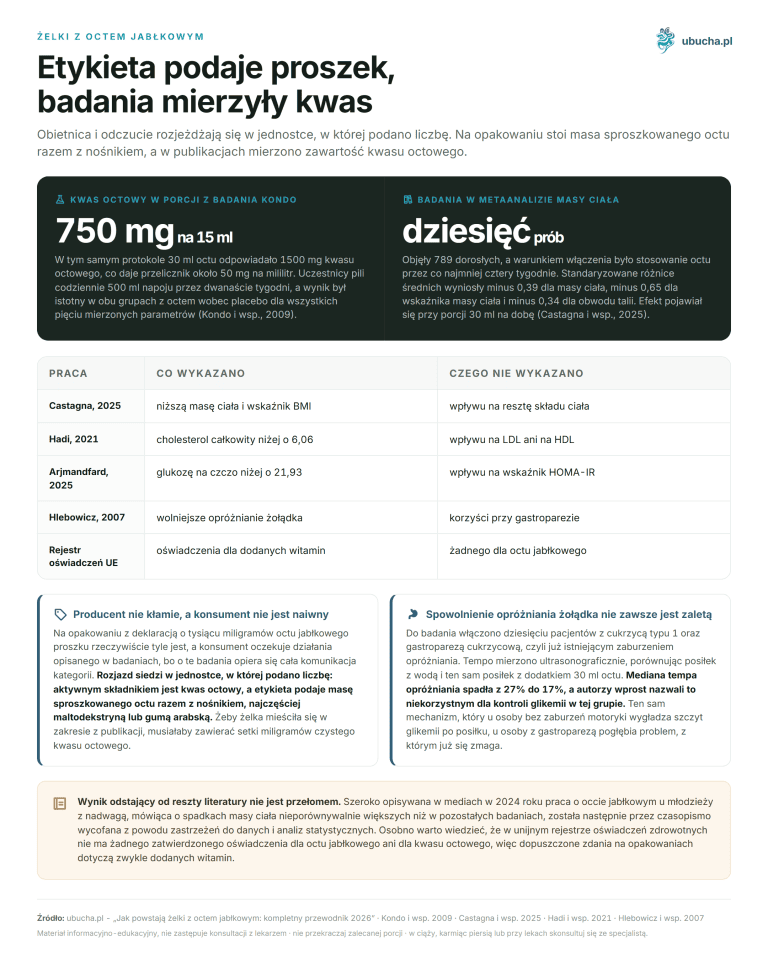
What Do Studies Say About Strains Described as Nighttime?
None. There is no clinical study that compared dried flower
labeled as nighttime with any other in terms of sleep, as the time of day
is not a medical indication or a feature recorded in the register.
However, there are studies on the label itself: they checked,
whether the division into sativa and indica means anything in the plant
rozdziela.
The starting point is a paper published in 2021 in the journal
Nature Plants (PMID:34650264). It compiled over a hundred samples of hemp,
marking the terpene content in each and
cannabinoids and reading the genome at over 100,000 sites
of polymorphisms. Samples labeled as sativa and those
labeled as indica turned out to be indistinguishable on a genome-wide scale.
However, the label was associated with
the variability of a handful of volatile compounds, whose
concentration depends on variants in clusters of synthase genes
for terpenes. This is an observation of plant material, not an experiment
involving patients, so it speaks about the plant, not about what
happens after administration.
A similar picture was provided by an earlier study from 2015 in PLOS ONE
(PMID:26308334). Odczytano w niej 14 031 miejsc polimorficznych, a
the material included 81 samples of psychoactive hemp and 43
samples of fiber hemp. The consistency between
the genetic structure and the declared origin from sativa or indica
was moderate, and the strain names often did not correspond to
a distinct genetic identity. The most telling result is the
side effect: fiber hemp genetically clustered closer
to indica-type plants than to sativa-type plants. Since the pair of names does not
even organize the species itself, it is even less likely to organize
the time of day to which the producer assigns the dried flower.
Where Did the Nighttime Strain Category Come From?
From commerce, not from medicine. The night label is a younger version of
pary sativa oraz indica: sprzedawcy przypisali indice wieczorne wyciszenie, a
the daytime wake-up call for sativa, after which the description transitioned to the cards
of products and to patient discussions. The name thus describes
the seller's promise, not a measured characteristic of the plant.
This is evident in the data we use for profiles.
In the database budcare.pl, from which we take profiles, there are 146 descriptions
covering 85 strain names. Each description carries a genetic label
and a separate label of presumed effect. These two columns almost overlap:
Out of 41 items labeled as indica, as many as 40 carry the tag
of relaxing effects, while all 19 items labeled as
sativa carry the stimulating tag. No sativa item received
the relaxing tag. This distribution is not the result of measurement, but
the consequence of the second column being derived from the first.
The night label thus duplicates itself and appears confirmed.
in this regard.
The same mechanics apply to the second half of the pair, which
are described in a separate text about odmianach dziennych.
Both labels have one
source and one weakness: they were created to
shorten the conversation at the point of sale, not to
summarize the measurement result. In a Polish pharmacy, the dried flower is
described by the name of the registration item and the manufacturer, and
Do commercial labels align with the chemistry of samples?
the time of day is not mentioned at all.
Partially and irregularly. This was examined in a 2022 study
in PLOS ONE (PMID:35588111), which measured the content of
cannabinoids and terpenes in commercial samples from six
American states. Reproducible chemotypes can be identified in this
material, but the names used in
sales do not consistently adhere to them.
Some labels correspond to a specific chemotype
more often than would be expected by chance, but never
exclusively. The authors call it as it is: naming systems
can be detached from the chemical reality of the
described material. The model here is descriptive; it is a cross-section of the market,
and not a clinical trial, so patient experiences are not determined
in any direction.
For the question about night, this has a very practical consequence. Even
if someone demonstrated that a specific chemotype affects
refers to the chemotype in a reliable way. Between the name and
the composition, there is a sieve with large holes, and between
the composition and sleep, no measurements have been established so far in
humans. The Polish market is no exception, although it is significantly smaller:
the registration position carries the name of the manufacturer and the declared content, but not
the designation of the chemotype, so what remains verifiable is only what the manufacturer
recorded for a specific batch.
What Did the Meta-Analysis on Cannabinoids and Sleep Show?
A moderate improvement in the assessment given by the patient himself, with
a very large spread of results and only for
products with a known dose. A systematic review with meta-analysis
of six randomized studies involving 1077
participants, published in 2025 in Sleep Medicine Reviews
(PMID:40929927), did not study any strain by name.
Against placebo, cannabinoids improved subjective
sleep quality by 0.53 standard deviations, and the confidence
interval calculated at 95 percent ranged from 0.03 to 1.02.
Among participants diagnosed with insomnia or
poor sleep, the improvement was 0.60 with a range from 0.09 to 1.11. The lower bounds of both
intervals lie just above zero, so a positive
number does not indicate a certain or large effect here.
Breaking down by types of preparation says more than the overall
result. The result was raised by those preparations that contained not only
pure cannabidiol: 0.82, and the range went from 0.24 to 1.40. Pure cannabidiol did not yield a statistically significant
effect, as its result of 0.13 stretched from minus 0.38
to 0.65, thus also encompassing deterioration.
Heterogeneity of results between studies
reached 88 to 89 percent, which means that
averaging obscures real differences between them.
Hence the boundary that cannot be shifted from this meta-analysis.
No study has been published comparing the strain described as night with any other in terms of sleep. Evidence of the impact of cannabinoids on sleep pertains to products with a known dose, not strain names, and is heterogeneous in itself. The night label is based on the sativa and indica pair, which in genomic studies does not separate plants, so there is no way to transfer information about effects from the name to the patient. We break down the evidence for sleep into
czynniki w a separate article.
What strain characteristics are important here?
Two measurable aspects are: chemotype, which refers to the content
of cannabinoids in a given registration entry, and the terpene profile of the batch.
Both can be measured in a laboratory and both are often provided by
the manufacturer. However, neither has been linked to
sleep quality in humans in a study that
would measure this relationship directly.
The work with Nature Plants showed that the label indeed corresponds
with the volatile composition, but the co-occurrence
is not synonymous with the effect. The variability
concerned a small group of compounds, and its basis
lies in clusters of terpene synthase genes. Between this measurement
and the patient's sleep, there is a missing link: no one has checked in a study with
randomization whether shifting the volatile profile in one direction or
the other changes anything in falling asleep.
We do not provide the percentage shares of individual components
of the profile in this service at all, because the denominator can vary in
each source. We calculated this on our own copy of the database
budcare.pl: out of 145 entries with a provided profile, only 12 sum to one hundred,
67 do not even reach eighty, six exceed one hundred,
and the highest sum reaches 125. A number that sometimes indicates a share
in total, and sometimes a share in what has been marked, does not lend itself
to comparing strains with each other, let alone to
wnioskowania o nocy.
What does the doctor decide, and what does the patient decide?
Lekarz o wszystkim, co dotyczy leczenia: o tym, czy susz konopny w
even consider the choice of registration entry, dosage, and
route of administration. The patient is left with a reliable description of their
symptoms and a complete list of medications taken. The choice of the night label
is not a separate therapeutic decision here.
In Poland, dried flower belongs to the Rpw availability category,
which means it is available to the patient only by prescription from a doctor, after a personal
zbadaniu, na recepcie wystawianej w osobnym trybie. Nie jest suplementem ani
consultation, which can be selected based on the description on the site. For this reason,
you will not find sentences here like "for sleep, take this
the strain: it would be a therapeutic recommendation issued without
knowledge of the patient, and with raw materials from this category, it would also be advertising
of a medicinal product directed to public knowledge.
Rozmowa z lekarzem zyskuje na konkrecie, gdy pacjent przynosi opis
of one's own sleep: how long it takes to fall asleep, how many times one wakes up at night, how
the functioning looks the next day. No commercial name
can replace this data. The doctor compares the dried flower with other
treatment options, not one strain with another. The formal
path has been described in the text about this,
what the process of obtaining a prescription looks like.
What side effects have been reported with the use of cannabis for this indication?
Separately, because no studies have been conducted for strains described as nighttime
so there is nothing to collect reports from. The cited
meta-analysis on subjective sleep quality reported
effectiveness, not safety, and it is impossible
to read the frequency of a single symptom from it in a specific
suszu.
Reports of adverse effects are collected for medicinal products with a batch number, not for the strain name, so the following pertains to hemp dried flower as a group of raw materials. The most frequently reported symptoms are dry mouth, red eyes, and increased heart rate. Dizziness upon rapid standing, daytime drowsiness, and temporary worsening of short-term memory are less frequently described, as well as anxiety that increases with dosage. A separate issue is medications taken concurrently, especially sedatives and those affecting coagulation: their assessment requires knowledge of the entire list of preparations, not just the description of the plant. We do not provide the frequency of these symptoms numerically, as public compilations for hemp dried flower in Poland do not separate them by individual products.
The nighttime label does not shift this image in any direction, because
it is not a feature of the raw material, but a sales description. If after
the dried flower there is drowsiness during the day or
anxiety, this information goes to the attending physician and to
the report of an adverse effect, not to the assessment of the name
of the strain. The name does not have a batch number, so there is no recipient,
who could do anything with such a report.
do.
What can be checked in the description of the dried flower instead of the nighttime label?
The name of the registration position, the manufacturer, and what this
manufacturer declared for a specific batch of dried flower. This information
has a recipient and a number, so it can be verified with
the source. The time of day included in the commercial name has neither
a recipient nor a number, and is often the most visible part
opisu w internecie.
The composition of the available assortment shifts from month to
month, as registration positions appear and disappear along
with permits and deliveries. A name that was in the pharmacy in winter,
may be unavailable in summer, and returns later under a different
the manufacturer and with a different declaration. We maintain the current state in
the list of strains available in Polish pharmacies,
and over-the-counter products, none of which were included in these studies, stand
w a separate section of the store.
| Element of the dried flower description | Who establishes it | Can it be verified |
|---|---|---|
| Name of the registration position | manufacturer and registration | yes, in the list of pharmaceutical raw materials |
| Declared content for the batch | manufacturer | yes, in the description of the position |
| Terpene profile of the batch | the manufacturer's laboratory or database external |
partially, depending on source |
| Nighttime or daytime label | sprzedawca | no, it is not in any register |
The last line is the crux of the matter: the first three entries have
a supplier to refer to, while
the fourth has none at all. Whoever organizes their dried flower by the time of day,
organizes it according to someone else's commercial convention, not according to
anything that has been labeled.
There remains the method of administration, which determines the course of the evening more
clearly than the name: vaporization and ingestion provide
a completely different course over time, and this is determined by the attending physician together
with the patient. How to read the description of the strain itself, we break down into
parts in the guide on genetics and terpenes.
Frequently Asked Questions
Does the strain described as nighttime have a sedative effect?
This has not been demonstrated in any study. Nighttime is a commercial description, not a characteristic marked in the laboratory or an indication for which clinical studies are conducted. The dried flower labeled as nighttime has not been compared in terms of sleep with any other.
Is indica a night strain and sativa a day strain?
This distinction has no basis in the genome. Analysis of over a hundred samples with readings from more than 100,000 polymorphic sites did not separate samples labeled with both tags across the entire genome.
Does the meta-analysis on cannabinoids and sleep pertain to pharmacy-grade dried flower?
Not directly. It included products with known dosages in six randomized studies with 1,077 participants, rather than dried flower described by strain name. The heterogeneity of results reached 88 to 89 percent.
Did cannabidiol alone improve sleep in this meta-analysis?
Not in a statistically significant way. Its result was 0.13, with a range from minus 0.38 to 0.65, thus also encompassing no change and deterioration.
Can hemp dried flower be purchased without a prescription?
No. It falls into the Rpw availability category, so it is provided to the patient only by a doctor's prescription after a personal examination. The method of administration is determined by the attending physician, not the description on the website.
How can you tell that a strain description promises more than has been demonstrated?
By the fact that it attributes an effect to the name in humans. No trade name has been compared with another in a study, so the statement about what a given strain does at night goes beyond evidence.
Hemp dried flower is a pharmaceutical raw material dispensed by a doctor's prescription in the Rpw category. The material is for informational purposes and does not replace medical advice or consultation with a pharmacist.
Editorial text: redakcja ubucha.pl.