
Monacolin K (red yeast rice) for cholesterol - dosage and risks
Monacolina K: dosage, contraindications, and precautions in a clear table. u Bucha.
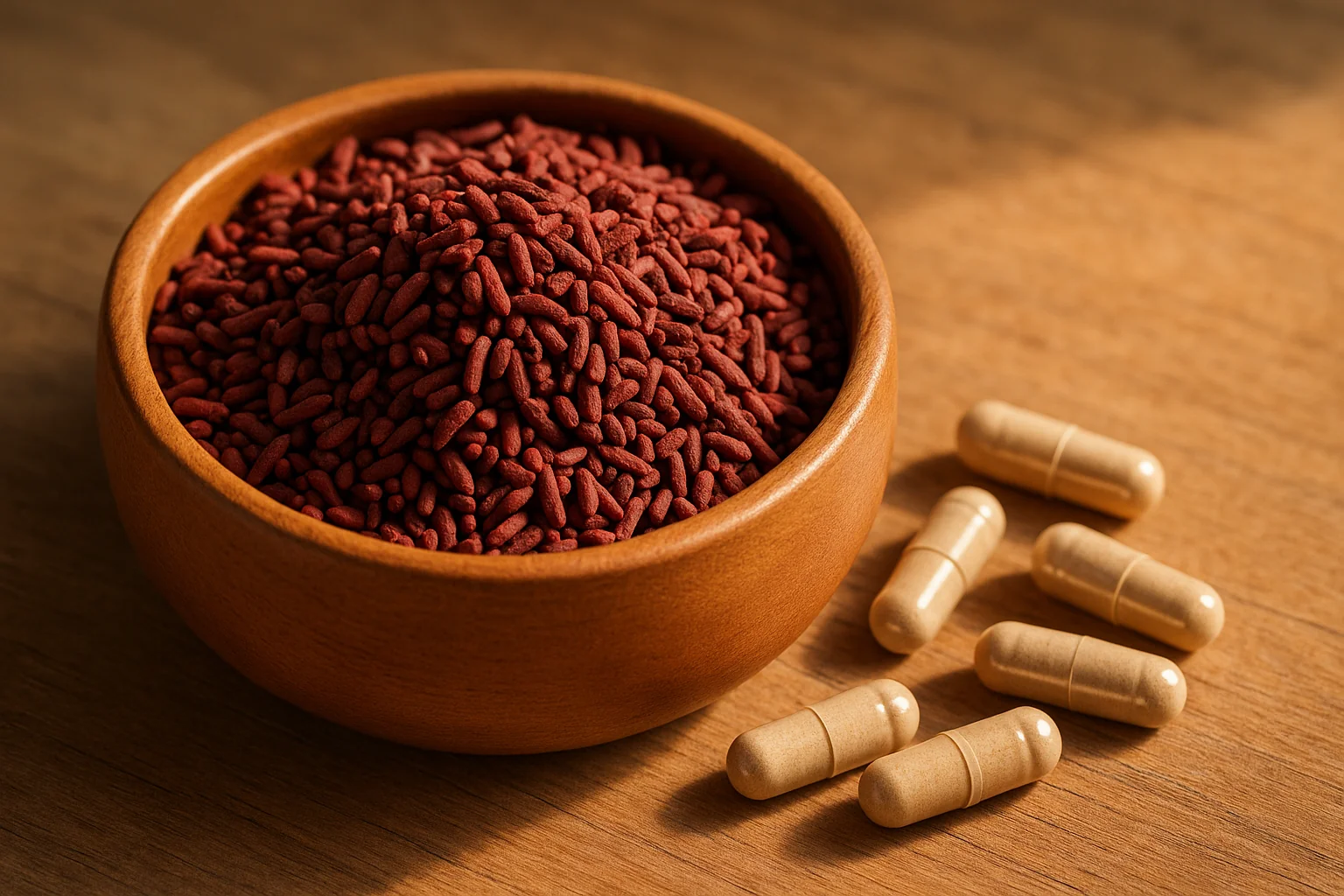
Red Yeast Rice (RYR) has been used in traditional Chinese medicine for over 2000 years. Today, its active ingredient - monacolina K - is the subject of lively regulatory debate across the European Union. The reason is simple: monacolina K is chemically identical to lovastatin, a prescription drug that lowers cholesterol. EFSA confirmed the effectiveness of 10 mg of monacolina K per day in 2018, but at the same time tightened regulations regarding supplements containing it (EFSA Journal, 2018). This article provides you with a reliable dosage table, a complete list of contraindications, and clear indications of when this supplement is not for you.
KEY INFORMATION
• Monacolina K is structurally identical to lovastatin - an HMG-CoA reductase inhibitor used as a prescription drug (Gordon et al., JACC, 2010).
• EFSA confirmed that 10 mg of monacolina K daily maintains normal LDL levels (EFSA, 2018).
• Supplements containing ≥3 mg of monacolina K in the EU require a clear consumer warning since 2022.
• Contraindications: pregnancy, lactation, statins in therapy, liver and kidney diseases, myopathies.
• Efekt na LDL widoczny po 4-8 tygodniach regularnego stosowania.
What is monacolina K and how does it affect cholesterol?
Monacolina K (monacolin K) is a substance produced by the fungus Monascus purpureus during rice fermentation. It is structurally identical to lovastatin in its lactone form - which was confirmed by X-ray crystallography as early as the 1980s (Gordon et al., JACC, 2010). The mechanism of action on cholesterol is the same as that of statin drugs: it inhibits the enzyme HMG-CoA reductase, which catalyzes a key step in the biosynthesis of cholesterol in the liver.
The effect is a reduction in the production of endogenous cholesterol, which forces liver cells to take up more LDL from the bloodstream through LDL receptors. The concentration of LDL in the blood decreases. In clinical studies, this effect at 10 mg of monacolin K daily results in an average reduction of LDL by 15-25% over 8-12 weeks, which corresponds to the action of low doses of lovastatin.
Since this is essentially a drug, why is it available as a supplement? The answer lies in regulations: products made from red fermented rice have historically functioned as "food" before pharmacology explored their mechanism of action. Today, this is a contentious area - France has banned the sale of supplements containing monacolin K ≥10 mg, while Belgium and Denmark have their own limits. Poland and most EU countries follow the unified EFSA guidelines with a warning requirement.
Monacolina K dosage and safety table
The table below collects information on dosing, warning signals, and risk groups in one place. It is a safety table - archetype safety_table - because with monacolin K, knowledge of contraindications is as important as dosing. Before using a supplement containing ≥3 mg of monacolin K, consult your doctor, especially if you are undergoing pharmacological treatment.
| Category | Details |
|---|---|
| Recommended daily dose | 10 mg of monacolina K (according to EFSA sufficient for effect on LDL); products ≥3 mg require a warning in the EU |
| Supplement form | Capsules or tablets with RYR extract; the content of monacolina K must be stated on the label |
| Time to effect | 4-8 weeks (visible change in LDL); full stabilization after 3 months |
| Monitoring | Lipid profile every 3 months; liver function tests (ALAT/ASAT) every 6 months with long-term use |
| Absolute contraindications | Pregnancy and lactation; children and adolescents; active liver or kidney disease; myopathies; concurrent therapy with statins |
| Drug interactions | Statins (risk of rhabdomyolysis); fibrates; cyclosporine; immunosuppressive drugs; grapefruit juice; amiodarone; azole antifungal medications |
| Alarm signals | Muscle pain or weakness; dark urine (myoglobinuria); jaundice; nausea lasting >3 days - stop and contact your doctor |
| Avoid together | Alcohol (hepatotoxicity); coenzyme Q10 (monacolin reduces its synthesis - consider supplementing with CoQ10 during long-term use) |
| For whom it is NOT indicated | Individuals with genetic hyperlipidemia requiring medication; with a history of myopathy on statins; with HbA1c indicating diabetes without medical supervision |
What do EU regulations say about monacolin K - current status 2026
The regulatory debate around monacolin K in Europe has been ongoing for years. In 2022, the European Commission amended Regulation No. 1170/2009 concerning dietary supplements, requiring manufacturers to place a clear warning on packages for products containing ≥3 mg of monacolin K (Regulation (EU) 2022/2245, EUR-Lex). The warning must inform, among other things, that the product is not intended for individuals taking statins.
At the same time, the EMA (European Medicines Agency) issued a position in 2018 confirming that monacolin K from red fermented rice is a "substance with an established medical use" - which technically qualifies it as a drug, not a supplement. Based on this, the European Commission restricted monacolin K through regulation in 2022 (Regulation (EU) 2022/860, EUR-Lex). In practice, this means a regulatory gray area where the same product can be legally sold as a dietary supplement as long as it does not exceed thresholds and contains the required warnings.
For the consumer, the conclusion is practical: always read the label and check the exact content of monacolin K in the daily portion. Manufacturers are required to provide this information. If the label does not specify the amount of monacolin K - it is a product that does not meet EU standards.
Monacolin K and coenzyme Q10 - why is it worth supplementing?
HMG-CoA reductase is involved not only in cholesterol synthesis but also in the synthesis of coenzyme Q10 (ubiquinone). Inhibition of this enzyme by monacolin K - just like by pharmacological statins - leads to a reduction in the endogenous synthesis of CoQ10 in the body (Hargreaves et al., Nutrients, 2019). CoQ10 is essential for mitochondrial function in muscle cells, including cardiac muscle.
The decrease in CoQ10 is one of the mechanisms through which statins - and monacolin K - can cause muscle pain and weakness (myopathy). Studies suggest that supplementing with CoQ10 at a dose of 100-200 mg daily may reduce the risk of muscle pain in people using statins, although the evidence is not yet conclusive.
We have noticed that customers asking about cholesterol supplements are rarely informed about the need to monitor CoQ10. If you are using monacolin K for more than 3 months, it is worth considering consulting a doctor and possibly monitoring this parameter - especially if muscle complaints arise.
Monacolin K and diet - what to eat to enhance the effect?
Supplementing with monacolin K alone yields results, but combining both interventions yields significantly better outcomes. The Mediterranean diet - rich in olive oil, fish, legumes, and nuts - lowers LDL synergistically with monacolin, through mechanisms independent of the HMG-CoA enzyme. The PREDIMED study showed that the Mediterranean diet reduces the risk of cardiovascular events by 30% compared to a low-fat diet (Estruch et al., NEJM, 2013).
What should be absolutely avoided during monacolin K supplementation? Grapefruit juice - contains furanocoumarins that inhibit CYP3A4, the enzyme that metabolizes monacolin (and statins). Blocking this enzyme increases the concentration of monacolin in the blood, raising the risk of myopathy. Even one glass of grapefruit juice daily can double exposure to monacolin.
Ethanol burdens the liver regardless of monacolin. The combination of both substances increases the risk of hepatotoxicity. If you are using monacolin K long-term, it is recommended to limit alcohol to a minimum - no more than 1 unit of alcohol per day, with days of abstinence.
Which products actively support the effect of monacolin? Plant sterols (fortified margarines, nuts, seeds) block the absorption of dietary cholesterol independently of HMG-CoA reductase. Beta-glucan from oats (3 g daily) - like psyllium - binds bile acids. The combination of monacolin with beta-glucan and plant sterols provides an additive effect and is described in the cardiology literature as a "polypill diet" for the primary prevention of hyperlipidemia.
How to check the quality of a red fermented rice supplement?
The quality of supplements with RYR is one of the biggest problems in this category. Laboratory studies have shown that the declared and actual content of monacolin K can differ by 50-100% between products from different manufacturers (Cohen et al., European Journal of Preventive Cardiology, 2017). Some products also lack data on the content of citrinin - a toxic substance produced by the fungus Monascus purpureus under suboptimal fermentation conditions.
Citrinin is nephrotoxic and potentially carcinogenic. European food law (EU Regulation 2015/1137) has set a maximum limit for citrinin in RYR supplements at 100 µg/kg of product. Certified products from the EU market should provide the citrinin test result on the certificate of analysis (CoA).
When choosing a supplement with monacolin K, check four things: whether the label specifies the exact content of monacolin K in mg per serving (not just "red yeast rice extract"), whether the manufacturer provides a CoA with citrinin testing, whether the product has the warning required by EU Regulation 2022/2245, and whether it comes from a GMP-certified manufacturer (Good Manufacturing Practice). Cheap products from marketplace platforms without this data carry unacceptable quality risks.
Frequently Asked Questions
How much monacolin K daily for cholesterol?
EFSA has confirmed that 10 mg of monacolin K daily is sufficient to maintain normal LDL cholesterol levels in adults without contraindications (EFSA, 2018). Products containing ≥3 mg of monacolin K in a daily serving are subject to mandatory warning in the EU. Do not exceed 10 mg without consulting a doctor.
How does monacolin K differ from statins?
Monacolin K is structurally identical to lovastatin and inhibits the same enzyme. The difference lies in the dosage: pharmacological statins are used in doses of 10-80 mg daily, while supplements contain 3-10 mg. The risk of myopathy and hepatotoxicity with supplementation is lower, but realistically exists - especially with drug interactions.
Who should not take monacolin K?
Monacolin K should not be used by pregnant and breastfeeding women, individuals taking statins or other lipid-lowering agents, patients with liver or kidney disease, individuals with a history of myopathy on statins, children, and adolescents. The list of drug interactions is long - always consult with a doctor or pharmacist.
Is red fermented rice safe?
At a dose of up to 10 mg of monacolin K daily and in the absence of contraindications - the safety profile is acceptable. The risk increases with the simultaneous use of statins, alcohol, and grapefruit juices. EU regulatory bodies have issued several warnings for specific risk groups, and the European Commission has restricted monacolin through regulation (Regulation (EU) 2022/860, EUR-Lex). Regular check-ups are necessary.
How long should you take monacolin K to see an effect?
The first results in LDL levels are visible after 4-8 weeks of regular use. Full stabilization of LDL usually takes 3 months. Regular lipid profile testing every 3 months and liver function tests every 6 months during long-term supplementation is recommended. Do not assess effectiveness before the end of the first month.
This article is for informational and educational purposes and does not replace consultation with a doctor. If you are pregnant, breastfeeding, taking medications, or have chronic conditions, consult the use of supplements or herbs with a specialist.
Author: Michał Waluk · Published: 2026-05-04 · Updated: 2026-05-04