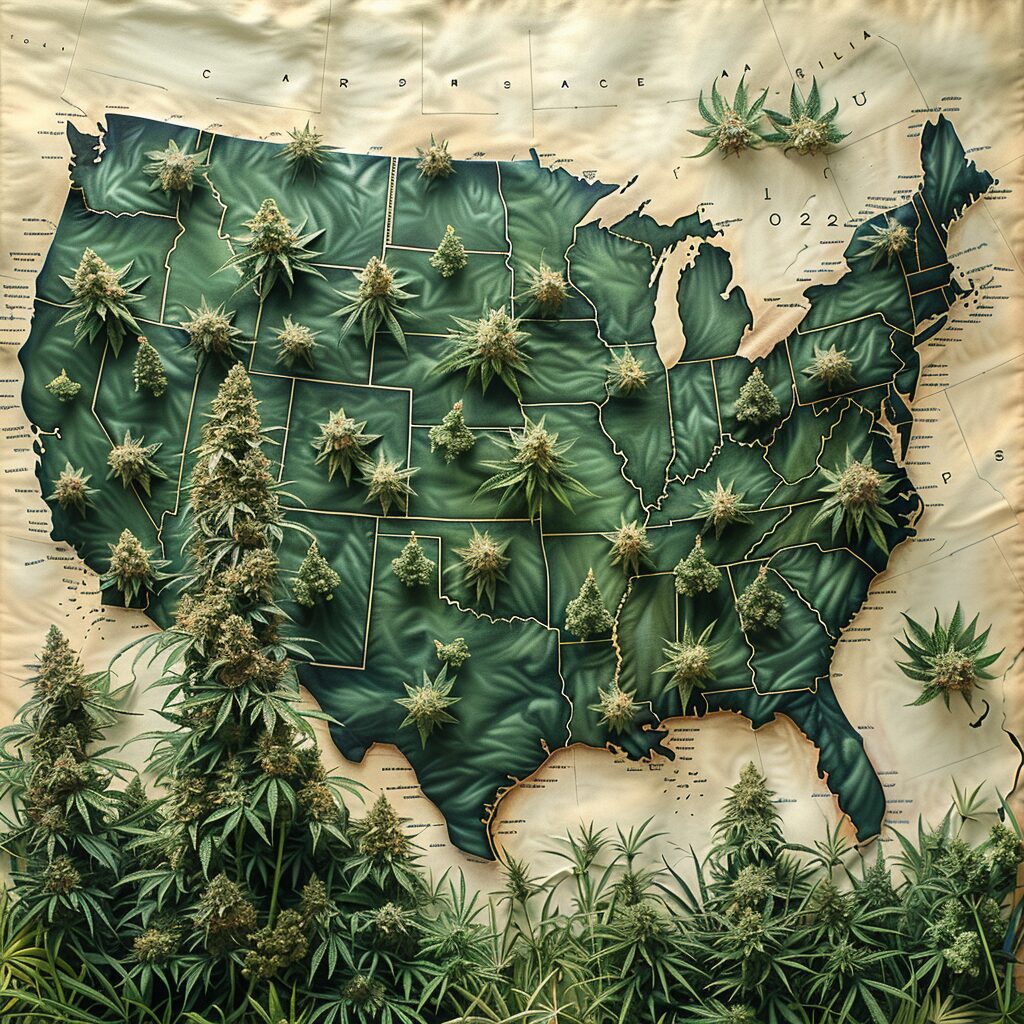

Legality Map – Where in the World is Marijuana Legal?
Legality Map - Where in the World is Marijuana Legal in 2024?
Should marijuana be legal? This question sparks heated debates worldwide, encompassing legal, health, social, and economic issues. In this article, we'll examine the legality of marijuana in various countries, discuss the harsh penalties for possession and trafficking, and present cases of partial decriminalization. If you're interested in this topic, want to learn about current regulations, and understand how attitudes toward marijuana are changing globally, we invite you to read on.
Why is the topic of marijuana legality so important?
In recent decades, marijuana has ceased to be merely a controversial, illegal substance and has gained the status of a plant with medical and even industrial potential. Scientific research demonstrating the therapeutic properties of cannabinoids has had a significant impact on this. Simultaneously, changing social and political attitudes have led many countries to initiate legal reforms aimed at regulating or deregulating its possession and use.
It's important to understand marijuana law to make informed decisions and avoid legal consequences. Being aware of changes in legislation also helps those interested in the medical use of marijuana, businesses, and consumers.
Countries with legal marijuana – where is it possible?
Currently, several countries around the world have legalized marijuana for recreational and medical use. Legalization means citizens can possess, cultivate, and purchase marijuana in certain quantities without fear of criminal penalties.
- Canada – Since 2018, recreational marijuana has been legal nationwide, with regulations on sales, advertising and production.
- Uruguay – the first country in the world to legalize marijuana under state control in 2013.
- United States – In many states, such as California, Colorado, and Oregon, marijuana is legal for recreational use, although it remains illegal at the federal level.
- Netherlands – although marijuana is formally illegal, in practice its sale in so-called coffee shops is tolerated.
- Malta – was the first EU country to legalize recreational marijuana in 2021.
Legalization in these countries has brought numerous benefits, such as increased tax revenue, reduced court burden, and improved quality and safety control of marijuana sales. However, it also presents social and health challenges that require appropriate educational campaigns and monitoring.
Benefits of Marijuana Legalization
- Crime reduction – the legal market limits the activities of the black market and organized crime.
- Quality control – products meet appropriate safety standards, which reduces the risk of consuming hazardous substances.
- Medical support – patients have access to legal therapeutic products.
- Fiscal revenues – the state benefits from taxes related to the marijuana trade.
- Protection of consumer rights – regulations protect the rights of buyers and limit marketing to adults.
Harsh penalties for drug offenses – countries with restrictive laws
Countries legalizing marijuana are opposed by those maintaining very harsh penalties for possession, production, and trafficking in the drug. In some cases, penalties can even reach life imprisonment or the death penalty. This policy is based on the premise that harsh penalties deter potential criminals and protect society from the consequences of drug addiction.
Examples of countries with harsh penalties
| Country | Range of penalties for marijuana | Comments |
|---|---|---|
| Bulgaria | Prison sentences, heavy fines | No tolerance, even small amounts punished |
| Cyprus | Prison sentences of up to several years | Strict controls but allows medical use |
| Denmark | Prison for up to 6 years | Tolerance for very small amounts is low |
| Estonia | Prison sentences, confiscation of property | Police actively prosecute drug crimes |
| Finland | Penalties up to 2 years in prison | Emphasis on addiction treatment, but strict laws |
| France | Fines and prison sentences | In recent years, discussions about easing penalties have been |
| Greece | Penalties of up to several years in prison | Prohibition of possession and cultivation |
| Ireland | Fines and prison sentences | New decriminalization proposals are being considered |
| Lithuania | Prison, confiscation | Zero tolerance policy |
| Latvia | Prison sentences | No medical legalization |
| Poland | Fines, arrests, and prison sentences | Possession of up to 3 grams is considered a misdemeanor |
| Romania | Long period of imprisonment | No tolerance for possession |
| Slovakia | Prison sentences | No medical legalization |
| Sweden | Prison sentences, harsh approach | Zero tolerance policy„ |
| Hungary | Prison | No legal changes |
| Great Britain | Fines, prison sentences | Limited medical use |
The harsh penalties in these countries mean that those caught with marijuana can face serious legal consequences, even prison time. It's important to thoroughly familiarize yourself with local laws before traveling to these countries, as ignorance of the law does not exempt you from responsibility.
Partial decriminalization of marijuana – the golden mean?
Partial decriminalization is a middle ground between complete prohibition and full legalization. It involves treating possession of small amounts of marijuana for personal use as a misdemeanor rather than a crime, or subject to only an administrative penalty, such as a fine. This model helps reduce the burden on the justice system and mitigate the negative consequences of punishing users.
Countries with partial decriminalization
- Austria – possession of up to 10 grams is often ignored but not legal.
- Belgium – persons over 18 years of age may possess up to 3 grams without criminal consequences.
- Croatia – small amounts treated as an offense.
- The czech republic – possession of up to 15 grams is not prosecuted by the police.
- Spain – private use permitted, possession on the street punishable by a fine.
- Netherlands – tolerance for up to 5 grams in coffee shops.
- Malta – medical legalization, recreational legalization is just being introduced.
- Germany – planned reforms towards legalization, currently small amounts tolerated.
- Portugal – possession and use of all drugs decriminalized since 2001.
- Slovenia – small amounts treated gently.
- Italy – Possession of up to 5 grams permitted, but not cultivation.
The decriminalization model allows for a more humane and pragmatic approach to marijuana users. It emphasizes education and treatment over repression. This ultimately improves social relations and reduces stigma toward marijuana users.
Practical advice for those interested in marijuana in countries with different regulations
- Before traveling, check the current law in your destination country. – regulations change frequently and differ even between regions within one country.
- Don't risk possessing marijuana in countries with harsh penalties – even a small amount can result in serious legal problems.
- Use legal sources – in countries with legalization you will avoid the black market and buy a safe and tested product.
- Pay attention to age regulations – most often, the sale of marijuana is limited to persons over 18 or 21 years of age.
- Consult your doctor for medical use. – proper dosage and selection of the preparation are crucial for the effectiveness and safety of the therapy.
Curiosities and global context
It's worth noting that global trends show a growing percentage of countries easing their approach to marijuana. In recent years, the World Health Organization (WHO) has recommended, among other things, changing the classification of marijuana, which could influence future legislative decisions. Many countries are also analyzing the economic benefits of a legal marijuana market, which generates billions of dollars annually.
At the same time, challenges arise, such as responsibly regulating advertising, preventing underage access to marijuana, and monitoring health effects at the societal level. This demonstrates that while marijuana is increasingly finding its place in legal systems, this requires thoughtful policy and education.
Frequently asked questions (FAQs) about the legality of marijuana
1. Is possession of marijuana always a criminal offense?
No, many countries take different approaches, from full legalization to decriminalization to harsh penalties. It all depends on local law.
2. Is medical marijuana legal in Poland?
Yes, medical marijuana is legal, but access to it is regulated and requires a prescription from a doctor.
3. What are the consequences of possessing a small amount of marijuana in countries with severe penalties?
These can include fines, imprisonment, and in some countries, even the death penalty. Therefore, it's always important to be aware of local laws.
4. Can you grow marijuana for private purposes in Poland?
No, growing marijuana is illegal in Poland and may result in serious legal consequences.
5. What are the most important benefits of legalizing marijuana?
Crime reduction, quality control, access to medical treatments, tax revenues and consumer protection.
Summary
The legality of marijuana is a complex topic that is evolving worldwide. From countries with full legalization, to those practicing decriminalization, to those with very harsh penalties, each model has its pros and cons. It's crucial for users, patients, and businesses to understand the applicable regulations and navigate this dynamic legal environment.
Changes in law often go hand in hand with education and social acceptance, opening up new therapeutic and economic opportunities. At the same time, we must not forget the responsibilities and legal consequences that still apply in many places around the world.