
Cannabis Legality Map 2026: Where is it Legal Worldwide? A Guide to 80+ Countries
Current cannabis legality map in 2026: Germany Cannabis Act 2024, DEA rescheduling USA, Thailand recriminalization, status in Poland, and 80+ countries.
The global cannabis legality map is changing faster than ever in history. According to the UNODC World Drug Report 2024, over 228 million people worldwide reported using cannabis in the past 12 months, and the number of jurisdictions allowing legal recreational sales has increased from 2 in 2013 to over 50 in 2026. Between full legalization in Canada, Germany's Cannabis Act from April 2024, and the death penalty in Singapore, there is a spectrum of legal models affecting the lives of hundreds of millions of people. In this article, we break down the global legality map into its components: state by state, continent by continent, with a particular focus on the situation in Poland in 2026.
Key information
- Recreational legalization: Full legalization is in effect in Canada (2018), Uruguay (2013), Malta (2021), Luxembourg (2023), and Germany (Cannabis Act, April 1, 2024).
- American reform: The DEA initiated the process of moving cannabis from Schedule I to Schedule III in May 2024, which will change its status at the federal level (DEA, 2024).
- Europe 2024-2026: Germany is legalizing possession of 25 g and Cannabis Social Clubs, the Czech Republic is debating a regulated model, while Poland maintains a recreational ban.
- Poland: recreational cannabis remains illegal (Article 62 of the Drug Prevention Act), medical cannabis is available by prescription (Canemes Rp.), and CBD products below 0.3% THC are legal.
- Restrictions: Thailand, after a brief experiment from 2022-2024, is returning to medical control in 2025-2026; Gulf countries, Singapore, and Malaysia maintain the strictest penalties, including the death penalty.
Disclaimer: The legal situation surrounding cannabis is changing dynamically. Before any trip, check the current legal status in the destination country. The import and export of cannabinoids between countries remains illegal, even if both countries allow recreational or medical use. In Poland, possession of THC cannabis without a prescription is a crime under Article 62 of the Drug Prevention Act. When traveling with medical cannabis, consult the embassy of the destination country. This text is for informational purposes only and does not encourage breaking the law.
Why is the cannabis legality map changing so quickly?
Since 2018, the number of countries legalizing recreational cannabis has doubled, and the global legal market surpassed $32 billion in value in 2024, according to the Prohibition Partners The Global Cannabis Report (2024). This change is driven by three overlapping trends: fiscal pressure, increasing scientific evidence for medical applications, and the failure of five decades of prohibition to curb consumption.
The UNODC World Drug Report 2024 shows that cannabis remains the most widely used controlled substance in the world. At the same time, the World Health Organization (WHO) recommended in 2019 to move cannabis from Schedule IV of the 1961 UN Single Convention, which the Commission on Narcotic Drugs (CND) confirmed by voting in December 2020. This decision opened the door to national reforms.
The second driver is money. According to the Leafly Jobs Report (2024), the legal cannabis sector in the USA employed over 440,000 full-time workers. States with legal recreational sales, such as Colorado, have surpassed a total tax revenue of $2.8 billion since 2014 (Colorado Department of Revenue, 2024).
In our trend analysis, we see a clear geopolitical pattern: the Americas and Western Europe are liberalizing, while Southeast Asia and the Middle East are tightening. Thailand, which seemed to be a precursor of Asian liberalization in 2022, reversed course in 2025, limiting access solely to medical use.
What do legalization, decriminalization, and depenalization mean?
These three concepts can mislead even journalists. Legalization means full allowance for possession, cultivation, and sale under state regulations. Decriminalization removes criminal penalties while leaving administrative offenses intact. Depenalization reduces penalties without changing the status of the offense.
The Dutch gedoogbeleid model, or tolerance policy, is a fourth hybrid category: formally, cannabis remains illegal, but prosecutors do not pursue possession of up to 5 grams or sales in licensed coffee shops. The EMCDDA in the European Drug Report 2024 distinguishes these four models as separate regulatory frameworks.
Where is cannabis fully legal in 2026?
By the end of 2025, recreational cannabis was fully or partially legal in at least 9 countries at the national level and in 24 states in the USA plus the District of Columbia, covering approximately 600 million people (EMCDDA, 2024; NCSL, 2025). Legal models vary dramatically: from the state monopoly in Uruguay to private dispensary networks in California.
Canada, the pioneer of national legalization (2018)
The Cannabis Act of October 17, 2018, made Canada the first G7 country with fully legal recreational cannabis. Adults can possess up to 30 grams of dried cannabis in public and grow up to 4 plants at home, except in Quebec and Manitoba. According to Statistics Canada (2024), legal sales exceeded CAD 5.2 billion in 2023.
The reform has yielded measurable effects. The share of the black market fell from over 80% in 2018 to about 25-30% in 2024 (Health Canada, 2024). The Canadian model is based on federal regulation of production and provincial retail sales, resulting in various models from the Ontario Cannabis Store to private shops in Alberta.
Uruguay, the first country in the world (2013)
Uruguay passed Ley 19.172 in December 2013, five years ahead of Canada. However, the Uruguayan model is narrower: mandatory registration in the state IRCCA registry, a purchase limit of 40 grams per month at pharmacies, cultivation of up to 6 plants at home, or membership in a club with up to 45 members.
According to IRCCA (2024), there were over 95,000 registered users in 2024, with a population of 3.4 million. Uruguay has shown that a state monopoly is possible, although it is less fiscally profitable than American models.
Germany, Cannabis Act from April 2024
The German Cannabisgesetz came into effect on April 1, 2024, making Germany the largest economy in Europe with legal recreational cannabis. Adults can possess up to 25 grams in public, 50 grams at home, grow 3 plants privately, and associate in Cannabis Social Clubs (Anbauvereinigungen) with up to 500 members.
The Bundestag voted on February 23, 2024, for the law with 407 votes to 226 (Bundestag, 2024). Commercial sales in retail stores were not introduced in the first phase, which is a compromise with the EU. The second pillar, pilot stores in selected cities, awaits approval from the European Commission.
Based on the analysis of inquiries from Polish users in the first year of German legalization, we observed a threefold increase in questions about crossing the border with legal cannabis. The answer remains clear: importing THC cannabinoids into Poland remains illegal, regardless of the status in the country of purchase.
Malta, Luxembourg, Czech Republic: European acceleration
Malta legalized possession of up to 7 grams and cultivation of up to 4 plants in December 2021, becoming the first EU country to do so, with the option of Cannabis Harm Reduction Associations. Luxembourg joined in July 2023 with a limit of 3 grams in public and 4 plants at home (Gouvernement du Grand-Duché, 2023).
The Czech Republic debated a bill in 2025 introducing a regulated recreational market, proposed by Minister Mikulas Ferjencik. The draft includes a limit of 100 grams per year per person and licensed stores. As of April 2026: legislative procedure ongoing, no final vote yet.
What does legalization look like in the USA state by state?
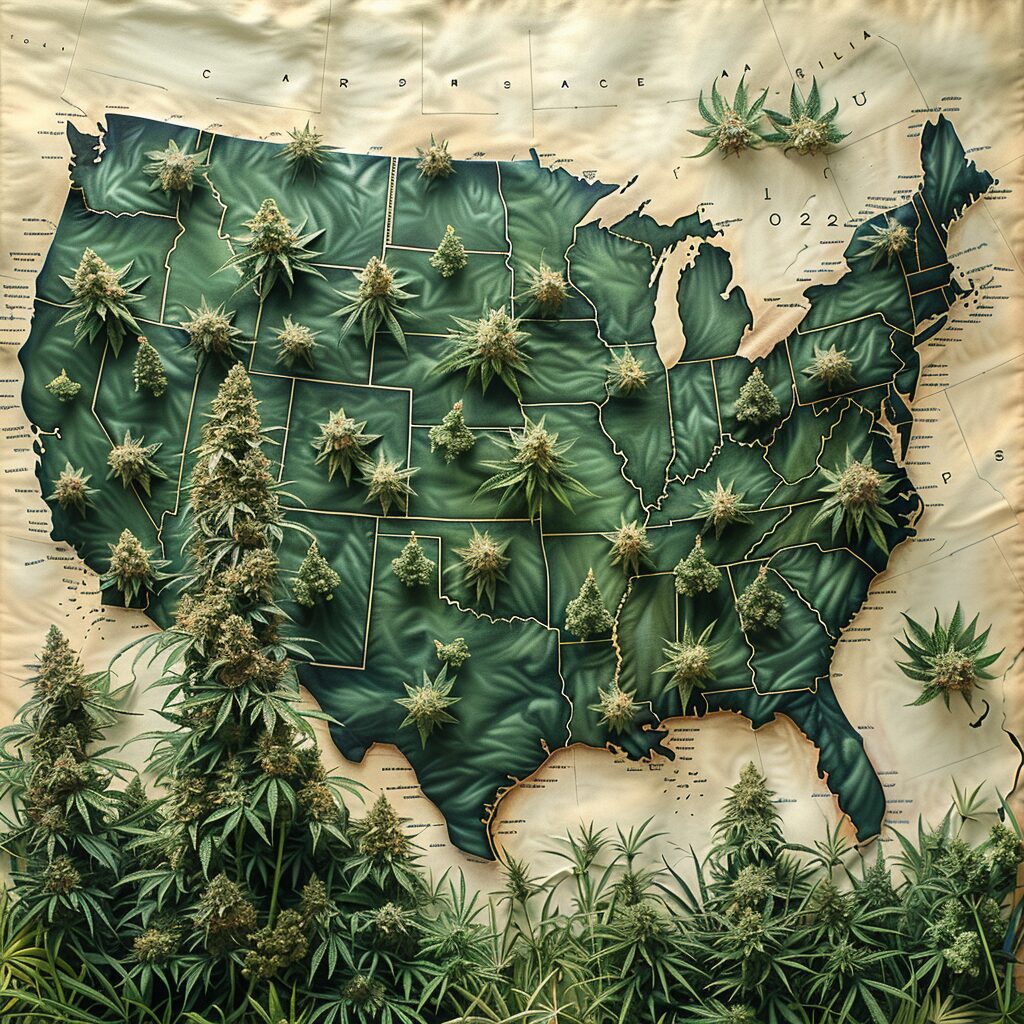
The United States represents the largest global paradox: cannabis remains illegal at the federal level as Schedule I (since 1970), while recreationally legal in 24 states and medically in 38 states and DC (NCSL, 2025). The total population of states with legal recreational cannabis exceeded 180 million in 2025.
DEA rescheduling 2024-2025: what is changing?
The DEA published a proposal on May 16, 2024, to move cannabis from Schedule I to Schedule III of the Controlled Substances Act, at the request of Health and Human Services (HHS) from August 2023. This change does not legalize cannabis federally, but it has three key effects.
First, it opens the way for FDA clinical research without the current Schedule I barriers. Second, it changes IRS tax rules (section 280E): cannabis companies will be able to deduct business expenses. Third, it changes the symbolic narrative, placing cannabis alongside ketamine or codeine instead of heroin and LSD.
The DEA rulemaking process faced procedural delays in 2025, with finalization expected in 2026. Industry commentators, including Marijuana Moment and the Marijuana Policy Project, point to uncertainty arising from administrative changes.
Which states in the USA are recreationally legal in 2026?
As of January 2026 (NCSL, 2025; DISA, 2025) recreationally legal states include: Alaska, Arizona, California, Colorado, Connecticut, Delaware, Illinois, Maine, Maryland, Massachusetts, Michigan, Minnesota, Missouri, Montana, Nevada, New Jersey, New Mexico, New York, Ohio, Oregon, Rhode Island, Vermont, Virginia, Washington, and Washington D.C.
Ohio joined in December 2023 through the citizen initiative Issue 2, Minnesota in August 2023, Delaware in April 2023. The Florida initiative Amendment 3 in the 2024 elections garnered 55.9% of the votes but fell short of the required 60% (Florida Department of State, 2024).
Which countries have legal medical cannabis?
Medical cannabis is available by prescription in over 50 countries worldwide, serving an estimated 6-8 million patients (Prohibition Partners, 2024). Models range from the restrictive British model (mainly private access since 2018) to the broad Australian model (over 1.3 million prescriptions issued by 2024).
Poland: medical cannabis since 2017
Poland allowed medical cannabis through an amendment to the Drug Prevention Act on July 7, 2017 (effective November 1, 2017). The Canemes product was introduced as a prescription drug, and since 2019, pharmaceutical raw materials in flower form have been available. The number of prescriptions filled exceeded 360,000 in 2023, compared to 2,000 in 2018 (Ministry of Health, 2024).
Access requires a prescription from a doctor of any specialty, issued for flowers with a specified concentration of THC and CBD. Indications include neuropathic pain, spasticity in MS, chemotherapy-induced nausea, and drug-resistant epilepsy. The system requires the approval of the Chief Pharmaceutical Inspector for the import of raw materials.
United Kingdom, Australia, Israel: different models
The United Kingdom changed the classification of cannabis-based products in November 2018, allowing specialists to issue prescriptions. In practice, the NHS issued fewer than 5 prescriptions per year in 2023, and 99% of patients use private clinics (NHS England, 2024).
Australia has developed one of the most dynamic medical markets in the world since 2016. The TGA (Therapeutic Goods Administration) reported over 1.3 million SAS-B approvals by 2024. Israel, often referred to as the cradle of THC research (Raphael Mechoulam isolated THC in 1964), has one of the longest medical programs with over 120,000 patients (Ministry of Health Israel, 2024).
South America: Brazil, Argentina, Peru
Brazil allows medical CBD and THC products with ANVISA approval since 2015, with the reimbursement list expanded in 2023. Argentina introduced REPROCANN, a national registry for patients and home cultivation for medical purposes, in 2020. Peru legalized medical use in 2017, while Chile maintains a model allowing home cultivation for patients with permission.
What is decriminalization and where does it work?
Decriminalization means removing criminal penalties for possession of small amounts for personal use, without legalizing sales. According to the EMCDDA European Drug Report 2024, this model is applied by 18 EU countries in various forms, from Portugal's comprehensive reform to pragmatic Italian or Spanish limits.
Portugal: model since 2001
Portugal is the most frequently cited example. Law 30/2000, in effect since July 2001, decriminalized possession of all drugs to amounts for 10 days of personal use, i.e., up to 25 grams of cannabis. Those detained are brought before the Commission for the Prevention of Drug Addiction (CDT), not before criminal courts.
The results are meticulously measured. The number of drug-related deaths fell from 369 in 1999 to 74 in 2021 (SICAD, 2023), while HIV infections among injection drug users decreased by over 90%. The Portuguese model inspired Oregon State Measure 110 (2020), although the latter was partially reversed in 2024.
Dutch gedoogbeleid
The Dutch tolerance model has been in place since 1976. Coffee shops can sell up to 5 grams to one person, but no more than 500 grams in stock, without selling to minors or alcohol. The paradox has been the illegal backdoor: wholesale suppliers remained outside the law. Since December 2023, the Netherlands has launched the Wietexperiment pilot in 10 municipalities, where coffee shops receive legally produced cannabis (Government of the Netherlands, 2024).
Czech Republic, Italy, Spain: tolerance limits
The Czech Republic has treated possession of up to 15 grams (or 5 plants) as an administrative offense since 2010. Italy allows 5 grams per person without criminal penalties. Spain has developed a specific model of Cannabis Social Clubs, particularly in Catalonia and the Basque Country, although without a clear national legal basis.
Where is cannabis strictly penalized?
In over 30 countries, possession of cannabis still carries a prison sentence of over 5 years, and in at least 8 jurisdictions, according to Harm Reduction International (2024), the penalty for drug trafficking is the death penalty. The map of the strictest penalties includes Southeast Asia, Gulf states, and selected countries in Africa and Central America.
Asia: Singapore, Malaysia, Indonesia, China, Japan
Singapore maintains the Misuse of Drugs Act with a mandatory death penalty for trafficking over 500 grams of cannabis. Since 2022, at least 17 drug executions have been carried out (Amnesty International, 2024). Malaysia has similar regulations, although a moratorium on executions has been in place since 2018.
Indonesia sentences possession to 4 years of imprisonment, and trafficking can lead to life imprisonment. China punishes possession with administrative detention of up to 15 days, and production or trafficking severely, including the death penalty for larger quantities. Japan tightened regulations in 2023, introducing prison sentences for mere use (from December 2024).
Middle East: United Arab Emirates, Saudi Arabia, Iran
The United Arab Emirates tightened Federal Decree-Law No. 30 of 2021 in 2022, which lowered penalty thresholds but still maintains long prison sentences for possession. Saudi Arabia and Iran impose corporal punishment and imprisonment. In Iran, the death penalty for drugs has been carried out less frequently since 2017, but it remains in the Code.
Thailand: from pioneering legalization to recriminalization
Thailand surprised the world in June 2022 by removing cannabis from the list of controlled drugs and legalizing cultivation and sales. At the peak of the boom in 2023, over 7,000 dispensaries were operating (Thai FDA, 2024). However, in 2024-2025, the government of Srettha Thavisin, followed by Paetongtarn Shinawatra, took steps to limit access solely to medical purposes.
In July 2025, the Ministry of Public Health issued a regulation requiring a doctor's prescription for any purchase of cannabis flowers. Thailand serves as a warning for countries considering rapid liberalization without complete regulatory frameworks.
What is the cannabis situation in Poland in 2026?
In Poland, recreational cannabis remains illegal, and possession of any amount is a crime under Article 62 of the Drug Prevention Act of July 29, 2005, punishable by up to 3 years in prison. According to data from the National Police Headquarters (2024), over 55,000 drug offenses were recorded in 2023, of which over 70% involved cannabis.
What does the Drug Prevention Act say?
Article 62, paragraph 1 punishes possession of any amount of controlled substances with a prison sentence of up to 3 years. Paragraph 2 provides for a penalty of up to 10 years for a significant amount. Paragraph 3 allows for a milder penalty of up to 1 year for a lesser offense.
Article 62a (added by the amendment of 2011) allows the prosecutor to discontinue proceedings in the case of a minor amount for personal use if imposing a penalty would be pointless. In practice, according to the Institute of Law and Society INPRIS (2023), the use of Article 62a is regionally inconsistent. Among prosecutors, application ranges from a few to over 40% in different districts.
Medical cannabis and CBD products
Medical cannabis has been legal by prescription since November 2017. In 2023, several varieties of pharmaceutical raw material were available in Poland, including Polish crops from PolCan Pharmaceuticals. A doctor of any specialty can issue a prescription for a monthly amount of up to 30 grams.
CBD products from industrial hemp (Cannabis sativa L.) with THC content below 0.3% are legal as dietary supplements or cosmetics. The basis is Regulation 2021/2115 EU for hemp cultivation and the Polish Drug Prevention Act, which excludes industrial hemp from the definition of a narcotic.
From our experience in serving CBD store customers, many Poles confuse the legal status of CBD products below 0.3% THC with the status of marijuana. All retail CBD oils, CBD flowers, or CBG products must come from certified industrial hemp strains and have laboratory certificates. These are not "narcotic" products, but cannabinoid compositions that do not reach the psychoactive threshold.
The legalization debate in Poland 2024-2026
In the 2023 election campaign, the Left and the Third Way declared their intention to pursue decriminalization or legalization of medical access. In 2024-2025, the Ministry of Health worked on expanding reimbursements and on an electronic prescription for cannabis. However, no legislative changes for recreational access were introduced.
What does the legality map look like by continent?
The global distribution of cannabis policies is clearly continental. The Americas and Europe are liberalizing, Southeast Asia and the Middle East are tightening, and Africa is diversifying. The table below synthesizes the state as of April 2026.
| Continent | Recreational legalization | Medical / Decriminalization | Strict prohibition |
|---|---|---|---|
| North America | Canada, 24 US states + DC, Mexico (home cultivation) | USA 38 states, Mexico medical | None |
| Central and South America | Uruguay | Argentina, Brazil, Chile, Colombia, Peru, Jamaica | Honduras, Nicaragua |
| Europe | Malta, Luxembourg, Germany | UK, Poland, Czech Republic, Portugal, Spain, Netherlands, Italy, Greece, France (med.), Germany | Russia, Belarus, Ukraine (med. limited) |
| Asia | None | Thailand (med. from 2025), Israel, Cyprus (med.), Lebanon (med.) | Singapore, Malaysia, Indonesia, China, Japan, South Korea, Philippines |
| Oceania | None (recreational in Australian Capital Territory) | Australia, New Zealand (med.) | Pacific Islands (most) |
| Africa | None | South Africa (personal cultivation), Lesotho (med. export), Morocco (med. since 2021) | Egypt, Nigeria, Algeria, Sudan |
| Middle East | None | Israel, Lebanon (med.), Turkey (med. limited) | Saudi Arabia, UAE, Iran, Jordan, Egypt |
What are the global trends for 2026-2030?
According to forecasts from Prohibition Partners The Global Cannabis Report (2024), the global legal cannabis market will reach $57 billion by 2028, with an annual growth rate of 14%. The liberalization trend in the EU and the Americas clashes with growing skepticism in Asia, creating a more polarized map than ever before.
The role of the European Union and UN Conventions
The 1961 UN Single Convention and the 1988 Convention still restrict a full model of the commercial market. Germany in 2023 withdrew from the original plan for retail stores under pressure from the European Commission, reaching a compromise with Social Clubs. The Czech Republic's 2025 bill also faces the same limitation.
The Council of Europe and EMCDDA indicate that decriminalization does not violate treaties, while commercial legalization does. This structural tension defines the European map for the coming years.
The CBD market: a legal bridge
The CBD market remains less controversial and is growing faster. According to ResearchAndMarkets (2024), the global CBD market was valued at $7.1 billion in 2023 and is expected to reach $24.4 billion by 2030 (CAGR 19.7%). In the EU, hemp products with less than 0.3% THC are traded, although the status of 'novel food' remains under EFSA proceedings.
Guide for travelers: what should you know?
According to data from the UNODC World Drug Report (2024), an average of 27,000 tourists are arrested each year for violating drug laws in a foreign country. Regardless of the cannabis status in the country of residence, any trip abroad carries legal risks that are worth minimizing through knowledge.
Five rules for safe travel
Before any trip, it is advisable to check the current legal status on the Ministry of Foreign Affairs website and the TravelHealthPro service. Even in countries with full legalization, local restrictions apply, such as bans on use in public places, hotels, and port areas.
Never transport cannabis across borders, even between legal countries. Canadian cannabis purchased in Toronto becomes illegal import once crossing the US border, regardless of the status of the destination state. Customs regulations define the legal framework.
If you are traveling with medical cannabis on prescription, contact the embassy of the destination country at least 4 weeks in advance. Some countries accept the Schengen Drug Certificate, while others require separate authorization. Austria, Germany, and the Netherlands have relatively clear procedures; the Gulf, Southeast Asia practically do not allow personal import.
CBD products legally available in Poland
Products from industrial hemp Cannabis sativa L. with THC content below 0.3% are legal in Poland as dietary supplements or cosmetics. Our offer includes:
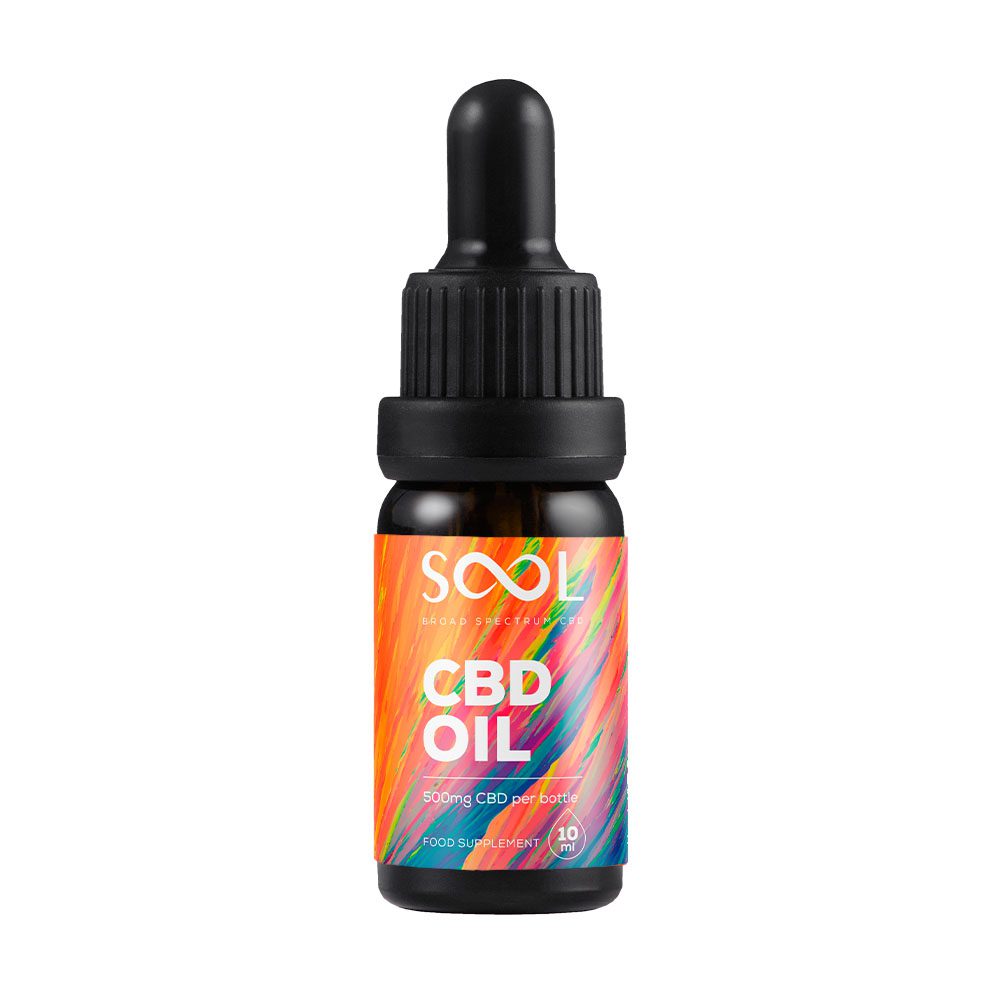
SOOL CBD 5% Broad Spectrum, 500 mg, 10 ml
A basic broad-spectrum CBD oil, ideal for daily supplementation.
76 PLN
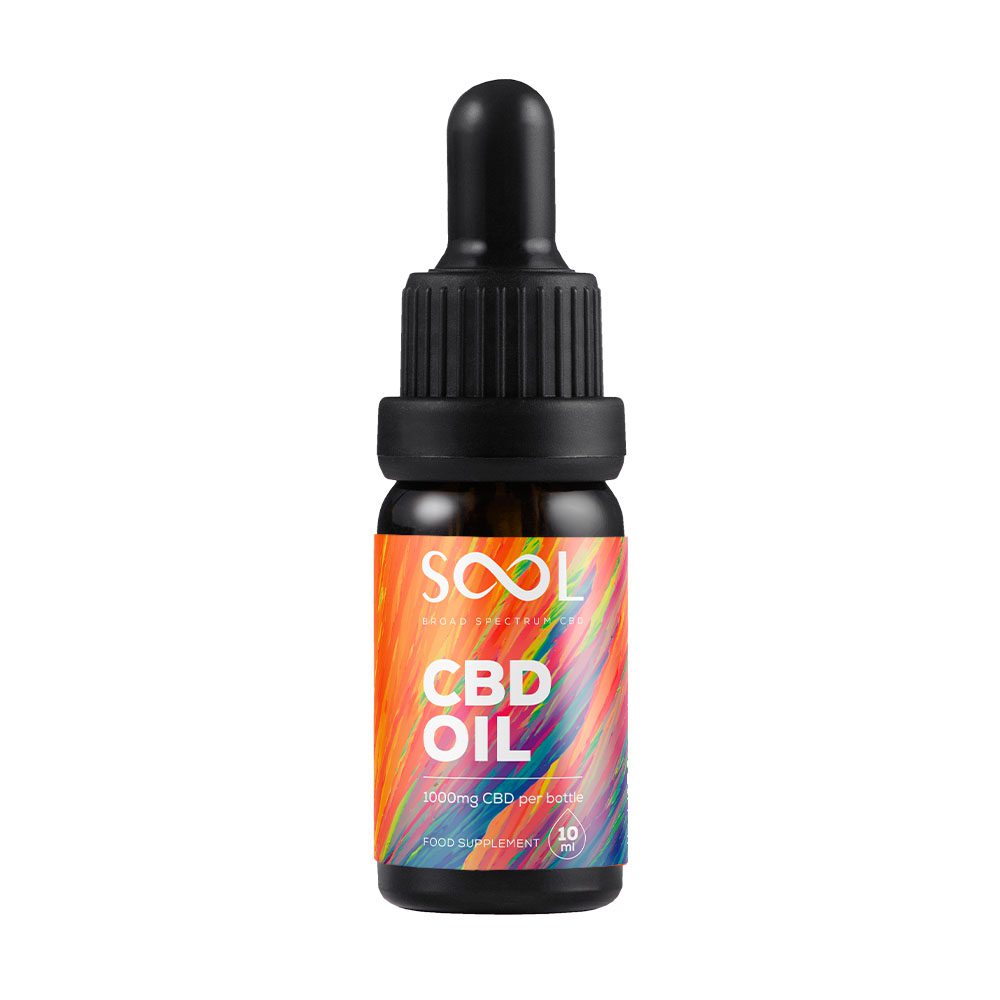
SOOL CBD 10% Broad Spectrum, 1000 mg, 10 ml
Double concentration for users seeking more intense herbal support.
99 PLN
Cannova Natural CBG 15%, 1500 mg, 10 ml
High-potency CBG oil from natural hemp, an alternative to standard CBD products.
240 PLN
Mars CBD Hemp Herb 9%
Hemp flower from fiber strains, THC content below 0.3%, a completely legal product.
59 PLN
Frequently Asked Questions (FAQ)
Is marijuana legal in Poland in 2026?
Recreational cannabis remains illegal, possession is subject to Article 62 of the Drug Prevention Act with a penalty of up to 3 years in prison. Medical cannabis has been available by prescription since 2017 (Canemes Rp., pharmaceutical flowers). CBD products from industrial hemp below 0.3% THC are legal as supplements or cosmetics.
In which EU countries is cannabis fully legal recreationally?
As of April 2026, fully legal recreationally in the EU are Malta (2021), Luxembourg (2023), and Germany (Cannabis Act, April 1, 2024). The Netherlands applies a tolerance model for coffee shops. The Czech Republic is debating a regulated market in 2025-2026. Other EU countries vary between decriminalization (Portugal, Spain) and prohibition (Poland, Hungary, Sweden).
Can I legally transport medical cannabis from Germany to Poland?
No. Despite the legal status in Germany (possession up to 25 g), importing cannabis to Poland constitutes a customs and drug offense. A Polish prescription does not cover products purchased in Germany. If you are a medical patient, you can only use medications issued in Polish pharmacies on a Polish prescription with a Polish PESEL number.
What is the difference between legalization and decriminalization?
Legalization means full allowance for possession, cultivation, and sale within a regulated market (Canada, Germany, Uruguay). Decriminalization removes criminal penalties but does not create a legal market, leaving possession as an administrative offense (Portugal, Czech Republic, Italy). According to EMCDDA (2024), 18 EU countries apply various forms of decriminalization.
What is DEA rescheduling and how will it affect the USA?
DEA rescheduling is the process of moving cannabis from Schedule I (the strictest CSA category since 1970) to Schedule III initiated in May 2024. It does not legalize cannabis federally but changes tax rules (ending section 280E for businesses), opens FDA research, and signals acceptance of medical use. Finalization is expected in 2026 (DEA, 2024).
Is CBD legal throughout Europe?
CBD products from industrial hemp Cannabis sativa L. with THC content below 0.2% (EU, some countries) or 0.3% (including Poland since 2021) are generally legal in the EU. The CJEU ruling Kanavape C-663/18 from November 2020 confirmed that CBD is not a narcotic under the 1961 Convention. Regulations regarding 'novel food' are still being considered by EFSA.
Summary
The global cannabis legality map in 2026 is a mosaic of three models: full legalization in 9 countries and 24 US states covering about 600 million people, decriminalization in 18 EU countries and parts of Latin America, and strict prohibition in Southeast Asia and the Middle East. The German Cannabis Act from April 2024 marks a turning point for Europe, the American DEA rescheduling 2024-2025 changes the federal framework in the USA, and Thailand's retreat shows that liberalization can be reversible.
Poland remains among countries with medical access (since 2017) and recreational prohibition (Article 62 of the Drug Prevention Act), with a legal market for CBD products from industrial hemp below 0.3% THC. The public debate is intensifying, but no legislative changes towards decriminalization were made in 2026. For travelers, three key rules remain: check current laws, never transport cannabis across borders, consult medication transport with the embassy.
The legality map will continue to change. The Czech bill, European harmonization after the German pilot, finalization of DEA rescheduling, and the evolution of policy in South America. One thing is certain: access to reliable, up-to-date legal information is becoming as important as knowledge about cannabinoids themselves.
Author: Michał Waluk