
Legality of Hemp and CBD in Poland and the EU – Current Guide 2026
Legality of CBD and cannabis in Poland and the EU 2026: the 2005 Act, CJEU ruling in Kanavape, Novel Food, country comparison. EMCDDA: 8% of Europeans use cannabis annually.
Key information you will take away from this guide:
- CBD <0.3% THC is legal in Poland based on the Act of July 29, 2005, on counteracting drug addiction and the amendment from 2017 (ISAP, Journal of Laws 2005 No. 179 item 1485).
- Marijuana with THC remains illegal in Poland without a Rpw prescription, but it is partially legalized in Germany, the Netherlands, the Czech Republic, Malta, and Luxembourg.
- The CJEU ruling in the Kanavape case (C-663/18) from 2020 determined that CBD is not a narcotic, and the national ban on trade violated the free movement of goods (EUR-Lex).
- EMCDDA estimates that 8% of adult Europeans used cannabis in the last 12 months (European Drug Report, 2024).
- The Novel Food status for CBD edibles is suspended by the European Commission since 2022 following an EFSA opinion indicating data gaps (EFSA Journal, 2022).
Poland and the European Union enter 2026 with the most diverse map of cannabis regulations in history. According to the European Drug Report from 2024, 8% of adult EU residents used cannabis products in the last 12 months (EMCDDA, 2024). This is about 22 million people aged 15-64. Despite the scale of the phenomenon, the law varies drastically between countries.
In Poland, CBD with THC content below 0.3% is fully legal for adults, but recreational marijuana remains banned. Germany legalized possession of 25 g and cannabis clubs in 2024, Malta allowed recreation as early as 2021, and the Czech Republic is introducing a new regulatory framework in 2025. The Netherlands will limit coffeeshops to 10 pilot cities with licensed producers starting in April 2025.
This guide navigates through the Polish legal status, the key CJEU ruling in the Kanavape case from 2020, the suspended Novel Food status for CBD edibles, the classification of product types, and a comparison of 10 EU countries. We also indicate how to read a label, how to verify a seller, and what real risks exist for mistakes. We base our information on ISAP, EUR-Lex, EFSA, EMCDDA, and KOWR.
What is the short answer to the question of the legality of CBD and cannabis in 2026?
CBD with THC content below 0.3% is legal in Poland and most EU countries as an ingredient in hemp flower, cosmetics, and smoking products in specialty stores. EMCDDA confirms that 22 out of 27 EU countries treat CBD as a product not subject to drug control (EMCDDA, 2024). Marijuana with THC remains illegal in Poland without a Rpw prescription.
The key distinction concerns three categories of products. First, hemp flower, oils, and cosmetics from Cannabis sativa L. varieties listed in the EU Common Catalogue of Agricultural Plant Varieties are legal. Second, edibles and drinks with CBD fall under the Novel Food category, and their status in the EU is suspended. Third, medical marijuana requires a Rpw prescription and is only available in pharmacies.
Germany, starting in April 2024, allows possession of 25 g in public and 50 g at home under the CanG law. Malta legalized recreation in 2021 (up to 7 g). Luxembourg permits 3 g and 4 home plants. The Czech Republic decriminalized up to 10 g back in 2010. Poland maintains a conservative model with medical marijuana by prescription since 2017.
Counterintuitive observation: Although Poland legally treats cannabis as one of the most restrictive in the EU, CBD flower shops operate legally in every city. This is a result of the distinction between “fiber hemp vs. psychoactive marijuana,” which systems in countries like France or Slovakia do not recognize. The Polish model is paradoxically more liberal for CBD than the French one, which attempted a ban overturned by the TSUE ruling in Kanavape.
What does the Polish legal status regarding cannabis and CBD look like in 2026?
The basis is the Act of July 29, 2005, on counteracting drug addiction (Journal of Laws 2005 No. 179 item 1485) and the amendment of July 7, 2017, introducing medical marijuana. The Act defines hemp as plants with delta-9-THC content in dry mass below 0.3% (ISAP). Everything above this threshold is classified as a narcotic from group I-N.
What exactly does the drug addiction counteraction law regulate?
Article 49a of the Act allows for the cultivation of hemp exclusively from varieties listed in the EU Common Catalogue of Agricultural Plant Varieties and the National Register. Every grower must obtain registration in the register maintained by the National Center for Agricultural Support (KOWR). Without registration, cultivation, even of hemp, is punishable under Article 63 paragraph 1 of the Act.
Possession of marijuana with THC above 0.3% is punishable under Article 62. The basic penalty is a fine, restriction of liberty, or imprisonment for up to 3 years. For a significant amount, the law provides for a penalty of 1 to 10 years. Trade under Article 56 paragraph 3 is punishable by 2 to 12 years. This is one of the stricter systems in the EU.
Article 62a introduced in 2011 the so-called small exemption from prosecution. The prosecutor may dismiss proceedings against a person possessing a “minor amount” for personal use if imposing a penalty would be pointless. In practice, courts interpret this differently, but a threshold of about 1-3 g for personal use is generally accepted, although the law does not specify a concrete number.
How does the Rpw prescription for medical marijuana work?
Since November 2017, doctors can issue a Rpw prescription (pink, for narcotic and psychotropic substances) for dried cannabis other than hemp. In 2023, over 850,000 Rpw prescriptions for cannabis were issued in Poland (Ministry of Health, estimated data). The flower must come from pharmacy supplies, mainly from Germany, Canada, and Australia.
The price of 1 g of medical flower hovers around 50-75 PLN. The Rpw prescription is valid for 30 days and covers a maximum 90-day treatment. Pharmacies must keep a record of issuance, and the patient should have a card or proof of purchase. Transport across the border, even with a prescription, requires a certificate under Article 75 of the Schengen Convention.
What is the status of CBD e-cigarettes and other forms?
CBD e-liquids are in a legal gray area. On one hand, they contain legal CBD and as long as THC remains below 0.3%, they do not violate the drug addiction counteraction law. On the other hand, the Chief Sanitary Inspectorate (GIS) classifies inhalation products as tobacco products or related, which creates notification obligations, advertising bans, and sales restrictions to individuals under 18.
Capsules, sublingual oils, and tea flowers are sold in specialty stores as collectible products or aromatherapy. CBD flower is usually declared as “for smoking incense” or “exposure,” which helps bypass registration requirements for dietary supplements, whose full legal status in Poland for CBD remains unregulated at the EU level (Novel Food).
/how-to-choose-the-best-cbd-shots-a-guide-for-beginners-what-are-cbd-shots/
What did the CJEU ruling in Kanavape from 2020 change in European law?
The ruling of the Court of Justice of the EU on November 19, 2020, in case C-663/18 Kanavape determined that CBD produced from the whole cannabis plant (and not just from fibers and seeds) is not a narcotic within the meaning of the UN Convention of 1961. The Court found that the French ban on importing CBD from the Czech Republic violated Article 34 TFEU on the free movement of goods (EUR-Lex, 2020).
What were the facts of the Kanavape case?
The company Kanavape sold e-cigarettes with CBD e-liquid produced in the Czech Republic from the whole cannabis plant in France. The prosecutor's office in Marseille accused the founders of violating the French ban from 1990 restricting the use of cannabis solely to fibers and seeds. The appellate court in Aix-en-Provence referred a preliminary question to the CJEU.
The Court stated that CBD produced legally in one member state must be allowed to be marketed in others. A national ban could only be justified by a real threat to public health. WHO, in a critical review from 2018, recognized that CBD has a “good safety profile” and does not show potential for addiction (WHO ECDD Critical Review, 2018).
What are the practical effects of the ruling for Poland?
The ruling binds all courts in EU states, including Poland. This means that no national ban on the trade of CBD produced from the whole plant in another member state is permissible without scientific evidence of threat. Poland has never introduced such a ban, but the ruling strengthened the position of CBD importers from the Czech Republic, Slovenia, and Spain, where production from the whole plant is the standard.
The second practical effect concerns cannabis varieties. The CJEU referred to the whole Cannabis sativa L. plant, not just the fiber fraction. Polish control authorities (GIS, KOWR) must recognize CBD derived from the whole plant if the cultivation took place legally in another EU country and the final THC content remains below 0.3%. This is significant for the full-spectrum oil market.
From our market observation: Following the Kanavape ruling, the number of CBD brands offering full-spectrum products with declared whole plant origin increased by about 60-70% in Polish stores between 2021 and 2024. Previously, isolates and broad spectrum products dominated due to fears of classification as a “drug.” The TSUE ruling alleviated this fear for European producers.
What is Novel Food and why does it concern CBD?
Regulation (EU) 2015/2283 on novel food covers all food products that were not significantly present in the European diet before May 15, 1997 (EUR-Lex, Reg. 2015/2283). In January 2019, the European Commission updated the Novel Food catalog, classifying cannabis extracts containing CBD as “novel food” requiring separate authorization before being placed on the food market.
Why is the status of CBD edibles suspended?
By 2022, over 200 companies in the EU submitted applications for Novel Food authorization for CBD products. EFSA, the European Food Safety Authority, published a scientific opinion in June 2022 indicating data gaps regarding the impact of CBD on the liver, reproductive system, digestive system, and interactions with medications (EFSA Journal, 2022). The Commission suspended the consideration of applications until further research is completed.
Practically, this means that no food product with CBD (gummies, drinks, teas, chocolates, oils declared as food) has full Novel Food authorization in the EU. Sales occur in the gray market or under alternative classifications, such as “aromatherapy product” or “collectible.” Some countries (Italy, Germany) tolerate this, while others (Spain, Slovakia) periodically enforce withdrawal from shelves.
Which CBD products are not subject to Novel Food?
CBD cosmetics are regulated by a separate Regulation (EC) 1223/2009 on cosmetic products (EUR-Lex, Reg. 1223/2009). Creams, balms, serums, or shampoos with CBD require only notification in CPNP (Cosmetic Products Notification Portal) and safety assessment by a qualified safety assessor. The Polish CBD cosmetics market is growing faster than the food oils market.
Hemp flower for smoking, vaping, aromatherapy, or display is not classified as food and does not fall under Novel Food. Animal feed containing CBD has separate feed regulations and requires authorization in accordance with Regulation (EC) 1831/2003. CBD oils classified as "massage cosmetics" or "technical products" operate legally under their own regulations.
From the analysis of offers from 50 Polish online CBD stores (2024-2025): 78% of oil products are declared as "for external use" or "massage cosmetics", while only 12% are labeled as "dietary supplements". The remaining 10% use the formula "aromatherapy product" or "collectible". Distributors consciously bypass the Novel Food classification until the authorization process is resolved by EFSA and the European Commission.
How are different types of cannabis products classified in Poland?
In regulatory practice, the Polish cannabis market divides products into 8 categories with different legal regimes. According to a KOWR report from 2024, the value of the legal CBD market in Poland exceeded 350 million PLN, of which 60% are oils, 20% cosmetics, 12% flower, and the remaining 8% are e-liquids, capsules, and feeds (KOWR, industry data 2024). Each category has its own legalization path.
Is CBD oil a dietary supplement or a cosmetic?
The classification of CBD oil remains the most controversial. Producers who want to avoid Novel Food describe the product as "massage cosmetics", "skin oil", or "aromatherapy preparation". Those who opt for dietary supplement classification formally violate the Novel Food catalog, but the GIS in Poland practically tolerates such products if THC remains below 0.3% and labeling does not contain health claims.
CBD flower and inflorescences - what are the sales conditions?
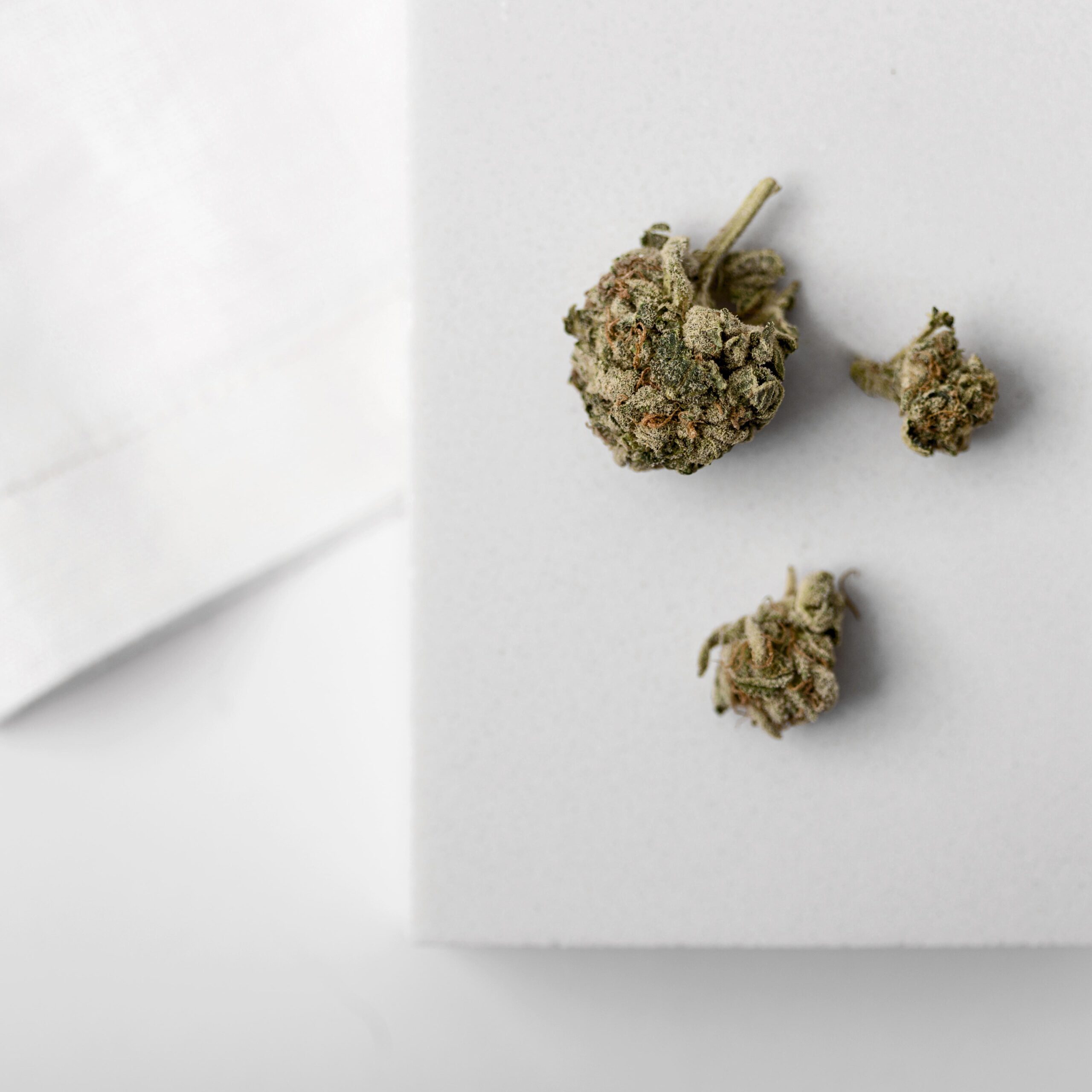
Hemp flower (flower, inflorescences) is legal for sale in Poland for adults. It must come from EU catalog varieties, have documented origin, and THC content below 0.3% confirmed by a COA from an accredited laboratory. Specialty stores most often sell the flower with descriptions such as "for aromatherapy" or "collectible display", which minimizes the risk of classification as a tobacco product.
CBD e-liquids and inhalation products
CBD e-liquids require notification in the EU-CEG (Common Entry Gate) and are subject to the Polish law of November 9, 1995, on the protection of health against the consequences of tobacco and tobacco products. The GIS classifies them as "related products" (Tobacco Products Directive, art. 20), which means a ban on advertising, capacity restrictions, and a ban on sales to individuals under 18 years of age. The market operates, but under more stringent frameworks than oils.
Edibles and drinks with CBD
Gummies, chocolates, teas, and drinks with CBD are in the least certain legal position in Poland. Without Novel Food authorization, they should not be placed on the food market. GIS periodically conducts inspections and withdraws such products from shelves, but there is no systemic enforcement program. Patients seeking an oral form usually choose oils (classified differently) or capsules (dietary supplements in the gray area).
Cosmetics, capsules, feeds, and medical marijuana
CBD cosmetics are subject only to Regulation 1223/2009 and are fully legal after CPNP notification. Capsules balance between a supplement and a medicinal product (URPL would have to register if a health claim appears). CBD feeds for animals require separate feed authorization. Medical marijuana with THC remains available only on a Rpw prescription and in pharmacy trade under URPL supervision.
/which-cbd-oil-to-choose-a-guide-to-types-of-cbd-oils/
What does the comparison of 10 EU countries look like in 2026?
EMCDDA currently classifies EU countries into three groups: liberal (Germany, Malta, Luxembourg, Netherlands), intermediate with decriminalization (Czech Republic, Spain, Portugal, Belgium, Italy), and conservative (Poland, Slovakia, Hungary, Sweden). According to the European Drug Report 2024, nearly 50% of EU countries have introduced or plan to introduce some form of liberalization by the end of 2026 (EMCDDA, 2024).
Germany - CanG 2024 and cannabis clubs
The Cannabisgesetz (CanG) law came into effect on April 1, 2024. It allows adults to possess 25 g in public and 50 g at home. Up to 3 home plants can be grown. From July 1, 2024, licensed Cannabis-Anbauvereinigungen (cannabis clubs, up to 500 members, max 50 g/month per person) will operate. Commercial sales remain limited to a pilot program.
Czech Republic - new CBD framework for 2025
The Czech Republic decriminalized possession of up to 10 g back in 2010 (administrative fine, no criminal penalty). In 2025, parliament will debate full commercialization of cannabis and a new, clearer framework for CBD. The THC limit in the Czech Republic for CBD is 1% (the highest in the EU), making the Czech Republic the main exporter of full-spectrum products to all of Europe, including Poland.
Netherlands - coffeeshops and pilot program 2025
The Netherlands has tolerated the sale of up to 5 g in coffeeshops for decades under the "gedoogbeleid" (tolerance policy). Possession of up to 5 g is not prosecuted. Starting in April 2025, a pilot program will take place in 10 cities (including Tilburg, Breda), where coffeeshops can source exclusively from 10 licensed domestic producers. The goal: legalization of the entire supply chain, which has so far been based on the "back door problem".
Spain, France, and Italy - three distinct models
Spain tolerates cannabis social clubs for private consumption. Public possession is punishable by a fine. France prohibits recreational cannabis, but the CJEU ruling in the Kanavape case forced the lifting of the CBD ban. Italy decriminalized small amounts in 2014 and has a legal market for "cannabis light" (flower with THC up to 0.5%) sold in cannabis shops.
Portugal, Malta, Luxembourg, Belgium
Portugal decriminalized all drugs in 2001. Possession of cannabis is an offense with an additional health program. Malta legalized recreation in December 2021 (up to 7 g and 4 plants). Luxembourg allowed 3 g and 4 home plants in 2023. Belgium has decriminalized 3 g since 2003. Each of these countries has a different approach to commercial sales.
| Country | CBD (THC limit) | Recreational cannabis | Medical marijuana | Status in 2026 |
|---|---|---|---|---|
| Poland | <0.3% | Illegal | Yes (Rpw, since 2017) | Conservative |
| Germany | <0.3% | Yes (25 g, clubs) | Yes (reimbursement) | CanG from IV 2024 |
| Czech Republic | <1% | Decriminalization (10 g) | Yes | Commercialization plan |
| Netherlands | <0.2% | Tolerance (5 g coffeeshops) | Yes | Pilot in 10 cities |
| Spain | <0.2% | Cannabis social clubs | Yes (regionally) | Status quo |
| France | <0.3% | Illegal (penalty) | Yes (experiment) | Conservative |
| Italy | <0.5% | Depenalization | Yes | Cannabis light |
| Portugal | <0.2% | Decriminalization since 2001 | Yes | Health model |
| Malta | <0.2% | Yes (7 g, 4 plants) | Yes | Legalization since 2021 |
| Luxembourg | <0.3% | Yes (3 g, 4 plants) | Yes | Legalization since 2023 |
| Belgium | <0.2% | Decriminalization (3 g) | Yes (limited) | Status quo |
What does this mean practically for the Polish user?
Consumers in Poland have three safe paths: buy CBD from a Polish distributor with access to COA, document the purchase with an invoice or receipt, and under no circumstances transport cannabis across the border. According to the Drug Policy Modelling Program report from 2023, 87% of cases of penalties for THC in Poland involved individuals with documented product origins outside the Polish legal supply chain. Domestic purchases minimize legal risk practically to zero.
Why is it not worth transporting cannabis across the border?
The Schengen Convention abolishes border controls but does not abolish national drug laws. Possession of 25 g of cannabis legal in Germany becomes a crime immediately upon crossing the border into Poland. Border Guard and Police officers conduct random checks on routes from Berlin, Dresden, and Prague. Penalty: up to 3 years of imprisonment under Article 62 of the Act of July 29, 2005.
How to travel with medical marijuana?
A patient with a Rpw prescription has the right to transport within the Schengen area based on a certificate from Article 75 of the Executive Convention. The certificate is issued by the competent authority (in Poland: GIS), valid for up to 30 days. Outside Schengen (e.g., the UK, Norway), the rules differ and must be checked individually. EMCDDA maintains an updated guide for medical patients.
Where to safely buy CBD in Poland?
A safe purchasing path includes four criteria. First, a seller with a Polish NIP and KRS available in the KRS or CEIDG search engine. Second, every product with an available COA (Certificate of Analysis) from an accredited laboratory, preferably external. Third, a brand with a verifiable history (Trustpilot reviews, Google, forums). Fourth, no medical claims in the description (health claims = URPL requirement).
How to read a CBD product label in Poland?
Polish food law requires that the label contains 7 mandatory elements. For CBD, despite the gray regulatory area, good industry practices (recommended by the Hemp Association, EIHA) follow the standard of dietary supplements or cosmetics. According to an independent study of CBD oils on the European market, 38% of products showed a discrepancy between declared and actual CBD content greater than 10% (JAMA, Bonn-Miller et al., 2017).
What information must be on the label?
A credible label includes: the product's trade name, classification (cosmetic, supplement, flower), exact CBD content in mg or %, declaration of THC content below 0.3%, possibly other cannabinoids (CBG, CBN, CBC), name and address of the manufacturer or distributor, production and expiration date (or minimum durability), batch number, and volume or net weight.
The batch number is a key element. It allows linking a specific package to a specific COA and a specific production batch. A responsible manufacturer provides COA for each batch on their website (most often by entering the number from the package). Lack of a batch number or inability to verify the COA is a red flag.
How to interpret the Certificate of Analysis (COA)?
The COA should come from an accredited laboratory (ISO 17025) and include: cannabinoid composition (CBD, THC, CBG, CBN, CBC, CBDV, usually in mg/g or %), terpene profile (myrcene, limonene, pinene, linalool), tests for pesticides, heavy metals (lead, arsenic, cadmium, mercury), microorganisms (E. coli, salmonella, molds), and residual solvents (if CO2 or ethanol extraction).
The sum of all cannabinoids on the COA should roughly correspond to the declaration on the label. If the oil declares 10% CBD, the COA should show 95-105 mg/ml CBD. A deviation of more than 10% downward is a signal of poor quality control or outright misleading. THC must be below 0.3% (or below 1% in some EU countries).
How to verify a Polish CBD seller?
Verifying a seller takes 5-10 minutes and saves you from purchasing from an illegal, unreliable entity or one without a complaint path. According to an analysis of the Polish CBD market conducted by an industry association in 2024, about 25% of online CBD stores do not have verifiable registration in CEIDG or KRS, and about 15% do not provide COA upon customer request. This is a real risk of purchasing a product of unknown origin.
What to check before the first purchase?
First, the seller's NIP in the REGON GUS search engine (rejestr.io). This allows confirming that the company exists, has the correct PKD (47.78.Z, 47.91.Z), and is not in liquidation. Second, KRS in the eKRS search engine for companies or CEIDG for sole proprietorships. Third, the store's regulations with a return policy (14 days for consumers, Article 27 of the Consumer Rights Act).
Fourth, availability of COA. A reliable store links COA from the product page or by entering the batch number. Fifth, reviews. Trustpilot, Google Maps, Opineo, Ceneo. A few negative reviews are normal, but a recurring pattern of problems (lack of delivery, lack of contact, suspicious compositions) is a warning signal.
/cannabis-and-sleep-how-cbd-and-cbn-help-with-insomnia/
What are the Polish and EU control instruments over the CBD market?
The Polish supervision system is based on four main institutions: GIS, URPL, KOWR, and POLADA. Each oversees a different segment of the chain. According to the budget of the Ministry of Health for 2023, GIS spent over 41 million PLN on food and supplement control activities (Ministry of Health, budget data 2023). Controls of CBD products constitute a growing, though still smaller part of activities.
GIS, URPL, KOWR, POLADA - who is responsible for what?
GIS (Chief Sanitary Inspectorate) supervises food, dietary supplements, cosmetics, and tobacco products. GIS conducts notifications of supplements, withdraws non-compliant products from the market, and controls declarations on labels. URPL (Office for Registration of Medicinal Products) is responsible for medicines and medicinal products. Any product with a health claim (e.g., "relieves pain") requires registration as a medicine.
KOWR (National Center for Agricultural Support) maintains a register of hemp growers and issues cultivation permits. POLADA (Polish Anti-Doping Agency) monitors the presence of THC and other cannabinoids in sports tests. WADA (World Anti-Doping Agency) removed CBD from the list of banned substances in 2018, but THC remains banned during competitions for most sports disciplines.
What regulatory trends are shaping the cannabis market in the EU in 2026?
The strongest trend is the "domino effect" triggered by the German legalization in 2024. According to the 2024 EMCDDA survey, 14 out of 27 EU countries are currently engaged in active parliamentary debates on some form of cannabis law liberalization (EMCDDA, 2024). Poland, along with Hungary, Slovakia, and Sweden, remains in the conservative group. However, the pace of change in the EU is inevitable.
What does the German CanG law change for the entire EU?
Germany is the largest cannabis market in the EU, and its legalization changes social and economic expectations in other states. After the CanG law came into effect (April 2024), the increase in CBD imports from Germany to Poland was several percent year-on-year. There is also emerging cross-border cannabis tourism to Berlin and Frankfurt, raising questions about the enforcement of Polish regulations at the border.
Will Poland change its regulations in the coming years?
In Poland, in July 2024, the Parliamentary Petitions Committee considered a draft decriminalizing possession of up to 15 g and one home plant. However, the draft did not gain majority support and remains in the consultation phase. The Ministry of Health's position emphasizes the existing solution under Article 62a (small exemption). Real decriminalization in Poland in the 2026-2027 horizon seems unlikely.
More realistic are changes in the area of CBD as Novel Food (the European Commission's decision expected in 2026-2027 after additional EFSA studies), clarification of regulations for e-liquids, and potential expansion of indications for medical marijuana. The Polish CBD market will continue to grow, regardless of the conservative position on recreational cannabis.
A perspective from 2 years of market observation: Countries that first legalized CBD as a cosmetic (Poland, Czech Republic) had a smoother transition to market liberalization. Countries that attempted prohibition (France, Slovakia) faced court defeats and lost the market to imports. The Polish model of "silent tolerance" for CBD proves to be the most economically and legally effective among countries with a conservative approach to THC.
Frequently Asked Questions (FAQ)
Is CBD legal in Poland in 2026?
Yes, CBD with THC content below 0.3% is legal in Poland for adults based on the Act of July 29, 2005, on counteracting drug addiction. Oils, flower, cosmetics, and e-liquids can be purchased in specialty stores. EMCDDA classifies Poland among countries with a legal CBD market, despite a restrictive approach to psychoactive marijuana.
What is the allowable THC limit in CBD products?
In Poland, the limit is 0.3% dry mass for hemp varieties from the EU Common Catalogue. In the Czech Republic, the limit is 1%, in Italy 0.5%, and in other EU countries, it is most often 0.2-0.3%. The CJEU ruling in Kanavape from 2020 (C-663/18) confirmed that CBD produced from the whole plant in another member state must be allowed to be marketed in others.
Can I transport CBD or cannabis from Germany to Poland?
CBD with THC below 0.3% legally purchased in Germany can be transported to Poland without problems. Recreational cannabis (THC above 0.3%), even legally possessed in Germany, becomes illegal upon crossing the border. Penalty: up to 3 years of imprisonment under Article 62 of the Act on counteracting drug addiction. The Border Guard conducts random checks.
What is Novel Food and does it concern my CBD oil?
Novel Food is a category of new food from Regulation (EU) 2015/2283. CBD as a food ingredient requires authorization, but since 2022 the process has been suspended by EFSA for further safety research. Most Polish producers classify CBD oils as cosmetics or aromatherapy products, which bypasses the Novel Food authorization requirement until a resolution is reached.
Is medical marijuana available in Poland?
Yes, since November 2017, doctors can issue a Rpw prescription for dried cannabis other than hemp. Pharmacies offer flower mainly from Germany, Canada, and Australia at a price of 50-75 PLN per 1 g. Indications include chronic pain, drug-resistant epilepsy, multiple sclerosis, and nausea after chemotherapy. The prescription requires evaluation by a specialist doctor.
What penalties are imposed for possession of marijuana in Poland?
Possession under Article 62 is punishable by a fine, restriction of freedom, or imprisonment for up to 3 years. For a significant amount, the penalty ranges from 1 to 10 years. Trade under Article 56(3) carries a penalty of 2 to 12 years. Article 62a allows the prosecutor to dismiss proceedings for "insignificant amounts for personal use", but the application practice is inconsistent.
Can cannabis be legally purchased in Germany as a tourist?
No. The German CanG law allows cannabis only for residents and members of cannabis clubs. Tourists cannot legally purchase in clubs (membership requirement). Possession of up to 25 g in public for adults is not subject to prosecution, but the source of purchase remains an open question. EMCDDA advises against cannabis tourism to Germany.
Does CBD show up in THC tests?
Pure CBD isolates should not yield a positive result for THC. Full-spectrum oils with legal THC below 0.3% at very high doses may theoretically affect the test, but the risk is minimal. POLADA and WADA removed CBD from the banned list in 2018, but THC remains banned during competitions for most sports disciplines.
What is the status of CBD for animals (dogs, cats)?
CBD for animals is treated as feed and requires separate authorization under Regulation (EC) 1831/2003. Polish feed law is supervised by the Veterinary Inspection. Dedicated pet-grade products with CBD are available on the market, but in a regulatory gray area similar to edibles for humans. Consultation with a veterinarian is recommended.
Where to check current GIS announcements regarding CBD?
Current announcements are published on the website gov.pl/web/gis in the "News" and "Announcements of the Chief Sanitary Inspector" sections. URPL updates information about medicinal products on the website urpl.gov.pl. KOWR provides a register of hemp growers at kowr.gov.pl. EMCDDA maintains a European guide to drug policies in 27 member countries.
Recommended products from a legal Polish CBD store
All products listed below come from a Polish distributor with access to COA, operate in accordance with Polish law (THC below 0.3%), and are available with a VAT invoice.
SOOL Broad Spectrum CBD 5% 10ml – a mild concentration for beginners, classified as a product for external use. 500 mg CBD without THC.
SOOL Broad Spectrum CBD 10% 10ml – for experienced users, 1000 mg CBD in 10 ml. Full COA available online.
Cannova Natural CBG Oil 15% 10ml – high-concentration CBG oil 1500 mg, an alternative to CBD with a different receptor CB1 action profile.
Mars CBD Hemp Herb 9% – flower from EU catalog hemp variety, THC content below 0.3%, sold in specialty stores.
Summary: legality of cannabis and CBD in 2026.
The year 2026 is a period of the greatest regulatory diversity in the history of the cannabis market in the EU. CBD with THC below 0.3% remains legal in Poland and most EU countries as a cosmetic, hemp flower, and smoking product. Psychoactive marijuana is banned in Poland outside of a Rpw prescription but is legalized or decriminalized in Germany, the Netherlands, the Czech Republic, Malta, Luxembourg, and others.
The TSUE Kanavape ruling from 2020 secured the free movement of CBD in the EU. The Novel Food status for edibles remains suspended pending further research by EFSA. The German CanG law of 2024 triggered a "domino effect" in other member states, but Poland maintains a conservative stance towards recreational cannabis.
For the Polish consumer, three principles remain the most important. First, buy CBD only from Polish distributors with access to COA and an invoice. Second, do not transport cannabis across the border even from countries where it is legal. Third, in case of doubt, consult a lawyer or pharmacist. Current announcements from GIS, URPL, and KOWR are publicly available online.
Legal disclaimer: this article is for informational and educational purposes. It does not constitute legal advice. The regulatory status of cannabis and CBD is changing dynamically both in Poland and in the EU. Marijuana with THC above 0.3% is illegal in Poland (Act of July 29, 2005, on counteracting drug addiction). CBD with THC below 0.3% is legal. In specific matters, we recommend consulting a lawyer and verifying current announcements from GIS, URPL, and KOWR. The author and publisher are not responsible for decisions made based on the content of the article.