
How long do the effects of smoking marijuana and THC last? We break down the effects.
Pharmacokinetics of THC: smoking vs vaporization vs edibles. Duration of high, cognitive deficits, window for drivers, tolerance, CBD in THC modulation.
The question of how long the effects last after smoking marijuana and THC seems simple, but the answer requires delving into the pharmacokinetics of cannabinoids. According to the classic work by Huestis published in Chemistry & Biodiversity (Huestis, 2007), the concentration of THC in the blood after inhalation peaks (Cmax) within 3-10 minutes and then rapidly decreases by over 90% in the following two hours. Despite this drop, subjective feelings, psychomotor deficits, and effects on working memory can last significantly longer, and the pharmacokinetics of edibles operate under entirely different rules than smoking or vaporization.
In this guide, we break down the topic into its components: from the parameters Cmax, Tmax, and half-life, through the differences between smoking, vaping, and edibles, to cognitive functions, driving safety, interactions with alcohol, and the role of CBD in modulating the effects of THC.
Key information
- Peak THC in the blood after inhalation occurs in 3-10 minutes, after edibles in 1-3 hours (Grotenhermen, 2003).
- Subjective "high" after smoking typically lasts 2-4 hours, after edibles 6-8 hours, with residual effects lasting up to 10-12 hours.
- Risk window for driving: a minimum of 4-6 hours after smoking and 8-12 hours after edibles (PMC, 2016).
- Working memory deficits last for 3-5 hours, but in naive individuals can extend up to 24 hours (Cannabis and Cannabinoid Research, 2021).
- In Poland, THC remains illegal outside the medical channel, and driving under the influence is a crime under Article 178a of the Penal Code.
What is the pharmacokinetics of THC and why does it matter?
Pharmacokinetics describes what the body does with a substance: it absorbs it, distributes it, metabolizes it, and excretes it. According to a review published in Clinical Pharmacokinetics (Grotenhermen, 2003), the bioavailability of THC after inhalation is 10-35%, while after oral consumption it is only 4-12% due to the first-pass effect through the liver.
Parameters Cmax, Tmax, and t1/2 in practice
Three numbers tell more about the cannabinoid than a thousand words of description. Cmax is the maximum concentration in the blood, Tmax is the time at which this maximum is reached, and t1/2 is the half-life, or the time required to reduce the concentration by half.
For inhaled THC, Cmax is usually 50-300 ng/ml of plasma, Tmax occurs in 3-10 minutes, and the initial distribution phase t1/2α lasts about 30 minutes. However, the terminal elimination phase t1/2β extends over 20-30 hours, and in regular users, even up to several days.
Distribution and storage in fat tissue
THC is highly lipophilic, meaning that once it enters the bloodstream, it quickly penetrates well-perfused organs (brain, liver, lungs), and then redistributes to fat tissue. This property accounts for the long "tail" of elimination and explains why THC metabolites can be detected in urine weeks after last use.
The pharmacokinetic paradox of THC is that the subjective feeling of "high" fades faster than the decrease in blood levels. The concentration in the blood two hours after smoking can still be 5-10 ng/ml, even though the user no longer clearly feels the psychoactive effects.
How long do the effects of smoking marijuana last?
After lighting a joint or vaporizing flower, the first sensations appear within 2-10 minutes, the peak "high" occurs at 30-60 minutes, and the main effects fade within 2-4 hours after inhalation. According to a systematic review in Cannabis and Cannabinoid Research (Cannabis and Cannabinoid Research, 2017), the total duration of acute effects from smoking is usually 3-6 hours, with residual symptoms lasting up to 10-24 hours.
Initial phase: the first 15 minutes
After the first inhalation of smoke, THC penetrates through the pulmonary alveoli into the blood within seconds. The pulmonary bioavailability estimated by Huestis (Huestis, 2007) is 10-35% and depends on the smoking technique: depth of inhalation, duration of smoke retention, and number of "puffs".
In this phase, the user experiences increasing relaxation, mild euphoria, dilation of conjunctival blood vessels, and an increase in heart rate by 20-50%. Motor functions begin to change, and the perception of time is extended.
Peak effect: 30-60 minutes
This is where the most intense experience concentrates. Subjective VAS (Visual Analog Scale) measures of "high", "stoned", and "drug liking" usually peak between 20 and 45 minutes after finishing smoking.
In this phase, the greatest cognitive deficits are also observed: slowed reaction times, impaired working memory, and divided attention problems. In naive individuals, anxiety, dysphoria, or paranoid reactions may occur.
Diminishing phase: 2-6 hours
After 2-3 hours, subjective feelings begin to noticeably weaken. Most users experience a "come down" to a relatively neutral state between 3 and 6 hours after smoking.
However, this does not mean a return to full cognitive function. Measurements of executive and psychomotor functions show that subtle deficits can persist for up to 8 hours, even if the person subjectively feels "sober".
Residual effects and "next day"
In the systematic review "The Next Day Effects of Cannabis Use" (Cannabis and Cannabinoid Research, 2021) the next day effects after smoking marijuana were documented in 20 out of 28 analyzed studies. The most common observations included worsened concentration, slowed reaction time, lowered mood, and subjective feelings of "fog" lasting up to 24 hours after use.
How does smoking differ from vaporization in terms of duration of action?
Vaporization and smoking provide very similar time profiles but differ in bioavailability and peak intensity. According to a study published in JAMA Network Open (Spindle et al., 2018), vaporizing 25 mg of THC yielded 30-50% higher blood concentrations than smoking the same dose, with a faster Tmax and stronger subjective effects.
Why does vaping have higher Cmax?
During smoking, some THC undergoes pyrolysis, breaking down at high temperatures into inactive or altered compounds. Vaporization at 180-210°C extracts THC without combustion, increasing the amount of active substance that reaches the lungs.
In practice, vaporizer users often report a quicker and "cleaner" onset of intoxication, without the throat irritation characteristic of smoking. However, the duration of the effect remains similar: 2-4 hours of acute action.
Pharmacokinetics of edibles: a completely different story
Edibles, or food products with THC, work fundamentally differently. According to Grotenhermen (Clinical Pharmacokinetics, 2003), Tmax after oral THC is 1-3 hours, and in some cases even 4-6 hours when the stomach is full.
THC from the intestines goes to the liver, where it undergoes intense metabolism to 11-hydroxy-THC, a metabolite that penetrates the blood-brain barrier more effectively. This metabolite is responsible for the more intense, sedative, and psychedelic experiences after edibles compared to smoking.
| Route of administration | Tmax | Duration | Bioavailability |
|---|---|---|---|
| Smoking | 3-10 min | 2-6 h | 10-25% |
| Vaporization | 3-10 min | 2-6 h | 15-35% |
| Edibles (empty stomach) | 1-2 h | 6-8 h | 4-12% |
| Edibles (after meal) | 2-4 h | 6-10 h | 6-20% |
| Sublingual (tinctures) | 15-45 min | 3-6 h | 6-20% |
What happens to the brain during a "high"?
"High" is a subjective experience resulting from the activation of CB1 receptors in the endocannabinoid system. According to a review in Psychopharmacology (Psychopharmacology, 2018), THC increases dopamine release in the mesolimbic system by 30-60%, which explains the rewarding and euphoric component of the experience.
Subjective dimensions of the experience
Psychopharmacologists usually break down the "high" into several components. Euphoria and elevated mood, altered perception (of time, sound, taste), physical relaxation, increased introspection, and easier laughter. At higher doses, negative effects also appear: anxiety, paranoia, disorientation, dysphoria.
Objective physiological changes
Alongside mental sensations, measurable bodily reactions occur. An increase in heart rate of 20-50 beats per minute usually lasts 1-2 hours. Conjunctival hyperemia, dry mouth, increased appetite, decreased orthostatic blood pressure, and mild hypothermia are classic signs of THC pharmacology.
Why do naive individuals react differently than veterans?
One of the most consistent observations in the literature: naive (occasional) users experience significantly stronger effects at the same dose than regular users. According to studies from Biological Psychiatry (Biological Psychiatry, 2016), experienced users develop tolerance to the subjective and physiological effects of THC, noticeable after just 2-4 weeks of daily use.
How does marijuana affect cognitive functions?
Acute effects of THC impact nearly all cognitive domains, but hit hardest on working memory, attention, and psychomotor functions. A meta-analysis from Neuropsychology Review (Neuropsychology Review, 2013) combining 33 studies showed that smoking a standard dose of THC results in a statistically significant decrease in short-term memory test scores by 0.4-0.8 standard deviations within 2 hours of use.
Working memory and learning
THC disrupts the encoding of new information by reducing hippocampal activity. The classic paradigm: a person under the influence struggles to remember a list of words read 20 minutes earlier, despite retaining the ability to repeat it immediately after presentation.
This effect is clearly dose-dependent and lasts 3-5 hours after smoking. Importantly, it does not significantly affect long-term memory formed before inhalation.
Attention and executive functions
The ability to divide attention, inhibit impulses, and flexibly switch tasks decreases by 15-30% at the peak of action. This has direct implications for tasks requiring concentration: driving a vehicle, operating machinery, solving complex problems.
Psychomotor functions and reaction time
Reaction time is likely the most linearly dose-related cognitive parameter under the influence of THC. Each additional 5 mg of inhaled dose extends simple reaction times by about 30-50 ms, which at a speed of 100 km/h means an additional meter of stopping distance.
When does full functioning return?
According to the review in Clinical Pharmacokinetics, most cognitive deficits reverse within 4-6 hours after smoking, but subtle impairments in complex tasks can persist for up to 8-24 hours. In regular users, certain deficits are reported even during a period of up to 28 days of abstinence.
Why is driving after smoking a huge risk?
Driving under the influence of marijuana increases the risk of an accident by 1.3-2.4 times according to a meta-analysis in BMJ (BMJ, 2012), and in combination with alcohol, the risk increases synergistically. In Poland, driving under the influence of an intoxicating substance is a crime under Article 178a of the Penal Code, punishable by up to 3 years of imprisonment and a mandatory driving ban.
Recommended safety window
The most serious guidelines (including PMC reports, 2016 and analyses from the University of Colorado) suggest a minimum of 4-6 hours of abstinence after smoking and 8-12 hours after edibles before considering driving. This is a minimum, not a guarantee: with higher doses or individual sensitivity, the window extends to 12-24 hours.
What does detectability look like in roadside checks?
Polish police use saliva testers that detect THC within a window of 2-8 hours after smoking. Blood tests confirm the presence of active THC for up to 6-12 hours after inhalation, and in regular users, up to 24 hours. Metabolites in urine persist for 3-30 days and are not an indicator of current intoxication, but may appear in routine tests.
Why is "I feel sober" a bad guideline?
The subjective feeling of not being intoxicated often does not align with objective functioning. Drivers regularly underestimate their deficits under THC, unlike alcohol, where most people can assess their state.
What increases and what shortens the duration of marijuana's effects?
The length and intensity of THC's effects depend on at least a dozen variables that can be grouped into three categories: product, user, context. According to an analysis in the Journal of Analytical Toxicology (Journal of Analytical Toxicology, 2009), differences between individuals in THC concentrations after the same dose can range from 300-500%, reflecting enormous pharmacokinetic variability.
Product-dependent factors
The THC content in the herb (typically 10-25% in 2025), CBD content, terpene profile, age and storage method, route of administration, inhalation technique. The same gram of herb smoked in a joint, bong, pipe, or vaporizer produces different temporal effects and intensities.
Individual factors
Body weight, percentage of body fat, genetics of CYP2C9 and CYP3A4 enzymes, tolerance, nutritional status, hydration, hormonal balance, mental health. Lean individuals and women typically achieve higher peak concentrations at the same dose.
Context of use
Empty or full stomach (regarding edibles), interactions with alcohol, caffeine, medications, level of fatigue, baseline mood, environment ("set and setting"). The effect of shortening the peak phase is known with excessive hydration and prolonging it in individuals after intense exertion.
What is THC tolerance and how does a "cannabis holiday" reset it?
Tolerance is a phenomenon in which the body gradually requires higher doses of THC to achieve the same effects. Imaging studies published in JAMA Psychiatry (JAMA Psychiatry, 2016) showed that daily marijuana users experience a 20-40% decrease in the availability of CB1 receptors in the brain compared to non-smokers, and a full return to normal takes about 4 weeks of abstinence.
Mechanism of down-regulation of CB1 receptors
With regular exposure to CB1 receptor agonists, the brain responds by decreasing the number of these receptors on the surface of neurons (down-regulation) and their desensitization. This is a safeguard against excessive stimulation, but at the cost of increasing tolerance.
Cannabis holiday: how long does the reset take?
Individuals practicing a "tolerance break" report that after just 48-72 hours, sensitivity to doses returns, and after 2-4 weeks, the effects are comparable to the beginnings of use. Neuroimaging studies suggest a full reset of CB1 receptors in about 28 days.
Practical deintensification scheme
The most common protocols include 1-3 days a week without THC as a soft deintensification and 14-28 days every 3-6 months as a full reset. Such rotation limits the development of strong tolerance, preserves the effectiveness of smaller doses, and reduces the risk of withdrawal syndrome.
What does rebound and THC withdrawal syndrome look like?
Cannabis Withdrawal Syndrome was introduced into the DSM-5 in 2013. According to a review in Current Psychiatry Reports (Current Psychiatry Reports, 2017), 47% of regular marijuana smokers experience withdrawal symptoms after cessation, most commonly lasting 1-2 weeks.
Typical withdrawal symptoms
Irritability, anxiety, low mood, sleep disturbances (most persistent), decreased appetite, sweating, muscle tremors, headache. Symptoms peak between days 2-6 after the last dose and usually subside within 1-3 weeks.
Rebound of symptoms treated with THC
In individuals using marijuana for self-medication of insomnia, pain, or anxiety, rebound often occurs after cessation: a temporary intensification of the primary problem. Insomnia can be particularly bothersome in the first week, with clear disturbances in REM sleep and strange, vivid dreams lasting for 2-3 weeks.
How do alcohol and other substances affect THC's action?
Combining alcohol with THC produces a superadditive effect: higher THC concentrations in the blood and stronger subjective intoxication. Studies in Clinical Chemistry (Clinical Chemistry, 2015) showed that prior alcohol consumption to a concentration of 0.065% in the blood increased peak THC concentrations after smoking by an average of 50-100% and prolonged the duration of action.
Why does alcohol amplify THC?
Alcohol dilates blood vessels, increases lung perfusion, and accelerates THC absorption. Additionally, alcohol and THC synergistically act on GABA and CB1 receptors, producing a stronger central nervous system depression than the sum of both substances separately.
Drug interactions
THC is primarily metabolized by CYP2C9 and CYP3A4. Inhibitors of these enzymes (ketoconazole, clarithromycin, some antiviral medications) can raise THC concentrations by 50-200%. Inducers (rifampicin, carbamazepine, phenytoin, St. John's wort) lower them by 30-60%. Special caution is advised for patients taking anticoagulants, benzodiazepines, and opioids.
THC and caffeine
Caffeine can paradoxically exacerbate some negative effects of THC, particularly anxiety and restlessness. In animal studies, coffee combined with THC more severely disrupted working memory than THC alone.
How do naive users differ from experienced ones?
Tolerance, expectations, and context create fundamentally different marijuana experiences for occasional and regular users. According to Biological Psychiatry (Biological Psychiatry, 2016), in daily users, the same dose of THC produces 30-50% weaker subjective and physiological effects than in individuals who smoke once a month or less.
Pharmacokinetics in regular users
An interesting paradox: in daily smokers, peak concentrations are often higher, but the perceived effects are weaker. This results from a combination of pharmacodynamic tolerance (fewer CB1 receptors) and greater experience in managing sensations.
Risk in naive individuals
Individuals without experience are particularly vulnerable to negative reactions after too high a dose. Panic reactions, anxiety attacks, vomiting (cannabinoid hyperemesis), disorientation, and in rare cases, toxic psychosis. This primarily concerns edibles, where overdose is easy due to delayed onset of effects.
How to minimize risk with first use?
"Start low, go slow" is a golden rule. One small inhalation, wait 15-30 minutes, then consider a second dose. In the case of edibles: 2.5-5 mg of THC and wait at least 2 hours, never add more earlier.
What role does CBD play in modulating THC's effects?
CBD (cannabidiol) is a non-psychoactive cannabinoid that can engage in biphasic interactions with THC. According to studies published in Neuropsychopharmacology (Neuropsychopharmacology, 2010), high doses of CBD (above 200-400 mg) can suppress some negative effects of THC, while low doses (single milligrams) can paradoxically enhance them.
Mechanism of moderation by CBD
CBD is an allosteric antagonist of CB1 receptors, meaning it alters how THC binds to them. Additionally, CBD inhibits the enzyme FAAH responsible for breaking down endocannabinoids and modulates serotonin receptors 5-HT1A, affecting mood and anxiety.
Pharmacokinetic interaction
CBD in higher doses may inhibit CYP2C9 and CYP3A4, theoretically prolonging the half-life of THC. In practice, the effect is variable and depends on the ratio of doses: CBD to THC 2:1 or 4:1 provides a different experience than 1:1 or 0.5:1.
Can CBD "save" you from THC overdose?
Anecdotally, many people use CBD as an "antidote" for too strong THC effects. Scientific evidence is mixed: some studies confirm the anxiolytic effect of CBD in the context of THC-induced anxiety, while others show no significant impact. However, it is safe to say that high doses of CBD do not worsen a bad state.
CBD products in the context of modulation
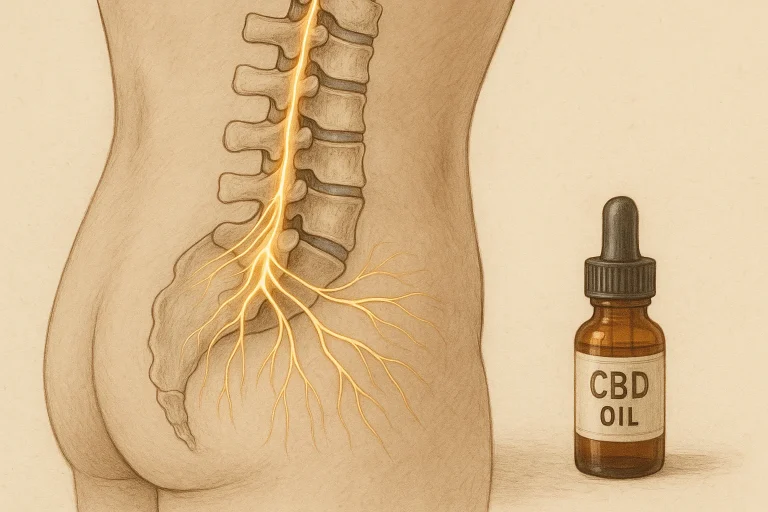
CBD oils such as SOOL CBD 5% or SOOL CBD 10%, as well as CBG oils like Cannova CBG 15%, are often mentioned by medical users as aids in alleviating residual anxiety and improving sleep quality regardless of THC context. For those seeking a legal form of hemp flower without THC, CBD flower Mars 9% available in legal trade remains an alternative.
How long is THC detectable in tests?
The detection window depends on the type of test, frequency of use, and individual metabolism. According to the classic review by Huestis in Chemistry & Biodiversity (Huestis, 2007), THC-COOH metabolites are detectable in urine for 1-3 days in occasional users and even 30-77 days in daily users with high BMI.
Blood test
Active THC is usually detected for 1-2 days in occasional users and up to 7-10 days in regular users. This test is the closest to actual "intoxication."
Saliva test
Used by police, detects THC 2-24 hours after use. It correlates well with the current state of intoxication, making it the basis for roadside checks.
Urine test
Detects inactive metabolites, mainly THC-COOH. Window: 3-30 days depending on the pattern of use. A positive result does not indicate current intoxication.
Hair test
Longest window, up to 90 days. Mainly used in the context of verifying longer patterns of use, not for current sobriety checks.
FAQ
How quickly does marijuana start to work after smoking?
The first effects appear within 2-10 minutes, and the peak "high" occurs 30-60 minutes after inhalation. According to Huestis (Chemistry & Biodiversity, 2007), Tmax of THC in the blood after smoking is usually 3-10 minutes. Vaporization works similarly quickly but with slightly higher intensity due to the absence of pyrolysis.
How long does the effect last after edibles compared to smoking?
Edibles take effect in 1-3 hours and last 6-10 hours, while smoking lasts 2-6 hours. The delayed onset with edibles often leads to overdose (Clinical Pharmacokinetics, 2003). Always start with 2.5-5 mg of THC and wait at least 2 hours before adding more.
When can I drive after smoking?
A minimum of 4-6 hours after smoking and 8-12 hours after edibles (PMC, 2016). This is a minimum, not a guarantee. With higher doses, the window extends to 24 hours. In Poland, driving under the influence of THC is a crime under Article 178a of the Penal Code, punishable by up to 3 years of imprisonment.
Why do regular smokers feel less from the same dose?
This is the effect of pharmacodynamic tolerance: down-regulation of CB1 receptors. According to JAMA Psychiatry (JAMA Psychiatry, 2016), in daily users, the availability of CB1 receptors decreases by 20-40%. A reset requires 2-4 weeks of a "cannabis holiday" and usually restores sensitivity to baseline levels.
Can CBD alleviate too strong THC effects?
High doses of CBD (200-400 mg) can suppress anxiety and paranoia induced by THC (Neuropsychopharmacology, 2010). Low doses (single mg) can paradoxically enhance the effects of THC. The relationship is biphasic, and evidence remains limited. A safer strategy is to prevent by "start low, go slow."
How long are THC metabolites detectable in urine tests?
From 3 days in occasional users to 30-77 days in daily users with high BMI (Huestis, 2007). Urine metabolites do not indicate current intoxication, only previous exposure. Blood and saliva tests better reflect the current state of sobriety.
Summary
How long do the effects last after smoking marijuana and THC? Subjectively 2-6 hours, objectively 4-10 hours for cognitive and psychomotor deficits, and at the metabolite level, even several weeks. These three different windows have distinct legal, medical, and practical implications.
Key takeaways: smoking and vaping provide a quick, short-lived effect, edibles act with a delay and last much longer, tolerance develops in 2-4 weeks of regular use, and a "cannabis holiday" resets sensitivity in about 28 days. CBD modulates the effects of THC biphasically. Alcohol synergistically enhances intoxication. Driving under the influence of THC is a crime in Poland. If you are looking for legal, safe alternatives at the CBD level, seek information about hemp products available in regulated trade, and in case of medical doubts, always consult your attending physician.
Author: Michał Waluk