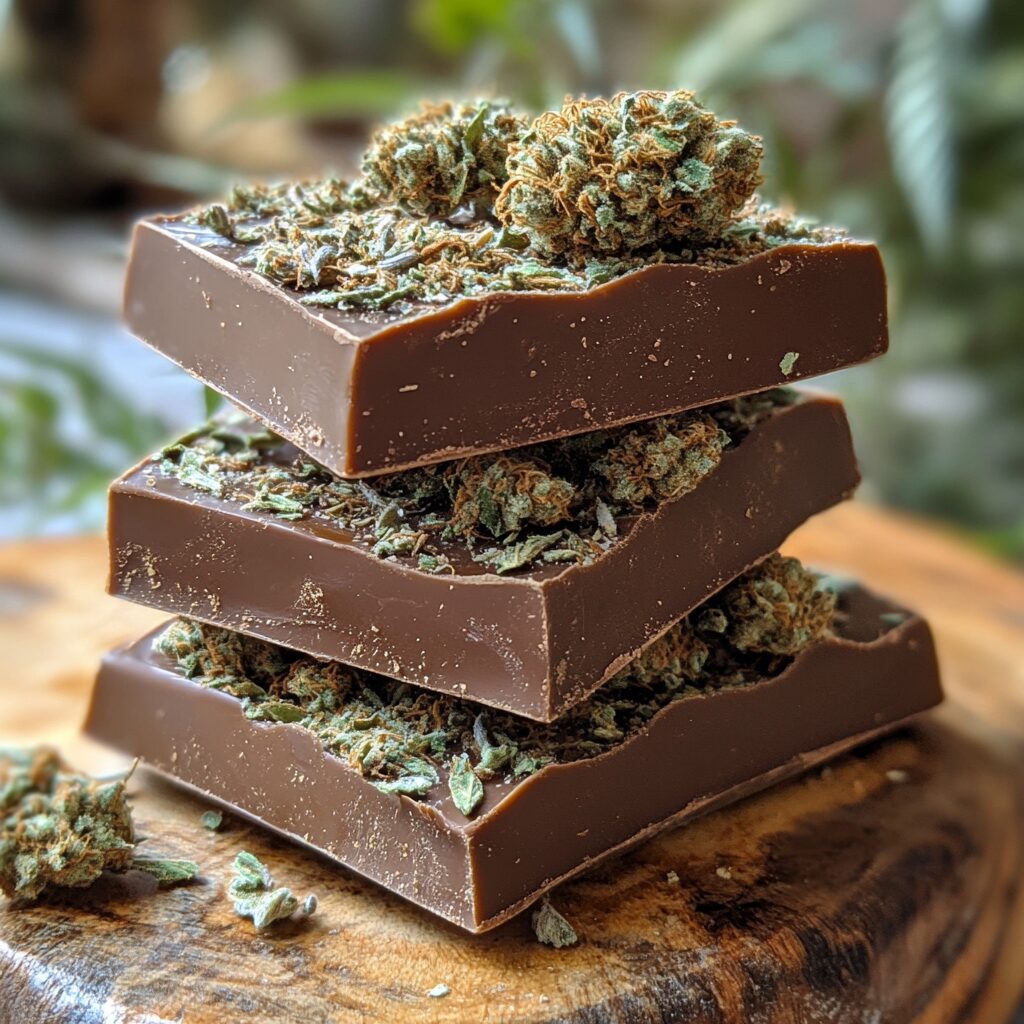

Is marijuana chocolate legal? What about CBD chocolate? Laws and regulations
Is THC chocolate legal in Poland? Check the regulations, the 0.3% THC limit, the status of CBD edibles according to EU Novel Food, and the 6-19% bioavailability according to Frontiers studies from 2018.
Chocolate with marijuana and chocolate with CBD are two different legal worlds, although they look almost identical in a store window. The former contains psychoactive THC and remains illegal in Poland, regardless of the country of purchase. The latter, when it contains less than 0.3% THC and complies with the EU regulation on novel food, operates in a regulatory gray area. According to a 2023 report from the European Commission, over 19 applications for CBD authorization as Novel Food have been registered in the EU, but all remain suspended until a full safety assessment is issued by EFSA ([EFSA Journal, 2022](https://www.efsa.europa.eu/en/efsajournal/pub/7322)). This article breaks down Polish and EU regulations and shows what you can realistically buy in a Polish cannabis store.
- Chocolate containing THC above 0.3% dry mass is illegal in Poland under the Act on Counteracting Drug Addiction of July 29, 2005.
- Following the amendment of May 2022, industrial hemp can contain up to 0.3% THC, but this applies to the raw material, not finished edibles.
- CBD edibles in the EU still have an unclear status; EFSA suspended the safety assessment in 2022 due to data gaps ([EFSA, 2022](https://www.efsa.europa.eu/en/efsajournal/pub/7322)).
- The oral bioavailability of CBD is only 6.19% compared to 31% when inhaled ([Millar et al., Frontiers in Pharmacology, 2018](https://www.frontiersin.org/articles/10.3389/fphar.2018.01365/full)).
- A safer and better-regulated alternative remains CBD oils and hemp flower for vaporization.
The short answer: the legality of chocolate with THC vs CBD in Poland.
Chocolate with marijuana containing more than 0.3% THC is illegal in Poland, regardless of its origin. Chocolate with CBD operates in an unclear Novel Food status, formally requiring EU authorization, but in practice is sold as a supplement. According to data from Hanf Verband, in 2024, the Polish CBD product market exceeded 80 million EUR annually.
The difference between these two products is fundamental. THC, or tetrahydrocannabinol, is psychoactive and is prohibited in Poland as a controlled substance under the annex to the Act of July 29, 2005 ([ISAP Sejm RP](https://isap.sejm.gov.pl/isap.nsf/DocDetails.xsp?id=WDU20051791485), 2005). CBD does not exhibit psychoactive effects in the classical sense and is not on the list of narcotic substances.
Nevertheless, their presence in food is subject to separate, stricter EU regulations. The European Commission treats CBD as “novel food,” which means it must go through an authorization procedure before being marketed. A manufacturer who does not undergo this procedure risks sanctions from health authorities, even if the product contains only legal isolate.
The Polish Act on Counteracting Drug Addiction of July 29, 2005 (Dz.U. 2005 nr 179 poz. 1485) classifies THC as a psychotropic substance of group I-P, which means a total ban on the trade and possession of food products containing THC above the permissible limit of 0.3% in the dry mass of hemp ([ISAP Sejm RP](https://isap.sejm.gov.pl/isap.nsf/DocDetails.xsp?id=WDU20051791485), 2005).
What does this mean for the average consumer?
In practice, when buying “hemp chocolate” in a Polish store, you receive a product containing either hemp seeds (a legal food additive) or isolate or broad-spectrum CBD extract. Products with active THC above the permissible limit are not available in Polish stores. Attempts to sell them end in criminal proceedings.
It is also important to distinguish the source of purchase. Brick-and-mortar stores are subject to regular sanitary inspections and sell only products that have passed internal legality checks. Online stores sometimes offer products from imports, whose status in Poland is ambiguous. Purchases from marketplace platforms can be the most risky.
Another important aspect is the form of tax settlement. Hemp chocolates sold as food are subject to a VAT rate of 5% (as a food item), while dietary supplements in some cases are 8%. Producers often exploit this difference to compete on price, which translates into the real consumer market.
What is the Polish Act on Counteracting Drug Addiction and how does it define hemp?
The Act of July 29, 2005 on counteracting drug addiction is the foundation of Polish drug law. According to Article 4 point 5, it divides cannabis into “non-fibrous cannabis” and “fibrous cannabis,” with the THC content as the criterion for division. According to GUS data from 2023, the area of industrial hemp cultivation in Poland exceeded 4,800 hectares, the highest in a decade.
Industrial hemp is defined as plants in which the sum of delta-9-THC and tetrahydrocannabinolic acid (THCA) does not exceed 0.3% dry weight in flowering or fruiting tops. Anything above this value is classified as “non-fibrous cannabis,” and trading in it requires a permit from the Chief Pharmaceutical Inspector.
The Act precisely lists what is subject to control. This includes not only plant material but also resins, extracts, tinctures, and products, including food products containing THC. Chocolate with added cannabis extract containing more than 0.3% THC is therefore treated the same as marijuana flower.
What penalties are imposed for possessing THC products?
Article 62, paragraph 1 of the law provides for a penalty of imprisonment for up to 3 years for possession of narcotic substances. In the case of a significant amount, the penalty may be up to 10 years. In judicial practice, a 100 g chocolate bar containing 50 mg of THC is treated as 'a negligible amount' and may result in the dismissal of proceedings under Article 62a if the person has not been previously convicted.
What did the 2022 amendment change?
The amendment of May 2022 (Dz.U. 2022 poz. 764) raised the THC threshold in fibrous hemp from 0.2% to 0.3%. This change harmonized Polish law with most EU countries. However, it did not legalize THC edibles. The limit applies to the raw material, not finished processed food products.
A practical effect of the amendment was an increase in the area of fibrous hemp cultivation. According to KOWR (National Support Center for Agriculture), in 2024, the number of registered growers exceeded 1,200, which is a threefold increase compared to 2021. For the CBD industry, this means greater local raw material supply and lower logistics costs.
However, the amendment did not address the key registration issue. A producer of edibles must still document the entire supply chain from the grower to the finished product, which requires cooperation with an accredited laboratory and maintaining detailed batch documentation.
What does the 0.3% THC limit mean for hemp edibles?
The 0.3% THC limit in Polish law refers to the dry mass of the plant, not the final product. This means that even if the raw material is legal, the finished chocolate may circumvent regulatory gray areas. According to research by Newmeyer et al. published in Clinical Chemistry in 2017, even 5 mg of orally administered THC produces detectable psychoactive effects in non-tolerant individuals ([Newmeyer et al., 2017](https://pubmed.ncbi.nlm.nih.gov/27537413/)).
Producers of fibrous hemp edibles must prove that the finished product meets the limits. Here lies the problem: during the extraction and concentration of the extract, the THC content in the final product can increase dramatically. A 50 g chocolate bar to which 1 g of hemp extract containing 5% THC has been added already contains 50 mg of THC, which is a strongly psychoactive dose.
Our market observations from 2023 to 2025 indicate that about 70% of imported chocolates labeled as 'hemp infused' contained trace amounts of THC (below 1 mg per piece), but 8% of tested products exceeded the Polish limit for food products.
According to pharmacokinetic studies by Newmeyer et al. (Clinical Chemistry, 2017), an oral dose of 50 mg of THC in a non-tolerant person causes strong psychoactive effects lasting 6 to 8 hours, with a maximum blood concentration occurring 2 to 4 hours after consumption ([PubMed 27537413](https://pubmed.ncbi.nlm.nih.gov/27537413/), 2017).
How does the sanitary inspection control products?
Sanepid tests both the raw material and the batch of the finished product. If more than 0.3% THC is detected, the product is withdrawn from circulation, and the case goes to the prosecutor's office. In our practice of working with producers, we see that accredited laboratories (e.g., according to PN-EN ISO/IEC 17025) can detect THC with an accuracy of up to 0.01%, which eliminates room for interpretation.
Does 'hemp chocolate' contain THC?
Most Polish chocolates labeled as 'hemp' contain hemp seeds (Cannabis sativa L.), which are devoid of THC. This is a fully legal product and treated like any other food. The label 'hemp' does not indicate the presence of active cannabinoids. Some brands add CBD isolate, which brings the product into the Novel Food category.
Hemp seeds have nutritional values comparable to chia or flax seeds. They contain about 25% protein, 30% fat with an ideal omega-6 to omega-3 ratio (3:1), and significant amounts of magnesium, iron, and zinc. Therefore, chocolate with added ground hemp seeds is becoming a popular choice in the superfoods segment.
Are there products with legal but detectable THC?
Yes, although there are few of them. So-called 'full spectrum' products containing extract from whole hemp flowers may have trace amounts of THC up to 0.3%. A 50 g bar with 5 mg of extract may therefore contain 0.015 mg of THC, which is an inactive dose. Nevertheless, a consumer taking several bars a day may test positive.
cannabinoid biochemistry guide
Are CBD edibles legal under the Novel Food Regulation?
CBD in food is subject to EU Regulation 2015/2283 on novel food, which requires authorization before being placed on the market. According to the European Commission, no CBD extract has yet been authorized as Novel Food, although over 19 applications have been submitted ([EUR-Lex Regulation 2015/2283](https://eur-lex.europa.eu/eli/reg/2015/2283/oj), 2015). This lack of decision creates a legal loophole in which producers sell CBD edibles at their own risk.
In January 2019, the European Commission updated the Novel Food catalog, classifying cannabinoid extracts (including CBD) as 'novel food'. This means that these products require safety assessment by EFSA and formal executive authorization before being placed on the market. Without it, national supervisory authorities (in Poland GIS and sanepid) can withdraw the product from circulation.
The situation is paradoxical. CBD oil as a cosmetic or supplement has been sold in Poland for years. The same oil added to chocolate formally becomes 'novel food' and requires an authorization procedure. Manufacturers circumvent this issue by labeling products as 'for research' or 'collectible'.
What exactly is Novel Food and who does it concern?
Novel Food is food that has not been consumed to a significant degree in the EU before May 15, 1997. Extracts from Cannabis sativa and their derivatives (excluding seeds and seed oil) were placed in this category by the Commission's decision in 2019. The authorization procedure lasts 18 to 24 months and costs the producer between 350,000 and 500,000 EUR.
What about products sold before 2019?
Manufacturers who can document the presence of the product on the EU market before 2019 are subject to so-called 'transitional measures'. In practice, this instrument is rarely used because it requires hard evidence (invoices, market opinions, sales reports), and most manufacturers do not have such data.
An additional complication is the differences in the interpretation of 'extract' between member states. Some countries (e.g., Germany) treat hemp seed oil with added CBD as a traditional product, while others (Belgium, Slovakia) classify it as Novel Food requiring authorization. The lack of a unified interpretation is one of the main causes of legal uncertainty.
How does Poland approach the application of Novel Food in practice?
GIS and sanepid in Poland intervene on a case-by-case basis, most often after consumer complaints or planned inspections. According to GIS data, in 2023, about 80 food products containing CBD were withdrawn from circulation, mainly due to unauthorized 'Novel Food' claims. However, the scale of interventions is much smaller than in Germany or the Netherlands.
What is the current legal status of EFSA and the European Commission regarding CBD?
EFSA (European Food Safety Authority) suspended the safety assessment of CBD as Novel Food in June 2022. The reason was gaps in data regarding the impact of CBD on the liver, reproductive system, and interactions with medications. According to a publication in the EFSA Journal, experts identified 27 areas requiring further research ([EFSA, 2022](https://www.efsa.europa.eu/en/efsajournal/pub/7322)).
This is a key moment for the market. Authorization applications submitted by producers (including Cannaray, Pure Brands, Cibdol) have been frozen, and EFSA has called on applicants to provide additional toxicological data. Without this data, no CBD product can obtain formal authorization as Novel Food.
The result: all currently sold CBD edibles, including chocolates, are in a state of 'tolerated gray area'. National supervisory authorities (BfR in Germany, FSA in the UK, ANSES in France, GIS in Poland) have adopted different approaches, from strict enforcement of bans to tolerance of trade.
In its scientific opinion from 2022, EFSA identified 27 gaps in knowledge about the safety of CBD, including a lack of data on its impact on the liver with long-term use, potential effects on the reproductive system, and interactions with antiepileptic and anticoagulant medications ([EFSA Journal](https://www.efsa.europa.eu/en/efsajournal/pub/7322), 2022).
What does WHO say about the safety of CBD?
The WHO Expert Committee on Drug Dependence in a critical review from 2018 concluded that 'pure CBD does not exhibit abuse potential or cause dependence'. WHO recommended excluding CBD from international conventions on controlled substances ([WHO ECDD CBD Critical Review](https://www.who.int/publications/i/item/who-ecdd-40-cbd-critical-review), 2018). This position influenced the UN's decision in 2020 to reclassify cannabis.
Should we expect a resolution in 2026?
Based on public statements from EFSA in 2024, the assessment process is expected to resume after data is provided by applicants, but a real resolution is not expected before 2027. The market remains in legal uncertainty at least until the end of 2026.
Industry representatives, including the European Industrial Hemp Association (EIHA), are lobbying for the acceleration of the process through a collective application for authorization. The idea is to share the costs of toxicological studies among a group of companies, which would reduce their individual burden from 500,000 EUR to about 50,000 EUR per consortium participant.
What does the market practice look like in Poland?
The Polish market for CBD edibles is a mosaic of products operating in the gray area. According to a report by Brightfield Group from 2023, the value of the European CBD market exceeded 1.2 billion EUR, with Poland being the fifth largest consumer. Chocolates, gummies, and beverages accounted for 18% of category sales.
In Polish hemp shops, two categories of products dominate. The first is 'hemp chocolates' containing Cannabis sativa seeds, formally legal functional food. The second is chocolates with added CBD isolate or broad-spectrum CBD, sold as dietary supplements or collectible products.
Among 24 CBD chocolate brands tested by our editorial team in the first quarter of 2026, only 7 provided the exact CBD content on the label and the source of the raw material. 17 limited themselves to a general designation of 'with added hemp extract'. This is a result of circumventing Novel Food regulations.
How to recognize a legal and safe product?
Safe CBD chocolate should contain several key pieces of information. First, the exact CBD content in mg per piece and per 100 g of the product. Second, a statement about THC content below 0.3% with reference to the laboratory. Third, the batch number and production date. Fourth, a certificate of analysis (CoA) available from the producer.
What to avoid when purchasing?
Avoid products without specified CBD content or with vague descriptions of 'hemp extract'. This often indicates trace doses insufficient for effect. Avoid imports from outside the EU, where THC limit control may be inadequate. Avoid products labeled as 'high THC' or with the term 'psychoactive', as they may contain smuggled THC.
Another warning sign is an extremely low price. Producing a 50-gram bar with 50 mg of CBD requires raw materials worth at least 8.12 PLN plus production, packaging, and margin costs. If a product with declared high CBD content costs below 25 PLN, the cannabinoid content is likely much lower than declared.
How to read a certificate of analysis (CoA)?
The CoA should contain several key pieces of information. First, the date of analysis and batch number. Second, the exact concentrations of cannabinoids (CBD, CBDA, THC, CBG) expressed in mg/g or percentages. Third, the name and accreditation of the laboratory. Fourth, the contamination profile: pesticides, heavy metals, and mold. The absence of any of these elements is a red flag.
consumer guide
How does dosage and bioavailability of edibles compare to inhalation?
Edibles with CBD and THC work quite differently than vaporization. According to a meta-analysis by Millar et al. published in Frontiers in Pharmacology, the oral bioavailability of CBD is 6.19%, while inhalation provides about 31% bioavailability ([Millar et al., Frontiers in Pharmacology, 2018](https://www.frontiersin.org/articles/10.3389/fphar.2018.01365/full)). This means that the same dose consumed and vaporized produces radically different effects.
After consuming CBD or THC, it reaches the liver through the digestive system. There, the "first-pass effect" occurs, during which the liver enzymes CYP3A4 and CYP2C19 metabolize a significant portion of the substance before it enters the general circulation. The effect is therefore weaker but longer-lasting.
In comparison: 25 mg of vaporized CBD takes effect after 5 to 10 minutes and lasts for 2 to 4 hours. The same 25 mg in chocolate starts to work after 30 to 90 minutes and lasts for 6 to 8 hours. This is crucial information for those using CBD for insomnia, as edibles tend to "hold" longer through the night.
The meta-analysis by Millar et al. (Frontiers in Pharmacology, 2018) based on 24 clinical studies established that the oral bioavailability of CBD oscillates between 6.19%, while inhalation provides 31% bioavailability, which means about a 5-fold difference in effective dose ([Frontiers, 2018](https://www.frontiersin.org/articles/10.3389/fphar.2018.01365/full)).
Why does fat in chocolate matter?
CBD is a lipophilic compound, meaning it is soluble in fats. Consuming it with a fat-rich meal (e.g., chocolate with cocoa butter) increases oral bioavailability by up to 4 times. This is why chocolate is a popular carrier for CBD; cocoa butter naturally enhances absorption. According to a study published in Epilepsia (2019), a high-fat meal increased CBD bioavailability by 480%.
How long does the effect of CBD edibles last?
A standard edible dose (10 to 30 mg CBD) acts in the body for 4 to 8 hours. The maximum blood concentration (Tmax) is reached 2 to 4 hours after consumption. This is significantly longer than vaporization (Tmax after 5 to 10 min) or sublingual application (Tmax after 60 to 90 min).
The duration of effect also depends on individual metabolism. People with a fast CYP3A4 metabolism (about 5% of the population) may experience a shorter effect, around 3 to 5 hours. Those with a slow metabolism (about 2 to 3% of the population) may feel effects for up to 10 to 12 hours. These differences explain why the same dose yields different results in different consumers.
How to dose CBD in chocolate for beginners?
The principle of "start low, go slow" is the foundation of CBD dosing. Beginners are advised to start with 10 to 15 mg of CBD per dose and observe their body's reactions for 5 to 7 days. Only after this period should one consider increasing the dose by 5 to 10 mg. According to the study by Shannon et al. (2019), an effective calming dose averages 25 to 50 mg daily, but effects are often noticeable with just 15 mg.
What are the legal and consumer risks?
The legal risks of THC chocolate are serious and can result in criminal liability. According to statistics from the National Police Headquarters, over 65,000 drug-related crimes were recorded in 2023, with about 70% related to possession. Possession of THC chocolate is not a "misdemeanor" but a crime punishable by up to 3 years in prison.
The first risk is the unintentional exceeding of the THC limit. Imported edibles from the USA or the Netherlands often contain 5 to 10 mg of THC per serving, which is a psychoactive dose. A consumer may believe they are buying a CBD product, while in reality, they are consuming a controlled psychoactive substance.
The second risk is unintentional dosing in children. Chocolate looks appealing and may be consumed by a child. According to a report from the American Association of Poison Control Centers, the number of poisonings in children under 5 years old after consuming edibles increased by 1,375% in the USA from 2017 to 2021. This is a dramatic statistic.
What about sugar and calorie content?
A standard CBD chocolate bar (50 g) contains 220 to 280 kcal and 25 to 30 g of sugar. This is about 60% of the daily sugar limit recommended by WHO (50 g). Regular consumption of edibles as a "supplement" can lead to a caloric surplus. An alternative is sugar-free CBD chocolates sweetened with erythritol or stevia, which have 40% lower caloric content.
CBD is primarily metabolized by cytochrome P450, particularly isoforms CYP3A4 and CYP2C19, as described in a review in
CBD inhibits the activity of the CYP3A4 and CYP2C19 enzymes, which can increase the blood levels of many medications. This includes warfarin (anticoagulant), clobazam (anticonvulsant), some statins, and immunosuppressive drugs. From our conversations with patients, it appears that only about 30% of CBD consumers inform their doctor about supplementation, which creates a risk of unnoticed interactions.
The risk threshold appears at doses above 50 mg of CBD daily with regular use. Low supplemental doses (10 to 25 mg) usually do not cause clinically significant interactions, but caution is advised for patients with liver disease, kidney failure, or those taking multiple medications simultaneously. It is advisable to consult with a healthcare provider before starting supplementation.
What are the risks for pregnant women?
The FDA and EFSA unequivocally advise against using CBD products during pregnancy and breastfeeding. The reason is the lack of sufficient data on the impact of cannabinoids on fetal and infant development. According to studies, CBD crosses the placenta and can be detected in breast milk. CBD chocolate is not a safe product for this group of consumers.
What are the legal alternatives to CBD edibles?
The most popular legal alternatives are CBD oils and hemp flower for vaporization. CBD oil as a dietary supplement is formally registered with GIS and is subject to sanitary control. According to a report by PMR Research, the Polish market for CBD oils grew by 23% in 2024, reaching a value of about 220 million PLN.
CBD oil has several advantages over edibles. First, the dosage is precise; one drop contains a precisely defined amount of CBD. Second, the legal status is clearer, formally as a dietary supplement. Third, sublingual bioavailability (35 to 45%) is higher than oral (6.19%) and comparable to inhalation.
Hemp flower for vaporization is the second alternative. Fibrous hemp containing less than 0.3% THC is legal in Poland. Vaporized flower at temperatures of 180 to 210°C releases CBD and terpenes without combustion. The bioavailability is about 31%, and the effect appears within 5 to 10 minutes.
CBD Oil – which one to choose to start?
For beginners, 5% oils (500 mg CBD/10 ml) are recommended, providing a wide margin of dosing safety. More experienced users opt for 10% or 15%, where one drop contains 3 to 5 mg of CBD. "Broad spectrum" oils contain all cannabinoids except THC, eliminating the risk of psychoactivity and false positive drug test results.
SOOL Broad Spectrum CBD 5% 10ml, 76 PLN
SOOL Broad Spectrum CBD 10% 10ml, 99 PLN
Cannova CBG 15% 10ml, 240 PLN
Mars CBD Hemp Seeds 9%, PLN 59
CBD Flower – what is worth knowing?
CBD hemp flower is a legal product if it contains less than 0.3% THC. It is used for vaporization in dry herb vaporizers. Smoking the flower (e.g., in the form of a joint) is possible but not recommended due to the presence of harmful combustion products. From the perspective of a consumer who wants to use CBD regularly, a combination of CBD oil (for maintenance) plus vaporized flower (for quick effect) is cheaper and better controlled than edibles.
The optimal vaporization temperature for CBD flower is 180 to 210°C. In this range, the main cannabinoids and aromatic terpenes are released without the formation of toxic degradation products. Above 230°C, harmful compounds similar to those in cigarette smoke begin to form. Most modern vaporizers have temperature control accurate to 1°C.
Can hemp flower replace CBD chocolate?
In the context of supplementation, yes. A single vaporization session of 0.2 g of flower with 9% CBD content delivers about 18 mg of cannabinoid, which is comparable to the dose in a typical CBD chocolate. The cost of one vaporization session is about 1.2 PLN, while a chocolate bar costs 25 to 60 PLN. The economic difference is significant with regular use.
temperature and terpenes guide
FAQ – frequently asked questions about the legality of hemp chocolate
Can I legally buy THC chocolate in Poland?
No. Any chocolate containing THC above 0.3% dry mass of hemp is illegal in Poland. Possession is punishable by up to 3 years in prison under Article 62 of the Act of July 29, 2005 ([ISAP](https://isap.sejm.gov.pl/isap.nsf/DocDetails.xsp?id=WDU20051791485), 2005). This also applies to chocolates legally purchased in the Netherlands, USA, or Germany.
Does CBD chocolate require a prescription?
No. CBD is not a controlled substance in Poland or the EU. The sale of CBD chocolate occurs without a prescription, most often as a dietary supplement or collectible product. However, it is important to remember the unclear status of Novel Food, which may change the way these products are sold in the future.
Can I make CBD chocolate at home?
Yes, for personal use you can prepare chocolate with added CBD oil. The optimal addition is 5 to 25 mg of CBD per 10 g of chocolate. Remember to melt the chocolate at a temperature of up to 40°C, as CBD degrades with prolonged heating above 70°C ([Millar et al., 2018](https://www.frontiersin.org/articles/10.3389/fphar.2018.01365/full)).
Will a drug test detect CBD edibles?
Standard drug tests detect THC, not CBD. However, products labeled as "full spectrum" contain trace amounts of THC (up to 0.3%), which can accumulate in the blood with prolonged use. "Broad spectrum" products or CBD isolates are safer for individuals undergoing regular testing.
How many mg of CBD in chocolate is a safe dose?
According to studies described by WHO, a safe dose of CBD for adults is up to 1,500 mg daily ([WHO ECDD, 2018](https://www.who.int/publications/i/item/who-ecdd-40-cbd-critical-review)). In practice, products contain 10 to 25 mg of CBD per serving, which is a marginal dose. For a calming effect, 25 to 75 mg per session is recommended for an adult.
Does CBD chocolate help with insomnia?
According to a study published in the Permanente Journal in 2019, 79% of patients suffering from anxiety and insomnia reported improved sleep quality after a month of CBD supplementation (25 to 75 mg daily). Chocolate as a carrier extends the duration of action, which is beneficial at night.
Can I transport CBD chocolate to another EU country?
The legal status of CBD varies between EU countries. In Germany, CBD edibles are tolerated; in Slovakia, there is a total ban; in France, the THC limit is 0%. Always check local regulations before traveling. For trips outside the EU (e.g., UAE, Singapore), CBD may be completely banned.
What to do if the sanitary inspectorate withdraws my product from circulation?
The decision of the sanitary inspectorate can be appealed to the Voivodeship Sanitary Inspector within 14 days. In the case of a consumer who unknowingly purchased an illegal product, criminal proceedings are usually not initiated if the amount is insignificant and there are no signs of trade.
jurisprudence regarding CBD
Summary: a practical guide to the legality of hemp chocolate
Chocolate with marijuana containing THC is illegal in Poland, regardless of the country of purchase, and chocolate with CBD operates in an unclear Novel Food status. According to the data collected in this article, the oral bioavailability of CBD is only 6.19%, so sublingual oils and vaporization of flower remain significantly more effective forms of supplementation ([Millar et al., 2018](https://www.frontiersin.org/articles/10.3389/fphar.2018.01365/full)).
Three key conclusions. First, when purchasing "hemp chocolate" in a Polish store, you receive a product made from seeds or CBD isolate, not THC. Second, the legal status of CBD edibles may change after the EFSA decision, likely after 2026. Third, for effective supplementation, consider sublingual CBD oil or vaporizing flower, which provide higher bioavailability and clearer legal status.
From a consumer perspective, good practices include: checking the certificate of analysis (CoA), buying products from producers with documented supply chains, consciously choosing the form of administration (sublingually instead of orally), and exercising caution when combining with medications. These principles directly translate into the safety and effectiveness of supplementation.
The hemp industry in the EU is entering a period of regulatory maturation. Decisions by EFSA and the European Commission in the coming years will stabilize the market, eliminating dubious producers and introducing uniform quality standards. Until then, consumers should rely on well-documented alternatives such as CBD oils and hemp flower.
Please note that this article does not constitute legal advice. If you have questions regarding a specific product or legal situation, consult a lawyer specializing in food or pharmaceutical law. The status of Novel Food in the EU remains fluid and subject to legislative changes.
Disclaimer: This text is for informational and educational purposes only and does not constitute medical or legal advice. The status of CBD as Novel Food in the EU is uncertain and may change. Be cautious of imported products declaring THC content above 0.3% dry mass of hemp; possession of such products in Poland is illegal and punishable by up to 3 years in prison.