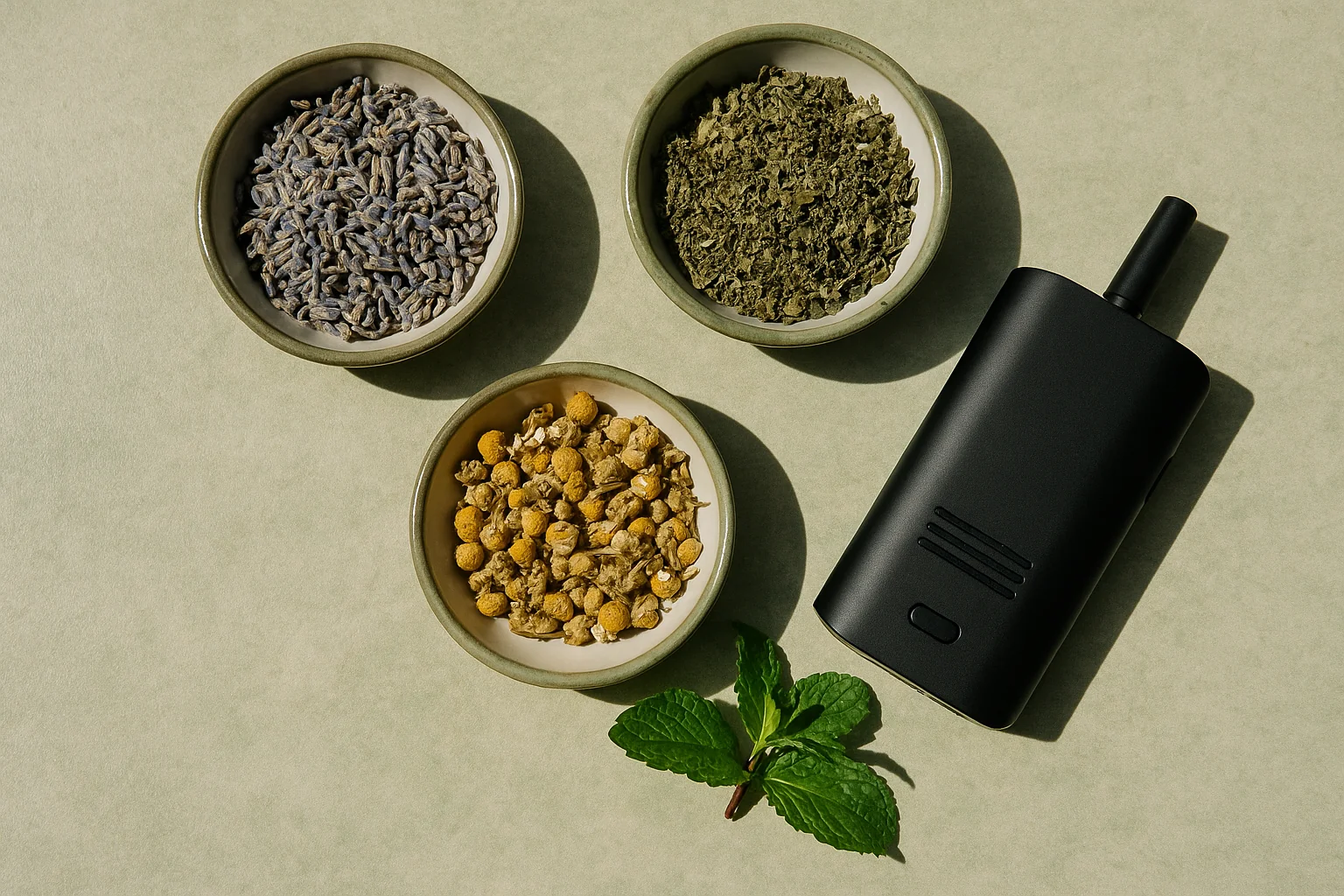

What to smoke instead of tobacco - herbal blends and herbal cigarettes (comparison)
What to smoke instead of tobacco: comparison, differences, and what to realistically choose. A table and specific tips from u Bucha.
Tobacco kills over 8 million people annually worldwide - this is data from the World Health Organization from 2023. Are you looking for something to replace your cigarette but don't know what to choose among plants, herbal cigarettes, and nicotine patches? This is a question we hear quite often. In this article, we compare three main alternatives: herbal blends for vaporization, herbal cigarettes without nicotine, and nicotine replacement therapy (NRT) methods. You will learn how vaporization actually differs from smoking, which options generate combustion products, and for whom each of them makes sense. Honestly, without beating around the bush.
KEY INFORMATION
• Tobacco is responsible for over 8 million deaths annually, and cigarette smoke contains over 70 carcinogenic substances (WHO, 2023).
• Smoking anything - herbs, tobacco, herbal cigarettes - produces combustion products, including carbon monoxide and polycyclic aromatic hydrocarbons.
• Vaporizing herbs works differently than smoking: the absence of flame means no smoke, but it does not guarantee a complete lack of risk.
• The most effective method to quit smoking is NRT with counseling - it increases the chances of success by 50-70% (Cochrane, 2018).
How does smoking herbs differ from vaporization - and why does it matter?
Vaporization of herbs heats the plant material to temperatures of 160-220°C, without causing combustion. Comparative studies show that vaporizing cannabis releases 30 to 80% fewer tar substances than traditional smoking (Gieringer et al., Journal of Cannabis Therapeutics, 2004). This is a fundamental difference that cannot be overlooked when comparing both methods.
Smoking - regardless of what you put in the cigarette - involves combustion at temperatures exceeding 900°C. At this temperature, pyrolysis occurs, which is the thermal decomposition of organic matter. Hundreds of chemical compounds are produced: carbon monoxide, benzene, formaldehyde, and polycyclic aromatic hydrocarbons (PAHs). These are present in both tobacco smoke and smoke from herbal cigarettes.
Vaporization, on the other hand, releases plant phytochemicals - essential oils, terpenes, flavonoids - without initiating pyrolysis. Vapor is not the same as smoke. This is an important distinction, especially when someone is looking for an alternative for health reasons. However, this does not mean that vaporization is completely free of risks - research on the long-term effects of vaporizing herbs is still limited.
We have noticed that many customers confuse vaporization with "herbal e-cigarettes." These are two different products. Dry herb vaporizers are devices that heat dry herbs - without liquid, without propylene glycol, without additional ingredients. E-cigarettes are based on liquids and have a completely different risk profile. It is important to know this difference before making a purchase.
Herbal cigarettes without nicotine - is smoke without tobacco safer?
Herbal cigarettes without nicotine do not cause physical addiction, but their smoke contains the same combustion products as tobacco smoke. Research by Malson and colleagues from 2003 showed that herbal cigarettes (without nicotine) produce carbon monoxide at levels comparable to conventional cigarettes (Malson et al., Nicotine & Tobacco Research, 2003). The absence of nicotine does not protect the lungs from smoke.
The composition of herbal cigarettes can vary greatly. The cheapest products contain blends with nettle leaves, St. John's wort, mint, or sage. More expensive versions use more exotic plants - such as Mexican sage, lobelia inflata (sometimes associated with warnings about hallucinogenic effects), or klawinia. Before you reach for something, check the composition. Not every herb is suitable for smoking.
Herbal cigarettes with filters reduce some fine particles, but do not eliminate carbon monoxide or PAHs. These compounds are volatile and pass through cellulose filters. Unfiltered cigarettes expose the lungs to more solid particles from smoke. None of these options are "safe" in a medical sense - they are simply different from tobacco in terms of lack of nicotine and differing chemical profiles of smoke.
Comparison table: what to smoke instead of tobacco?
The table below compares five main options for those seeking an alternative to tobacco. The key takeaway: any option that involves combustion generates thermal decomposition products. Vaporization and NRT bypass this problem from different angles - one eliminates combustion, the other delivers nicotine without smoke.
| Type | Nicotine | Smoke / combustion | Health risk | For whom |
|---|---|---|---|---|
| Herbal blends for vaporization | None | No smoke; vapor | Lower than smoking; no long-term data | Individuals seeking a smoke-free and nicotine-free ritual |
| Herbal cigarettes (without filter) | None | Yes - smoke from combustion | Combustion products (CO, PAHs) - like in tobacco | Individuals wanting to avoid nicotine, accepting smoke |
| Herbal cigarettes (with filter) | None | Yes - smoke, filter reduces particulate matter | Somewhat fewer particles; CO and PAHs still present | As above, with minimal reduction in exposure |
| NRT (patches, gums) | Yes - controlled dose | None | Low; nicotine affects the cardiovascular system | Individuals addicted to nicotine, wanting to quit smoking |
| Quitting smoking (complete) | None | None | Lowest - the only option without health compromises | Everyone - with the help of a specialist and/or NRT |
The table reveals one uncomfortable truth: if you ask for something to smoke instead of tobacco, every combustion option has a similar problem with thermal degradation products. The difference lies in the absence of nicotine and the different profile of plant substances. If health is the goal - vaporization or NRT are options with better scientific justification.
Are herbal blends for vaporization a real alternative?
Herb vaporization is gaining popularity as an alternative to smoking. The 2022 market analysis by the European Monitoring Centre for Drugs and Drug Addiction (EMCDDA) noted a year-on-year increase of over 30% in the sales of vaporizers for plant material in EU countries (EMCDDA, Drug Market Insights, 2022). The motivation is not only to avoid smoke but also the desire to control consumption.
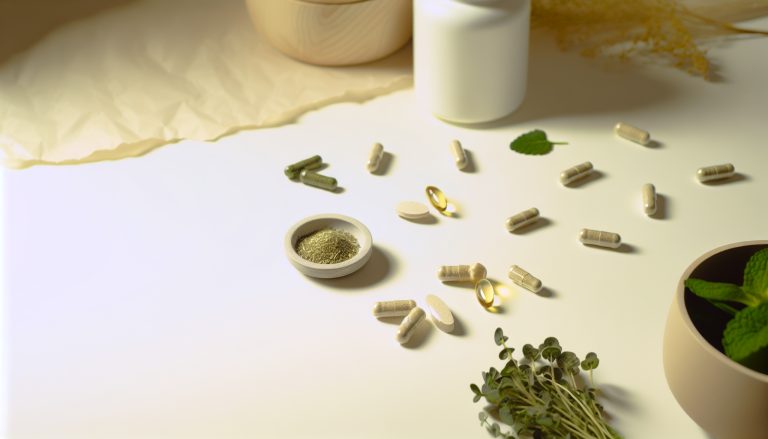
Herbal blends for vaporization differ from herbal cigarettes in that they are specifically composed for the vaporizer's temperature profile. Individual herbs release their active ingredients at specific temperature ranges. Peppermint releases menthol around 175°C. Lavender releases linalool from about 130°C. Lemon balm - citral and geranial - starts to vaporize around 140°C. A good blend is a thoughtful composition, not just random herbs ground together.
Our observations indicate that individuals transitioning from tobacco to herb vaporization often need a few weeks to adjust. The ritual is similar - a moment for oneself, something to hold in hand, inhale and exhale - but the absence of nicotine and smoke makes the first days challenging. Combining the herbal blend with NRT in the form of gum can be particularly helpful in the first two weeks.
Vaporization blends also have a practical advantage: you can regulate the temperature and control the intensity. At lower temperatures, mainly essential oils are released, while at higher temperatures, other fractions are released. This level of control is not offered by a regular herbal cigarette. Is it for everyone? Not necessarily. A vaporizer requires purchasing a device (cost from about 200 PLN upwards) and some learning to operate.
NRT and quitting smoking - when no alternative is enough?
Nicotine Replacement Therapy (NRT) is the only method that directly addresses nicotine addiction. A Cochrane meta-analysis involving over 150 clinical studies found that NRT increases the chances of quitting smoking permanently by 50-70% compared to trying without support (Hartmann-Boyce et al., Cochrane Database, 2018). These are solid data, reproducible in many populations.
Herbal cigarettes and vaporization blends do not cure nicotine addiction. They can replace the ritual - a moment of pause, the act of lighting up, something to hold - but they do not provide the nicotine your body may actively seek. If your goal is to quit smoking, not just to replace a cigarette, NRT combined with behavioral counseling yields the best results in studies.
Quitting smoking without any support results in abstinence after 12 months in about 3-5% of those who try on their own. This rate increases to about 15-20% with therapeutic support and NRT (WHO, 2023). This is a real difference that smokers often do not know when they reach for herbal cigarettes as a "healthier" transitional option.
How to choose the right option for yourself?
The choice depends on what you really want to achieve. A study on attitudes towards tobacco alternatives published in Tobacco Control showed that about 60% of smokers seeking alternatives have at least two distinct goals simultaneously - reducing health risks and maintaining the ritual (Brose et al., Tobacco Control, 2020). It is rarely a single straightforward goal.
If you want to avoid nicotine and smoke but maintain the ritual - an herbal blend for the vaporizer is the most consistent choice. No combustion, no nicotine, control over composition and temperature. However, you will need a vaporizer and some time to learn.
If you want to mimic the act of smoking without purchasing a device - herbal cigarettes meet this need, but be aware: smoke is still smoke. Your lungs do not distinguish between smoke from rosemary and smoke from tobacco in terms of carbon monoxide.
If you are addicted to nicotine and want to quit smoking - NRT is the path with the best clinical support. Herbal cigarettes will not help with nicotine detox. Consult options with your doctor or pharmacist.
Is herb vaporization legal and how to get started?
Vaporizing legal herbs - mint, lavender, lemon balm, St. John's wort, or thyme - is fully legal in Poland. These herbs are available in pharmacies, herbal shops, and supplement stores. The only requirement is a dry herb vaporizer, which is a consumer device with no legal restrictions. Basic models start at around 200 PLN.
Before the first use, it is worth checking the recommended temperatures for the selected herbs. Exceeding the optimal temperature worsens the quality of the vapor and brings the effect closer to combustion. Most vaporizers have temperature control in increments of 5-10°C. A good starting point for herbal blends is 170-185°C - the range in which most essential oils are released without the risk of thermal degradation of aromatic substances.
Ready blends, such as Harmony Blends Clear Focus or Vital Flow, have compositions and temperatures tailored for vaporization. This is a more convenient entry than composing a blend yourself and checking the temperature for each herb individually. For someone transitioning from tobacco, a ready blend with a clear composition is a practical first option to try. It is worth starting with a few sessions before assessing the effect. A body that has reacted to nicotine for years needs a few days to appreciate the plant vapor itself without chemical enhancement. A vaporizer is a tool, not a medicine - but for many people, it is the ritual, not just nicotine, that constitutes the more challenging part of quitting smoking.
Frequently Asked Questions
Are herbal cigarettes without nicotine safe?
Not entirely. Studies have shown that burning herbs produces carbon monoxide and polycyclic aromatic hydrocarbons - the same classes of compounds found in tobacco smoke (Malson et al., Nicotine & Tobacco Research, 2003). Herbal cigarettes do not cause nicotine addiction, but smoke remains irritating to the respiratory tract. The absence of nicotine does not make smoke safe.
What is the difference between herb vaporization and smoking herbal cigarettes?
Vaporization heats herbs to 160-220°C without combustion, releasing phytonutrients in vapor form. Combustion occurs at over 900°C and generates pyrolysis products. Studies show that vaporizing cannabis emits 30 to 80% less tar substances than smoking (Gieringer et al., Journal of Cannabis Therapeutics, 2004). This is a fundamental difference in mechanisms.
What herbs can be vaporized instead of smoked?
The most commonly used herbs for vaporization are peppermint (about 175°C), lavender (130°C), lemon balm (140°C), St. John's wort (150°C), and thyme (170°C). Ready-made blends, such as Harmony Blends Clear Focus or Vital Flow, combine several herbs in compositions optimized for vaporizers. It is advisable to choose products with specified ingredients and without chemical additives.
Is NRT better than herbal cigarettes when quitting smoking?
For a person addicted to nicotine - definitely yes. A Cochrane meta-analysis from 2018 showed that NRT increases the chances of quitting smoking by 50-70% (Hartmann-Boyce et al., 2018). Herbal cigarettes do not reduce nicotine cravings because they do not contain nicotine. They are different from tobacco, but they are not an addiction therapy.
What to choose - a herbal blend for vaporization or herbal cigarettes?
Vaporization blends are a better choice if you want to avoid combustion products. No smoke means no carbon monoxide and PAHs. Herbal cigarettes better mimic the ritual of smoking without the need to purchase a device, but they generate smoke. The choice depends on the goal: if the priority is the ritual - herbal cigarettes; if reducing exposure to smoke - vaporization.
This article is for informational and educational purposes and does not replace consultation with a doctor. If you are pregnant, breastfeeding, taking medications, or have chronic conditions, consult the use of supplements or herbs with a specialist.
Author: Michał Waluk · Published: 2026-05-04 · Updated: 2026-05-04