


Alpha-lipoic acid ALA: a powerful antioxidant for nerves, sugar, and skin
Alpha-lipoic acid ALA – mechanism, dosage, diabetic neuropathy, insulin sensitivity, skin. The SYDNEY study. R-ALA vs. S-ALA. Interactions and safety.
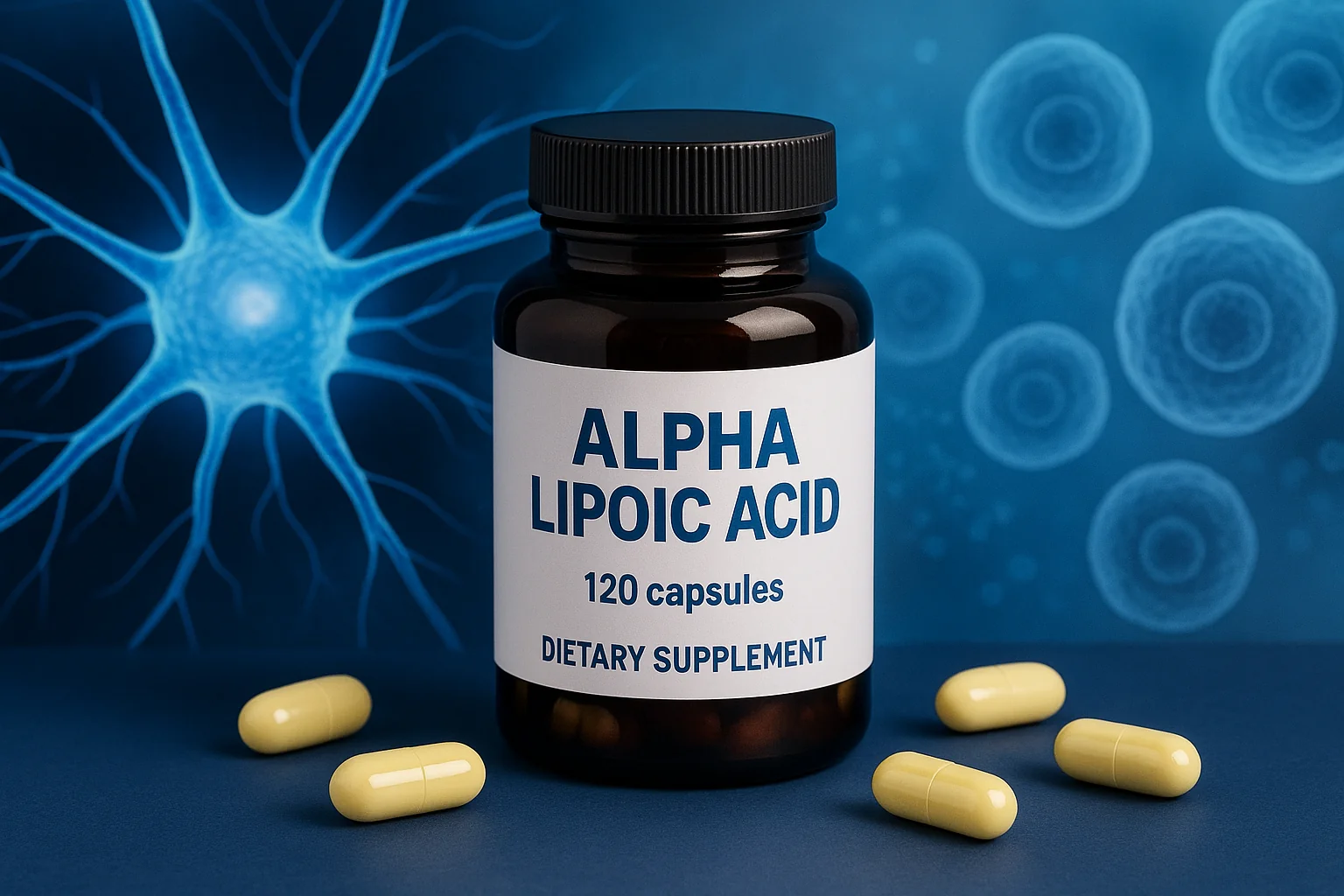
Alpha-lipoic acid (ALA) is the only antioxidant among commonly used ones that works in both lipophilic (cell membranes) and hydrophilic (cytoplasm and extracellular fluid) environments. This is a unique property. It also crosses the blood-brain barrier. It regenerates vitamins C and E after they are oxidized. It is a cofactor for mitochondrial enzymes essential for energy production. And - most importantly from a clinical perspective - it is one of the few supplements registered as a drug in Germany for diabetic neuropathy, confirmed in the SYDNEY study. This article explains the mechanism, applications, and how to rationally dose it.
KEY INFORMATION
• The SYDNEY study (Ziegler et al., 2006, Diabetic Medicine) demonstrated a significant reduction in symptoms of diabetic neuropathy (pain, burning, numbness) with ALA 600 mg/day for 7 months compared to placebo.
• ALA as an antioxidant works in both phases - lipid and water - and regenerates vitamins C and E. It is referred to as the "antioxidant of antioxidants."
• R-ALA is a biologically active enantiomeric form - biologically effective at half the dose of RS-ALA (racemic).
• Caution: ALA enhances the action of hypoglycemic drugs - risk of hypoglycemia in diabetics on pharmacotherapy.
What is alpha-lipoic acid and why is it unique?
Alpha-lipoic acid (1,2-dithiolane-3-pentanoic acid, ALA) is an organic sulfur molecule, endogenously synthesized by the body in mitochondria. It is a cofactor for two key complexes of mitochondrial enzymes: pyruvate dehydrogenase (PDH) and alpha-ketoglutarate dehydrogenase (AKGDH) - both essential for the Krebs cycle and ATP production. Unlike most antioxidants, ALA is produced endogenously, but in amounts too small to saturate the antioxidant capacity in disease states or increased oxidative stress.
Unique property of ALA: both lipophilicity and hydrophilicity. Vitamin C is only hydrophilic and does not penetrate membranes. Vitamin E is only lipophilic and does not act in the cytoplasm. CoQ10 is lipophilic. ALA works in both environments and penetrates the blood-brain barrier - opening up neurological applications. Additionally, ALA regenerates oxidized forms of vitamins C and E, glutathione, and CoQ10, enhancing the effectiveness of the entire antioxidant network.
Our observations: ALA is a supplement with one of the strongest biochemical justifications among popular antioxidants. However, the clinical translation of this fascinating mechanism is uneven - diabetic neuropathy has solid data, skin anti-aging is biochemically documented but clinically weaker. It is worth making this distinction to avoid expecting miracles from ALA where the evidence is weak.
Neuropatia cukrzycowa - najlepiej udokumentowane zastosowanie
Diabetic neuropathy affects about 50% of diabetics - damage to nerve fibers due to chronic hyperglycemia and oxidative stress. Symptoms: burning pain, numbness, tingling, especially in the lower limbs. Pathophysiology: hyperglycemia generates excess reactive oxygen species (ROS) through the sorbitol pathway and AGEs, which destroy axons and myelin. ALA neutralizes ROS in mitochondria and peripheral nerves.
Ziegler et al. (Diabetic Medicine, 2006) conducted the SYDNEY 2 study - 181 patients with diabetic neuropathy, randomized, double-blind. Oral ALA 600 mg/day for 5 weeks significantly reduced the Total Symptom Score (TSS - measure of neuropathy symptoms) compared to placebo: TSS decreased by 51% in the ALA group vs. 35% in placebo (p < 0.05). The earlier SYDNEY 1 (Ziegler et al., 2004) with intravenous ALA 600 mg for 3 weeks showed an even stronger effect. ALA is registered as a drug for diabetic neuropathy in Germany (Thioctacid HR, Thiogamma) and several other European countries.
Insulin sensitivity and glucose metabolism
ALA affects glucose metabolism through several mechanisms: activation of GLUT4 (glucose transporter to muscles) independently of insulin, activation of AMPK (through increased AMP/ATP, similar to berberine), inhibition of hepatic gluconeogenesis, and reduction of oxidative stress, which per se impairs insulin signaling. In practice: ALA acts "antioxidatively on the insulin pathway" - removing ROS that block the tyrosine phosphorylation of the insulin receptor.
Meta-analysis by Akbari et al. (2018, Nutrition, Metabolism and Cardiovascular Diseases) - 24 RCT - showed that ALA significantly reduces fasting glucose levels and HOMA-IR (insulin resistance) in patients with diabetes and prediabetes. Doses of 600-1200 mg/day for 8-24 weeks. The effects were moderate but consistent. Combining ALA with berberine or metformin may yield additive effects - but then strict glycemic control is necessary due to the risk of hypoglycemia.
ALA for the skin - anti-aging antioxidant
The skin is exposed to external oxidative stress (UV, pollution, ozone) and internal (inflammation, AGEs). ALA, as both a lipophilic and hydrophilic antioxidant, protects both the cell membranes of keratinocytes and fibroblasts, as well as cytoplasmic proteins and DNA. It inhibits NFkB (inflammatory factor), reducing the production of MMP (collagen-degrading enzymes). It inhibits tyrosinase, which may reduce excessive pigmentation.
Clinical studies with ALA applied topically: Berkson (1999) in a pilot study showed improvement in skin appearance with a cream containing 5% ALA. Biernat et al. showed a reduction in wrinkles with supplementation. The data is promising, but studies have a limited number of participants. ALA used both orally (300-600 mg/day) and topically is popular in anti-aging dermatology, especially as part of a comprehensive antioxidant therapy (ALA + vitamin C + collagen).
R-ALA vs. RS-ALA - which form is better?
Commercially available synthetic ALA is usually a racemic mixture of RS-ALA (50% R-ALA + 50% S-ALA). R-ALA is an endogenously produced form by the body and is biologically active. S-ALA is a synthetic form - it has lower biological activity and may interfere with R-ALA by competing for enzymes.
Pharmacokinetic studies show that R-ALA reaches higher peak concentrations in plasma and tissues after administering the same weight dose compared to RS-ALA. R-ALA is also less stable at higher temperatures (it polymerizes) - it requires storage in a cool place and special formulation (sodium salt Na-R-ALA is more stable). Practical conclusions: R-ALA preparations require about 50% lower weight dosage to achieve a similar biological effect as RS-ALA. 150-300 mg R-ALA ≈ 300-600 mg RS-ALA.
Dosage, safety, and interactions
For diabetic neuropathy: 600 mg RS-ALA/day or 300 mg R-ALA/day on an empty stomach or 30 minutes before a meal (food reduces absorption by 20-30%). As antioxidant supplementation: 300-600 mg RS-ALA/day or 150-300 mg R-ALA/day. In studies on insulin resistance: 600-1200 mg/day. Split the dose into 2 portions if you are taking more than 600 mg/day to reduce peak concentrations.
Safety: ALA is well tolerated. The most common side effects: nausea, stomach discomfort - especially when taken on an empty stomach and at high doses. Rarely: skin reactions (rash). At doses above 1200 mg/day - headache and dizziness. Do not use in case of thiamine (vitamin B1) deficiency - ALA may exacerbate B1 deficiency symptoms due to metabolic competition. Caution in individuals with thiamine deficiency (alcoholism, malnutrition).
Drug interactions: hypoglycemic medications (insulin, sulfonylureas, metformin) - ALA enhances glucose lowering, increasing the risk of hypoglycemia. Monitor glycemia when introducing ALA. Metal chelating drugs or mineral supplements - 2-hour interval. Antithyroid medications - ALA may inhibit the conversion of T4→T3; caution in hypothyroidism. Chemo- or radiotherapy - ALA as an antioxidant may potentially interfere with the oxidative mechanism of oncological therapies; consult with an oncologist.
If you are interested in comprehensive antioxidant support, ALA is often combined with NAC - read the article. NAC (N-acetylcysteine): what it is, when it is worth taking. Both supplements have complementary antioxidant mechanisms.
ALA in autoimmune diseases and aging
Chronic low-grade inflammation is a common denominator of many civilization diseases: diabetes, obesity, cardiovascular diseases, neurodegeneration, and biological aging. ALA, by neutralizing ROS and inhibiting NFkB, reduces pro-inflammatory signaling in many tissues. In clinical studies, ALA reduced CRP and IL-6 in patients with diabetes and metabolic syndrome - correlating with improved insulin sensitivity and reduced risk of cardiovascular complications.
In multiple sclerosis (MS), ALA is being studied as a potential neuroprotective adjuvant - by reducing lipid peroxidation in myelin and inhibiting MMP-9 (an enzyme that degrades myelin). A pilot study by Marracci et al. (2002) showed a reduction in MMP-9 and a potential anti-inflammatory effect. Clinical studies are ongoing. In Alzheimer's disease: ALA combined with acetyl-L-carnitine has been studied as an antioxidant combination - a pilot study by Hagen et al. (2002) showed improvement in cognitive functions in older rats. More extensive RCTs are needed in humans.
ALA and ketogenic diet and caloric restriction
The ketogenic diet and caloric restriction activate many of the same pathways as ALA: AMPK, SIRT1, Nrf2 (regulator of antioxidant enzyme expression, including glutathione transferase). ALA synergizes with these dietary strategies by complementarily activating these pathways. In the context of keto: the ketogenic diet increases the production of ketones, which have their own antioxidant and neuroprotective properties. ALA as an enzymatic cofactor is particularly important in high fat metabolism, as pyruvate dehydrogenase and alpha-ketoglutarate dehydrogenase are activated in the context of lipid metabolism.
Practical tip: on a ketogenic diet, during intermittent fasting or caloric restriction, ALA 300-600 mg/d in the morning on an empty stomach may enhance the metabolic and neuroprotective effects of these strategies. The combination of ALA + berberine + caloric restriction is being explored in studies as a comprehensive metabolic intervention for insulin resistance, but requires strict glycemic control.
Frequently Asked Questions
How to dose alpha-lipoic acid?
Diabetic neuropathy: 600 mg RS-ALA/d or 300 mg R-ALA/d on an empty stomach or 30 minutes before a meal. General supplementation: 300-600 mg RS-ALA/d or 150-300 mg R-ALA/d. Higher doses for insulin resistance: 600-1200 mg/d, under glycemic control.
What is R-ALA and is it better than regular ALA?
R-ALA is a biologically active, enantiomeric form of ALA, produced endogenously by the body. It exhibits higher bioavailability and biological activity at a lower weight dose than racemic RS-ALA. 150-300 mg R-ALA ≈ 300-600 mg RS-ALA. R-ALA is less stable - it requires appropriate formulation (Na-R-ALA).
Does alpha-lipoic acid help with diabetic neuropathy?
Yes - this is the best-documented clinical application of ALA. The SYDNEY study (Ziegler et al., 2006) showed a significant reduction in neuropathy symptoms (pain, burning, numbness) at 600 mg/d for 5 weeks. ALA is registered as a drug for diabetic neuropathy in Germany.
Does ALA affect glycemia and insulin sensitivity?
Yes - it activates GLUT4 and AMPK, increasing glucose uptake independently of insulin. A meta-analysis by Akbari et al. (2018, 24 RCT) showed a significant reduction in fasting glucose and HOMA-IR at 600-1200 mg/d. Monitor glycemia when concurrently using pharmacological treatment - risk of hypoglycemia.
Does alpha-lipoic acid work on the skin?
ALA reduces oxidative stress in keratinocytes and fibroblasts, inhibits NFkB, and lowers MMP (collagen-degrading enzymes) activity, and inhibits tyrosinase. It works both with topical application and orally (300-600 mg/d). A popular part of the anti-aging protocol along with vitamin C and collagen.
Does alpha-lipoic acid have interactions with medications?
It enhances the action of hypoglycemic drugs (risk of hypoglycemia in diabetics). It chelates minerals - maintain a 2-hour interval from supplements. It may inhibit the conversion of T4→T3 - caution with hypothyroidism and thyroid medications. Potential interaction with oncological therapy.
What is a mitochondrial antioxidant and why is ALA unique?
ALA is both lipophilic and hydrophilic - the only antioxidant that works in both cellular environments. It penetrates the blood-brain barrier. It regenerates vitamins C, E, glutathione, and CoQ10 after their oxidation. It is a cofactor for mitochondrial enzymes of the Krebs cycle. Therefore, it is called the "antioxidant of antioxidants."
This article is for informational and educational purposes and does not constitute medical advice. Before starting to use cannabis or CBD for therapeutic purposes, consult a doctor, especially if you are taking other medications, are pregnant, or breastfeeding.
Author: Michał Waluk · Published: 2026-05-04 · Updated: 2026-05-04