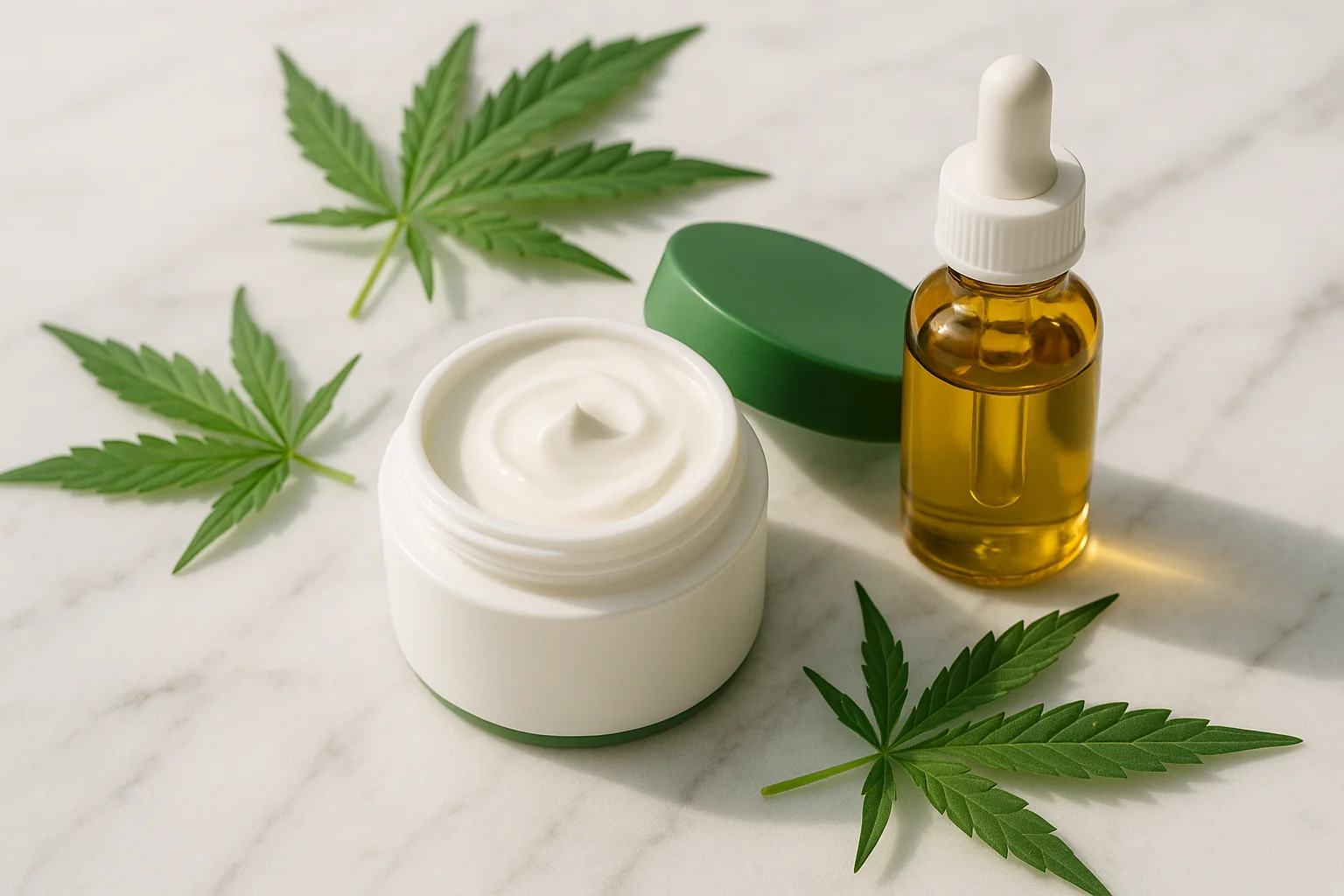

Hemp face cream: how it works, for which skin type, and whether it can replace pharmacy cream
Hemp face cream – how it works, for which skin type it is suitable, and whether it can replace pharmacy cream? Sebum balance, CBD in cosmetics, studies 2026.
Hemp face creams have come a long way from niche products in health food stores to mainstream categories in drugstores and pharmacies. But is the marketing-driven enthusiasm justified by research? Does a cream with hemp oil or CBD really regulate sebum, help with acne, and soothe atopic dermatitis - or is it just catchy marketing? In this article, we will examine the mechanism of action of hemp cream on facial skin, the profile of candidates it may actually help, and a sober assessment of when hemp cream can replace pharmacy creams and when it should only complement dermatological treatment.
KEY INFORMATION
• Hemp seed oil has a comedogenic rating of 0-1 (on a scale of 0-5) - one of the safest oils for oily and acne-prone skin.
• CBD modulates the endocannabinoid system in the skin - CB2 receptors regulate sebum production and inflammation (Tóth et al., Trends in Pharmacological Sciences, 2014).
• A study by Vincenzi et al. (Dermatitis, 2020) showed improvement in atopic dermatitis with the use of hemp oils in skincare.
• Hemp cream is effective in prevention and mild issues; in cases of active hormonal acne or atopic dermatitis, it is a complement, not a substitute for treatment.
How hemp cream works on the face - the mechanism from lipids to CBD
Hemp cream is a cosmetic product that can contain two different active substances: hemp seed oil (hemp seed oil, Cannabis sativa seed oil in INCI) or CBD extract (cannabidiol). This is an important distinction - both ingredients work differently and have different properties.
Hemp seed oil is a lipid carrier with a structure similar to the skin's natural sebum. Rich in linoleic acid (omega-6, ~55%), alpha-linolenic acid (omega-3, ~17%), and GLA (gamma-linolenic acid, ~3%) - it provides the skin with the building blocks of the hydrolipid barrier. Skin lacking an adequate amount of linoleic acid produces sebum with a changed structure, more comedogenic and pro-inflammatory - studies indicate that a deficiency of LA correlates with acne and atopic dermatitis. Supplementing LA through topical application can correct this deficiency. Hemp seed oil is also non-comedogenic (rating 0-1) - it does not clog pores, which distinguishes it from most heavy plant oils.
CBD in the cream works through the cutaneous endocannabinoid system. Tóth et al. (Trends in Pharmacological Sciences, 2014) They demonstrated that the skin has its own CB1 and CB2 receptors on keratinocytes, fibroblasts, and immune cells. CBD regulates skin cell proliferation, inflammatory response, and - particularly important for oily skin - sebum production by sebaceous glands through these receptors. The oil from sebaceous glands regulates CB2 - CBD reduces sebum overproduction, which has potential applications in acne and combination skin.
GLA (gamma-linolenic acid) from hemp seed oil is a precursor to series 1 prostaglandins - anti-inflammatory mediators. For sensitive and atopic skin, GLA can reduce skin inflammation from within the lipid layer of the epidermis. Vincenzi et al. (Dermatitis, 2020) They clinically confirmed the beneficial effect of hemp preparations in atopic dermatitis - improvement in dryness, itching, and inflammation after 20 weeks of use.
Hemp seed oil vs CBD in cream - what are the differences and what to choose
Before we move on to skin profiles, it is worth explaining a key terminological difference that is a source of misunderstandings in the market: "hemp cream" is not the same as "CBD cream". Both terms are often used interchangeably, although they refer to different active ingredients.
“Hemp cream” most often refers to a product based on hemp seed oil (hemp seed oil, in INCI: Cannabis sativa seed oil) - a cosmetic substance pressed from hemp seeds. Hemp seed oil does not contain CBD or any cannabinoids - it is pure plant oil rich in fatty acids, vitamin E, and chlorophyll. It is produced from hemp varieties from which all traces of hulls and resin containing cannabinoids are removed.
“CBD cream,” on the other hand, contains an extract from the flowers or the whole plant of Cannabis sativa - rich in cannabidiol (CBD), other cannabinoids, and terpenes. Such an extract has the previously described action through the skin's endocannabinoid system. CBD creams are more expensive to produce and usually more expensive for the customer. On the label, look for: “CBD,” “cannabidiol,” “hemp extract,” or “Cannabis sativa flower/leaf/stem extract” - not just “Cannabis sativa seed oil.”
Dla jakiej cery jest krem konopny - profile i wskazania
Hemp cream is not a product “for every skin type” to the same extent. There are several skin types for which the properties of hemp are particularly beneficial - and a few where the effect will be minimal or require additional ingredients.
Combination and oily skin: The best match for hemp cream. Hemp oil mimics the structure of natural sebum - when applied topically, it can “communicate” to the skin that it has enough lipids, which reduces excessive sebum production. CBD enhances this effect by modulating CB2 in sebaceous glands. The non-comedogenicity of hemp seed oil (rating 0-1) allows for use without the risk of clogging pores. Oily skin that responds well to light hydration is an ideal candidate.
Sensitive and reactive skin: GLA and the anti-inflammatory action of CBD make hemp cream a good choice for skin reactive to stress, temperature changes, and certain cosmetics. Hemp seed oil is hypoallergenic and rarely causes allergic reactions - the more common cause of reactions to hemp creams are other auxiliary ingredients (fragrances, preservatives).
Cera atopowa (AZS): Study Vincenzi et al. (Dermatitis, 2020) is a key reference point - it has shown clinical improvement when using hemp products in atopic dermatitis. Hemp cream as part of daily care for atopic facial skin has scientific justification. It is not a substitute for treatment (pharmacy emollients, corticosteroids during flare-ups), but a valuable complement.
Acne-prone skin (comedonal acne, mild-moderate): CBD + non-comedogenic hemp seed oil + anti-inflammatory action = a good foundation for acne-prone skin. In cases of hormonal, pustular, or extensive acne, hemp cream will not replace dermatological treatment (retinol, antibiotics, isotretinoin), but it can be part of supportive skincare.
Dry and mature skin: Hemp seed oil provides essential fatty acids, but dry skin usually needs more intensive emollients (ceramides, hyaluronic acid, shea butter). Hemp cream for dry skin will work as a base for combining with other active ingredients - not as a standalone intensive moisturizer. Skin age matters: mature skin after the age of 50 produces fewer natural lipids, so hemp seed oil can be a valuable addition to an anti-aging routine - providing essential fatty acids and antioxidants (vitamin E) that support elasticity and protection against free radicals. However, it is worth combining it with retinoids, peptides, or vitamin C used separately in a personalized skincare routine.
Our observations: Hemp cream disappoints the most when used by individuals with dry skin expecting intense hydration comparable to a pharmacy cream with urea or ceramides. Hemp seed oil is primarily an oil - it moisturizes through occlusion and rebuilding the lipid barrier, but does not “pull” water into the skin like humectants. If you have dry skin and are looking for intense hydration, look for hemp creams with added hyaluronic acid or glycerin as humectants - the hemp base alone will not suffice.
Does hemp cream replace pharmacy cream - an honest assessment
This is one of the key questions, as the answer determines the real application of the product. The short answer: hemp cream can replace pharmacy cream in preventive care and for mild, stable skin issues - but not in the active treatment of more serious skin conditions.
When hemp cream can replace pharmacy cream: Healthy skin that only requires hydration and nourishment - hemp seed oil provides essential lipids without unnecessary ingredients. Mild skin irritations from sun exposure, wind, or frost - the soothing action of GLA and emollient properties of hemp seed oil. Regular anti-aging care for normal skin - antioxidants (vitamin E) from hemp protect against free radicals. Supporting the skin barrier as part of the routine after dermatological treatment.
When pharmacy cream is essential: Active atopic dermatitis with flare-ups - here, pharmaceutical emollients with ceramides and possibly corticosteroids prescribed by a dermatologist are essential. Hormonal, pustular, or extensive acne - treatment requires topical or oral retinoids, not just cream. Rosacea - hemp may alleviate inflammation but does not treat the underlying cause. Pigmentation disorders - hemp cream does not have a brightening effect; active ingredients (vitamin C, niacinamide, kojic acid) are needed here.
Dermatologist vs. hemp cream: Hemp cream is a cosmetic product, not a medicine. Cosmetic products can support the skin and improve its appearance, but they do not treat medical conditions. If skin disease is suspected (AD, psoriasis, acne requiring treatment), always consult a dermatologist first. It's also worth remembering that not every "hemp cream" is a high-quality product - check the INCI composition, look for Cannabis sativa seed oil or cannabidiol high on the ingredient list (INCI ingredients are listed in descending order by concentration). A product where hemp appears at the end of the INCI list contains trace amounts of hemp oil, insufficient for noticeable effects.
How to use hemp cream on the face - practical tips
Proper use of hemp cream is important for results. Here are a few rules that help you get the most out of this product.
Oczyszczanie przed kremem: Apply the cream to thoroughly cleansed skin. Impurities and makeup block the penetration of hemp oil and CBD into the dermis. Use a gentle gel or milk without alcohol that does not disturb the skin's pH (ideal pH = 5.5).
Tonizacja (opcjonalna): Toner or water-based essence before hemp cream - humectants (glycerin, hyaluronate) draw water into the skin, and the hemp oil in the cream will "seal" in moisture. Order: humectant → hemp cream → UV filter (in the morning). This protocol significantly improves hydration, especially for dry and normal skin.
Porcja i technika: A pea-sized amount for the entire face - hemp seed oil is concentrated, and excess can create a greasy feeling. Apply with gentle movements from the center of the face outward and upward, avoiding pulling the skin.
Rano vs wieczorem: In the morning - under makeup or UV filter. Hemp seed oil does not block SPF action. In the evening - you can apply a slightly thicker layer or add a few drops of pure hemp oil to the cream for more intense nourishment during nighttime regeneration.
Okres adaptacji: The skin needs 2-4 weeks to adjust to a new skincare routine. For oily and acne-prone skin, the first 1-2 weeks may bring temporary worsening (the skin is "cleansing") - this is normal and usually subsides. If the worsening lasts more than 3-4 weeks, consider changing the product or consulting a dermatologist.
Frequently Asked Questions
How does hemp face cream work?
Hemp cream works on the facial skin through three main mechanisms: hemp seed oil provides omega acids and GLA that build the lipid barrier of the epidermis; CBD (if present) modulates the skin's endocannabinoid system, regulating sebum and inflammation; GLA acts as an anti-inflammatory precursor to prostaglandins of series 1. Tóth et al. (Trends in Pharmacological Sciences, 2014) described the skin's CB system as the "guardian of skin homeostasis."
Dla jakiej cery jest krem konopny?
It provides the best effects for combination and oily skin (sebum regulation, non-comedogenic), sensitive and reactive skin (soothing and anti-inflammatory effects), and atopic skin (GLA supports the hydrolipid barrier). Dry skin can benefit but needs the addition of humectants. Vincenzi et al. (Dermatitis, 2020) confirmed the effectiveness of hemp preparations in atopic dermatitis.
Can hemp cream replace pharmacy cream?
In preventive care and with mild issues - yes, it can replace a pharmaceutical cream for healthy skin that requires hydration and nourishment. With active AD, hormonal acne, rosacea, or psoriasis, hemp cream is a complement to treatment, not a substitute. Always consult more serious skin issues with a dermatologist.
Czy krem konopny zapycha pory?
Hemp seed oil has a comedogenic rating of 0-1 on a scale of 0-5 - it is considered non-comedogenic and safe for oily and acne-prone skin. This is one of its main advantages compared to olive oil (rating 2) or coconut oil (rating 4). Pores can become clogged from other auxiliary ingredients in the cream - read the ingredients and avoid hemp creams with heavy waxes or fats with high comedogenicity.
Czy krem z CBD jest lepszy od kremu z samym hemp seed oil?
CBD cream offers additional action through the skin's endocannabinoid system - stronger anti-inflammatory effects and regulation of sebum production by sebaceous glands. Hemp seed oil without CBD mainly acts as an emollient and supplier of fatty acids. For regular hydration and nourishment of the skin, hemp seed oil is sufficient; for active acne or AD care, it is worth reaching for CBD cream. Also read Hemp shampoo.
How to use hemp cream on the face?
Use morning and evening on cleansed skin. Portion: a pea-sized amount for the entire face. Massage gently from the center outward. In the morning under UV filter - hemp seed oil does not block SPF. In the evening, you can apply a thicker layer. Before first use: patch test for 24 hours on the inner wrist. Assess the full effect after 4 weeks of regular use. More about hemp cosmetics can be found in the article Palacio hemp cosmetics.
This article is informational and educational in nature. It contains internal links to products available in the u Bucha store. Prices and specifications may change - please check the current data on the product page before purchasing.
Author: Michał Waluk · Published: 2026-05-04 · Updated: 2026-05-04