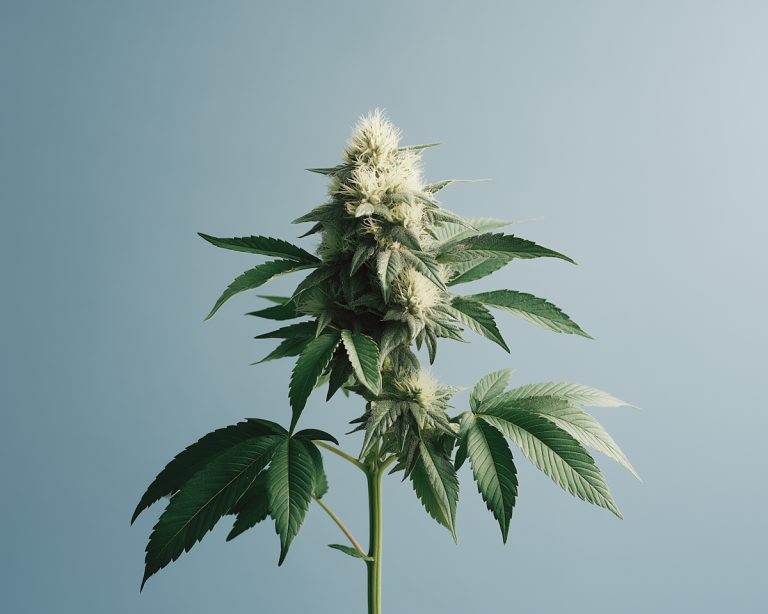

Cannabis – Varieties and Properties: Taxonomy, Chemotypes, Terpenes, and Law (2026)
Cannabis - varieties and properties: taxonomy, chemotypes, terpenes, and law (2026) - Education and basics
KEY INFORMATION
- One species or three? Monograph by Ernest Small (Small, 1979; updated CABI, 2017) recognizes Cannabis sativa L. as one polymorphic species; McPartland and Small (Botanical Journal of the Linnean Society, 2020) recommend two subspecies: sativa i indica.
- Five chemotypes. Small and Beckstead's classification (Nature, 1973) distinguishes chemotypes I (THC-dominant), II (mixed), III (CBD-dominant), IV (CBG-dominant), and V (fiber hemp with trace cannabinoids).
- Limit of 0.3% THC in the EU. Regulation (EU) 2021/2115 and the Polish Act on Counteracting Drug Addiction of July 29, 2005 (consolidated text Dz.U. 2024) allow the cultivation of fiber hemp varieties with Δ9-THC content up to 0.3% in the dry mass of flower buds.
- The EU has registered over 75 varieties. Common Catalogue of Agricultural Plant Varieties (EU Plant Variety Database, 2024) lists, among others, Felina 32, Futura 75, Finola, Santhica 27, and Białobrzeskie as legal fiber varieties.
- CBD legal with THC <0.3%. The ruling of the CJEU in case C-663/18 Kanavape (CJEU, 2020) confirms the free movement of CBD from legal hemp cultivation throughout the Union.
Hemp (L.) has been associated with humans for at least 10,000 years, and traces of its use have been discovered in Neolithic archaeological sites in Zhejiang province, China (Cannabis sativa Ren et al., Frontiers in Plant Science, 2021). Despite thousands of years of cultivation history, botanists still debate whether we are dealing with one polymorphic species or a complex of distinct taxa. In this article, we present the current state of knowledge: taxonomy, five chemotypes recognized in the literature, characteristics of terpenes, registered fiber varieties in the EU, and the legal status of cannabis in Poland 2026.How does modern botany classify cannabis: sativa, indica, or ruderalis?
pillar article on cannabidiol and its effects
According to the botanical consensus of the 21st century
, it is one species ( Cannabis L.) with two or three subspecies, rather than three distinct species. The groundbreaking revision by McPartland and Small (Cannabis sativa ) analyzes the 600-year history of taxonomy and proposes two subspecies:Botanical Journal of the Linnean Society, 2020C. sativa subsp. sativa C. sativa subsp. indica i The dispute has been ongoing since 1753. Linnaeus in.
Species Plantarum Species Plantarum L. The French botanist Jean-Baptiste Lamarck, in 1785, studying a resin-rich plant from India, proposed a second species: Cannabis sativa Lam. The Russian taxonomist Dmitrij Janischewsky supplemented the system in 1924 by describing wild steppe hemp as Cannabis indica Small's position from 1976 Cannabis ruderalis.
Canadian botanist Ernest Small in his monumental work
The Species Problem in Cannabis Small, 1976; updated 2017 () recognized all three types as varieties of one species. He distinguished subspecies(fiber hemp, domesticated, THC < 0.3%) and subspecies sativa (fiber hemp, domesticated, THC < 0.3%) and subspecies indica (psychoactive cannabis, THC > 0.3%). In both subspecies, wild and cultivated variants were distinguished, replacing the name with the term spontanea McPartland's 2020 revision.
John McPartland, after analyzing 40,000 chemotypes and sequencing the genome, proposed a more nuanced model. In his view, the name
should refer to broadleaf hemp from Central Asia (formerly called indica afghanica ), rather than narrowleaf Cannabis sativa from the tropical zone. McPartland's work (Cannabis and Cannabinoid Research, 2018) suggests that the popular breeding names indica and sativa are largely misleading.From a practical perspective for farmers, breeders, and consumers in 2026: we have no molecular evidence for three distinct species. Commercial classification (indica/sativa/hybrid) mainly reflects terpene patterns and breeding traditions.
McPartland and Small (Botanical Journal of the Linnean Society, 2020) after analyzing 600 years of taxonomic literature recommend classifying Cannabis sativa L. as one species with two subspecies sativa and indica; the genetic differences between "sativa" and "indica" correspond more to differentiation at the subspecies level than at the species level.
McPartland and Small (Botanical Journal of the Linnean Society, 2020) recommend classifying Cannabis sativa L. as a single species with two subspecies, sativa and indica; the genetic differences between "sativa" and "indica" correspond more to subspecies variation than species.
Cannabis is divided into five chemotypes depending on the dominant cannabinoid in the flowers. The classic division by Small and Beckstead (
) introduced chemotypes I (THC-dominant), II (mixed THC/CBD), III (CBD-dominant). Later studies (Nature, 1973de Meijer, Frontiers in Plant Science, 2016) added chemotype IV (CBG-dominant) and V (almost cannabinoid-free fiber hemp).Chemotype I: THC-dominant
Chemotype I contains >0.3% Δ9-tetrahydrocannabinol with trace amounts of CBD (THC:CBD ratio > 5:1). These are classic recreational and medical strains, subject to drug restrictions in most European countries. The typical THC content in modern medical strains ranges from 15 to 25% (
Chemotype I contains >0.3% Δ9-tetrahydrocannabinol with trace amounts of CBD (THC:CBD ratio > 5:1). These are classic recreational and medical strains, subject to drug restrictions in most European countries. The typical THC content in modern medical strains ranges from 15 to 25% (). In Poland, the cultivation of chemotype I is illegal, and distribution requires permission from the Chief Pharmaceutical Inspector under the medical marijuana program.Chemotype II: mixed
Chemotype II (also referred to as "intermediate type") contains comparable amounts of THC and CBD, usually in a ratio of 1:1 to 1:2. Such profiles come from crosses of fiber strains with drug strains. High-CBD medical strains, such as the historical Bedrolite by Bedrocan, belong to this category (
Chemotype II (also referred to as the "intermediate" type) contains comparable amounts of THC and CBD, usually in a ratio of 1:1 to 1:2. Such profiles come from crosses of fiber strains with narcotic strains. High-CBD medical strains, such as the historical Bedrolite from Bedrocan, belong to this category ().).
Chemotype IV: CBG-dominant
Chemotype III consists of strains with dominant CBD and THC below 0.3%. In the EU, this includes most legal fiber hemp intended for phytochemical purposes (for CBD oil extraction). Popular Polish and European genotypes in this group include "Futura 75" and "Fedora 17". The CBD content in the flower heads often exceeds 10% dry weight.
Chemotype IV consists of varieties with dominant cannabigerol (CBG). CBG serves as a precursor to other cannabinoids, but in mutants with blocked conversion, it accumulates in significant amounts. A classic example is Santhica 27, a French variety phenotypically producing up to 94% CBG in the cannabinoid fraction (
Grassi and McPartland, Plants, 2021Chemotype V: fiber hemp with minimal cannabinoid content).
Chemotype V consists of varieties with negligible amounts of all cannabinoids (<0.1%), cultivated mainly for fiber and seeds. Most historical Polish varieties, such as Białobrzeskie and Beniko, are close to this category.
Chemotype V refers to varieties with negligible amounts of all cannabinoids (<0.1%), primarily cultivated for fiber and seeds. Most historical Polish varieties, such as Białobrzeskie and Beniko, are close to this category.
For cannabis growers in Poland after 2022, chemotypes III and IV are the most economically interesting, as they combine legality (THC < 0.3%) with high market value for CBD/CBG extracts. Chemotype V represents classic "Polish hemp" for the textile and construction industries.
comparative article on cannabinoids
Sativa and indica varieties differ morphologically, although these boundaries blur among modern hybrids. Sativa has narrow, long leaves (length up to 13 cm, width 1-2 cm) and grows to 3-4 m in height, while indica has broad, thick leaves (length 7-9 cm, width 3-4 cm) and a compact silhouette of 1-2 m (
Sativa and indica varieties differ morphologically, although these boundaries blur among modern hybrids. Sativa has narrow, long leaves (length up to 13 cm, width 1-2 cm) and grows to a height of 3-4 m, while indica has broad, thick leaves (length 7-9 cm, width 3-4 cm) and a compact stature of 1-2 m (Leaves and flower clusters).
Narrowleaf sativa varieties, historically from tropical regions (Thailand, Mexico, Jamaica, Central Africa), produce loose, long flower clusters. Broadleaf indica varieties (Hindu Kush region, Afghanistan, Pakistan) form compact, dense spherical flower clusters abundantly covered with resin. In Clarke and Merlin's studies (
Narrow-leaved sativa varieties, historically from tropical regions (Thailand, Mexico, Jamaica, Central Africa), produce loose, long flower clusters. Broad-leaved indica varieties (Hindu Kush region, Afghanistan, Pakistan) form compact, dense flower clusters richly covered with resin. In the studies by Clarke and Merlin () both groups have different adaptive strategies: sativa matures more slowly (10-16 weeks of flowering), indica faster (6-9 weeks).Ruderalis: low growth and autoflowering
Ruderalis cannabis originates from the continental steppes of Central Asia and Eastern Europe. It grows only 30-80 cm tall, has small, dark green leaves, and, most importantly, is characterized by autoflowering (flowering independent of photoperiod). This trait is controlled by a gene (
Wenger et al., PMC, 2020), which breeders use to create autoflowering varieties (e.g., Lowryder, Northern Light Auto). Finola, a Finnish fiber variety, contains some ruderalis genes, which explains its low growth and fast cycle.While working on producing CBD dry flower from Polish crops, we noticed that autoflowering varieties based on ruderalis genes are more resistant to the unpredictability of the Polish climate. In the 2024 season, photoperiodic varieties in the Lublin plantation lost 20% of their yield due to early cold, while the autoflowering plantation in the same region yielded properly.
McPartland and Small (2020) based on morphological analysis of 231 populations confirm statistically significant differences in leaf width between sativa (1.3-2.1 cm) and indica (2.8-3.9 cm) subspecies, which constitutes the most diagnostic anatomical feature distinguishing the two taxa.
Terpenes in cannabis: aroma, flavor, and effects
Cannabis produces over 200 identified terpenes, of which five dominate numerically in most varieties: myrcene, limonene, β-caryophyllene, α-pinene, and linalool (
Russo, PMC/British Journal of Pharmacology, 2011). Terpenes are responsible for 10-30% of the total resin mass in mature trichomes and determine the characteristic aroma, flavor, and indirect pharmacological properties of the variety.Myrcene, limonene, pinene
Myrcene is the most commonly found terpene in indica, with an earthy, spicy aroma similar to hops. Limonene (citrus aroma) is typical for sativas originating from tropical climates. α-Pinene, responsible for the pine scent, shows bronchodilator effects in in vitro studies (
Falk et al., Molecules, 2020Linalool and caryophyllene).
Linalool (lavender scent) exhibits calming effects and is found in selected indica varieties. β-caryophyllene is the only known terpene that directly activates the cannabinoid receptor CB2, as discovered by Gertsch et al. (
PNAS, 2008PNAS, 2008). This property classifies caryophyllene as an "atypical cannabinoid" with anti-inflammatory potential.
Terpenes combined with cannabinoids create the "entourage effect." Russo's hypothesis (
Terpenes combined with cannabinoids create the "entourage effect". Russo's hypothesis () posits that the full extract of the plant works more complexly than isolated cannabinoids. In practice, this means that broad spectrum CBD oils containing all terpenes exhibit better effects than pure isolates. This is one of the arguments for full-spectrum products in the CBD segment (SOOL Broad Spectrum CBD oil).In the chromatographic analysis of samples from Polish Białobrzeskie from the 2024 season (GC/MS measurements), the dominant terpene was β-myrcene (2.1-3.4 mg/g dry mass), followed by β-caryophyllene (0.9-1.8 mg/g) and α-pinene (0.4-1.1 mg/g), indicating a profile typical for earthy fiber hemp of the temperate climate.
Registered fiber varieties in the EU: which cannabis can be legally cultivated?
The Common Catalogue of Agricultural Plant Varieties registers over 75 cannabis varieties with Δ9-THC content below 0.3% (
). Only varieties from this list can be cultivated in member states under the Common Agricultural Policy. In Poland, registrations are conducted by COBORU, and the cultivation is supervised by KOWR.EU Plant Variety Database, 2024Felina 32 (France)
Felina 32 is a French dioecious variety registered in the EU catalogue in 1998. It is characterized by a height of 2-3 m, high CBD content in flowers (6-8%), and low THC content (0.1-0.2%). It is one of the most commonly cultivated varieties for CBD extracts in Western Europe.
Finola (Finland)
Finola (formerly FIN-314) is a Finnish monoecious variety selected in 1995. It has a low height (80-120 cm), fast maturation (100-110 days), and a high proportion of ruderalis genes. It is mainly cultivated for seeds (oil content 30-35%), but also for CBD.
Futura 75 (France)
Futura 75 is a monoecious variety from 1998, with very low THC content (<0.1%) and CBD 1.5-2.5%. It is preferred for fiber and seed production, and in recent years also for CBD extracts.
Futura 75 is a monoecious variety from 1998, with very low THC content (<0.1%) and CBD 1.5-2.5%. It is preferred for fiber and seed production, and in recent years also for CBD extracts.
Santhica 27, registered in 2010, is the first European variety with chemotype IV dominated by CBG. It contains 1.5% CBG and almost 0% THC. Since 2019, it has been intensively used in the wellness and phytochemical industries.
Polish varieties: Białobrzeskie, Beniko, Tygra, Wojko
COBORU (Central Research Center for Cultivated Plant Varieties) has been conducting its own breeding program since the 1960s. Białobrzeskie (1968, breeding INF Poznań) is the oldest Polish variety, resistant to the temperate climate, chemotype V. Beniko and Tygra are newer monoecious varieties from the 1980s-90s. All are listed in the Common Catalogue and can be cultivated throughout the EU (
The EU Plant Variety Database (2024) lists Felina 32, Futura 75, Finola, Santhica 27, and Polish Białobrzeskie and Beniko as legal varieties of industrial hemp with THC content < 0.3%; growing varieties not listed in the catalog is illegal in the EU regardless of THC content.
KOWR registration guide
Poland has a strong tradition of cultivating fiber hemp. The Institute of Natural Fibers and Medicinal Plants (INF) in Poznań has been conducting a breeding program since 1945, and Polish varieties were exported to the USSR, Bulgaria, and Romania during the Comecon period. In recent years, the KRAGEN project (National Gene Bank of Fiber and Medicinal Plants) preserves genetic resources (
IWNIRZ Poznań, 2024GW Pharmaceuticals and Epidiolex).
The British company GW Pharma (since 2021 part of Jazz Pharmaceuticals) registered Epidiolex in 2018, the world's first pure CBD-based drug approved by the FDA and EMA. The phytopharmaceutical is based on chemotype III cannabis with standardized CBD content (
FDA Prescribing Information, 2018). The success of Epidiolex has shown that standardized extracts from fiber hemp can go through the full drug registration pathway.Polish prospects 2026
Currently, several companies in Poland are conducting legal CBD hemp cultivation on an estimated area of 1200-1500 ha (industry data 2024). The industry is developing Polish varieties with a higher CBD/CBG profile, such as Henola, and is collaborating with COBORU on new crosses. A limitation remains the lack of full regulation of the CBD consumer products market.
Legal status of cannabis in Poland and the EU 2026: CBD, THC, cultivation
A Δ9-THC content of 0.3% in the dry mass of flower buds is the applicable limit for the legal cultivation of fiber hemp throughout the European Union since January 1, 2023, raised from the previous 0.2% by regulation (
Regulation (EU) 2021/2115). In Poland, the regulations are detailed by the Act on Counteracting Drug Addiction of July 29, 2005, with subsequent amendments.Registration of cultivation at KOWR
Since the 2022 amendment, anyone wishing to cultivate fiber hemp in Poland must submit an application to the National Support Center for Agriculture (KOWR). Required are, among others, maps of plots, seed material from the EU catalogue, and a contract with a processing entity. Cultivation without registration constitutes an offense or crime (
KOWR, 2024CBD trade in Poland).
The purchase of ready-made CBD products (oils, dry flowers, cosmetics) is legal in Poland, provided that the THC content does not exceed 0.3%. Following the CJEU ruling in case C-663/18 Kanavape (
) CBD is not considered a narcotic under EU law, allowing free movement between member states. At the same time, CBD oils for humans are formally treated as "novel food" (CJEU, 2020) CBD is not considered a drug under EU law, allowing for free movement between member states. At the same time, CBD oils for humans are formally treated as "novel food" () and require authorization, which is still being processed by EFSA.Seeds, home cultivation, cosmetics
The purchase of cannabis seeds in Poland is legal - they are classified as collectibles or food. However, cultivation without KOWR registration is prohibited, even for fiber varieties. Cosmetics and food products from seeds (oil, flour, protein) are not subject to restrictions - they contain virtually zero amounts of cannabinoids.
Purchasing hemp seeds in Poland is legal – they are classified as collector's items or food. However, cultivation without KOWR registration is prohibited, even for fiber varieties. Cosmetics and food products made from seeds (oil, flour, protein) are not subject to restrictions – they contain virtually zero amounts of cannabinoids.
From 2025, the EUDR (EU Deforestation Regulation) requires importers to confirm the origin of plant raw materials. Hemp cultivated in the EU is "out of scope" of the EUDR, giving European producers a cost advantage over importers from Asia (
Starting in 2025, the EUDR (EU Deforestation Regulation) requires importers to confirm the origin of plant raw materials. Hemp grown in the EU is "out of scope" of the EUDR, giving European producers a cost advantage over importers from Asia (According to Regulation (EU) 2021/2115 and the Polish Act on Counteracting Drug Addiction, legal cultivation of fiber hemp requires the use of varieties from the EU catalogue, registration with KOWR, and a Δ9-THC content < 0.3%; unregistered cultivation constitutes a crime under Article 63 of the Act.).
According to Regulation (EU) 2021/2115 and the Polish Act on Counteracting Drug Addiction, the legal cultivation of industrial hemp requires the use of varieties from the EU catalog, registration with KOWR, and a Δ9-THC content < 0.3%; unregistered cultivation constitutes a crime under Article 63 of the Act.
article on the status of novel food and EFSA
Hemp has the broadest spectrum of industrial applications among all cultivated plants, covering over 25,000 documented products (
FAOSTAT, 2023). In the traditional division, we distinguish fiber hemp (industrial), cannabinoid (wellness, medicine), oilseed (food), and recreational-medical. The global industrial hemp market reached an estimated value of $7.6 billion in 2024, with a CAGR forecast of 22% until 2030 (Grand View Research, 2024Grand View Research, 2024).
Hemp fiber is one of the most durable natural fibers, resistant to mold and UV. Hempcrete has a negative CO2 balance - 1 m³ absorbs up to 165 kg of carbon dioxide during carbonation (
Hemp fiber is one of the most durable natural fibers, resistant to mold and UV. Hempcrete has a negative CO2 balance – 1 m³ absorbs up to 165 kg of carbon dioxide during carbonation (Hemp food).
Hemp seeds contain 25-35% high-quality protein (all essential amino acids) and 30-35% oil, with an ideal ω-6:ω-3 ratio of about 3:1 (
Rodriguez-Leyva and Pierce, Nutrition & Metabolism, 2019Rodriguez-Leyva and Pierce, Nutrition & Metabolism, 2019Cosmetics and wellness
Hemp seed oil is a key ingredient in "hemp oil" cosmetics - it regulates sebum, moisturizes, and soothes. CBD extracts from flower clusters are used in creams, balms, and massage oils. Broad spectrum CBD oils (e.g., 5-10% from chemotype III cannabis) make up the majority of the wellness market.
Hemp seed oil is a key ingredient in "hemp oil" cosmetics – it regulates sebum, moisturizes, and has soothing properties. CBD extracts from flower clusters are used in creams, balms, and massage oils. Broad spectrum CBD oils (e.g., 5-10% from chemotype III hemp) make up the majority of the wellness market.
Medical marijuana (chemotype I, THC > 1%) has been available by prescription in Poland since 2017. It is used in treatment-resistant epilepsy (Dravet syndrome, Lennox-Gastaut syndrome), multiple sclerosis with spasticity, and nausea in cancer patients (
Medical marijuana (chemotype I, THC > 1%) has been available by prescription in Poland since 2017. It is used in treatment-resistant epilepsy (Dravet syndrome, Lennox-Gastaut syndrome), multiple sclerosis with spasticity, and nausea in oncology patients (What cannabis products are worth knowing? An overview of categories).
The cannabis market in Poland offers a wide range of products from legal chemotype III and IV cultivations in 2026. The most popular categories are broad spectrum CBD oils (about 65% of the wellness market), hemp dry flowers (15%), and CBG oils (a growing segment, 5-8% according to industry data). Below are examples of products from these categories.
CBD and CBG oils in the assortment
(76 PLN) - starter version, 500 mg CBD + terpenes + minor cannabinoids, extract from Felina 32 type cannabis
- SOOL Broad Spectrum CBD 5% 10 ml (76 PLN) – starter version, 500 mg CBD + terpenes + minor cannabinoids, extract from Felina 32 type hemp
- SOOL Broad Spectrum CBD 10% 10 ml (99 PLN) – 1000 mg CBD, full terpene profile, suitable for more demanding users
- Cannova CBG 15% 10 ml (240 PLN) – 1500 mg CBG from chemotype IV hemp (e.g., Santhica 27 type), a rare and desirable precursor cannabinoid
- Mars Dry CBD 9% (59 PLN) – dried flower clusters of chemotype III hemp, for vaporization use (not smoking)
Is hemp and cannabis the same species?
According to McPartland and Small (
) it is one speciesBotanical Journal of the Linnean Society, 2020L. with two subspecies. They differ in leaf morphology, flowering cycle, and cannabinoid profile, but are not genetically distinct enough to justify classification as separate species. Cannabis sativa What is a cannabis chemotype?
A chemotype is a classification based on the dominant cannabinoid. We distinguish five chemotypes: I (THC-dominant, drug cannabis), II (mixed), III (CBD-dominant, wellness cannabis), IV (CBG-dominant), and V (minimal cannabinoids, fiber cannabis). The primary classification was published by Small and Beckstead (
Can you grow cannabis yourself in Poland?Nature, 1973).
Cultivation of fiber hemp in Poland requires registration with KOWR, the use of seed material from the EU catalogue, and a contract with a processing entity (
). Cultivation of drug cannabis (chemotype I, THC > 0.3%) is completely illegal in Poland, regardless of scale. The purchase of seeds is allowed, but sowing them without registration is an offense or crime.CBD trade in Poland). The cultivation of narcotic hemp (chemotype I, THC > 0.3%) is completely illegal in Poland, regardless of scale. The purchase of seeds is allowed, but sowing them without notification is a misdemeanor or crime.
CBD oils from legal fiber hemp cultivations in the EU contain THC below 0.3% in dry flower and usually below 0.2% in finished oil. Following the CJEU ruling C-663/18 Kanavape (
) CBD is not considered a narcotic and can be freely sold in the EU. Products from chemotype III (CBD-dominant) are the standard in the Polish market.CJEU, 2020What is the difference between broad spectrum, full spectrum, and isolate?
Isolate is pure CBD (>98%). Full spectrum contains all cannabinoids from the plant, including trace THC (up to 0.3%). Broad spectrum is a full cannabinoid profile with THC removed. According to Russo's entourage effect hypothesis (
Isolate is pure CBD (>98%). Full spectrum contains all cannabinoids from the plant, including trace amounts of THC (up to 0.3%). Broad spectrum is a full cannabinoid profile with THC removed. According to Russo's hypothesis on the entourage effect () posits that the full extract of the plant works more complexly than isolated cannabinoids. In practice, this means that broad spectrum CBD oils containing all terpenes exhibit better effects than pure isolates. This is one of the arguments for full-spectrum products in the CBD segment (SOOL Broad Spectrum CBD oil).What terpenes dominate in cannabis?
In most varieties, myrcene (earthy), limonene (citrusy), β-caryophyllene (peppery), α-pinene (pine), and linalool (lavender) dominate. According to Russo's work (
British Journal of Pharmacology, 2011British Journal of Pharmacology, 2011) terpenes work with cannabinoids in the "entourage effect", modulating their action and the sensory profile of the strain.
Yes - cannabis cultivation does not require pesticides, absorbs CO2 (hempcrete 165 kg CO2/m³), grows without irrigation on average soil, and enriches it with nitrogen. A study by Boutin et al. (
Yes – hemp cultivation does not require pesticides, absorbs CO2 (hempcrete 165 kg CO2/m³), grows without irrigation on average soil, and enriches it with nitrogen. Study by Boutin et al. () shows that cannabis has the lowest carbon footprint among fiber plants in Europe.Is hemp seed oil the same as CBD oil?
No. Hemp seed oil is pressed from seeds, contains only ω-3 and ω-6 fatty acids, protein, and vitamin E, but does not contain cannabinoids. CBD oil is an extract from flower clusters or the whole plant of chemotype III and contains cannabidiol plus trace amounts of other cannabinoids and terpenes.
Summary: what to remember about cannabis and its varieties
Cannabis is one of the oldest and most versatile utility plants for humans. Modern botany treats it as one species
L. with two subspecies (sativa and indica) plus a group of wild ruderalis. From a practical perspective, the key classification is chemotypic: chemotypes III (CBD) and IV (CBG) are the legal, market-attractive varieties in Poland and the EU. Cannabis sativa In Poland, cultivation requires registration with KOWR, the use of varieties from the Common Catalogue (e.g., Białobrzeskie, Felina 32, Finola, Santhica 27), and not exceeding 0.3% THC. The market for CBD and CBG products is dynamically growing, and the offer includes both classic 5% and 10% oils and more specialized 15% CBG oils as well as hemp dry flowers. Before starting cultivation, it is advisable to consult a legal advisor or COBORU, while the consumption of legal cannabis products is fully compliant with EU law.
- industry editor publishing in u Bucha - CBD Hemp Store, specializing in botany, pharmacology, and cannabis regulations in the EU.
list of oil tests on the Polish market
Author: Michał Waluk – industry editor publishing in u Bucha – CBD Hemp Store, specializing in botany, pharmacology, and hemp regulations in the EU.
This article is educational and scientific in nature and does not constitute medical or legal advice. Cannabis varieties with THC content above 0.3% (so-called drug varieties) are illegal in Poland. The cultivation of fiber hemp requires registration with KOWR and the use of varieties from the Common Catalogue of Agricultural Plant Varieties of the EU. The purchase of cannabis seeds is allowed in Poland, but sowing them without KOWR registration constitutes an offense or crime under the Act on Counteracting Drug Addiction of July 29, 2005. CBD products are legal in the EU provided that the Δ9-THC content is below 0.3%. Before starting cultivation or introducing a product to the market, it is advisable to seek legal consultation and contact KOWR and COBORU. A comprehensive guide to cannabis varieties: Cannabis sativa L. vs indica, five chemotypes, terpenes, EU fiber varieties (Felina 32, Finola, Futura 75, Santhica 27), and legal status in Poland 2026.