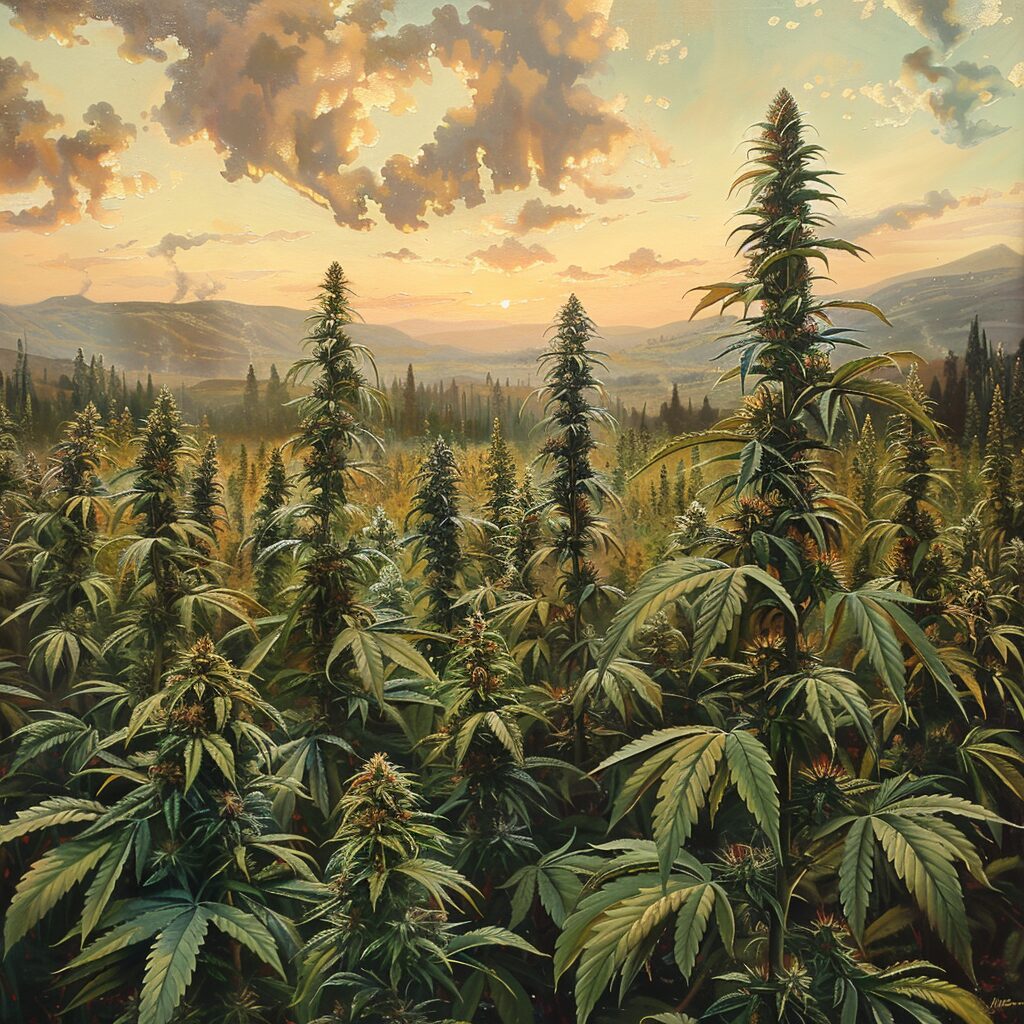

Hemp – varieties and properties
Hemp - varieties and properties
Origin and use of hemp:
Hemp is a species of plant in the Cannabis family, native to Central Asia. It has been cultivated for thousands of years (in China as early as 10,000 years ago) for medicinal, food, and textile purposes.
Main varieties of hemp:
There are three main varieties of hemp:
- Hemp (Cannabis Sativa): Also called industrial hemp or fiber hemp, it contains trace amounts of THC and has no psychoactive effects. It is cultivated for fiber (textiles, paper), biofuel, construction materials, food (seeds, oil), and cosmetics.
- Cannabis Indica: It contains the highest THC content of all strains. It is used medicinally and recreationally for its psychoactive properties.
- Hemp Ruderalis (Cannabis Ruderalis): It grows wild in wastelands. Low THC content, highly resistant. Used in blends with other varieties.
Differences in chemical composition:
The chemical composition of cannabis can vary depending on the variety, strain, growing conditions, and climate. Tropical and equatorial varieties may have different cannabinoid and terpene ratios than those grown in temperate climates.
Properties of hemp:
Hemp has many valuable properties, including:
- Medical: Analgesic, anti-inflammatory, pain reliever, antiemetic, appetite stimulant.
- Food: Rich in protein, fiber, vitamins, and minerals, hemp seeds and oil are a valuable addition to your diet.
- Textile: Strong, durable, biodegradable. Used to make clothes, rope, sails, and paper.
- Ecological: They absorb CO2, reduce soil erosion, and promote biodiversity.
Cannabis strains:
Within each cannabis variety, there are many strains that differ in appearance, smell, taste, and cannabinoid content, among other things.
Origin of hemp:
An important factor influencing the properties of hemp is its origin. Hemp from different regions of the world may have different characteristics.
Summary:
Hemp is a plant with a rich history and a wide range of uses. Different varieties and strains of hemp possess different properties, making it a valuable resource in many areas of life.
Hemp: Varieties and Their Uses
Cannabis Indica:
- It contains the most THC of all cannabis varieties.
- It has psychoactive properties, used in the treatment of pain, nausea, anxiety, and depression, among other things.
- It is the subject of numerous scientific studies that confirm its therapeutic potential.
- The body's response to THC may vary from person to person, and studies on animals and humans are sometimes contradictory.
Hemp (Cannabis Sativa):
- Contains trace amounts of THC, does not cause psychoactive effects.
- Also called industrial or fiber hemp.
- Grown as a biodegradable raw material for the production of clothes, ropes, sails, and paper.
- Used to produce paints, impregnations, cosmetics, food (oil, seeds, flour).
- Used in folk medicine and as a natural insect repellent.
Past uses of hemp:
- Production of textiles, ropes, sails, paper.
- Production of paints and wood impregnations.
- Creating ointments for the skin and accelerating the healing of wounds.
- Production of cooking oil, tea, flour.
- Add to baked goods and consume fresh seeds.
- Brewing hemp beer.
- Use in folk medicine.
- Use as a natural insect repellent.
Cannabis Ruderalis: Characteristics and Uses
Cannabis Ruderalis, or wild hemp:
- The name comes from natural habitats such as rubble and wasteland.
- It is characterized by smaller sizes compared to Indica and Sativa varieties.
- Contains less THC than Indica.
- It is distinguished by its high resistance to unfavorable environmental conditions.
- It's autoflowering, meaning it flowers after a set period of time, regardless of photoperiod (day length) and temperature. These factors are crucial for the flowering of both indica and sativa strains.
Uses of wild hemp:
- Mainly used in mixtures with other varieties to obtain:
- Plants more resistant to environmental stresses.
- Strains with autoflowering properties.
- Used in research on cannabis genetics.
Additional information:
- Wild hemp is an important source of resistance and autoflowering genes for cannabis breeders.
- In Poland, wild hemp grows wild throughout the country.
- The cultivation of wild cannabis for commercial purposes is regulated by law and may require a permit.
Hemp Properties: Benefits for the Environment, Health and Beauty
Hemp is a unique plant with many valuable properties that make it useful in various areas of life.
Environmentally friendly cultivation:
- Natural pesticides: Hemp has fungicidal, mildewcidal, and insect-repellent properties, eliminating the need for harmful herbicides and pesticides.
- Resistance to conditions: It grows in a variety of soils, preferring loose, nitrogen-rich soils, but it can even thrive in arid and flooded areas. It does not require fertilization.
- Ecological raw materials: Hemp cultivation is environmentally friendly and allows for the production of chemical-free raw materials.
Universal fiber:
- Healthy and biodegradable: Hemp fibers are delicate, breathable and extremely durable.
- Wide range of applications: Hemp is used to produce clothes (from underwear to outerwear), ropes, sails, paper and much more.
- Durability: Hemp products are durable and wear-resistant.
Valuable oils and extracts:
- Natural care: Hemp oil and extracts regulate sebum secretion, moisturize and soothe irritation.
- Medicinal properties: They have anti-inflammatory, regenerative and anti-itching properties, supporting wound healing and relieving muscle and joint pain.
- Cosmetic applications: They are a valuable ingredient in massage oils, creams and other cosmetics, strengthening hair and skin.
- Security: They can even be used on babies, allergy sufferers and people with sensitive skin.
Additional features:
- Hemp flowers have an anesthetic effect and relieve swelling.
- Hemp is a source of protein, fiber, vitamins and minerals.
- Hemp seeds can be eaten or used to produce cooking oil.
Hemp is a plant with enormous potential, offering a wide range of benefits for the environment, health, and beauty. Its natural properties and versatile applications make it a valuable raw material for many industries.
Hemp Foods: A Wealth of Nutrients for Health and Beauty
Hemp has been known for centuries for its numerous properties. In recent years, hemp foods have become increasingly popular, providing a valuable source of nutrients essential for proper body function.
Rich in unsaturated fatty acids:
Hemp foods are rich in essential fatty acids (EFAs), especially omega-3 and omega-6 fatty acids, whose proportions are ideal for human health. EFAs perform many important functions, including:
- Building materials: They are part of cell membranes and nervous tissue.
- Regulatory: They affect blood cholesterol levels, reducing the risk of heart and circulatory system diseases.
- Anti-inflammatory: They reduce inflammation in the body, which may protect against many diseases, including cancer.
- Strengthening immunity: They support the functioning of the immune system and protect against infections.
- Improving brain function: DHA is essential for the proper development and functioning of the brain and nervous system.
Terpenes – aromatic substances with many properties:
Hemp foods also contain terpenes, aromatic compounds responsible for the characteristic scent of cannabis. Terpenes exhibit many health-promoting properties, including:
- Antioxidant: They protect cells against damage caused by free radicals.
- Anti-inflammatory: They soothe inflammation in the body.
- Antibacterial and antifungal: They have a destructive effect on bacteria and fungi.
- Painkillers: They relieve pain and inflammation.
- Calming: They support relaxation and reduce stress.
Flavonoids – natural dyes with antioxidant properties:
Hemp foods are rich in flavonoids, organic compounds that give plants their color. Flavonoids exhibit strong antioxidant properties, protecting cells from damage caused by free radicals. Additionally, flavonoids:
- Strengthens blood vessels: They reduce the risk of heart and circulatory system diseases.
- They have anti-inflammatory properties: They soothe inflammation in the body.
- Supports immunity: They strengthen the immune system and protect against infections.
Vitamins and minerals essential for health:
Hemp foods are a rich source of vitamins and minerals essential for proper body function. They include:
- Vitamins: A, C, E, D, K, from group B.
- Minerals: Magnesium, calcium, zinc, iron, phosphorus, potassium.
Vitamins and minerals perform many important functions in the body, including:
- Strengthens immunity: They protect against infections.
- They support the functioning of the nervous system: They improve concentration and memory.
- They regulate hormonal balance: They maintain hormonal balance in the body.
- Strengthens bones and teeth: They provide the ingredients necessary for the construction and regeneration of bones and teeth.
- Improves the condition of skin, hair and nails: They give them a healthy look and shine.
Amino acids – the building blocks of proteins:
Hemp food is a valuable source amino acids, the basic building blocks of proteins. Amino acids are essential for:
- Tissue structure and regeneration: Muscles, bones, skin, hair and nails.
- Production of hormones and enzymes: Responsible for many important functions in the body.
- Strengthening immunity: They protect against infections.
Industrial Hemp Applications: A Sustainable Future for Various Industries
Hemp, a plant with a rich history and a wide range of applications, is gaining increasing interest from various industries. Its properties and potential make it a promising alternative to many traditional materials and technologies, contributing to a more sustainable future.
1. Textile Industry:
Hemp fiber shares many characteristics with linen, making it an attractive material for the textile industry. In its Circular Economy Action Plan, the European Commission cites the textile sector as one of the key areas for the transition to a greener and more sustainable economy. The search for new materials and business models is encouraged, and hemp fits perfectly into this trend.
2. Food and Feed:
Hemp seeds are a rich source of protein, fiber, vitamins, omega-3 fatty acids, and minerals. The dehulled seeds are a valuable food for humans, while the whole seeds are used as animal feed.
3. Construction:
Due to its energy-saving properties, hemp fiber is used in construction in the form of lime concrete, hemp wool, and fiberboard insulation. The construction sector, responsible for a significant portion of energy consumption and greenhouse gas emissions, is seeking CO2-neutral or carbon-sequestering solutions. Hempcrete, a carbon sink, perfectly meets these needs.
4. Paper Production:
Hemp fiber is ideal for paper production. Hemp stalks take just five months to grow, and hemp paper production doesn't require the use of toxic bleaching agents. Furthermore, this paper can be recycled seven to eight times.
5. Other Applications:
Hemp products are used in many other industries. Due to their lightness and durability, they are an excellent alternative to plastic, used in industries such as the automotive, rail, aviation, and space industries.
Hemp is also a valuable raw material in the cosmetics industry (oils, balms, shampoos) and in the energy sector (biofuels). There is significant interest in the production and sale of hemp extracts, particularly cannabidiol (CBD), due to its potential uses in cosmetics, health products, and food. However, it is important to note that these uses are subject to strict EU regulations.
The Future of the Hemp Industry:
Hemp offers a wide range of opportunities for various industries, contributing to the development of a sustainable economy. Its properties, potential, and growing popularity place it among the leading promising raw materials of the future.