
420 – what does it mean? The history of 420 and the holiday of marijuana
A comprehensive guide to the history of the 420 code: from San Rafael 1971 and the Waldos to the global cannabis holiday on April 20. Myths, facts, Polish legal context, and CBD.
Key information
- The origin of the code 420: the term originated in the fall of 1971 at San Rafael High School in California. A group of five students known as the Waldos would meet at 4:20 PM by the statue of Louis Pasteur to search for a lost cannabis crop ([Time Magazine](https://time.com/4747501/420-april-20-marijuana-pot-holiday-history/), 2017).
- Global reach: April 20 has become an informal cannabis holiday celebrated from San Francisco to Berlin. According to ESPAD research, 16% of European teenagers have tried cannabis ([ESPAD Report](http://www.espad.org/espad-report-2019), 2019).
- Legal status in Poland: possession of THC flower remains a crime under the Drug Prevention Act of July 29, 2005 ([ISAP](https://isap.sejm.gov.pl/isap.nsf/DocDetails.xsp?id=WDU20051791485), 2005). CBD products with THC content below 0.3% are legal.
- Debunked historical myths: the police code for smoking cannabis, Hitler's birthday, or the date of Bob Marley's death, all these explanations are false ([HuffPost / Steven Hager](https://www.huffpost.com/entry/420_n_3115132), 2013).
- CBD as a legal alternative: The World Health Organization recognized cannabidiol as a substance with no addictive potential or health harms ([WHO ECDD](https://www.who.int/publications/i/item/who-ecdd-40-cbd-critical-review), 2018).
Every year, on April 20 at 4:20 PM, crowds gather in parks, campuses, and outside parliament buildings in dozens of cities around the world. Is this time and date a coincidence? Absolutely not. The number 420 is one of the most enduring cultural codes of the 20th century, a phenomenon that grew from an innocent school game in California and became a symbol of the fight for drug law reform. In this article, we will trace the official history of the term, debunk popular myths, show how 420 functions in pop culture, politics, and the legal reality in Poland. We will also explain why the date 4/20 holds special significance for millions of people identifying with cannabis culture.
What exactly does 420 mean? A brief answer
The term 420 (pronounced as "four-twenty") refers to an informal code of cannabis culture relating both to the time 4:20 PM, the traditional time for smoking marijuana, and to the date April 20, which is the international marijuana holiday. According to a report published by Time Magazine, the code was coined by American high school students in 1971 ([Time Magazine](https://time.com/4747501/420-april-20-marijuana-pot-holiday-history/), 2017).
Today, 420 functions as a universal cipher recognizable from Vancouver to Tel Aviv. The number 420 appears in hotel room numbers, on clocks in films, in song titles, and in social media hashtags. It serves as both a greeting, a sign of belonging to the community, and a political stance advocating for reform of prohibition.
Over five decades, the term has evolved from a secret password of teenagers to an officially cited concept in English dictionaries and mainstream media. Its strength lies in its simplicity. Three digits condense half a century of counterculture history, activism, and social transformation.
What is the official history of 420? The Waldos from San Rafael
The official and documented origin of the term 420 begins in the fall of 1971 at San Rafael High School in Marin County, California. A five-member group of classmates from the school football team, known as the Waldos (from the English word wall, the wall where they spent their breaks), would meet daily at 4:20 PM by the statue of chemist Louis Pasteur in front of the school building ([Time Magazine](https://time.com/4747501/420-april-20-marijuana-pot-holiday-history/), 2017).
The reason for the meetings was a map drawn by a certain coast guard officer, which marked the location of a lost cannabis crop in the Point Reyes Peninsula area. The officer could no longer tend to the plantation, so he passed the location to the Waldos in hopes that they would harvest it. The meeting was set for 4:20 PM, after practice and extracurricular activities.
Where did the name "Waldosi" come from?
The group's name had nothing to do with cannabis. The Waldos simply met by a specific wall on campus. This place became their headquarters. The five founders went by the nicknames Steve, Dave, Jeffrey, Larry, and Mark, while the last names Capper, Reddix, Noel, Schwartz, and Gravich were later revealed in press interviews from the 90s.
What was behind the Pasteur statue?
Meetings under the statue of the French microbiologist had a practical reason. The monument stood off the beaten path, away from the eyes of teachers and other students. Waldosi used the code "4:20 Louis" to coordinate without revealing their intentions. Over time, as the search for the crop proved fruitless, the word "Louis" fell away, and "420" stuck as a universal slogan ([Time Magazine](https://time.com/4747501/420-april-20-marijuana-pot-holiday-history/), 2017).
What role did Grateful Dead play?
Marin County was home to the Grateful Dead in the 70s, one of the most important psychedelic rock bands. The brothers of one of the Waldos, Patrick Reddix, managed the properties of the band members, and Mark Gravich worked as an assistant to bassist Phil Lesh. Thanks to these connections, the 420 code made its way into the band's wardrobe, concerts, and from there, through fans known as Deadheads, to all of America.
Without the infrastructure of Grateful Dead and their massive, traveling fan base, the term 420 would likely have remained a local school cipher from San Rafael. The concert tours of the 70s and 80s acted as the earliest viral marketing campaign in the history of counterculture, long before the internet.
Citation Capsule: According to a 2017 report by Time Magazine, the code 420 originated in the fall of 1971 at San Rafael High School when five students known as the Waldos would meet at 4:20 PM by the statue of Louis Pasteur to search for a lost cannabis plantation. The term spread thanks to the group's connections with the Grateful Dead.
How did High Times popularize 420 in the 90s?
A breakthrough in the global recognition of the code occurred in December 1990 when High Times reporter Steven Hager received a flyer distributed at a Grateful Dead concert in Oakland. The flyer called for a communal smoking of cannabis on April 20 at 4:20 PM on Mount Tamalpais in California. Hager conducted a journalistic investigation and published the full story of the Waldos in 1998 ([HuffPost](https://www.huffpost.com/entry/420_n_3115132), 2013).
At that time, High Times was the leading industry publication for the cannabis community in the USA. Any mention of 420 in the magazine reached hundreds of thousands of readers. Hager personally adopted the term and began using it in headlines, interviews, and editorials, making April 20 a symbolic holiday.
Why is April 20 significant?
The choice of date was a result of the American convention of writing month/day, which is 4/20. The number matched the already established time of meetings. Additionally, April in North America marks the beginning of cannabis vegetation, the planting season. For drug law reform activists, the date became a convenient time for spring demonstrations.
How did the Waldos prove their version?
For decades, dozens of competing theories about the origin of 420 have circulated. Waldosi presented evidence in the form of dated letters from the 70s with postmarks, flags reading "4:20", and witness letters confirming their ritual ([HuffPost](https://www.huffpost.com/entry/420_n_3115132), 2013). These materials were deposited in a bank safe in San Francisco and made available to journalists from Time Magazine and Huffington Post.
What myths about the origin of 420 are false?
Around the code 420, at least a dozen false legends have accumulated, which still circulate on the internet. The 2017 report by Time Magazine and Steven Hager's investigation from High Times unequivocally ruled out all these alternative explanations ([Time Magazine](https://time.com/4747501/420-april-20-marijuana-pot-holiday-history/), 2017). The most persistent myths are worth discussing, as they continue to appear in the media.
Is 420 a police code?
The most commonly repeated myth states that "420" was a California police code meaning "ongoing marijuana smoking." California police documents do not contain and have never contained such a code. Section 420 of the California Penal Code pertains to a completely different issue, namely trespassing on federal land. The myth likely arose from reverse engineering as people sought an "official" explanation for the popular number.
Does it relate to Hitler's or Bob Marley's birthday?
Adolf Hitler was born on April 20, 1889, which is indeed a historical fact. Bob Marley, on the other hand, died on May 11, 1981, and was born on February 6, 1945. Neither of these elements has anything to do with the origin of the term 420. The cannabis community firmly distances itself from the coincidence with Hitler's birthday, which it considers an unfortunate calendar coincidence.
Is it the number of chemical compounds in cannabis?
Another popular myth claims that cannabis contains 420 active chemical compounds. In reality, pharmacological studies identify over 500 compounds, including about 100 cannabinoids ([Hartman & Huestis](https://pubmed.ncbi.nlm.nih.gov/23438855/), 2013). The number 420 has no basis in the phytochemistry of cannabis.
Is it Bob Dylan's tea?
There is also a theory that 420 refers to Bob Dylan's song "Rainy Day Women No. 12 & 35", because 12 times 35 equals 420. The lyrics of the song contain the phrase "everybody must get stoned", which has been interpreted as a reference to smoking marijuana. Dylan himself has never confirmed this interpretation, and the mathematical coincidence is coincidental.
Having worked in the cannabis industry for several years, we regularly encounter clients who are convinced of the truth of one of these myths. The police code comes up most often in conversations, probably because it is the most "cinematic". This shows how strongly entrenched false narratives can be once they enter pop culture.
Citation Capsule: All alternative explanations for the origin of the 420 code, police code, Hitler's birthday, Marley’s death, the number of chemical compounds in cannabis, have been debunked by journalistic investigations from Time Magazine and High Times. The only documented origin leads to five students from San Rafael High School in 1971 ([Time Magazine](https://time.com/4747501/420-april-20-marijuana-pot-holiday-history/), 2017).
How is 4/20 celebrated around the world?
April 20 is now the largest communal holiday for the cannabis community. According to various estimates, gatherings at Hippie Hill in Golden Gate Park alone attract over 15,000 participants annually. Globally, the scale of celebrations is counted in the hundreds of thousands of people in dozens of cities across six continents.
Hippie Hill in Golden Gate Park
San Francisco's Hippie Hill is the symbolic center of 4/20 celebrations. The tradition dates back to the 70s when the city's hippie community would meet there for spontaneous picnics. Today, the event has official sponsors, a stage with concerts, food trucks, and thousands of participants. At 4:20 PM, a distinctive cloud of smoke rises over the park, and this moment is broadcast every year by local and international media.
Denver and the Mile High Festival
The capital of Colorado, where cannabis has been legal for recreational use since 2014, hosts one of the largest cannabis festivals in the world. The Mile High 420 Festival in Civic Center Park gathers up to 50,000 participants, offering concerts by well-known rappers, discussions on reforming the law, and tasting zones for legal cannabis products.
New York and Washington Square Park
New York's celebrations are less festival-like and more protest-oriented. Washington Square Park and Union Square become the center of demonstrations supporting federal drug law reform. Activists often distribute rolled cannabis (joints) as an act of civil disobedience against ongoing criminal regulations.
Berlin, Toronto, and Wellington
The European capital of celebrations is Berlin, where thousands gather in Görlitzer Park. In Canada, Toronto's Yonge-Dundas Square serves as the center, with events taking place since federal legalization in 2018 in a festive atmosphere. Wellington in New Zealand hosts celebrations in Civic Square, combining the theme of legal reform with local Māori traditions.
How has 420 been recorded in pop culture?
The number 420 has become one of the most frequently hidden "Easter eggs" in American cinema and music over the past three decades. Directors, screenwriters, and video game creators regularly place the number in pseudo-random contexts. In Quentin Tarantino's Pulp Fiction series, almost all clocks show the time 4:20.
Movies and series
Classics include the duology "Pineapple Express" and "Half Baked", where the main characters live by the 420 code. The series "That 70's Show", "Weeds", and "Disjointed" consistently reference the number. In the animations "Family Guy" and "South Park", 420 appears in hundreds of scenes as a gag for adult audiences. The films of Cheech and Chong from the 70s laid the groundwork for this genre of "stoner comedy".
Music
Hundreds of hip-hop tracks contain references to 420. Snoop Dogg, Wiz Khalifa, Cypress Hill, Method Man, and Redman have made the number a part of their personal branding. Wiz Khalifa released the album "O.N.I.F.C." on December 19, 2012, but previously titled a mixtape "Taylor Allderdice" that contained many references to 420 culture. Bob Marley and the entire reggae genre treat marijuana as a religious-spiritual theme within Rastafarianism.
Anglophone days and hashtags
In the calendar of unofficial "national days" present on social media, 4/20 has its own position as "National Weed Day". Related terms have also emerged, such as "Dabbing Day" on 7/10 (the date read upside down resembles "OIL"), "Hash Day" on 9/2, and "International Cannabis Day" coinciding with 4/20.
What political significance does 4/20 have?
April 20 has become a day of political mobilization for the drug law reform movement. According to statistics from the American organization NORML, cannabis is now legally recreational in 24 states and medically in 38, with many of these legalizations announced deliberately around the date of April 20 ([Time Magazine](https://time.com/4747501/420-april-20-marijuana-pot-holiday-history/), 2017).
Symbolic announcements of legalization laws around 4/20 are a conscious communication strategy. California, Colorado, Washington, Oregon, Maine, Massachusetts, and many other states have used this date to sign documents or launch the first legal dispensaries. For activists, it represents a symbol of the triumph of a long-standing struggle.
Canada and federal legalization
Canada federally legalized cannabis on October 17, 2018. Although the date was not exactly 4/20, the political mobilization leading to the passage of the Cannabis Act lasted through years of annual celebrations on April 20 in Vancouver, Toronto, and Montreal. Prime Minister Justin Trudeau made legalization one of the main points of his 2015 election campaign.
Thailand, Germany, and other countries
In recent years, the theme of legalization has also entered the mainstream outside of both Americas. Thailand in 2022 became the first Asian country to liberalize medical cannabis regulations. Germany introduced partial recreational legalization for adults in April 2024 (the CanG Act). Malta, Luxembourg, and the Czech Republic are heading in a similar direction.
Impact on public health
Legal reform goes hand in hand with epidemiological research. According to studies by Hartman and Huestis published in PubMed, controlled legalization combined with health education can reduce the harms associated with cannabis use compared to prohibition ([Hartman & Huestis](https://pubmed.ncbi.nlm.nih.gov/23438855/), 2013). This argument is one of the main points in the political debate.
From our observations conducted in a Polish cannabis shop, interest in CBD products increases around April 20 by about 30-40% compared to the average in March. This is indirect evidence of the strength of the cultural message of the date 4/20 even in a country where THC cannabis remains illegal.
What does 420 look like in Poland in a legal context?
In Poland, the key act regulating cannabis issues is the Act of July 29, 2005 on Counteracting Drug Addiction ([ISAP](https://isap.sejm.gov.pl/isap.nsf/DocDetails.xsp?id=WDU20051791485), 2005). The act imposes strict criminal penalties for the production, possession, and trafficking of narcotic substances, which include cannabis containing THC above 0.3%.
Possession of even a small amount of THC cannabis flower constitutes a crime punishable by up to three years in prison. In less serious cases, the prosecutor may dismiss the proceedings under Article 62a of the act, but this is a discretionary decision, not an automatic one.
What exactly does the 2005 act regulate?
The Drug Prevention Act replaced an earlier act from 1997 and harmonized Polish law with UN conventions. It defines categories of narcotic drugs and psychotropic substances, criteria for treating addicted individuals, principles of harm reduction programs, and also the medical applications of cannabis (since the amendment in 2017).
Medical cannabis in Poland
Since November 1, 2017, medical cannabis has been available in Poland by prescription. Patients with treatment-resistant epilepsy, multiple sclerosis, Parkinson's disease, and chronic pain can access pharmaceutical products containing THC. The number of prescriptions filled is increasing year by year, exceeding 200,000 in 2024.
CBD as a legal alternative
CBD (cannabidiol) products with THC content below 0.3% are legal and available for sale in Poland. The World Health Organization confirmed in its 2018 ECDD report that CBD does not exhibit addictive potential or toxicity characteristic of psychoactive substances ([WHO ECDD](https://www.who.int/publications/i/item/who-ecdd-40-cbd-critical-review), 2018). This has created a legal space for the cannabis product market in Poland.
detailed article comparing cannabinoids
What does the social phenomenon of 420 look like in Poland?
Despite restrictive laws, the Polish cannabis community has been celebrating April 20 for over two decades. According to ESPAD studies conducted in Polish high schools, about 17% of teenagers aged 15-16 report having tried cannabis ([ESPAD Report](http://www.espad.org/espad-report-2019), 2019). This value is close to the European average.
Cannabis Liberation Marches have been organized in Warsaw, Krakow, Poznan, Wroclaw, and Gdansk since the late 90s. The initiator was the Polish Cannabis Liberation Movement associated with figures from the music world and social activists. The demonstrations attract from several hundred to several thousand participants, depending on the city and weather.
Cannabis Liberation March in Warsaw
The capital marches traditionally start from Defilad Square or the vicinity of the Palace of Culture and Science and end under the Sejm or in Skaryszewski Park. The character of the event has evolved from a countercultural protest in the 90s to a more organized civic manifestation involving politicians advocating for reform.
Krakow's Free Cannabis
The Free Cannabis Association based in Krakow organizes scientific conferences and educational meetings around April 20 each year. Invited experts, lawyers, doctors, and researchers discuss the state of Polish drug policy and proposals for reform. The event is substantive, less festival-like than its American counterparts.
Police and institutional response
Polish law enforcement approaches cannabis demonstrations formally, securing the march but not intervening unless there is open lawbreaking. In practice, some participants take advantage of the atmosphere to demonstratively smoke cannabis, which is sometimes enforced sporadically. The scale of interventions has significantly decreased in the last five years.
What role does CBD play in 420 culture?
CBD has become the biggest bridge connecting 420 culture with the legal consumer market. Over the course of a decade, the global CBD product market has grown from a marginal niche to a segment estimated at over $7 billion annually. According to the WHO ECDD report from 2018, cannabidiol is safe and well-tolerated by humans ([WHO ECDD](https://www.who.int/publications/i/item/who-ecdd-40-cbd-critical-review), 2018).
Around April 20, CBD producers worldwide organize educational campaigns, promotions, and tastings. This is an opportunity to show that cannabis culture encompasses not only recreational smoking but also wellness, supplementation, and medicine. The Polish CBD scene fully participates in this global trend.
What CBD products are popular around 4/20?
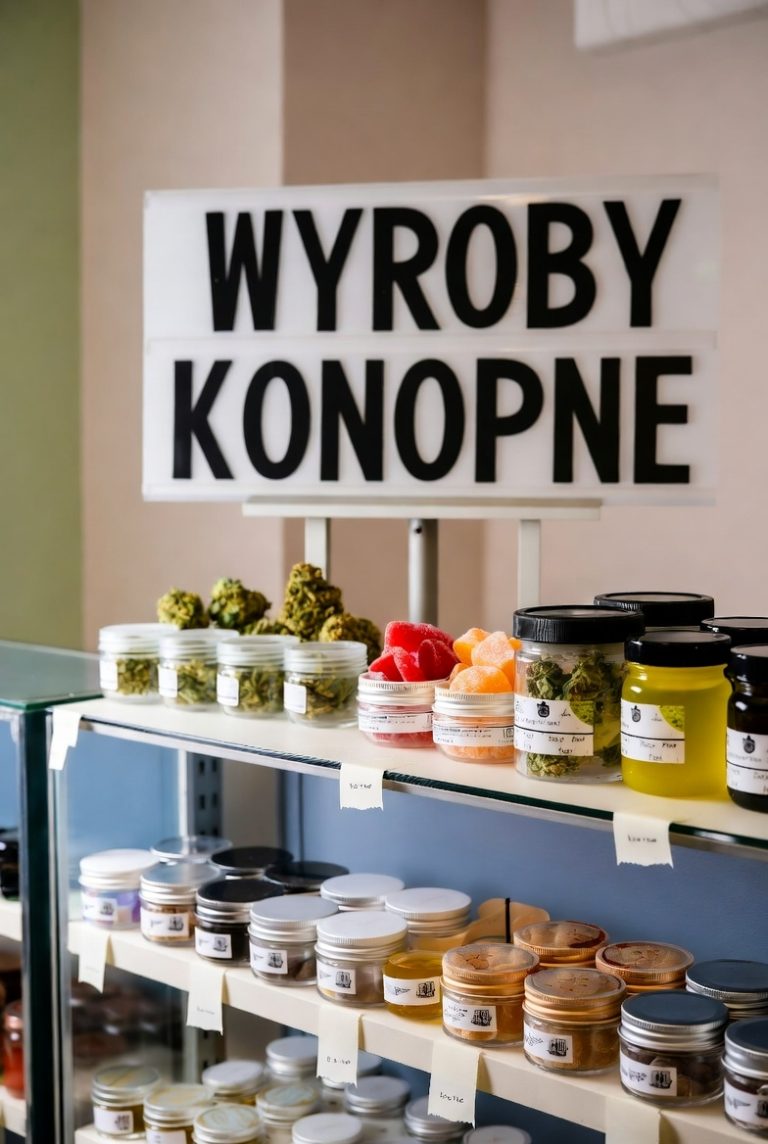
In Poland, the most popular products are CBD oils with concentrations of 5%, 10%, and 15%, CBD flowers from legal hemp strains, and CBG and CBN products. CBD flowers are particularly chosen by those who want to "celebrate 420" in full compliance with Polish law, as they contain less than 0.3% THC.
CBD and mental well-being
Research on CBD indicates the substance's potential in alleviating symptoms of anxiety, sleep disorders, and chronic pain. While they do not replace the recreational experience of THC, they offer a legal and safe alternative for those valuing the health benefits of cannabis without the psychoactive effect ([WHO ECDD](https://www.who.int/publications/i/item/who-ecdd-40-cbd-critical-review), 2018).
How to celebrate 420 legally in Poland?
Legally celebrating 4/20 in Poland comes down to using CBD products, participating in educational events, and supporting reform efforts. According to ESPAD, awareness of the difference between CBD and THC among Polish consumers has significantly increased over the last decade ([ESPAD Report](http://www.espad.org/espad-report-2019), 2019).
The key is to consciously choose legal alternatives that capture the spirit of 420 without legal risk. More and more Poles treat April 20 as a day of reflection on drug policy, public debate, and celebration of cannabis culture in its broad dimension.
CBD oil for a relaxing 4/20 evening
A classic choice for the evening of April 20 is sublingual CBD oil. It acts quickly, offers a calming effect, and allows one to appreciate the ritual of celebration without violating regulations. Among Polish products, it is worth noting full-spectrum oils from certified European farms.
An example is SOOL CBD 5% priced at 76 PLN, a mild concentration suitable for those starting their journey with CBD or valuing subtle effects. For more experienced users, a version is available SOOL CBD 10% for 99 PLN, offering a more intense calming effect after a demanding day.
CBD flower as a substitute ritual
For those who value the ritual of smoking, there is a legal alternative in the form of CBD flower from hemp. Mars Dry CBD 9% available for 59 PLN is a popular choice, offering an authentic cannabis aroma and significant concentrations of cannabidiol while keeping THC content below the permissible limit of 0.3%.
CBG for more advanced consumers
Cannabigerol (CBG), known as the "mother of all cannabinoids", is gaining popularity among conscious consumers. Cannova CBG 15% for 240 PLN is a high-concentration oil for those seeking properties other than classic CBD, such as support for concentration and recovery.
Dosage and safety
Regardless of the chosen product, it is crucial to gradually introduce CBD into the body. Start with the minimum dose suggested by the manufacturer, observe the body's reactions for a few days, and only then consider increasing it. Individuals taking chronic medications should consult a doctor due to potential interactions.
What is the basic terminology of 420 culture?
420 culture has created its own lexicon of English terms that have permeated the global discourse on cannabis. According to a report by Time Magazine, some of these words have found their way into official dictionaries like Merriam-Webster and the Oxford English Dictionary after decades of popular use ([Time Magazine](https://time.com/4747501/420-april-20-marijuana-pot-holiday-history/), 2017).
Familiarity with this terminology helps understand English-language content, films, music, and memes related to cannabis culture. Most terms come from American subcultures of the late 20th century, some from reggae and Rastafarianism, and the latest from online communities of the 21st century.
"Blaze it"
The phrase "blaze it" (literally "light it up") means to smoke marijuana. It is often combined with the number as "blaze it 420" or in the hashtag #420blazeit. It also functions as a universal internet meme used humorously in contexts unrelated to cannabis, as a form of online folklore.
"Stoner"
The term "stoner" refers to a person who regularly uses marijuana. Unlike pejorative terms, "stoner" carries a rather neutral or positive connotation in cannabis culture. It describes a certain lifestyle, aesthetic, and identity. The genre "stoner rock" in music refers to the hypnotic, heavy sound associated with cannabis culture.
"Stoned"
"Stoned" refers to the state after consuming THC marijuana, characterized by relaxation, altered perception of time, and heightened sensory experiences. The term is neutral and descriptive. Bob Dylan famously stated "everybody must get stoned" in his song "Rainy Day Women," which many interpret as an ironic play on words.
Other important terms
It is also worth knowing the terms "joint" (a rolled cigarette), "blunt" (a tobacco cigar filled with marijuana), "bong" (a water pipe), "vape" (a vaporizer), "edibles" (edible forms of cannabis), "dab" (a concentrated extract), "indica" and "sativa" (categories of cannabis strains), and "hybrid" (a crossbreed). The Polish cannabis scene mainly uses localized variants: blant, lufka, jaracha, fajunia.
comprehensive glossary of terminology
FAQ – frequently asked questions about 420
Does 420 mean smoking cannabis?
Yes, the code 420 originally meant communal smoking of cannabis at 4:20 PM, and over time expanded to the date April 20 as a holiday of cannabis culture. Today, it functions as a universal symbol of the cannabis user community and the drug law reform movement ([Time Magazine](https://time.com/4747501/420-april-20-marijuana-pot-holiday-history/), 2017).
Is celebrating 420 legal in Poland?
Celebrating 4/20 itself is not punishable, but smoking THC cannabis flower remains illegal under the Act of July 29, 2005 on Counteracting Drug Addiction ([ISAP](https://isap.sejm.gov.pl/isap.nsf/DocDetails.xsp?id=WDU20051791485), 2005). A legal alternative is to use CBD products containing less than 0.3% THC.
Where does the number 420 come from?
The number comes from the time 4:20 PM, when a group of five students from San Rafael High School in California would meet in the fall of 1971 by the statue of Louis Pasteur. They were searching for a lost cannabis crop based on a map received from a coast guard officer ([Time Magazine](https://time.com/4747501/420-april-20-marijuana-pot-holiday-history/), 2017).
Is 420 a police code?
No, this is a popular myth. The California Penal Code does not contain and has never contained a code 420 for smoking cannabis. The myth likely arose from reverse engineering when people sought an official explanation for the popular number ([HuffPost](https://www.huffpost.com/entry/420_n_3115132), 2013).
What do we celebrate on April 20?
4/20 is an informal holiday of cannabis culture celebrated worldwide. It combines festival elements, political (demonstrations for drug law reform), and educational (informational campaigns about the medical properties of cannabis). In Poland, Cannabis Liberation Marches take place in major cities.
Does CBD have anything to do with 420?
Yes, CBD is an essential part of contemporary 420 culture as a legal alternative allowing the celebration of the holiday without breaking the law. WHO recognizes CBD as a safe substance with no addictive potential ([WHO ECDD](https://www.who.int/publications/i/item/who-ecdd-40-cbd-critical-review), 2018). The global CBD market is growing, and 4/20 is a key marketing date for the industry.
Summary – 420 as a cultural phenomenon
The code 420 is one of the most fascinating examples of how a local school game can transform into a global cultural phenomenon encompassing hundreds of millions of people. From the statue of Louis Pasteur in San Rafael, through Grateful Dead concerts, the pages of High Times magazine, to festivals in Denver and marches in Warsaw, the path of 420 illustrates the power of countercultural symbols in shaping social change.
In the Polish context, consciously celebrating 4/20 primarily means understanding the history, educating oneself about the medical and wellness aspects of cannabis, and using legal CBD products. The Drug Prevention Act still imposes significant restrictions, but growing social awareness and the development of the CBD market create space for authentic participation in the global cannabis culture.
detailed guide for beginners
Legal disclaimer: Possession of THC cannabis in Poland is illegal under the Act of July 29, 2005 on Counteracting Drug Addiction. CBD products with THC content below 0.3% are legal. This article is of a cultural-historical and educational nature and does not encourage breaking applicable laws. Individuals planning to use cannabis products for health purposes should consult a doctor.