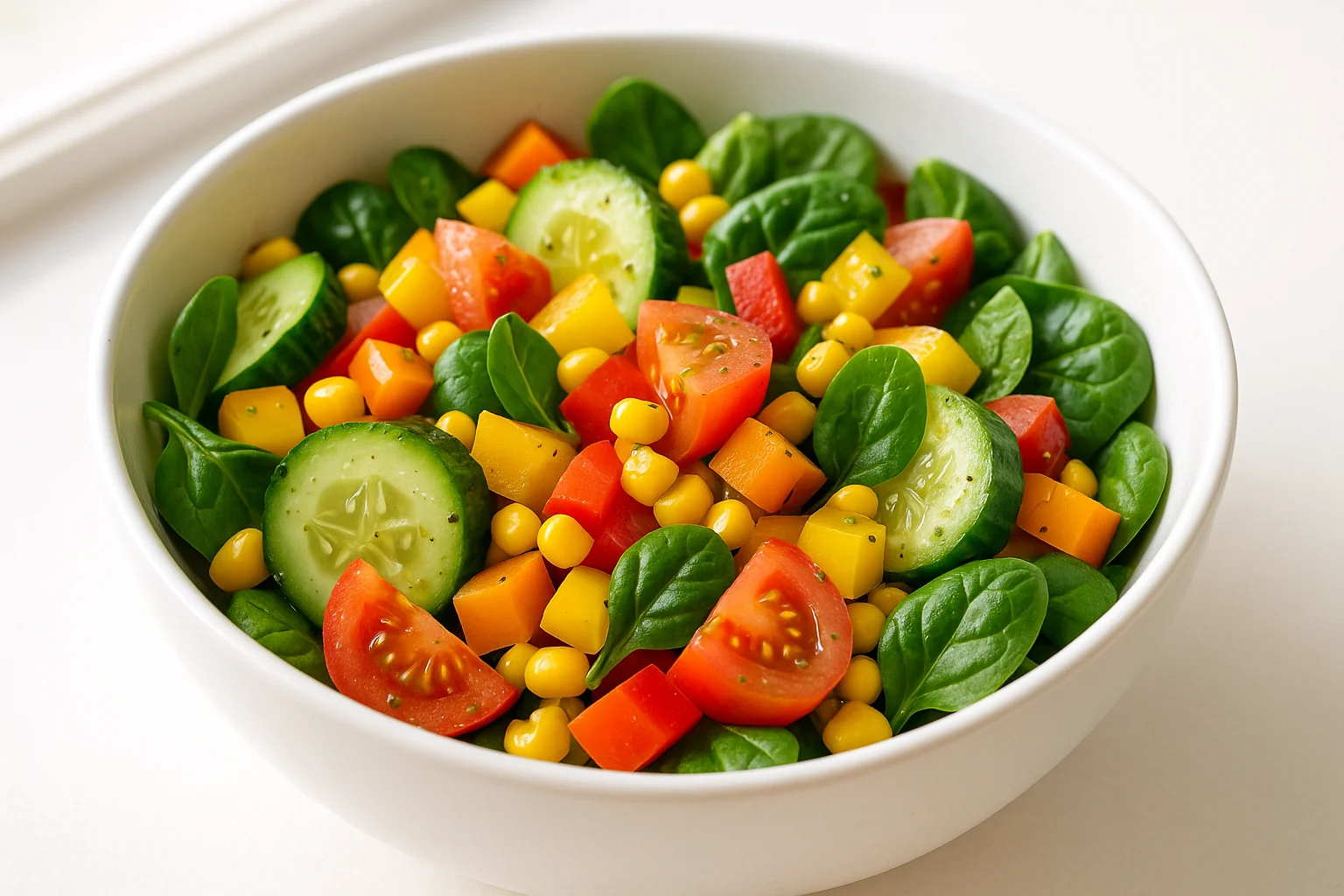

Colorful vegetable salad with hemp dressing
Colorful Vegetable Salad with Hemp Dressing – Step-by-step recipe. Light dressing made with cold-pressed hemp oil, nutritional value, and variations.
A colorful vegetable salad is a dish that practically cooks itself - provided the dressing is good. And the dressing made with cold-pressed hemp oil is just that: nutty, slightly earthy, with a natural sweetness that brings all the vegetables together. Plus, it has one of the best fatty acid profiles among vegetable oils. Ready in 15 minutes, visually appealing, and tasty all year round. I will show you how to make it and why hemp oil makes a difference.
KEY INFORMATION
• Hemp oil contains about 76-80% polyunsaturated fatty acids (PUFA) (Callaway, Euphytica, 2004).
• The smoke point of hemp oil is about 165°C - use it only cold, never for frying (Hemp Oil Canada, PMC 2020).
• A tablespoon of hemp oil (15 ml) provides about 125 kcal, 14 g of fat, and about 5 mg of vitamin E (USDA FoodData Central, 2023).
• The fats from hemp dressing enhance the absorption of vitamins A, D, E, and K from vegetables by up to 3-5 times compared to a fat-free salad.
What makes hemp oil dressing special?
Most homemade dressings are based on extra virgin olive oil or sunflower oil. Olive oil is an excellent choice due to its monounsaturated fatty acids, but its omega-6 to omega-3 ratio is about 10:1. Cold-pressed hemp oil keeps this ratio at about 3:1, which Simopoulos (Nutrients, 2016) indicates as a range for anti-inflammatory action in the Western diet. This makes simply changing the oil in the dressing one of the easiest dietary modifications without altering the menu.
The flavor of hemp dressing is distinctive but not overpowering. USDA FoodData Central confirms that a tablespoon of hemp oil provides about 5 mg of vitamin E - a powerful antioxidant. In combination with apple cider vinegar and whole grain mustard, hemp oil creates an emulsion with a nutty, slightly sweet flavor that enhances the freshness of the vegetables rather than overwhelming them. How to distinguish good hemp oil from bad? Color: it should be yellow-green and intense, not pale.
Our observations from dressing tests: hemp oil and whole grain mustard create a stable emulsion much better than hemp oil with just vinegar. The mustard seeds release lecithin, which acts as a natural emulsifier. The result? The dressing does not separate for several hours and forms a delicate, uniform layer on the salad instead of greasy spots.
Nutritional values - what does this serving provide?
One serving of colorful vegetable salad (about 250 g of mixed vegetables, 2 tablespoons of hemp dressing) provides about 240-270 kcal, 4-5 g of protein, 19 g of fat (mainly beneficial PUFA and MUFA), and 16 g of carbohydrates. The fiber from the vegetables is about 4-5 g. Vitamin C from bell peppers and tomatoes: about 120% of the daily requirement per serving.
Ingredients - what do you need?
Proportions for 2 servings. Preparation time: 15 minutes.
- 2 handfuls of mixed salad greens or baby spinach (about 80 g)
- 1 cucumber (about 200 g)
- 200 g of cherry tomatoes
- 1 yellow or orange bell pepper (about 150 g)
- 100 g of canned corn (drained)
- optional: 1/2 avocado or a handful of olives
- 2 tablespoons of hulled hemp seeds for sprinkling
- 3 tablespoons of cold-pressed hemp oil
- 1 tablespoon of apple cider vinegar or lemon juice
- 1 teaspoon of whole grain mustard
- 1 teaspoon of honey or maple syrup
- salt and pepper to taste
How to prepare a colorful salad with hemp dressing - step by step?
This is one of the quickest recipes in this collection - no cooking, no baking. It all comes down to cutting and mixing.
Step 1. Prepare the vegetables. Slice the cucumber into slices or half-slices about 5 mm thick. Cut the cherry tomatoes in half. Slice the bell pepper into thin strips about 4-5 cm long. Drain the corn from the brine and dry it on a towel. Each vegetable should be dry before adding to the bowl - excess moisture dilutes the dressing and reduces its adherence to the leaves.
Step 2. Prepare the lettuce. Rinse the salad mix or baby spinach under cold water. Dry in a salad spinner or on a paper towel. Wet lettuce is the most common mistake - after drizzling with dressing, it becomes watery within minutes.
Step 3. Make the hemp dressing. In a small jar, combine hemp oil, apple cider vinegar, mustard, honey, salt, and pepper. Seal tightly and shake vigorously for 20-30 seconds. If you don't have a jar, mix with a whisk in a bowl. Taste the dressing before using - it should be balanced: nutty, slightly sour, and gently sweet.
Step 4. Assemble the salad. In a large bowl or on a plate, lay a layer of lettuce. On top, arrange the vegetables by color - green cucumber, yellow bell pepper, red cherry tomatoes, yellow corn. The visual effect is half the pleasure of this salad.
Step 5. Drizzle and sprinkle. Just before serving, drizzle the hemp dressing evenly over the entire surface of the salad. Sprinkle with a spoonful of hulled hemp seeds. You can also serve the dressing separately in a bowl at the table - everyone can dose it to their liking.
Step 6. Serve immediately. Serve immediately after assembling. The colorful salad with hemp dressing is a momentary dish - the sooner it reaches your mouth, the better. The dressing and prepared ingredients can be kept separately in the fridge for 2-3 days.
Tips and variations
A colorful vegetable salad is a dish that can be modified endlessly. Here are a few tried-and-true combinations:
Summer version. In summer, add pieces of watermelon or peach to the salad - the sweetness of the fruit balances the nutty hemp dressing phenomenally. Watermelon with arugula and hemp dressing is one of those combinations that surprises with the first bite.
Autumn-winter version. Replace cucumber and tomatoes with roasted bell peppers from a jar, olives, and sun-dried tomatoes. Winter ingredients have more intense flavors and better withstand dressing with ginger or garlic.
Hearty version. Add 100 g of cooked chickpeas or lentils, 2 hard-boiled eggs, or grilled shrimp to the salad. The hemp dressing pairs well with any of these additions and boosts the protein content of the meal to 20+ g.
The most common mistake. Dressing the salad too early before serving. The acidity of the dressing causes the delicate lettuce leaves to wilt quickly. Always drizzle just before serving. Also, check out our recipe for avocado salad with hemp oil - a similar dressing base, with avocado as the main star.
Frequently Asked Questions
Why is it worth using hemp oil for dressings?
Hemp oil contains about 76-80% polyunsaturated fatty acids (PUFA)Callaway, Euphytica, 2004) and an omega-6:omega-3 ratio of about 3:1 - one of the most beneficial fat profiles among vegetable oils. When used cold in dressings, it retains its full nutritional value and vitamin E.
How many kcal does a salad with hemp dressing provide?
One serving of colorful vegetable salad with 2 tablespoons of hemp dressing provides about 240-270 kcal, 4 g of protein, and 18 g of fat. A tablespoon of hemp oil contributes about 125 kcal and 14 g of fat (USDA FoodData Central, 2023).
How to store hemp dressing?
Keep hemp dressing in a sealed jar in the fridge for up to 5-7 days. Hemp oil oxidizes when exposed to light and heat (Hemp Oil Canada, PMC 2020) - the fridge slows down this process. Shake before use, as the dressing naturally separates when chilled.
Can dressing made with hemp oil be heated?
No - hemp oil has a smoke point of about 165°C and oxidizes quickly at high temperatures (Hemp Oil Canada, PMC 2020). Use hemp dressing only cold: for salads, drizzling over prepared dishes, or as a dip. Never heat hemp oil.
This article is for informational and educational purposes and does not replace consultation with a doctor. If you are pregnant, breastfeeding, taking medications, or have chronic conditions, consult the use of supplements or herbs with a specialist.
Author: Michał Waluk · Published: 2026-05-04 · Updated: 2026-05-04