
Cocoa flavanols and cognitive functions in seniors - CoCoA study
Cocoa flavanols and cognitive functions in seniors: a reliable response based on research. u Bucha.
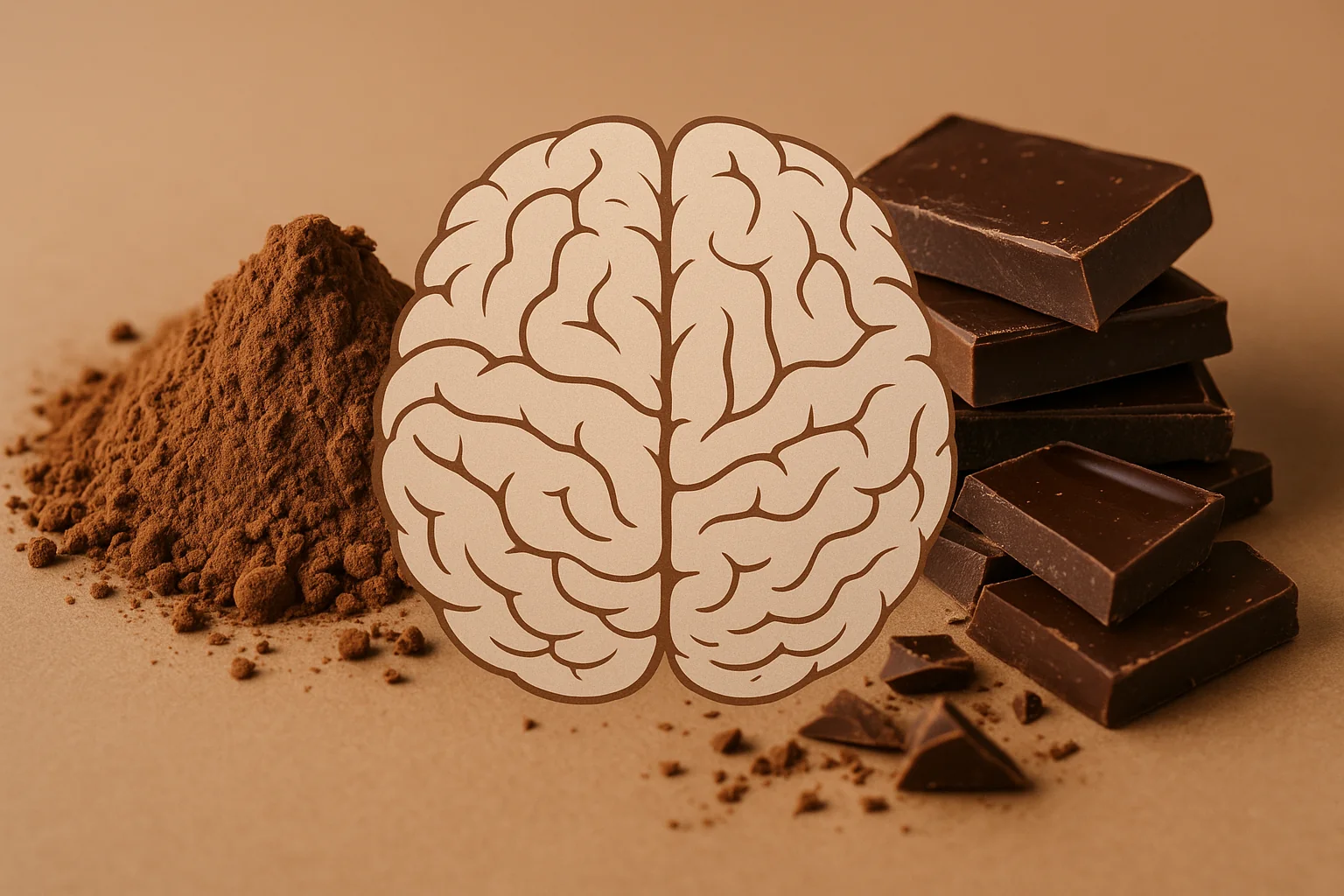
Can a cup of cocoa really protect your brain from aging? This question, which has been treated as a dietary curiosity for years, received a serious scientific answer in 2023. The COSMOS-Mind study - one of the largest randomized controlled trials in this field, involving over 2,200 seniors - showed that supplementation with concentrated cocoa flavanols for three years reduces the rate of decline in episodic memory. This is not a chocolate advertisement. These are results published in one of the world's most prestigious scientific journals. In this article, we explain what cocoa flavanols are, what the studies specifically showed, and for whom this knowledge is particularly relevant.
KEY INFORMATION
• The COSMOS-Mind study (RCT, n=2262, 3 years) found that 500 mg of cocoa flavanols daily reduces the rate of decline in episodic memory by 24% in seniors with low cocoa intake in their diet (Brickman et al., PNAS, 2023).
• The mechanism works by increasing the bioavailability of nitric oxide, which improves blood flow in the brain's blood vessels.
• Regular milk chocolate provides several times too few flavanols - alkalization (dutching) destroys up to 90% of these compounds.
• The effects are stronger in individuals with a poor diet in polyphenols at the beginning of supplementation.
What are cocoa flavanols and how do they affect the brain?
Cocoa flavanols are a subclass of flavonoids - natural polyphenols found in the beans. Theobroma cacao. The main active compounds are (-)-epicatechin and its oligomers, known as proanthocyanidins. A study using functional MRI showed that a single intake of 900 mg of cocoa flavanols significantly increases blood flow in the dentate gyrus of the hippocampus - a structure crucial for forming new memories - in healthy adults (Brickman et al., Nature Neuroscience, 2014). This is the first experiment that directly linked flavanols to a brain area particularly sensitive to aging.
The mechanism of action occurs through several pathways. Epicatechin activates the enzyme endothelial nitric oxide synthase (eNOS), leading to vasodilation and improved microcirculation. The second pathway involves inhibiting platelet aggregation and anti-inflammatory effects through modulation of the NF-κB pathway. Together, both mechanisms contribute to a better-nourished brain - particularly in areas sensitive to age-related declines in blood supply.
We noticed that in the debate about "superfoods," cocoa flavanols are one of the few plant substances that have undergone verification in a large, long-term RCT - not just in short-term studies on small groups. This is an important methodological difference worth knowing when assessing the strength of the evidence.
The COSMOS-Mind study - what did the results really show?
COSMOS-Mind is a randomized, double-blind, placebo-controlled study conducted as part of the larger COSMOS project (Cocoa Supplement and Multivitamin Outcomes Study). For 3 years, 2262 adults with an average age of 71 took either 500 mg of standardized cocoa flavanols daily (including 80 mg of epicatechin) or a placebo (Brickman et al., PNAS, 2023).
The overall score of cognitive tests was higher in the active group by 0.10 standard deviations - a statistically significant difference, though clinically moderate. The key result concerned the subgroup with low cocoa intake at the beginning of the study: there, the improvement was 24% in episodic memory. This means that the effect is likely related to supplementing a dietary deficiency, not to a pharmacological effect on a healthy brain. Individuals with a rich Mediterranean diet (high natural polyphenol intake) did not show similar benefits.
The study has strong points: a large sample, a long observation period, and a multicenter design. Limitations: cognitive tests were conducted by phone (lower sensitivity), and the effect size is relatively small in absolute numbers. The authors themselves note that COSMOS-Mind does not yet have enough power to answer the question about the impact on dementia risk - this requires longer observation.
| Study parameter | COSMOS-Mind (2023) |
|---|---|
| Type of study | RCT, double-blind, placebo-controlled |
| Number of participants | 2262 adults, average age 71 years |
| Duration | 3 lata (2015-2020) |
| Intervention dose | 500 mg of flavanols daily (+ 80 mg of epicatechin) |
| Global effect | +0.10 SD in overall cognitive score (p=0.04) |
| Effect in the subgroup of low consumers | −24% worsening of episodic memory |
| Publication | Proceedings of the National Academy of Sciences (PNAS) |
Why regular chocolate cannot replace a flavanol supplement?
This is one of the most common misunderstandings after reading press headlines. The flavanol content in cocoa products is extremely variable, and in most processed cocoa - very low. Raw cocoa powder contains 2-5 mg of flavanols per gram, but standard drinking cocoa (alkalized, so-called "dutched") loses up to 90% of these compounds in the production process (Payne et al., Journal of Agricultural and Food Chemistry, 2010).
Milk chocolate typically contains 15-60 mg of flavanols per 100 g. To achieve the 500 mg dose used in COSMOS-Mind from milk chocolate, you would need to eat almost a kilogram daily - which, due to calories and sugar, is counterproductive. High-percentage dark chocolate (85%+) reaches slightly higher values (150-250 mg/100 g), but still far from therapeutic doses. The only practical way to obtain repeatable clinical doses is through standardized supplements or specially certified cocoa drinks with preserved flavanol profiles.
How to distinguish cocoa rich in flavanols? Look for products with the CocoaVia certification or labeled "non-alkalized" (not subjected to the dutching process). Color also gives a clue: light brown cocoa retains more flavanols than dark brown or black (which results from intense alkalization).
Who can benefit the most from cocoa flavanol supplementation?
Data from COSMOS-Mind and earlier studies indicate that benefits are unevenly distributed in the population. A meta-analysis of 9 randomized studies (Socci et al., Frontiers in Nutrition, 2017) indicated that the effects on attention, processing speed, and working memory are more pronounced in older individuals and those with initially higher blood pressure - two groups for whom vascular function is particularly important for cognitive performance.
From our experience: individuals interested in cognitive support often seek "one brain supplement." Cocoa flavanols are not a magic solution - their effects are strongest in those with a low polyphenol diet and elevated vascular risk. For someone with an optimal Mediterranean diet, the effect will be minimal.
A particularly promising group is seniors with suboptimal diets, high blood pressure, or a family history of vascular dementia. For them, cocoa flavanols may represent a justified element of prevention - not as a substitute for treatment, but as a safe addition to a lifestyle based on activity and a varied diet.
Frequently Asked Questions
What are cocoa flavanols and why are they important for the brain?
Cocoa flavanols are polyphenols found in cocoa beans, mainly (-)-epicatechin and its oligomers. They improve blood flow through cerebral vessels by increasing the bioavailability of nitric oxide. In the COSMOS-Mind study, supplementation of 500 mg of flavanols daily for 3 years reduced the worsening of episodic memory by 24% in individuals with low cocoa intake in their diet (Brickman et al., PNAS, 2023).
What did the COSMOS-Mind study show?
COSMOS-Mind is a RCT involving 2262 seniors. After 3 years of supplementation with 500 mg of cocoa flavanols daily, the score in cognitive tests was higher by 0.10 standard deviations. The effect was stronger in participants with a poor polyphenol diet at the beginning of the study, where the worsening of episodic memory was 24% lower (Brickman et al., PNAS, 2023).
How much flavanols does regular chocolate contain?
The flavanol content in cocoa is highly dependent on processing. Alkalization (dutching) destroys up to 90% of these compounds. Milk chocolate typically contains 15-60 mg of flavanols per 100 g - many times less than the doses used in clinical studies (400-900 mg/day). To achieve the dose from COSMOS-Mind, one would need to eat almost a kilogram of milk chocolate daily.
Do cocoa flavanols help with already existing cognitive problems?
Research focuses mainly on prevention, not treatment. A meta-analysis of 9 RCTs (Socci et al., Frontiers in Nutrition, 2017) showed improvement in attention and reaction time in healthy adults. Evidence of effectiveness in clinically diagnosed mild cognitive impairment (MCI) is still limited and requires further clinical studies.
What dose of cocoa flavanols is used in studies?
In clinical studies, 400-900 mg of flavanols are most commonly used daily. COSMOS-Mind used 500 mg. EFSA has approved a health claim for 200 mg of flavanols daily in the context of vascular health (EFSA, 2012). No upper safe limit for cocoa flavanols has been established so far.
Can cocoa be combined with adaptogenic supplements?
No clinical interactions have been found between cocoa flavanols and popular adaptogens like ashwagandha or shilajit. Both act through different mechanisms. Before combining supplements - especially when taking blood pressure medications or anticoagulants - always consult with a doctor or pharmacist.
This article is for informational and educational purposes and does not replace consultation with a doctor. If you are pregnant, breastfeeding, taking medications, or have chronic conditions, consult the use of supplements or herbs with a specialist.
Author: Michał Waluk · Published: 2026-05-04 · Updated: 2026-05-04