
Energy balls with hemp seeds and matcha – green power balls
Energy balls with hemp seeds and matcha – a recipe for green power balls without baking. Ready in 15 minutes, natural caffeine and plant protein in one snack.
A green snack that looks complicated but can be made in fifteen minutes without turning on the oven. Energy balls with hemp seeds and matcha combine natural caffeine with L-theanine from matcha tea and complete plant protein from hemp seeds. Together, they provide calm, balanced energy instead of a caffeine spike. Shelled hemp seeds contain about 31 g of protein per 100 g and omega acids in a 3:1 ratio of omega-6 to omega-3. The recipe below guides you through each step and explains how to adjust the intensity of matcha flavor to your own preferences.
KEY INFORMATION
• Shelled hemp seeds: about 31 g of protein/100 g with all 9 essential amino acids (House et al., Food Chemistry, 2010).
• 2 teaspoons of matcha provide about 60–80 mg of caffeine plus L-theanine, which smooths its effect on the nervous system.
• 3 tablespoons of hemp seeds (30 g) contain about 166 kcal, 9 g of protein, and 14 g of PUFA fat (USDA FoodData Central, 2023).
• Omega fats from hemp seeds increase the bioavailability of EGCG catechins from matcha – together they work better.
Why do matcha and hemp seeds make a good combination?
Matcha and hemp seeds are ingredients that at first glance don’t seem to have much in common – one comes from Japan, the other from Central and Central Asia. However, nutritionally, they complement each other exceptionally well. Matcha is rich in catechins (EGCG – the main antioxidant in green tea), which require fat for effective absorption. Hemp seeds contain about 49% fat, including about 76–80% polyunsaturated fatty acids (Callaway, Euphytica, 2004) – an ideal lipid carrier for the active ingredients of matcha.
Caffeine from matcha acts differently than from coffee. Matcha contains L-theanine – an amino acid that modulates neurotransmitter activity. The effect is calmer, more stable energy without the sudden spike and subsequent drop. Two balls as a morning snack or before a workout provide energy without the heart palpitations that sometimes occur after espresso. Dates as a base add natural glucose and fructose – quick fuel that starts faster than fats.
We noticed in tests that balls made with culinary matcha (the cheaper kind) have a more intense bitter taste than those made with ceremonial matcha – and paradoxically, they pair better with the nuttiness of hemp seeds. Ceremonial matcha is sweeter and milder, which causes its flavor to get lost in a bowl of dates. For energy balls, culinary quality is sufficient – save ceremonial matcha for matcha lattes.
Nutritional values – what does a serving of 2 balls provide?
Two balls (about 50 g) provide about 170–185 kcal, 5 g of protein, 7 g of fat, and 21 g of carbohydrates. The fiber from oats and hemp seeds is about 2.5 g. Hemp seeds cover about 25% of the daily requirement for magnesium (USDA FoodData Central, 2023) – a mineral that supports energy production at the cellular level. Caffeine from matcha (about 20–25 mg per ball) is released gradually, without a sudden insulin spike.
Ingredients – what do you need?
Proportions for 12–14 balls. You need a food processor or a blender. Active working time: 15 minutes + 20 minutes of cooling.
- 180 g of pitted Medjool dates (about 9–10 pieces)
- 3 tablespoons of almond or cashew butter (no sugar)
- 3 tablespoons of shelled hemp seeds (for the mixture)
- 3 tablespoons of rolled oats
- 2 teaspoons of matcha powder (culinary or ceremonial)
- 1 tablespoon of unrefined coconut oil
- 1 teaspoon of honey or maple syrup
- a pinch of sea salt
- for the topping: 2 tablespoons of hemp seeds + 1 teaspoon of matcha mixed
How to prepare energy balls with matcha and hemp seeds – step by step?
The recipe is quicker than the version with hemp protein, as it doesn't require long blending. The key is not to over-blend after adding the seeds – they should remain visible in the mixture.
Step 1. Soak the dates. Place the dates in a bowl, cover with warm water for 5 minutes. Drain thoroughly, reserving 1 tablespoon of water. Soft dates provide a creamy base; hard and dry ones create a chunky mixture.
Step 2. Blend the base. Dates, almond butter, coconut oil, and salt into the food processor. Blend for 45–60 seconds until a sticky mixture forms. With a jug blender, you may need to pause and push the mixture down from the sides with a spatula.
Step 3. Add matcha, seeds, and flakes. Add matcha, hemp seeds, oats, and honey. Blend in pulses – 3–4 short bursts. The mixture should retain visible green seeds and flakes – this gives the balls their crunch. Long blending results in a smooth, uniform mixture without texture.
Step 4. Assess the taste and consistency. Taste the mixture – the matcha should be distinctly noticeable but not overpowering. Add more powder if the flavor is too weak. Form a test ball with your hands – it should hold together well without sticking. If too dry – add a tablespoon of soaking water. If too wet – add a tablespoon of flakes.
Step 5. Form the balls. Wet your hands with cold water. Take portions of about 25 g, quickly roll them in your hands. The balls should be even and smooth on the outside – any irregularities will be covered by the topping. Wet your hands every 3–4 balls.
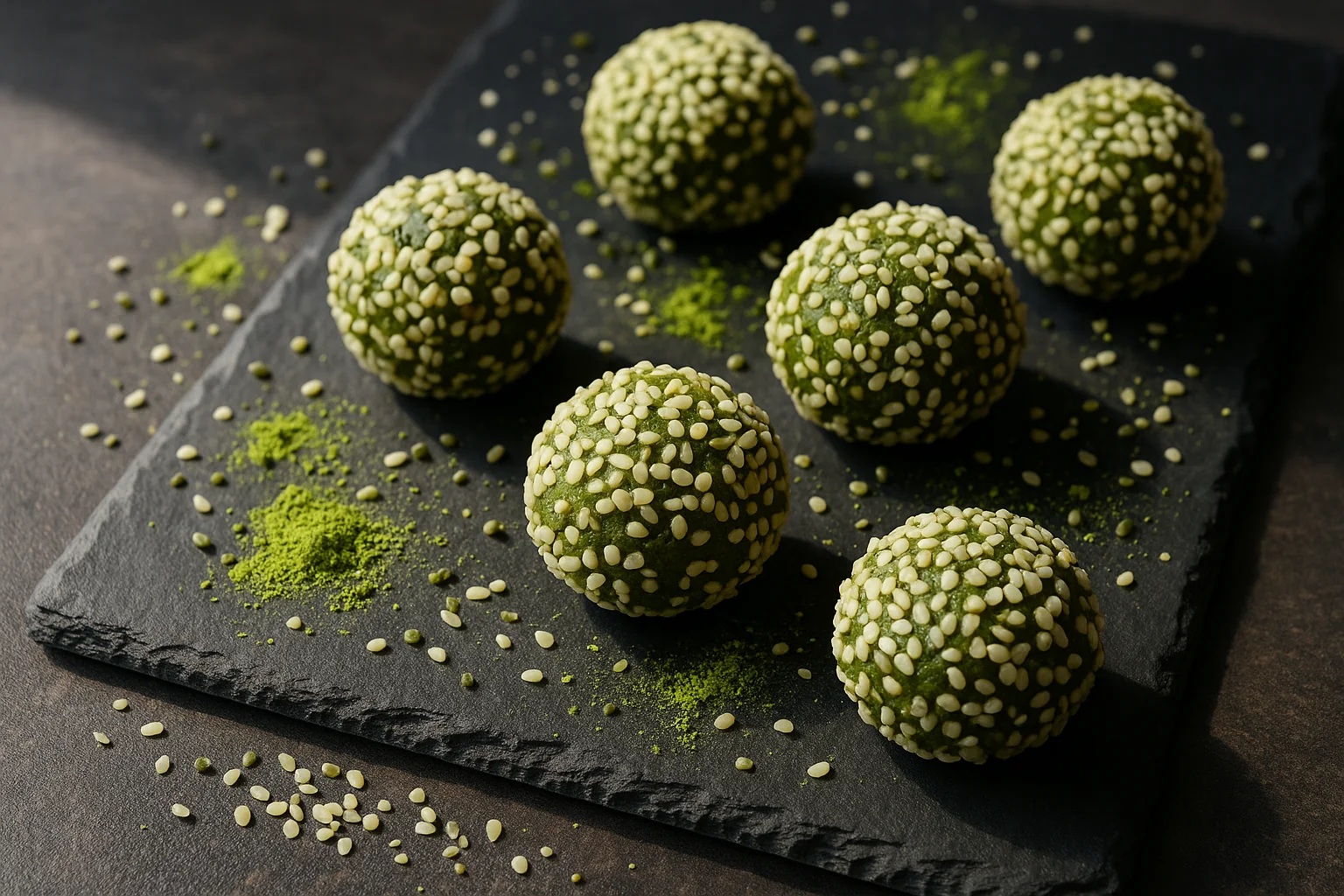
Step 6. Roll in the green topping and chill. Mix the hemp seeds with matcha in a bowl – this creates a green topping that contrasts with the dark date mixture. Roll each ball in it. Place in the refrigerator for at least 20 minutes. The finished balls should be firm, shiny, and intensely green on the outside.
Tips and variations
Matcha energy balls are the base for several interesting variations:
Version with white chocolate. Add 30 g of grated white chocolate (min. 30% cocoa) to the mixture. White chocolate sweetens and smooths the bitterness of matcha. Roll in coconut flakes instead of seed topping – the contrast of white and green looks impressive.
Lemon-matcha version. Add the zest of 1 lime and 1 tablespoon of juice to the mixture. Citrus enhances the plant aroma of matcha and highlights the nuttiness of hemp seeds. Do not use more than 1 tablespoon of juice – acidity loosens the date mixture.
Spirulina version. Replace matcha with 1 teaspoon of powdered spirulina. The color will be a more intense green, and the taste – more marine. Spirulina contains about 60–70 g of protein/100 g, so the combination with hemp seeds provides a very dense protein profile. Add more honey to balance the strong flavor.
Also check the version with hemp protein instead of seeds: energy balls with hemp protein and dates – deeper chocolate flavor, more protein per ball.
Frequently Asked Questions
How much caffeine do the energy balls with matcha contain?
Two teaspoons of matcha (about 4 g) contain approximately 60–80 mg of caffeine – the same as a small espresso. A serving of 2 balls provides about 20–25 mg of caffeine. Matcha also contains L-theanine, which smooths out the effects of caffeine, resulting in a calmer, longer-lasting energy boost without a subsequent crash.
Does matcha go well with hemp seeds?
Yes – the nuttiness of hemp seeds complements the plant flavor of matcha. The omega fats from hemp seeds (about 76–80% PUFA, Callaway, Euphytica, 2004) also support the absorption of EGCG catechins from matcha, which is higher when consumed with fat.
How many hemp seeds should be added to energy balls?
An optimal amount is 3 tablespoons (about 30 g) in the mixture. This quantity provides about 9 g of protein and 14 g of fat for the entire batch of 12 balls. Hulled hemp seeds contain about 31 g of protein/100 g (House et al., Food Chemistry, 2010) – they can also be used as a topping.
Are energy balls with matcha suitable for children?
Due to the caffeine in matcha, they are not recommended for children under 12 years old. Make a version without matcha: replace it with raw cocoa or cinnamon. Hemp seeds are safe and provide a valuable source of omega fats and magnesium – about 210 mg/100 g (USDA, 2023).
What can replace matcha?
Raw cocoa (2 tablespoons) gives a different color and flavor with similar bitterness and antioxidants. Spirulina (1 teaspoon) retains the green color, but the taste is distinctly marine. Cinnamon (2 teaspoons) – a completely different version, caffeine-free, warm, and spicy. Each version pairs well with hemp seeds.
This article is for informational and educational purposes and does not replace consultation with a doctor. If you are pregnant, breastfeeding, taking medications, or have chronic conditions, consult the use of supplements or herbs with a specialist.
Author: Michał Waluk · Published: 2026-05-04 · Updated: 2026-05-04