
Zinc and magnesium at night (ZMA) - does it really work (FAQ)
Zinc and magnesium at night: answers to the most common questions and what studies say. u Bucha.
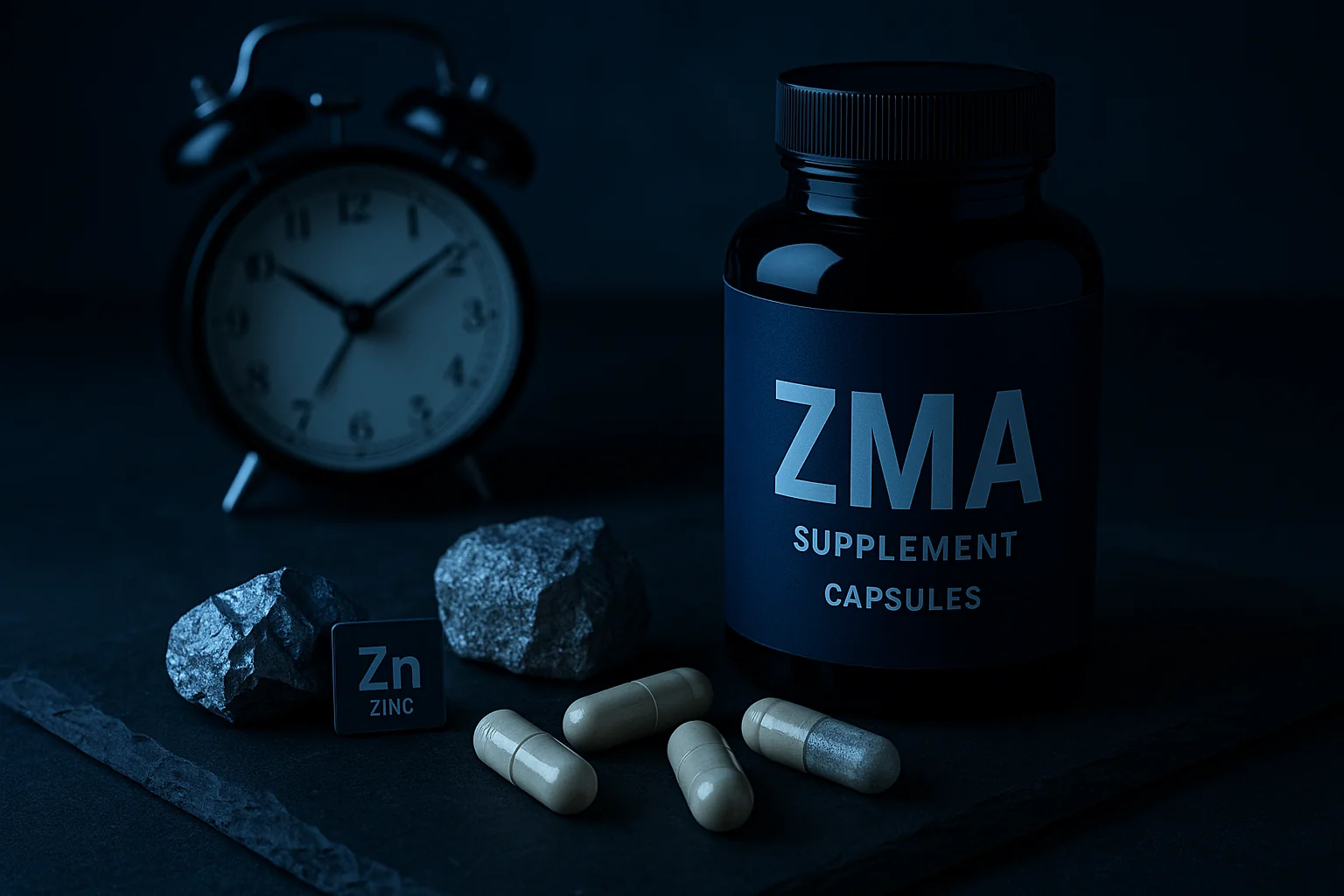
ZMA - a combination of zinc, magnesium, and vitamin B6 - is one of the more popular supplements in the world of sports and biohacking. The formula was created in the 1990s, and its creator, Victor Conte, claimed that it increases testosterone levels and improves athlete recovery. Do these promises hold up scientifically? The answer is more nuanced than marketing messages: ZMA is not a miracle hormone booster, but for those with deficiencies in zinc and magnesium - and there are quite a few in Poland - nighttime supplementation can provide real benefits for sleep and recovery. This article answers the most common questions without unnecessary noise.
KEY INFORMATION
• ZMA = zinc (aspartate, ~30 mg) + magnesium (aspartate, ~450 mg) + vitamin B6 (10.5 mg) - a formula developed for athletes in the 1990s.
• Over 70% of Europeans do not reach the recommended intake of magnesium; zinc deficiencies are common among athletes and vegans (EFSA 2015).
• ZMA does not raise testosterone above physiological norms - it restores it in individuals with zinc deficiency.
• Magnesium in ZMA has a documented effect on sleep quality by modulating GABA and NMDA receptors.
• Take on an empty stomach 30-60 minutes before sleep - calcium from meals significantly reduces the absorption of both minerals.
What exactly is in ZMA and where does this formula come from?
ZMA is a proprietary combination created by Victor Conte from BALCO Laboratories in the United States. The original formula contains: zinc as zinc aspartate (30 mg of elemental Zn), magnesium as magnesium aspartate (450 mg of elemental Mg), and vitamin B6 in the form of pyridoxine (10.5 mg). These ingredients were chosen deliberately - each plays a role in metabolic pathways important for athletes.
Zinc is a cofactor for over 300 enzymes, including those involved in testosterone synthesis in the testes. Magnesium is involved in ATP production and is essential for the activation of vitamin D. Vitamin B6 regulates amino acid metabolism and supports the synthesis of neurotransmitters - serotonin and dopamine - which affect sleep and mood. Aspartates as carriers of minerals were intended to provide better bioavailability than the inorganic salts that were popular at the time.
The first clinical study on ZMA, published by Brilla and colleagues in 2000, showed an increase in testosterone and IGF-1 levels in American football players taking ZMA for 8 weeks compared to placebo (Brilla et al., Journal of Exercise Physiology, 2000). The study was funded by the ZMA manufacturer and has not been independently replicated under similar conditions - which is an important methodological caveat.
Does ZMA really raise testosterone?
This question requires precision. Zinc is essential for testosterone synthesis - this is a fact documented in clinical studies. In men with zinc deficiency, supplementation restores testosterone levels to normal (Prasad et al., Nutrition, 1996). But "restoring to normal" is not the same as "raising above normal." ZMA is not an anabolic or steroidogenic agent.
A meta-analysis from 2021, including 7 randomized controlled trials with zinc supplementation in men with normal baseline testosterone levels, found no statistically significant increase in testosterone in any of the studies (Santos et al., Nutrients, 2021). In other words: ZMA works for those with deficiencies, not for those who have normal levels of zinc and magnesium.
An interesting context: endurance and strength athletes have a significantly higher risk of zinc deficiency than the average population - zinc excretion through sweat and urine is increased during intense exercise. It is estimated that training over 10 hours a week can increase daily zinc requirements by 20-40% (Lukaski, Magnesium Research, 2004). In this context, ZMA makes sense for the active athlete - not as a "T booster," but as a preventive measure against mineral deficiencies resulting from intense training.
Does ZMA improve sleep and recovery?
Here, the evidence is stronger than for testosterone. Magnesium acts as an NMDA receptor antagonist and a GABA-A receptor agonist - both mechanisms have a calming effect on the nervous system and promote sleep. A clinical study by Abassi and colleagues in older adults with insomnia showed that magnesium supplementation (500 mg for 8 weeks) significantly improved subjective sleep quality, time to fall asleep, sleep efficiency, and melatonin levels compared to placebo (Abbasi et al., Journal of Research in Medical Sciences, 2012).
Zinc and vitamin B6 have an auxiliary effect on sleep by participating in the synthesis of melatonin and serotonin. Zinc is a cofactor for the enzyme that converts serotonin to melatonin in the pineal gland. B6 is essential for the synthesis of serotonin from tryptophan. Therefore, both ingredients support the nightly regenerative cycle, although their impact is weaker than that of magnesium.
Why is ZMA taken at night? Taking magnesium on an empty stomach in the evening allows for absorption without competition from calcium in meals. Magnesium absorbed 30-60 minutes before sleep reaches peak plasma concentration just as the body prepares for sleep. This is a logistically and physiologically justified time.
Recovery during sleep involves several processes in which zinc and magnesium play a direct role. Magnesium is a cofactor for over 300 enzymes, including those involved in muscle protein synthesis. Zinc is essential for the proper production of IGF-1 (insulin-like growth factor 1) in the liver - a hormone that stimulates tissue rebuilding during sleep. A study published in the Journal of Exercise Physiology found that athletes taking ZMA for 8 weeks had higher IGF-1 levels than the placebo group, which correlated with faster recovery of muscle strength after training (Brilla et al., 2000). The methodological caveat remains relevant - the study was funded by the ZMA formula manufacturer - however, the biological mechanism is justified.
How to use ZMA - dosage and practical tips
Standard ZMA dosage according to the original formula: 3 capsules for men (30 mg Zn, 450 mg Mg, 10.5 mg B6) or 2 capsules for women (20 mg Zn, 300 mg Mg, 7 mg B6), taken 30-60 minutes before sleep on an empty stomach. Key condition: at least 1-2 hours after the last meal containing dairy, nuts, or other sources of calcium.
Calcium is a direct antagonist of the absorption of both zinc (through DMT1 and ZIP transporters) and magnesium (through TRPM7 channels). A glass of milk or a serving of yogurt eaten an hour before ZMA can reduce zinc absorption by 50-80% (Lönnerdal, Journal of Nutrition, 2000). This makes the timing of intake more important here than with many other supplements.
Customers asking about ZMA often make one mistake: they take the supplement with their evening meal "for convenience." The effect is often disappointing. After switching to taking it 45 minutes before sleep, away from dairy and dinner, they report significantly better sleep quality and fewer nighttime awakenings after just 7-10 days.
Frequently Asked Questions
What is ZMA and what does it contain?
ZMA is a proprietary supplement formula consisting of zinc (zinc aspartate, ~30 mg elemental Zn), magnesium (magnesium aspartate, ~450 mg elemental Mg), and vitamin B6 (pyridoxine, ~10.5 mg). Developed by Victor Conte in the 1990s as a supplement for athletes supporting hormonal metabolism and recovery after training.
Does ZMA increase testosterone levels?
In individuals with zinc deficiency, supplementation restores testosterone to normal - this is documented. However, in men with normal baseline levels of zinc and testosterone, a 2021 meta-analysis did not show a significant increase in the hormone (Santos et al., Nutrients, 2021). ZMA restores normal levels but does not exceed physiological limits.
Why is ZMA taken on an empty stomach before sleep?
Calcium from dairy and meals is a direct antagonist of zinc and magnesium absorption. Taking ZMA on an empty stomach 30-60 minutes before sleep ensures maximum bioavailability of both minerals. Magnesium absorbed without competition from calcium exerts a relaxing effect more quickly by modulating GABA and NMDA receptors.
Does ZMA improve sleep quality?
The magnesium contained in ZMA has a documented effect on sleep quality. A clinical study showed that 500 mg of magnesium daily for 8 weeks improved sleep onset time, sleep efficiency, and melatonin levels in older adults with insomnia compared to placebo (Abbasi et al., 2012). Zinc and B6 support melatonin synthesis as an auxiliary.
Can ZMA be combined with other supplements?
ZMA should be separated from calcium, iron, and other minerals (at least 2 hours). It can be combined with ashwagandha, melatonin, and L-theanine without known negative interactions. Caution is advised with thyroid medications (zinc may reduce the absorption of levothyroxine), fluoroquinolone antibiotics, and tetracyclines - always maintain a 2-4 hour gap between ZMA and these medications.
How long should ZMA be taken to see effects?
The effects of mineral supplementation depend on baseline status. With a clear deficiency of zinc or magnesium, the first noticeable changes - better sleep quality, fewer nighttime awakenings, less tendency for muscle cramps - usually appear after 2-4 weeks of regular use. Correcting zinc deficiency in tissues (not just in the blood) takes 6-8 weeks. In the absence of deficiency, the subjective difference may be negligible. The optimal testing period is 8 weeks of daily use, with an assessment of well-being and - if possible - a follow-up test of zinc and magnesium levels in serum.
Is ZMA suitable for women?
Yes, ZMA is used by both men and women who are physically active. The formula for women typically contains lower doses: 20 mg of zinc, 300 mg of magnesium, and 7 mg of vitamin B6 (equivalent to 2 capsules of the original formula). The role of magnesium is particularly important for women - studies indicate that magnesium deficiency exacerbates PMS symptoms (pain, irritability, sleep disturbances), and supplementation may alleviate them (Fathizadeh et al., Iranian Journal of Nursing and Midwifery Research, 2010). Zinc is also necessary for the proper functioning of the immune system and tissue healing, regardless of gender.
This article is for informational and educational purposes and does not replace consultation with a doctor. If you are pregnant, breastfeeding, taking medications, or have chronic conditions, consult the use of supplements or herbs with a specialist.
Author: Michał Waluk · Published: 2026-05-04 · Updated: 2026-05-04