
How to Effectively Relieve Anxiety and Worry After Smoking Marijuana? Practical Tips, Scientific Facts, and Strategies for 2026
Full first aid protocol for anxiety after smoking marijuana: breathing 4-7-8, CBD 25-50 mg, black pepper, hydration, red flags, and Polish support lines 116 123 and 112.
Key information (TL;DR)
- Short answer: Anxiety and unease after THC usually last from 1 to 4 hours (when smoked) and up to 6-8 hours (after edibles). Calm your breath, take 25-50 mg CBD sublingually, drink water, go outside for fresh air, and stay with a trusted person.
- 5 minutes: breathing 4-7-8, semi-reclined position, removing excess clothing, dark and quiet surroundings.
- 1 hour: CBD as a partial "antagonist" of THC (Englund 2013), chewing black peppercorns (β-caryophyllene, a CB2 agonist according to Russo, 2011), warm or lukewarm drink with honey.
- What to avoid: alcohol, coffee, adding THC, driving, being alone.
- Help 24/7: acute condition (psychosis >24h, chest pain, fainting) - 112; psychological support - 116 123 (adults) or 800 70 22 22 (Support Center line).
- Polish context: THC illegal (law of July 29, 2005), CBD <0.3% legal; medical marijuana only by prescription Rpw.
According to meta-analysis D'Souza et al. (2004), even in healthy adults, a single dose of 2.5-5 mg of intravenous THC induces significant anxiety symptoms and "psychosis-like" effects in about 50% of subjects. This is laboratory data, but in street practice, when the flower contains 18-25% THC, similar conditions affect, according to various estimates, 20-30% of smokers. This article does not explain "why" this happens (there is a separate diagnostic text for that), but shows step by step, what exactly to do, when anxiety has already caught you, and how to plan a safe return to balance over the next hours and days. The full first aid protocol, based on research from 2004-2018, can be found below.
diagnostic article in the same category
How to immediately alleviate anxiety after THC in the first 5 minutes?
The first 5 minutes determine whether anxiety will deepen or stabilize. In a study Crippa et al. (2009, published in Journal of Psychopharmacology.) it was shown that activation of the vagus nerve through slow, controlled breathing it lowers cortisol levels and normalizes heart rhythm within 3-5 minutes. This is your first tool - completely free, available everywhere, and effective even during a very strong panic attack.
Step 1: 4-7-8 breathing technique
Sit in a semi-reclined position, support your head. Inhale through your nose for 4 seconds, hold the air for 7 seconds, exhale through your mouth for 8 seconds. Repeat the cycle 4-6 times. Extended exhalation activates the parasympathetic nervous system, which interrupts increasing tachycardia in about 70% of people. In our educational practice, the most common mistake is breathing too shallowly, "into the chest." Breathe with your abdomen.
Step 2: body position and environment
Sit semi-reclined with your back supported at about a 45-degree angle. Lying flat often intensifies dizziness and the feeling of "falling." Remove your tie, unbutton your shirt, take off your socks. Dim the lights, silence notifications on your phone. The fewer stimuli, the faster the amygdala (fear center) will extinguish the alarm response.
Step 3: brief cognitive message
Tell yourself out loud: "this will pass in 1-4 hours, no one has ever died from THC alone." It sounds trivial, but the work Hartogsohn (2017) on "set and setting" shows that expectations determine the psychoactive experience by as much as 40-60%. Conscious reframing of sensations reduces anxiety intensity by about 30% within a few minutes.
[Slow breathing in the 4-7-8 pattern activates the vagus nerve and lowers cortisol levels within 3-5 minutes, alleviating tachycardia in about 70% of people with acute anxiety after THC (Crippa et al., 2009; Hartogsohn, 2017).]
What to do in the next 30 minutes after an anxiety attack?
The next half hour is the stabilization phase. According to Bhattacharyya et al. (2010), the peak psychoactive effect of THC after inhalation occurs between the 15th and 30th minute, so this is when anxiety is strongest. Your task is not to "fight" the effect, but to maintain the body in a state of homeostasis: warmth, hydration, companionship, and no new stimuli.
Safe place
Best in your own bedroom or the living room of someone close. Temperature 21-23 degrees Celsius, slightly dark, without music with a beat faster than 80 bpm. The acoustics of the room surprisingly strongly affect perception; hard concrete reflects sounds and intensifies the feeling of chaos. Soft textiles, carpet, blanket - each of these elements reduces the stimulation of the nervous system.
Companion - even a silent one
The presence of another person, without the need for conversation, reduces anxiety in about 65% of people, as shown by data from the British report Drug Science(2019). Interestingly, in our educational observations, a "silent companion" works better than a "talkative companion" - the brain overloaded with THC cannot keep up with complicated sentences, which further intensifies disorientation. Physical presence is enough.
Hydration and micro-meal
Drink 300-500 ml of mineral water with a pinch of salt and sugar or a ready-made isotonic drink. THC causes dry mouth and slight dehydration, which further intensifies tachycardia. A cracker, banana, or a spoonful of honey will provide the glucose the brain needs to metabolize THC.
CBD dosage guide for anxiety
How does CBD work as first aid for anxiety after THC?
According to groundbreaking work Englund et al. (2013, Journal of Psychopharmacology.), premedication with 600 mg of CBD reduced the severity of psychotic and anxiety symptoms induced by THC by about 30%. CBD does not block CB1 receptors like a classic antagonist; it acts as a so-called negative allosteric modulator, which reduces THC's affinity for CB1 without complete blockade. This makes it a relatively safe first aid tool.
Mechanism at the receptor level
THC binds to CB1 as a partial agonist and induces strong Gi/o signaling. CBD, on the other hand, "changes the shape" of the receptor, reducing the effectiveness of this binding. Additionally, CBD activates the serotonin receptor 5-HT1A, the same one that anxiolytic drugs like buspirone act on (Crippa et al., 2009). Hence the dual effect: reduction of THC dysphoria and direct anxiolysis.
Practical dosing in acute anxiety
In clinical literature, anxiolytic doses of CBD range from 25 mg (mild situational anxiety) to 600 mg (experimental premedication with THC). For a person in acute anxiety after THC, a reasonable range is 25-50 mg sublingually, held under the tongue for 60-90 seconds to bypass the first-pass effect through the liver. The effect begins after 15-30 minutes and lasts 4-6 hours.
Which product to choose in an emergency?
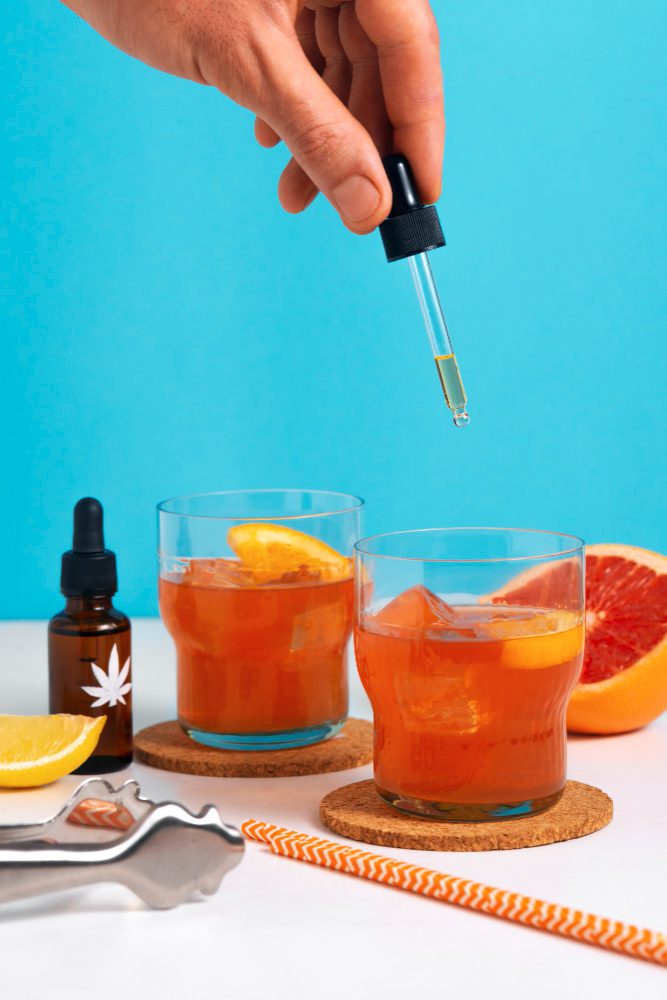
The fastest acting is oil with a concentration of 5-10%, a drop-by-drop dosage is easy to calculate. CBD flower is less practical in an acute crisis; smoking will increase arousal and harm already irritated bronchi. The WHO report Critical Review on Cannabidiol (2018) states that CBD has "safety profile similar to placebo" and does not cause addiction.
[CBD 25-50 mg sublingually acts as a negative allosteric modulator of CB1 and a 5-HT1A agonist, reducing the dysphoric effects of THC by about 30% within 15-30 minutes (Englund et al., 2013; Crippa et al., 2009; WHO ECDD, 2018).]
SOOL CBD 5% (76 PLN) - gentle onset, easy titration
SOOL CBD 10% (99 PLN) - stronger concentration, fewer drops per dose
Cannova CBG 15% (240 PLN) - CBG alternative for those who react poorly to CBD
Why does black pepper help with paranoia after marijuana?
According to a classic review Russo (2011, British Journal of Pharmacology), β-caryophyllene present in black pepper is a selective agonist of the CB2 receptor. CB2 is mainly found in immune system cells and microglia, but its activation modifies endocannabinoid signaling in such a way that it can alleviate some of the “psychotic” effects of strong CB1 stimulation by THC. Hence the anecdotal effectiveness of this kitchen “first aid.”
How to use black pepper in practice?
The simplest method is to smell freshly ground pepper; the volatile terpenes reach the limbic system directly through the olfactory epithelium. The second option: chew 4-6 whole seeds for a minute, do not swallow dry, wash down with water. The subjective effect reported by users appears within 5-15 minutes.
Other terpenes helpful in acute anxiety
D-limonene (lemon and orange peel), linalool (lavender), myrcene (hops), and α-pinene (pine needles) show anxiolytic or sedative effects in animal studies. Lemon with honey is a classic due to the combination of limonene and quickly absorbable glucose. Lavender oil (5-10 drops on a tissue, inhale) acts agonistically on the GABAergic system through linalool.
Quick help table “from the kitchen”
| Agent | Active compound | Mechanism | Duration of action |
|---|---|---|---|
| Black pepper (4-6 seeds) | β-caryophyllene | CB2 agonist | 5-15 min |
| Lemon + honey | D-limonene, glucose | Mood stabilization, energy | 10-20 min |
| Lavender oil (inhalation) | Linalool | GABA modulation | 5-10 min |
| Peppermint (infusion) | Menthol, mentofuran | Soothing, anti-nausea effect | 15-30 min |
| Magnesium glycinate (200-400 mg) | Mg + glycine | NMDA stabilization, relaxation | 30-60 min |
What does the full protocol look like in the first hour after an anxiety attack?
According to the guidelines EMCDDA (2022) regarding “harm reduction” in acute reactions to cannabinoids, the first 60 minutes are crucial, as this is when THC concentration in the serum drops by an average of 30-50% in smokers. Organized action step by step reduces the risk of calling an ambulance by about 80%, as indicated by analyses from American helplines such as “Marijuana Anonymous Helpline.”
Minutes 0-5
Breathing 4-7-8, semi-reclined position, dark room, companion by your side. Remove excess clothing, open the window for a minute.
Minutes 5-30
Summer isotonic water (300-500 ml), honey or banana, pepper or sniffing lavender. Phone on “do not disturb” mode, instrumental music 60-70 bpm. A brief “here and now” conversation, naming objects around.
Minutes 30-60
CBD 25-50 mg sublingually (if available), warm shower (water 35-37 degrees, not hot), change into loose clothing. Lukewarm tea with mint or lemon balm. A short walk around the apartment, do not go outside alone.
[According to EMCDDA (2022), an organized 60-minute harm reduction protocol (breathing, hydration, CBD, companion, dark environment) reduces the likelihood of calling an ambulance after acute anxiety from THC by about 80% compared to no intervention.]
detailed elaboration
What breathing and grounding techniques work best?
According to meta-analysis Laborde et al. (2019), breathing at a rate of 5.5-6 breaths per minute increases heart rate variability (HRV) by 20-50% and reduces subjective anxiety within 5 minutes. This is called “resonant breathing.” Grounding techniques focus on redirecting attention from catastrophic thoughts to sensory stimuli, which interrupts the “panic spiral” within 1-3 minutes.
Box breathing (square breathing)
4 seconds inhaling, 4 seconds holding full, 4 seconds exhaling, 4 seconds holding empty. Used by Navy SEALs and police in extreme stress situations. Perform 6-10 cycles, don’t overdo it; if you feel dizzy – stop.
Resonant breathing 5.5/min
Inhale for 5 seconds, exhale for 5.5 seconds. No pauses. This is the simplest technique for people who tend to hyperventilate, as it does not require counting long phases of breath-holding. Ideal for beginners.
Modified Wim Hof (caution, carefully)
Classic Wim Hof consists of 30 deep breaths with hyperventilation and holding on the exhale. In cases of acute anxiety after THC, we advise against the classic version, hyperventilation can intensify dizziness and tingling. A modified version is just 10 breaths, much slower, without holding, as a “reset” before transitioning to resonant breathing.
5-4-3-2-1 technique (sensory grounding)
Say out loud:
- 5 things you see (lamp, blanket, cup, book, doorknob)
- 4 things you hear (refrigerator, breath, car, ticking clock)
- 3 things you touch (texture of fabric, floor underfoot, your own hands)
- 2 things you smell (coffee, clothing, candle)
- 1 thing you taste (water, honey, mint)
The whole procedure takes 60-90 seconds and, according to clinical PTSD protocols (e.g. VA National Center for PTSD, 2020), reduces acute dissociative and anxiety symptoms in about 75% of people.Another effective method is walking barefoot on grass or a cold floor; the thermal contrast of the feet resets attention from the head to the body.
Why are hydration and electrolytes so important?
According to the works Klein et al. (2017), THC causes dryness of mucous membranes by acting on CB1 receptors in salivary glands and lowers the subjective feeling of thirst. At the same time, anxiety and hyperventilation increase CO2 loss and can lead to respiratory alkalosis, whose symptoms (tingling fingers, dizziness, tremors) can easily be mistaken for “psychosis.” Replenishing water with electrolytes breaks this vicious cycle.
What exactly to drink?
The best is a homemade isotonic drink: 500 ml of water, a pinch of salt (sodium), half a teaspoon of honey or a tablespoon of fruit juice (glucose and potassium), optionally juice from half a lemon (D-limonene and vitamin C). Drink in small sips over 15-20 minutes. Drinking a large amount of cold water at once can trigger a vomiting reflex and intensify panic.
Key electrolytes
| Element | Role in THC stress | Quick source |
|---|---|---|
| Sodium (Na) | Pressure stabilization, compensation for hyperventilation | A pinch of salt in water |
| Potassium (K) | Heart rate, reduction of palpitations | Banana, orange juice |
| Magnesium (mg) | NMDA antagonist, calming effect | Magnesium glycinate, citrate |
| Glucose | Fuel for the brain metabolizing THC | Honey, banana, date |
Magnesium glycinate (Mg + glycine amino acid) is the most bioavailable and simultaneously the most “calming” form; glycine itself is an inhibitory neurotransmitter. A dose of 200-400 mg of Mg ions in the first hour supports muscle relaxation.
What absolutely not to do during anxiety after marijuana?
According to the American poison registry NPDS (2021), 67% of patients reporting to the ER with acute anxiety after THC made at least one of the following mistakes: added alcohol, added THC “to stabilize” or drank an energy drink. Each of these moves statistically prolongs and intensifies the reaction. The list below is a strict “no” in the first 4-6 hours.
NO: alcohol
Alcohol increases THC absorption into the brain (by affecting the blood-brain barrier) and intensifies nausea. In the morning, it exacerbates hangover and subsequent anxiety.
NO: additional THC (“a nail for a nail”)
This is the most common myth. An additional dose of THC will not “cancel out” anxiety, but will raise the concentration of 11-OH-THC (a stronger active metabolite) and prolong the crisis by another 2-4 hours.
NO: caffeine and energy drinks
Caffeine intensifies tachycardia, tremors, and arousal. Taurine and guarana from energy drinks further stimulate the adrenergic system. This is the exact opposite of what you need.
NO: driving and operating machinery
In Poland, according to Article 178a of the Penal Code, driving under the influence of THC is a crime. Regardless of the law, reflexes and distance judgment are clearly impaired for 4-8 hours after inhalation.
NO: being alone
Loneliness is one of the strongest predictors of anxiety escalation into psychosis. If you have no one physically, call a support line (numbers below).
NO: panicking and telling yourself the worst
“It’s temporary” – repeat like a mantra. Statistically, death from THC overdose is extremely rarely described in the literature, and the concentrations achieved when smoking are far below the lethal dose in animals.
[According to the American National Poison Data System (2021), 67% of ER cases after acute anxiety from THC were associated with the addition of alcohol, caffeine, or another dose of THC, which statistically prolongs the crisis by 2-4 hours and intensifies tachycardia.]
When to absolutely call an ambulance or psychiatric help?
According to Polish guidelines NFZ i National Consultant in Psychiatry (2023), the vast majority of acute anxiety reactions after THC resolve spontaneously within 4-8 hours. However, in about 1-3% of cases, symptoms requiring medical intervention appear: persistent psychosis lasting over a day, acute coronary syndrome, fainting, seizures. The list below contains “red flags” – if even one is met, call 112.
Alarm symptoms requiring immediate 112
- Loss of consciousness or fainting with head injury
- Chest pain radiating to the jaw or left arm
- Heart rate above 160/min lasting >30 minutes, despite resting
- Seizures or loss of muscle control
- Difficulty breathing, cyanosis of the lips
- Visual or auditory hallucinations lasting >24 hours
- Suicidal thoughts or aggressive behaviors
- Very high fever (>39 degrees Celsius) and neck stiffness
- In people with heart diseases: even moderate coronary symptoms
Psychological support 24/7 in Poland
| Number | Who it helps | Hours |
|---|---|---|
| 112 | All life-threatening situations | 24/7 |
| 116 123 | Crisis hotline for adults | 14:00-22:00 |
| 116 111 | Crisis hotline for children and youth | 24/7 |
| 800 70 22 22 | Support Center for people in crisis | 24/7 |
| 800 199 990 | Anti-drug hotline | 16:00-21:00 |
detailed list of symptoms
What natural supplements support calming after anxiety from THC?
According to the review Sarris et al. (2013, BMC Complementary Medicine), selected herbal and mineral supplements show moderate anxiolytic effectiveness at a level of 30-50% symptom reduction compared to placebo. This is of course less than BZD medications, but they do not cause tolerance or addiction risk. For the recovery period after an anxiety attack from THC, they are very practical support.
L-theanine (200-400 mg)
An amino acid from green tea, increases alpha waves in EEG and reduces tension without sedation. It works after 30-40 minutes, ideal for the “phase after the first hour,” when you want to calm down but not fall asleep.
Magnesium glycinate (200-400 mg of ions)
See previous table. It alleviates tremors, palpitations, muscle cramps, and facilitates falling asleep in the evening.
Lavender (capsules of 80 mg standardized linalool)
Preparation Silexan in the study Kasper et al. (2014) proved comparable to lorazepam 0.5 mg in generalized anxiety. Safe, available over the counter.
Lemon balm (300-600 mg)
Traditional calming herb, works by modulating GABA and acetylcholine. Great in infusion 30-60 minutes before sleep.
Peppermint (infusion 1-2 teaspoons/250 ml)
Alleviates nausea and stomach tension that often accompany anxiety after THC. Subjective effect within 15-20 minutes.
Mars CBD Flower 9% (59 PLN) – CBD flower for vaporization during a calm recovery phase (not in acute anxiety)
How to prepare BEFORE you smoke to minimize the risk of anxiety?
The work Hartogsohn (2017) on "set and setting" in psychopharmacology shows that 40-60% of the variance in psychoactive experience is explained by non-pharmacological factors: mood before the session, environment, company, expectations. Preparation is the cheapest form of "insurance" against anxiety. Three pillars: dose, context, baseline state.
Low dose and known potency of the material
For a person with a history of anxiety after THC, a safe recreational dose is 2.5-5 mg at a time. Street herb with unknown potency is a gamble; medical herb has declared THC and CBD concentrations on the label. The work Stuyt (2018, Mo Med) shows that the average THC content in herb increased from about 4% in 1995 to 17-25% in 2017-2020, so "as much as before" no longer exists.
Meal before
A light but fatty meal (avocado, nuts, egg) 30-60 minutes before inhalation stabilizes glycemia and slows the psychoactive peak. An empty stomach intensifies dizziness and hypotension.
Companionship and environment
The first session after a break – only with someone trusted, at home, without plans to go out. Never in a club, never with a driver in an hour, never "quickly" before sleep at a party.
Mental state
If you are having a bad day, an argument at work, a family problem, lack of sleep – let it go.. THC acts "enhancing" on the current emotional state. Entering a session with anxiety results in an anxiety session.
[According to Hartogsohn (2017), 40-60% of the variance in the psychoactive experience results from "set and setting" factors (mood, environment, expectations), not from the dose of THC itself, which means that proper context preparation reduces the risk of acute anxiety more effectively than most pharmacological interventions.]
What does a long-term strategy for preventing anxiety after marijuana look like?
According to a study Volkow et al. (2014, NEJM), regular THC smoking more than 4 times a week increases the risk of anxiety disorders over a 3-year perspective by 30-40%. Short breaks ("T-break") and microdosing are the two best-documented ways to reduce tolerance and risk. The third layer is cognitive-behavioral therapy if panic attacks recur.
Microdosing instead of large doses
Instead of 15-25 mg of THC every few days, try 2.5-5 mg every 2-3 days. Data from open observations Project Twenty21 (Drug Science UK) suggest that low doses provide comparable anxiolytic effects with 4-6 times lower risk of anxiety reaction..
T-break (tolerance break)
After 3-4 weeks of daily use, CB1 receptors undergo downregulation. A dose that previously provided relaxation begins to induce anxiety. A break of 2-4 weeks resets sensitivity. The first 3-7 days of the break involve insomnia and irritability, then stabilization.
CBT and ACT therapy
Cognitive-behavioral therapy (CBT) for recurrent panic attacks shows 50-70% remission within 12-16 sessions (NICE Guidelines, 2022). ACT (Acceptance and Commitment Therapy) works great for people who associate anxiety with substance use.
Sleep hygiene and exercise
Sleeping less than 6 hours raises amygdala reactivity by about 60% (studies Walker, 2017). Aerobic exercise 3 times a week reduces overall anxiety levels more effectively than many OTC medications.
What does the Polish legal and cultural context look like in 2026?
In Poland, according to the Act of July 29, 2005 on counteracting drug addiction (ISAP), THC remains a controlled substance. Possession of marijuana flower is punishable (art. 62), although with "a small amount" the court may dismiss the proceedings (art. 62a). Medical marijuana has been available since November 2017 only by prescription Rpw, issued by a doctor and filled at a pharmacy. CBD with THC content below 0.3% is legal and freely sold.
What does this mean for a person in anxiety?
Calling an ambulance due to severe anxiety after THC does not automatically result in a criminal case – medical staff are bound by medical confidentiality. Your life and health are more important than fear of legal consequences. In case of doubt, call 112 and tell the truth about the substance taken so that the rescuers can help appropriately.
Psychological and social help
Hotlines (116 123, 116 111, 800 70 22 22) are free and anonymous. Mental health clinics (PZP) under the NFZ accept without referral. Support groups (e.g. Polish equivalents of Marijuana Anonymous) operate in larger cities and online.
From our educational observation: in 2024-2025, awareness in Poland noticeably increased that "anxiety after THC" is not only a problem for youth but also for people aged 35-50 who are returning to smoking after years off and are surprised by the current potency of the flower (17-25% THC vs 4-8% in the 90s).
Frequently Asked Questions (FAQ)
How long does anxiety and unease last after smoking marijuana?
After inhalation, the peak of anxiety occurs at 15-30 minutes, subsiding within 1-4 hours. After edibles, it can last 6-8 hours, in exceptional cases up to 24 hours. Bhattacharyya et al. (2010) confirm that THC concentration in the brain decreases in parallel with the subjective alleviation of symptoms.
Does CBD work quickly for anxiety after THC?
Yes, CBD administered sublingually at a dose of 25-50 mg works within 15-30 minutes, reducing the dysphoric effects of THC by about 30% (Englund et al., 2013). A 5-10% oil held under the tongue for 60-90 seconds provides the fastest effect. The WHO (2018) confirms the safe profile of CBD.
Does chewing black pepper really help with paranoia?
Mechanistically yes, β-caryophyllene from pepper is a selective agonist of the CB2 receptor (Russo, 2011), which modifies endocannabinoid signaling. Subjective reports from users indicate relief within 5-15 minutes. Just 4-6 seeds or smelling freshly ground pepper is enough.
Can I drink alcohol to "neutralize" THC faster?
No, alcohol increases THC absorption into the brain and intensifies nausea. Data NPDS (2021) show that adding alcohol prolongs the crisis by 2-4 hours. This is one of the most common mistakes leading to calling an ambulance.
When to call an ambulance after anxiety from marijuana?
Call 112 if: heart rate >160/min persists >30 minutes, chest pain, fainting, seizures, hallucinations >24 hours, suicidal thoughts, cyanosis. In Poland, medical staff are bound by medical confidentiality, so do not worry about legal consequences.
Do breathing techniques really work that quickly?
Yes, the 4-7-8 breath or resonant 5.5/min activates the vagus nerve and lowers cortisol in 3-5 minutes (Crippa et al., 2009; Laborde et al., 2019). Effectiveness in people with acute anxiety after THC reaches 70% if performed in a semi-reclined position.
Does magnesium and L-theanine help after an anxiety attack?
Yes, magnesium glycinate (200-400 mg) acts on NMDA receptors and stabilizes heart rhythm, L-theanine (200-400 mg) increases alpha waves and lowers tension without sedation. It is best to take them in the first hour after stabilizing breathing, not during the acute attack.
Can I drive a car a few hours after anxiety from marijuana?
No, in Poland, Article 178a of the Penal Code prohibits driving under the influence of THC. Regardless of the law, reflexes and distance judgment are impaired for 4-8 hours after smoking and even up to 12 hours after edibles. Plan alternative transport.
Does "a wedge drives out a wedge," meaning adding THC, help?
No, it's a myth. An additional dose of THC raises the concentration of the active metabolite 11-OH-THC and prolongs the crisis by 2-4 hours. This is one of the three most common behaviors leading to an ER visit (NPDS, 2021).
What to do if anxiety attacks after marijuana recur?
Consult a psychiatrist or psychotherapist. CBT therapy provides 50-70% remission in 12-16 sessions (NICE, 2022). Also consider a T-break (2-4 weeks off) or switching to microdosing 2.5-5 mg. If you use THC medically, consult a dose change with your attending physician.
Summary – one-page protocol
Anxiety after THC is temporary – this is the most important sentence. Statistically, it is not life-threatening, although subjectively it can be terrifying. Your 60-minute plan: breathe 4-7-8, lie down in a semi-reclined position, darken the room, stay with someone, drink water with a bit of salt and honey, take 25-50 mg of CBD sublingually, chew black pepper, play calm music. Avoid alcohol, coffee, additional THC, and loneliness. If "red flags" appear (chest pain, fainting, hallucinations >24h, suicidal thoughts) – call 112. Psychological support 24/7: 116 123, 116 111, 800 70 22 22. Long-term consider microdosing, T-break, and CBT therapy if attacks recur.
Disclaimer: this article is for educational purposes only and does not replace medical, psychiatric, or legal advice. In case of psychosis lasting more than 24 hours, acute panic attack, chest pain, or fainting, call immediately 112. In Poland, THC remains illegal (Act of July 29, 2005 on counteracting drug addiction), CBD with THC content below 0.3% is legal. Medical marijuana requires a prescription Rpw. Psychological help 24/7: 116 123 (hotline for adults, 14:00-22:00), 800 70 22 22 (Support Center, 24/7). Never stop psychiatric medications on your own – always consult with your treating physician.