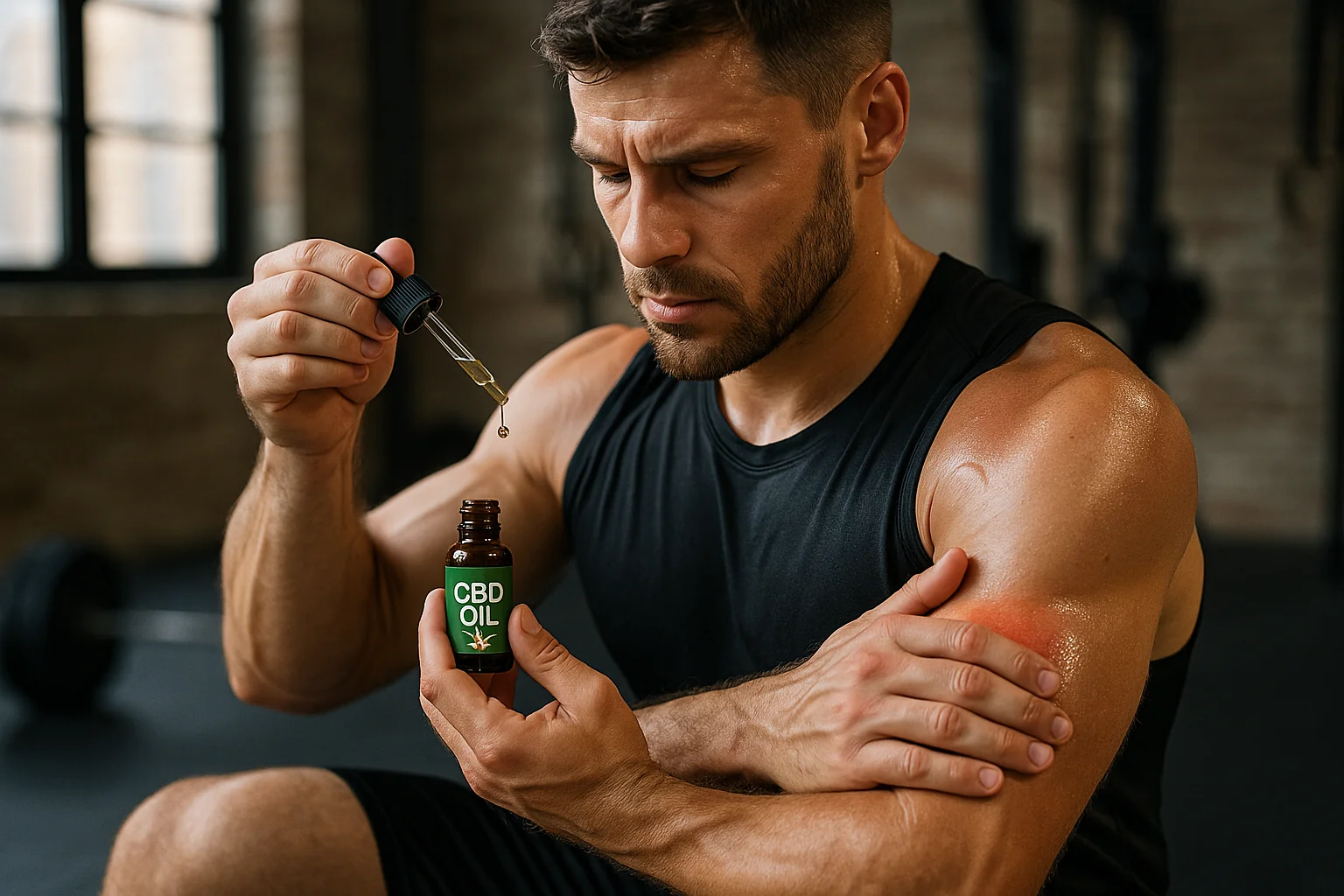

CBD for Athletes: Muscle Recovery, Sleep, and Post-Workout Pain
Does CBD help athletes with recovery? What does WADA say about CBD? Research on cannabidiol, muscle recovery, sleep, and post-workout pain in 2026.
An increasing number of athletes — both amateurs and professionals — are incorporating CBD into their recovery protocols. The 2018 decision by WADA to remove CBD from the list of prohibited substances opened the door for elite athletes. But does CBD actually accelerate recovery? Does it improve an athlete's sleep? And what are the realistic expectations when using CBD after intense training? This article reviews the available scientific data honestly — without exaggerated promises.
KEY INFORMATION
• WADA removed CBD from the list of prohibited substances as of January 1, 2018 — CBD is allowed in professional sports (THC remains banned).
• Gamelin et al. (Frontiers in Physiology, 2020) conducted a systematic review of CBD in sports — the biological mechanisms are solid, but there is a lack of large RCTs with clear clinical conclusions.
• CBD may support recovery by: reducing inflammation after exertion (CB2, COX-2), improving sleep (adenosine, 5-HT1A), and reducing pain (TRPV1).
• For athletes subject to testing: CBD isolate or broad spectrum (THC: ND) — zero risk of a positive THC test.
• CBD is a recovery aid, not an ergogenic — it does not directly improve VO2max, strength, or endurance.
CBD in Sports: What Changed After the WADA Decision in 2018?
Before 2018, CBD was subject to a general ban on cannabinoids in professional sports by WADA. The change occurred on January 1, 2018: WADA (World Anti-Doping Agency) removed CBD from the list of prohibited substances, leaving THC as a banned substance. This decision was based on an analysis of evidence: CBD does not exhibit performance-enhancing properties, is not a narcotic substance that threatens the athlete's health, and does not create an uneven playing field.
What does this mean in practice? Elite athletes can use CBD without the risk of disqualification for CBD. But THC remains banned — which creates a trap for athletes using full spectrum CBD products containing up to 0.3% THC. With regular use of higher doses of full spectrum CBD, trace amounts of THC can accumulate to detectable levels in anti-doping tests.
Wniosek dla sportowców wyczynowych: stosuj wyłącznie izolat CBD (99%+ czysty CBD, zero THC) lub broad spectrum z potwierdzonym THC „not detected” w certyfikacie COA. Produkty bez certyfikatu COA od niezależnego laboratorium są ryzykowne — zawartość THC może być wyższa niż deklarowana na etykiecie. Kilka przypadków pozytywnych testów na THC u sportowców stosujących „CBD” dotyczyło produktów niezgodnych z deklaracją.
How Can CBD Support Muscle Recovery?
Muscle recovery after intense exertion is a complex biological process involving: repair of micro-tears in muscle fibers, regulation of inflammation, protein synthesis (MPS), hydration and glycogen replenishment, and sleep — the most important recovery factor. CBD may potentially influence several of these processes.
Regulation of Inflammation After Exertion: Intense exertion, especially eccentric (running uphill, weighted squats), causes micro-tears in muscle fibers and an inflammatory response — necessary for adaptation and muscle growth, but painful. CBD, through CB2 receptors and inhibition of COX-2, may modulate the intensity of this inflammatory response — reducing pain and discomfort without completely blocking the recovery process (which would be undesirable). Gamelin et al. (Frontiers in Physiology, 2020) in their systematic review described the potential of CBD as a modulator of exercise-induced inflammation, while also emphasizing the lack of large controlled clinical trials in athletes.
Reduction of DOMS: DOMS (Delayed Onset Muscle Soreness) — delayed muscle soreness occurring 24–72 hours after exertion — is a result of inflammation in micro-tears of muscles. CBD, through TRPV1 (pain receptor) and CB2 (inflammatory receptor), may reduce the intensity of DOMS, shortening discomfort time and allowing for a quicker return to full-value training. One smaller study showed a reduction in subjective DOMS symptoms with topical and oral CBD use, but there is a lack of large RCTs in this population.
Oxidative Stress: Intense exertion generates reactive oxygen species (ROS), which damage muscle cells and slow recovery. CBD exhibits antioxidant properties — it may neutralize some ROS by activating Nrf2 pathways. This mechanism is biologically interesting in the context of sports, although clinical data in athletes are preliminary.
CBD and Athlete Sleep: Why It Matters Most?
Among all potential mechanisms of CBD for athletes, its impact on sleep is probably the most important and best documented clinically. Why is sleep crucial for athletic recovery?
During deep sleep (NREM stage 3), about 70% of daily growth hormone (GH) secretion occurs — a key anabolic hormone for muscle protein synthesis and repair of micro-tears. REM sleep is crucial for the consolidation of motor memory — learning new movements and sports techniques is reinforced during REM. Reducing sleep to 6 hours decreases testosterone production by about 10–15%, slows muscle recovery, and increases the risk of injury. Athletes need 8–10 hours of sleep per day — more than the average population.
CBD and Athlete Sleep: Shannon et al. (Permanente Journal, 2019) demonstrated an improvement in sleep for 66.7% of participants at 25 mg of CBD daily. This mechanism is particularly relevant for athletes: CBD reduces competition anxiety and training stress, which often causes sleep problems in high-performance athletes. Better sleep = better recovery = higher training results. This is not a marketing claim — it’s simple sleep physiology.
Praktyczny protokół CBD dla snu sportowca: 25–50 mg CBD wieczorem, 30–60 minut przed snem. Połączenie z rytuałem „wind-down” (brak ekranów 60 min przed snem, chłodna sypialnia, stała pora snu nawet w dni bez treningu) daje synergię między farmakologicznym działaniem CBD a higieną snu.
CBD and sports anxiety and concentration
Pre-competition anxiety is a common issue for athletes at all levels. Excessive arousal before competitions disrupts concentration, motor coordination, and decision-making. CBD, as an anxiolytic substance, may have significant applications for sports anxiety.
The anxiolytic mechanism of CBD (5-HT1A agonism, FAAH inhibition increasing anandamide) reduces activation of the HPA axis and cortisol levels — the stress hormone, which in excess disrupts cognitive and motor performance. Data from the study Bergamaschi et al. (Neuropsychopharmacology, 2011) showed that a single dose of 300 mg of CBD significantly reduced anxiety in individuals with social phobia during public speaking. The doses used by athletes (25–75 mg) are lower, but depending on individual sensitivity, the effect may be sufficient.
Important: low doses of CBD (5–15 mg) can be slightly stimulating — which is desirable when concentration is needed. Higher doses (50–100 mg) are more relaxing — suitable for pre-competition anxiety or evening use. Every athlete should know their individual response to CBD before using it on competition day.
Our observations: Athletes using CBD most commonly report three categories of effects: better sleep and recovery (the most frequent and consistent effect), reduction of DOMS after high-intensity eccentric training, and calming anxiety before important competitions. The least described effect is a direct improvement in performance — which is consistent with scientific data: CBD is not an ergogenic aid, but a substance that supports recovery and reduces stress.
Which CBD product should an athlete choose?
The choice of CBD product for an athlete depends on two key criteria: purpose (recovery vs sleep vs anxiety) and athletic status (competitive with WADA testing vs amateur without testing).
For competitive athletes subject to WADA testing: Izolat CBD lub broad spectrum CBD z certyfikatem COA potwierdzającym THC: „not detected”. Nigdy full spectrum bez weryfikacji zawartości THC — ryzyko pozytywnego testu jest realne. Producent powinien wystawiać COA z każdej partii produktu, bo zawartość kannabinoidów może się różnić między partiami.
For amateur athletes: Full spectrum CBD potentially has the strongest entourage effect (terpenes + CBD + CBG + trace THC) — it may be better for pain and recovery. Broad spectrum as a compromise — entourage effect without THC. Isolate for minimalists — no flavor, simple pharmacology.
Dosage for athletes: Post-training (within 2 hours): 25–50 mg of CBD for reducing inflammation and DOMS. In the evening: 25–50 mg of CBD for supporting sleep and overnight recovery. On competition day (if used): 15–25 mg of CBD in the morning or 2 hours before the start for reducing anxiety — check individual response to CBD beforehand, do not experiment on competition day for the first time. More about CBD dosing can be found in the article CBD dosing – how many drops to take.
CBD and types of sports: who benefits the most?
Different sports disciplines generate different physical and mental loads — which affects which mechanism of CBD action is most relevant for a given athlete.
Endurance sports (running, triathlon, cycling): Prolonged aerobic effort generates strong systemic inflammation and oxidative stress — mechanisms where CBD may have the greatest value. Recovery of skeletal muscles during ultramarathons or stage races lasts for days. CBD in the evening after training may reduce inflammation and improve restorative sleep. For runners with chronic joint pain (runner's knee, IT band pain), CBD through TRPV1 and CB2 is particularly relevant.
Strength sports and crossfit: Intense eccentric effort causes the most significant DOMS. Strength athletes often struggle with chronic muscle and joint pain resulting from heavy loads. CBD as a modulator of inflammation after training may shorten recovery time to full fitness. Important: CBD does not affect muscle protein synthesis — it is not an anabolic. It does not directly cause muscle mass gain.
Team sports and combat sports: Anxiety before competitions, quick recovery between matches (tournaments), post-injury pain — CBD addresses all these needs through various mechanisms. In the case of injuries (sprains, strains), CBD can be used as a supplement to recovery, but never as a substitute for diagnosis and orthopedic treatment.
Esports and mental sports: Lęk przed turniejami, problemy ze snem przy nieregularnych godzinach, chroniczny stres — CBD jako środek anksjolityczny i wspomagający sen może być wartościowy dla tej grupy, choć tradycyjnie nie kojarzonej ze „sportem”. WADA nie dotyczy e-sportu.
CBD vs NSAIDs and other recovery aids in sports
Athletes have access to many substances and methods that support recovery. Where does CBD fit in comparison to conventional options?
CBD vs ibuprofen/NSAIDs: NSAIDs (ibuprofen, naproxen) block both COX-1 and COX-2 — causing side effects in the stomach and kidneys with regular use. Regular use of NSAIDs by athletes may also inhibit muscle adaptation by blocking pro-inflammatory prostaglandins necessary for hypertrophy. CBD is not as strong an inhibitor of COX as NSAIDs — but has a milder side effect profile and does not inhibit muscle adaptation. For long-term recovery use, CBD may be a more beneficial option than regular NSAIDs.
CBD vs cryotherapy: Cryotherapy (ice baths, cryo chambers) reduces DOMS by constricting blood vessels and reducing the influx of prostaglandins. The mechanism is different from CBD — and both can be used concurrently without interaction. Cryotherapy provides quicker results (minutes), while CBD has effects lasting several hours. Combining both may be beneficial.
CBD and sports supplements: CBD is not an ergogenic supplement (it does not enhance performance) — it is a recovery supplement. In the context of sports supplements, CBD fits alongside magnesium, omega-3 fatty acids (EPA/DHA), vitamin D, and creatine as substances that support recovery and reduce inflammation. None of these substances replace sleep and diet — they are complementary. Shelled hemp seeds are an interesting addition to an athlete's diet due to their fatty acid and protein profile.
CBD in sports following the open study article (Gamelin et al.) is an area of growing scientific interest — but solid RCTs for specific sports and intensity levels are just emerging. The article on the general effects of CBD on pain is available here: CBD for pain.
Frequently Asked Questions
Is CBD allowed for athletes?
Yes — WADA removed CBD from the list of prohibited substances as of January 1, 2018. Important: THC remains banned. Full spectrum CBD products contain up to 0.3% THC — elite athletes should use isolate or broad spectrum (THC: ND in COA) to eliminate risk.
Does CBD accelerate muscle recovery?
Preliminary data suggest that CBD supports recovery by reducing inflammation (CB2, COX-2), modulating DOMS pain (TRPV1), and improving sleep (adenosine). Gamelin et al. (Frontiers, 2020) described the mechanisms — no large RCTs, but the biology is solid.
How much CBD to take after training?
Starting point: 25–50 mg of CBD within 2 hours after training. In the evening, 25–50 mg for support of restorative sleep. Isolate or broad spectrum for athletes with WADA testing. Full spectrum for amateurs without testing (stronger entourage effect).
Does CBD reduce DOMS?
Biological mechanisms suggest so — CB2 and TRPV1 are directly involved in inflammation and pain in DOMS. Several smaller studies have shown a reduction in subjective pain sensations. There is a lack of large RCTs specifically for CBD + DOMS in athletes.
Does CBD affect athletic performance?
There is no evidence of a direct impact of CBD on VO2max, strength, or endurance. CBD is not an ergogenic aid. Indirect effects: better recovery, improved sleep, reduced pre-competition anxiety — all of this may translate into performance, but through its effect on overall health, not through a direct improvement in physical performance.
This article is for informational and educational purposes only and does not constitute medical advice. Before starting the use of cannabis or CBD for therapeutic purposes, consult your doctor, especially if you are taking other medications, are pregnant, or breastfeeding.
Author: Michał Waluk · Published: 2026-05-04 · Updated: 2026-05-04