
What determines marijuana's potency? What influence do strains have?
What determines the potency of marijuana? Genetics 50%, cultivation 30%, curing 20%. THC from 1-3% in the 60s to 25% today. Terpene profile, THC:CBD ratio, and Polish law.
Key information
- Genetics account for about 50% of the potency of cannabis, cultivation conditions for 30%, and harvesting and curing for the remaining 20%, according to meta-analyses cited by ElSohly et al. (2021).
- The average THC content increased from 1-3% in the 1960s to 18-25% after 2020, and in extreme strains exceeds 28% (Bruce Banner, Godfather OG), along with a simultaneous decrease in CBD referred to as „loss of CBD” (Russo, 2018).
- The percentage of THC is not the only determinant of effect, as the actual effect depends on the cannabinoid profile, terpenes, and consumer tolerance, as described by the entourage effect theory (Russo, 2011).
- Higher potency means higher risk of cannabinoid hyperemesis syndrome, paranoia, addiction, and psychotic symptoms, according to the National Academies of Sciences report (NASEM, 2017).
- In Poland, marijuana with THC remains illegal except with a prescription Rpw based on the Act on Counteracting Drug Addiction of July 29, 2005, while CBD products with THC content below 0.3% are legally available.
Disclaimer: This article is botanical-scientific and educational in nature. In Poland, possession and trade of marijuana containing more than 0.3% THC is illegal under the Act of July 29, 2005, on Counteracting Drug Addiction. Medical marijuana is available only by prescription from a doctor on a Rpw prescription. The text does not encourage breaking the law nor does it constitute medical advice.
The question of marijuana potency hits the nail on the head of the contemporary debate about cannabis. Just half a century ago, typical dried cannabis contained 1-3% THC, today laboratories confirm results exceeding 28%, and concentrates reach 80-90% (ElSohly et al., 2021). This leap is not a coincidence or a marketing myth, but the result of decades of genetic selection, advances in cultivation techniques, and increasingly precise analytical methods. In this paper, we break down the potency of cannabis into its components, show why the percentage of THC alone is not enough to assess effects, and explain how to read laboratory results on labels. We draw on data from peer-reviewed sources and government reports to separate facts from common opinions.
What does „potency” of marijuana really mean?
In laboratory jargon, the potency of marijuana primarily refers to the percentage of delta-9-tetrahydrocannabinol (THC) in the dry weight of the flower, but the actual effect depends on the full cannabinoid profile, terpenes, and individual tolerance. According to ElSohly et al. (2021), the average potency of confiscated marijuana in the USA increased from 4% in 1995 to 17.1% in 2017.
However, the result on the label does not tell everything. Two strains with the same level of 22% THC can produce completely different experiences because they differ in terpenes, CBG, CBN, or CBD content, and how the consumer's body metabolizes the active compounds.
Cannabinoids, terpenes, and tolerance
Cannabis produces over 100 cannabinoids and more than 200 terpenes that modulate each other's effects. Russo (2011) described this as the entourage effect: the terpene myrcene enhances sedation, while CBD alleviates anxiety caused by high THC. The tolerance of a regular user can reduce subjective potency by 50-70% compared to a novice.
A review of 50 COA reports for CBD flower sold in Polish stores shows that the same strain labeled with the same trade name can have 0.18% or 0.29% THC in different batches, meaning the difference can reach 60% with formally identical products. This shows how important it is to look at the specific COA of a batch, rather than the averaged declaration of the producer.
Subjective vs. objective potency
Scientists distinguish between objective potency (percentage of THC by weight) and subjective potency (intensity of experiences). Both correlate, but imperfectly. A patient regularly smoking 22% flower may subjectively experience the effect as „mild”, while someone who has never tried marijuana may end up in the emergency room with a panic attack from the same dose.
Why has the percentage of THC gained marketing dominance?
The percentage of THC has become the main purchasing criterion in commercial dispensaries for two reasons: it is easy to measure and simple to compare. Consumers treat a higher percentage as a guarantee of greater value, similar to higher ABV in alcohol. The industry has picked up on this trend, shifting the entire cultivation towards extremes, at the expense of cannabinoid balance.
What three factors most influence the potency of cannabis?
The three pillars of potency are strain genetics (about 50% influence), cultivation conditions (about 30%), and harvesting and curing (about 20%), according to the consensus described in the review by ElSohly et al. (2021). Each of these areas can raise or lower the final percentage of THC by several percentage points, which is why medical producers control all stages according to GACP and GMP guidelines.
differences between sativa and indica – an article comparing chemovars
Genetics as the foundation of potential
Without the right genes, no cultivation technique will produce 25% THC. Breeders since the 1980s have been crossing plants to maximize THC while eliminating CBD, which Russo (2018) referred to the phenomenon of “CBD loss” in contemporary recreational genotypes.
The environment as a modulator
Light, nutrients, CO2, humidity, and temperature can increase the expression of genes responsible for cannabinoid synthesis by several percent. Controlled stress, such as water deficiency in the last week of flowering, can raise THCA levels by up to 12% (Caplan et al., 2017).
Harvesting and processing
Trichomes change color from clear to milky to amber, and the window for harvesting for maximum THC lasts only 5-10 days. After harvesting, slow drying and multi-week curing allow for the preservation of 90-95% of cannabinoids, while improper storage reduces THC concentration by 16% per year (Trofin et al., 2012).
Cannabis Genetics – why does the choice of strain determine half of the effect?
Genetics accounts for about 50% of the variance in THC content according to the classic work of de Meijer et al. (2003), on which the modern chemovar classification by Lewis et al. (2018) is based. Different strains carry different variants of THCA synthase and CBDA synthase enzymes, determining whether the plant will produce mainly THC, CBD, or a mixture of both.
Sativa, indica, hybrids – what do these labels really mean?
The traditional division into sativa and indica originates from 18th-century botanists, but contemporary genotypes are 95% hybrids. McPartland (2018) proved that the names “indica” and “sativa” in commerce do not correlate with the actual chemical profile. A more useful classification is chemovar classification.
Chemovars Type I, II, III
Lewis et al. (2018) proposed three main types:
- Type I: THC dominance (above 0.3% THC, low CBD), typical recreational and medical high-THC strains.
- Type II: similar proportions of THC and CBD (e.g., 1:1, 2:1), often used medically, e.g., in Sativex.
- Type III: CBD dominance (e.g., 15% CBD, 0.3% THC), legal EU hemp and therapeutic strains.
Famous high-THC strains
In commercial dispensaries in the USA and Canada, strains exceeding 25% THC are regularly tested. Bruce Banner reaches about 27%, Strawberry Banana 26%, and Godfather OG is sometimes cited as over 28% in analysis certificates. It is worth noting that declarations above 30% are often questioned as results from unrepresentative samples (Schwabe et al., 2023).
CBD-dominant strains
On the therapeutic side, the most well-known are Charlotte’s Web (developed by the Stanley brothers for Charlotte Figi), ACDC, and Harlequin. These strains typically contain 12-20% CBD with less than 1% THC and are the basis for many medical products registered in Europe. Charlotte’s Web gained fame for reducing seizures in a pediatric patient with Dravet syndrome, which sparked a wave of research on CBD in treatment-resistant epilepsy.
CBG and other minor cannabinoid strains
Another breeding direction is strains dominant in CBG (cannabigerol), which Russo and Marcu (2017) describe as “the mother of all cannabinoids,” as it is a precursor to THC, CBD, and CBC. Strains like White CBG or Jam contain 12-15% CBG with minimal THC and are used in research on neurodegenerative diseases.
Genotype vs. phenotype – why do sister plants differ in potency?
From the same seeds, plants with different phenotypes emerge, meaning different expressions of physical and chemical traits. This is why breeders select the strongest specimens (the so-called “mothers”) and clone them to ensure consistency. Without cloning, even stabilized genetic lines show 10-15% variance in the final THC percentage between sister plants.
How do cultivation conditions change the potency of the plant?
Cultivation conditions account for about 30% of the final percentage of THC and can elevate average genetic seeds to medical results or destroy the potential of elite genetics. According to meta-analyses cited by Magagnini et al. (2018), simply optimizing the light spectrum can increase cannabinoid production by 38% compared to standard HPS lamps.
Light, including UV-B radiation
Trichomes are the plant's defensive response to UV-B radiation. Controlled exposure to UV-B in the last 2-3 weeks of flowering increases THC content by 10-30%, as the resin of the trichomes acts like the plant's “sunscreen” (Lydon et al., 1987). Simultaneous PPFD levels of 800-1000 µmol/m²/s maximize photosynthesis.
Enriching CO2
Raising CO2 concentration from 400 ppm to 1200-1500 ppm during flowering increases biomass by 20-30%, but does not necessarily raise the percentage concentration of THC per gram of dry material, as there is a dilution effect of cannabinoids. Therefore, medical producers try to balance mass growth with the concentration of active compounds.
Soil vs. hydroponics
Hydroponics provides precise control over nutrients and often higher cannabinoid concentrations, but growing in organic soil often produces a richer terpene profile. Observations from COA of Polish CBD flower producers indicate that organic outdoor fields yield lower CBD percentages (8-12%), but the terpenes myrcene and pinene are significantly higher than in greenhouse hydroponics.
Nutrients and humidity
Phosphorus and potassium during flowering support cannabinoid synthesis, while excess nitrogen lowers the percentage of THC. Optimal humidity decreases from 65% during the vegetative phase to 40-50% in late flowering, minimizing the risk of mold and supporting resin production. Magnesium and calcium deficiencies manifest as yellowing leaves and significantly reduce the final THC concentration, which is why professional cultivations use complex two-component (A+B) or three-component nutrients.
Indoor, outdoor, or greenhouse?
Each environment has its advantages. Indoor provides full control over light, humidity, and photoperiod, yielding THC results of 18-25%. Outdoor mimics natural conditions, is cheaper and eco-friendly, but yields can be lower (12-18% THC) and seasonal. Greenhouses combine the benefits of both methods: sunlight plus supplemental LEDs, controlled atmosphere, higher yield per square meter. GMP greenhouses dominate in medical programs.
Plant stress as a breeder's tool
Some breeders apply controlled stress (drought, low nighttime temperatures, defoliation) in the last weeks of flowering to force the plant to increase defensive resin production. Caplan et al. (2017) showed that moderate drought stress in the last 11 days increases THCA by 12% and CBDA by 13%. However, this technique is risky, as excessive stress degrades yield and can lead to hermaphroditism.
Why can harvesting and curing reduce potency by 20%?
Improper harvesting and post-harvest processing can destroy 20-30% of the potency potential even of an ideally grown plant, as THCA decarboxylates and degrades due to oxygen, light, and heat. Ross and ElSohly (1996) showed that improperly stored flower loses an average of 16.6% THC in the first year.
When to harvest – white or amber trichomes?
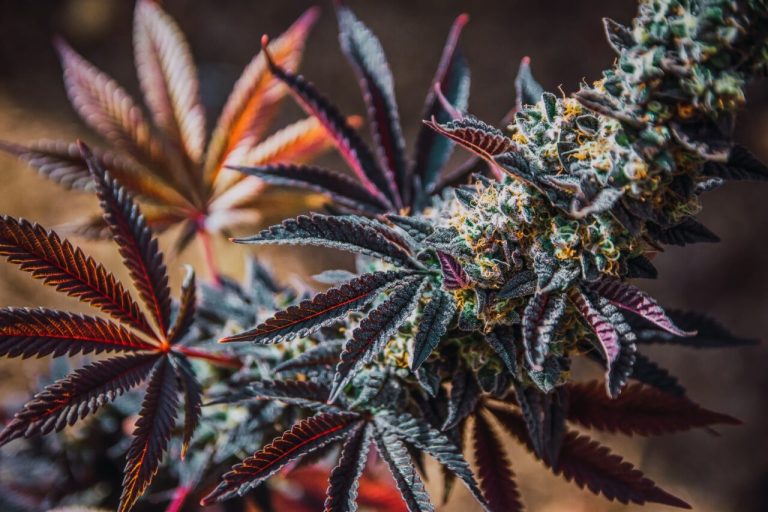
Trichomes under a 60x microscope go through three phases: clear (immature, low THC), milky-white (peak THC), and amber (degradation of THC to CBN, sedative effect). The optimal window for maximum psychoactive effect is 70-90% milky trichomes. Harvesting later results in a more “narcotic” relaxing profile due to higher CBN.
Drying – 60-65% humidity for 7-14 days
The flower should lose moisture slowly, at a temperature of 16-21°C and humidity of 55-65% for 7-14 days. Too rapid drying halts the breakdown of sugars and chlorophyll, resulting in a “grassy” taste and harsh smoke. Too slow drying risks mold, including Aspergillus, which is dangerous for medical patients.
Curing in jars – the art of patience
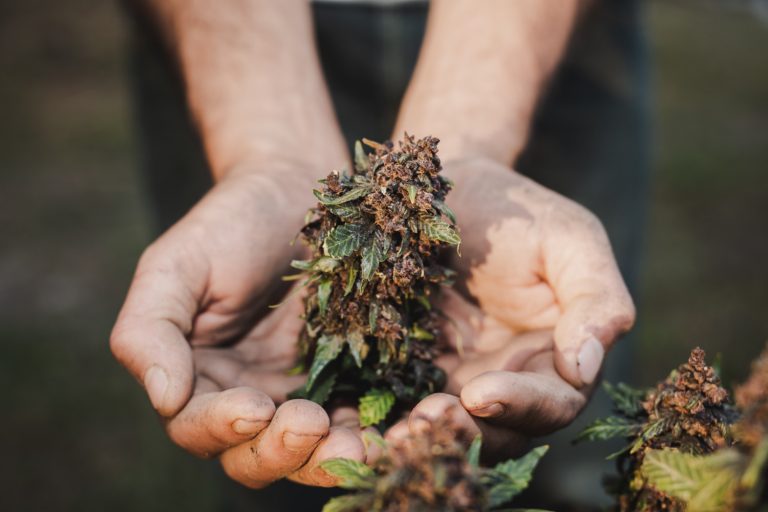
After initial drying, the flowers are placed in airtight glass jars. Daily opening (“burping”) for the first 1-2 weeks equalizes humidity inside the buds and allows enzymes to complete the breakdown of chlorophyll residues. The full cycle lasts 2-8 weeks, and some medical growers cure for 6 months. The effect is smoother smoke, more intense terpenes, and better-preserved THC.
Curing does not increase THC content, as some forums claim, but allows it to be preserved and enhances perceived potency by intensifying terpenes that amplify the entourage effect. This is a key difference that the HPLC result alone does not show.
Common mistakes during curing
Common mistakes list: too short curing (less than 14 days), lack of daily “burping” in the first two weeks (mold), high storage temperature (above 23°C, THC degradation), sunlight (loss of terpenes), and plastic containers absorbing terpenes. Professionals use dark glass, humidity indicators, and Boveda 62% packs.
The impact of processing on the terpene profile
Terpenes are more sensitive than cannabinoids. Myrcene, limonene, and pinene evaporate at temperatures above 35°C, so drying in ovens or on radiators destroys the aromatic profile. After proper curing, terpene content increases by 20-50% compared to immediately dried flower, as enzymes break down compounds responsible for the “grassy” smell (chlorophyll, carotenoids).
How do laboratories measure THC and CBD content?
The most accurate method for cannabinoid determination is high-performance liquid chromatography (HPLC), which allows for the separation of THCA from THC without thermal conversion. According to the European Pharmacopoeia guidelines (Ph. Eur. 11.0), the HPLC deviation for cannabinoids should not exceed 5%, while colorimetric tests have an error of 20-40%.
HPLC – the gold standard
HPLC uses a liquid solvent to separate compounds, allowing for the separate measurement of THCA and delta-9-THC. This is significant because THCA is not psychoactive, and only after decarboxylation (e.g., during smoking) does it convert to active THC. Total THC is calculated as: THCA × 0.877 + THC.
What will you find in a COA (Certificate of Analysis)?
A reliable COA from an accredited laboratory includes: sample name, batch number, analysis date, cannabinoid profile (usually 8-16 compounds), terpene profile (5-30 compounds), microbiological tests, heavy metals, pesticides, and solvent residues. The absence of any of these elements is a red flag.
Colorimetric tests and their limitations
Home colorimetric tests (Beam, tCheck) are only for orientation. They react to the presence of cannabinoids but do not distinguish THC from THCA or CBD from CBC. For medical patients and those testing CBD products for compliance with 0.3% THC, they are insufficient.
GC vs. HPLC – why the choice of method matters
Gas chromatography (GC) operates at high temperatures, thus automatically decarboxylating THCA to THC, yielding only a total result of “Total THC.” HPLC, on the other hand, works at cold temperatures and allows separation of both forms. This is significant because raw flower mainly contains THCA, and Total THC measured by GC can be misleadingly low or overestimated depending on the device configuration. Professional reports always indicate the method.
Red flags in COA
What to watch for: lack of laboratory name and accreditation number, lack of sample collection date, total results without the profile of individual cannabinoids, lack of microbiological tests (especially Aspergillus), lack of pesticide and heavy metal tests. A solid COA fits on 2-4 pages and includes barcodes or QR codes for verification with the laboratory.
how to read COA step by step – a guide for CBD consumers
How has marijuana potency changed from the 1960s to today?
The average THC content in confiscated marijuana in the USA increased from about 1-3% in the 1960s and 70s to 17.1% in 2017 and over 21% in analyses from 2022, according to ElSohly et al. (2021) and updates from the Potency Monitoring Program. This is an increase of over 700% in half a century, one of the most dramatic in the history of agricultural commodities.
Historical data
- 1968-1972: an average of 1-3% THC in typical flower, dominance of CBD and other minor cannabinoids.
- 1990: an average of about 3-5% THC in confiscated material.
- 2000: 6-8% THC in DEA analyses.
- 2010: 12% THC, the beginning of the era of selective high-THC strains.
- 2017: 17.1% THC (ElSohly et al., 2021).
- 2020+: 18-25% THC in commercial products, concentrates 60-90%.
What drove the increase?
Three main drivers: medical and recreational legalization in many states in the USA and provinces in Canada, market demand for “the strongest strains,” and advancements in indoor growing techniques (LED, CO2, hydroponics). Equally important was the globalization of seed banks and the exchange of genetics among breeders in the Netherlands, Spain, Canada, and the USA.
Concentrates – a new level of potency
The emergence of concentrates (shatter, wax, rosin, live resin, distillates) raised the potency ceiling by an order of magnitude. Distillate THC can reach 90-99% purity, while typical shatter falls within the range of 70-85% THC. Stang et al. (2020) published a study in JAMA showing that concentrate consumers had higher serum THC levels than flower consumers, but subjective effects were surprisingly similar, suggesting a role of rapid receptor tolerance.
Edibles and their specifics
Edibles introduce a different dimension of potency. After passing through the liver, THC converts to 11-hydroxy-THC, a form 2-3 times stronger and longer-lasting. The standard medical dose in Canada is 2.5-5 mg THC, while unaware consumers often take 25-100 mg, leading to most hospitalizations related to marijuana.
What Russo referred to as “CBD loss” in modern strains?
Russo (2018) described a trend of genetic selection where breeders eliminated CBDA synthase genes in favor of THCA synthase for over 30 years, leading to the disappearance of balanced strains (Type II) in the recreational market. According to his analyses, the frequency of balanced chemovar in commercial strains dropped from about 33% in the 1980s to less than 5% in 2018.
Consequences for consumers
CBD acts as a natural “safety net” for THC: it alleviates anxiety, paranoia, and tachycardia. Without CBD, consumers experience stronger side effects at the same level of THC. Russo argues that a return to balanced strains could reduce the number of cases of acute cannabis poisoning and hospitalizations.
Return to Type II strains
In recent years, several medical breeders in Canada, Israel, and the Netherlands have been rebuilding balanced lines (e.g., CBD Critical Mass, Cannatonic). This trend is reinforced by the requirements of medical programs, where patients often need a predictable, less narcotic effect.
The role of minor cannabinoids in therapy
There is also increasing talk about the role of minor cannabinoids: CBG, CBN, CBC, THCV. CBN is formed from the degradation of THC and has sedative effects, CBC enhances the analgesic effects of CBD, and THCV suppresses appetite (the opposite of “munchies”). Russo (2018) suggests that breeders should consciously rebuild the full cannabinoid profile, not just THC and CBD.
Terpene profile vs. chemovars
New classification proposals consider not only cannabinoids but also dominant terpenes. Sherman and del Castillo (2020) proposed an expanded system in which the flower is described as, for example, “Type I, myrcene” or “Type II, terpinolene.” Such classification better predicts subjective effects than traditional strain names.
Does higher THC mean a better effect? Potency paradoxes
Higher THC does not linearly translate to a better experience, and quite the opposite: in a study by Freeman et al. (2019), consumers of marijuana above 10% THC had four times the risk of anxiety disorders compared to users of weaker strains. The brain has a limited number of CB1 receptors, so after exceeding the saturation threshold, additional THC mainly increases side effects rather than subjective pleasure.
Shorter tolerance, greater risk
Regular use of high THC quickly develops tolerance through down-regulation of CB1 receptors (D’Souza et al., 2008). A user starting with 25% THC will need larger doses within a few weeks, driving the spiral of addiction (cannabis use disorder).
Bioavailability vs. THC percentage
When smoking, the bioavailability of THC is only 10-35%, and most cannabinoids undergo pyrolysis. Therefore, “25% THC in a joint” does not mean the body will absorb 25%. Vaping at low temperatures (180-210°C) increases bioavailability to 30-45% and better preserves terpenes.
The paranoia paradox
High THC without CBD significantly increases the risk of acute paranoia, especially in genetically predisposed individuals. Morgan et al. (2010) showed that strains with higher CBD caused fewer psychotic episodes at the same dose of THC.
What is the concept of equivalent THC ratio and why does it have clinical significance?
Equivalent THC ratio is the THC:CBD ratio in a product, crucial for the clinical profile and safety. The registered product Sativex (nabiximols) in Canada and the EU has a ratio of 1:1 (2.7 mg THC and 2.5 mg CBD per dose), while typical medical flowers from pharmacies may have a ratio of 2:1 or 1:1, according to the characteristics of medicinal products.
Examples of ratios and their applications
- 1:1 THC:CBD: Sativex, neuropathic pain, spasticity in MS, lower risk of psychoactive effects.
- 2:1 THC:CBD: typical profile for chronic pain, greater analgesic effect, controlled psychoactivity.
- 1:2 or 1:5 CBD:THC: drug-resistant epilepsy, anxiety, inflammation, minimal psychoactivity.
- 20:1 CBD:THC: pediatrics (Charlotte’s Web), practically no psychoactive effect.
Why does the ratio matter more than the percentage itself?
A patient taking 10 mg of THC from a Type I strain (without CBD) will experience significantly stronger psychoactive effects than someone taking 10 mg of THC from a 1:1 strain. The ratio is thus a tool for precise dosing, essential in cannabinoid medicine.
How to choose the right potency for yourself?
The selection of potency should start from the lowest effective dose („start low, go slow”), as tolerance, body mass, metabolism, and mental state have a greater impact than the percentage of THC itself. According to the guidelines of the College of Family Physicians of Canada (2018), a novice medical patient should start with flower containing less than 10% THC and a single inhalation, with a 15-minute observation of effects.
Beginners – 10-15% THC
For inexperienced individuals, mild strains or balanced products (THC:CBD 1:1) are recommended. The first dose should be a maximum of one small inhalation or 2.5 mg of THC orally. The full effect from smoking appears in 5-15 minutes, from edibles after 30-120 minutes, so patience protects against overdose.
Experienced – 18-22% THC
Regular users can choose strains of 18-22% THC, keeping in mind that tolerance is not an advantage but an adaptation requiring periodic breaks (the so-called tolerance break, 2-4 weeks of abstinence).
Medical patients
In medical programs, dosing is individualized by a doctor. In Poland, available medical flowers usually have 8-22% THC and are supplied only by pharmacies with a Rpw prescription.
differences between CBD flower and medical marijuana – a guide
What are the risks associated with high potency?
High potency marijuana increases the risk of cannabinoid hyperemesis syndrome (CHS), acute paranoia, addiction, and induced psychosis, according to a report by the National Academies of Sciences, Engineering, and Medicine (NASEM, 2017). This report, based on 10,000 scientific publications, is the most comprehensive evidence to date of the relationship between potency and adverse effects.
Cannabinoid hyperemesis syndrome
CHS is a paradoxical reaction: individuals smoking high THC for many years experience cyclic vomiting, abdominal pain, and compulsive hot showers. The number of hospitalizations due to CHS in states with legalization increased by 280-300% between 2010 and 2018 (Sorensen et al., 2017).
Psychosis and addiction
NASEM (2017) assessed the evidence for a link between cannabis use and the development of schizophrenia as „substantial”. Daily use of marijuana above 10% THC increases the risk of a psychotic disorder fivefold (Di Forti et al., 2019, Lancet Psychiatry). Cannabis use disorder affects about 9% of all consumers and 17% of those who started before the age of 18.
CBD safety
The WHO Expert Committee on Drug Dependence (WHO ECDD, 2018) stated that CBD has a good safety profile in humans and does not cause dependence or abuse. This is the fundamental reason why CBD products are legal in the EU and most of the world.
What is the legal context in Poland?
In Poland, possession and trade of marijuana with THC above 0.3% is illegal under the Act of July 29, 2005, on Counteracting Drug Addiction (Journal of Laws 2005 No. 179 item 1485). Medical marijuana has been available since 2017 only by prescription from a doctor on a Rpw prescription, in pharmacies. CBD products with THC content below 0.3% are legal and classified as food or cosmetics.
Hemp and CBD
Hemp seeds (Cannabis sativa L.) from the fiber group (THC below 0.3%) are legally cultivated after being listed in the EU variety catalog. Products from this hemp: CBD oil, hemp flower, cosmetics, functional food, are present in the Polish market and do not require a prescription.
Medical marijuana in pharmacies
Since November 2017 (amendment to the law), pharmaceutical raw materials of hemp origin, including flowers (Bedrocan, Bediol, Aurora) with THC content from 1% to 22%, have been available. The Rpw prescription must be issued by a doctor and filled at a pharmacy. The list of registered preparations is maintained by the Office for Registration of Medicinal Products.
Legal risks
Possession of recreational marijuana carries a penalty of up to 3 years of imprisonment (Article 62 of the Act), and in the case of a small amount and an unpunished person, it is possible to dismiss the proceedings (Article 62a). CBD shops must maintain documentation confirming the legal origin of the raw material and THC levels confirmed by COA tests.
Recommended legal hemp products available in Poland
The following CBD and CBG products are legal in Poland, have COA from accredited laboratories, and contain THC below 0.3%. This is an alternative for those seeking the effects of cannabis within Polish law.
- SOOL CBD Oil 5% Broad Spectrum (10 ml, 76 PLN): a mild starting concentration, 500 mg of CBD in a bottle, broad spectrum profile without THC.
- SOOL CBD Oil 10% Broad Spectrum (10 ml, 99 PLN): double the potency for experienced individuals, 1000 mg of CBD, a popular choice for long-term use.
- Cannova Natural CBG 15% (10 ml, 240 PLN): a rarely encountered cannabinoid CBG, studied for its neuroprotective and anti-inflammatory properties.
- Mars CBD Hemp Flower 9% (Hemp Buch, 59 PLN): dried flowers of industrial hemp for vaporization or infusions, profile 9% CBD, THC below the legal limit.
FAQ – frequently asked questions about marijuana potency
What determines the potency of marijuana?
Potency is determined by three main factors: strain genetics (about 50%), cultivation conditions (about 30%), and harvesting and curing (about 20%). The percentage of THC alone is not enough, as subjective effects are also modified by terpenes, other cannabinoids (CBD, CBG, CBN), tolerance, and method of consumption, as described by Russo (2011).
Is 30% THC a realistic result?
Results above 30% THC in commercial dispensaries are questioned by scientists. Schwabe et al. (2023) showed that laboratories sometimes inflate results at the request of producers, and actual values rarely exceed 28%. Above this threshold, trichomes cannot hold more THC in the resin.
Does high THC always produce a stronger effect?
No. After exceeding the saturation threshold of CB1 receptors, additional THC mainly increases side effects (paranoia, tachycardia), not pleasurable experiences. Freeman et al. (2019) proved that consumers of marijuana above 10% THC have four times the risk of anxiety disorders compared to users of weaker strains.
What is the difference between THC and THCA?
THCA is the inactive acidic form of the cannabinoid present in raw flower. Under heat (smoking, vaporizing, cooking), it loses its carboxyl group and converts to psychoactive THC. Total THC is calculated as: THCA × 0.877 + THC. Eating raw flower will not produce a psychoactive effect.
What is the entourage effect?
This is a theory described by Russo (2011), according to which cannabinoids and terpenes act synergistically, enhancing or modulating their effects. Full-spectrum extracts have stronger and more nuanced effects than isolates. Myrcene enhances sedation, CBD alleviates anxiety caused by THC, and pinene improves concentration.
Does CBD lower the potency of marijuana?
CBD does not lower the percentage of THC itself but modifies its subjective effects. Morgan et al. (2010) showed that strains with higher CBD induced fewer psychotic episodes at the same dose of THC. CBD acts as a „fail-safe” that alleviates anxiety, paranoia, and tachycardia.
How long should flower be kept to retain potency?
Properly cured flower in an airtight jar, in a dark and cool place (15-21°C, 55-62% relative humidity) retains 90-95% of cannabinoids for 6-12 months. After a year, it loses an average of 16.6% THC (Ross and ElSohly, 1996). Freezing in vacuum extends the shelf life to 2-3 years.
Does CBD flower contain THC?
Legal CBD hemp flower in Poland must contain below 0.3% THC (EU threshold), which is confirmed by COA from an accredited laboratory. Such a low content does not produce psychoactive effects, but at very high doses, it may be detectable in drug tests. Individuals working in regulated professions should exercise caution.
What potency is safe for a beginner?
For inexperienced individuals, strains below 10-15% THC or products with a balanced THC:CBD ratio of 1:1 are recommended. The first dose should be a maximum of one small inhalation or 2.5 mg of THC orally, with a 15-minute (smoking) or 2-hour (edibles) observation of effects, in accordance with the „start low, go slow” principle.
Can I buy high THC marijuana in Poland?
Only with a Rpw prescription from a doctor, in a pharmacy. Available medical flowers contain from 1% to 22% THC and come from certified producers (Bedrocan, Aurora). Possession of recreational marijuana (above 0.3% THC) without a prescription carries a penalty of up to 3 years of imprisonment (Article 62 of the Act of July 29, 2005).
Summary
The potency of marijuana is not a single number on the label but a complex result of genetics, growing conditions, harvesting techniques, curing, terpene profile, and individual consumer tolerance. The increase in average potency from 1-3% THC in the 1960s to 18-25% today has changed the landscape of cannabis consumption and introduced new risks, from cannabinoid hyperemesis syndrome to cannabis use disorder. Russo (2018) warns of the „loss of CBD” in modern strains and advocates for a return to balanced chemovars. Meanwhile, NASEM (2017) emphasizes that the evidence for links between high THC and psychosis and addiction is substantial. In the Polish context, marijuana with THC remains regulated, available only by prescription Rpw, while CBD products offer a legal alternative for those seeking the effects of cannabis without the psychoactive effect.
how to read a CBD product COA – a consumer guide